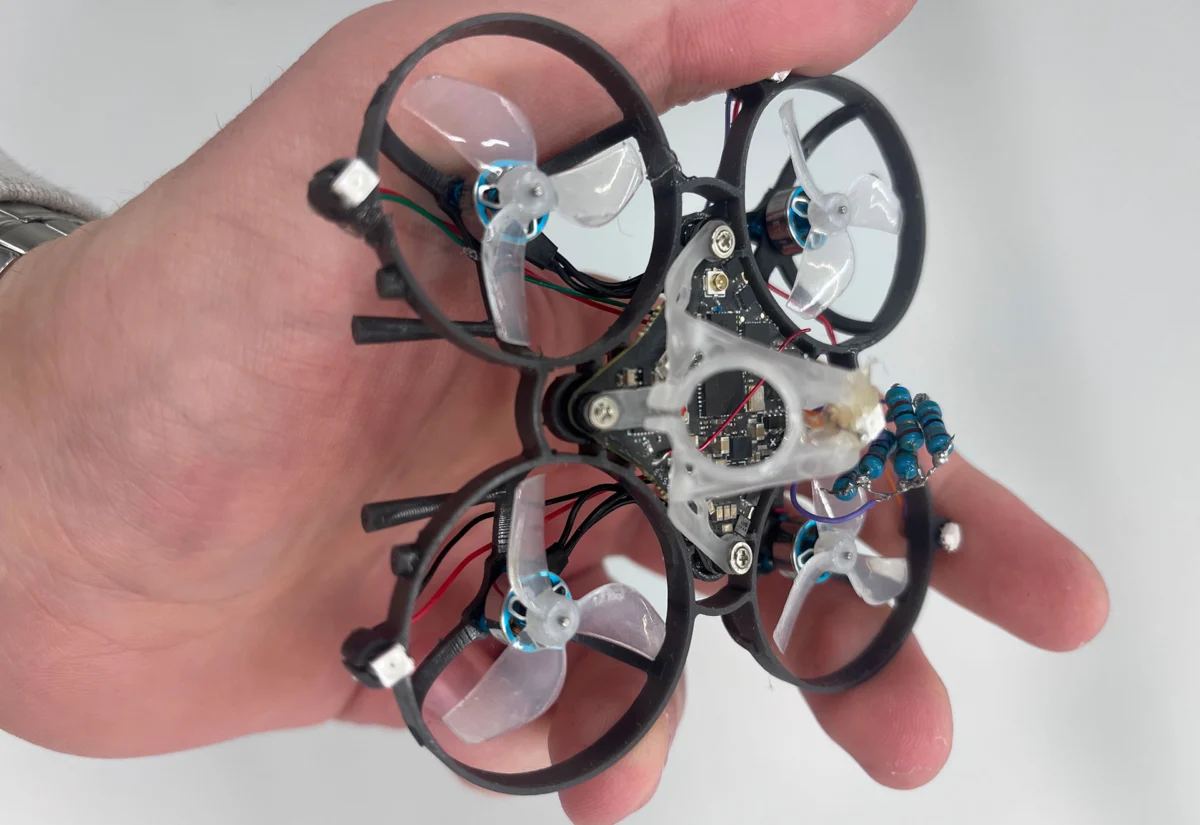
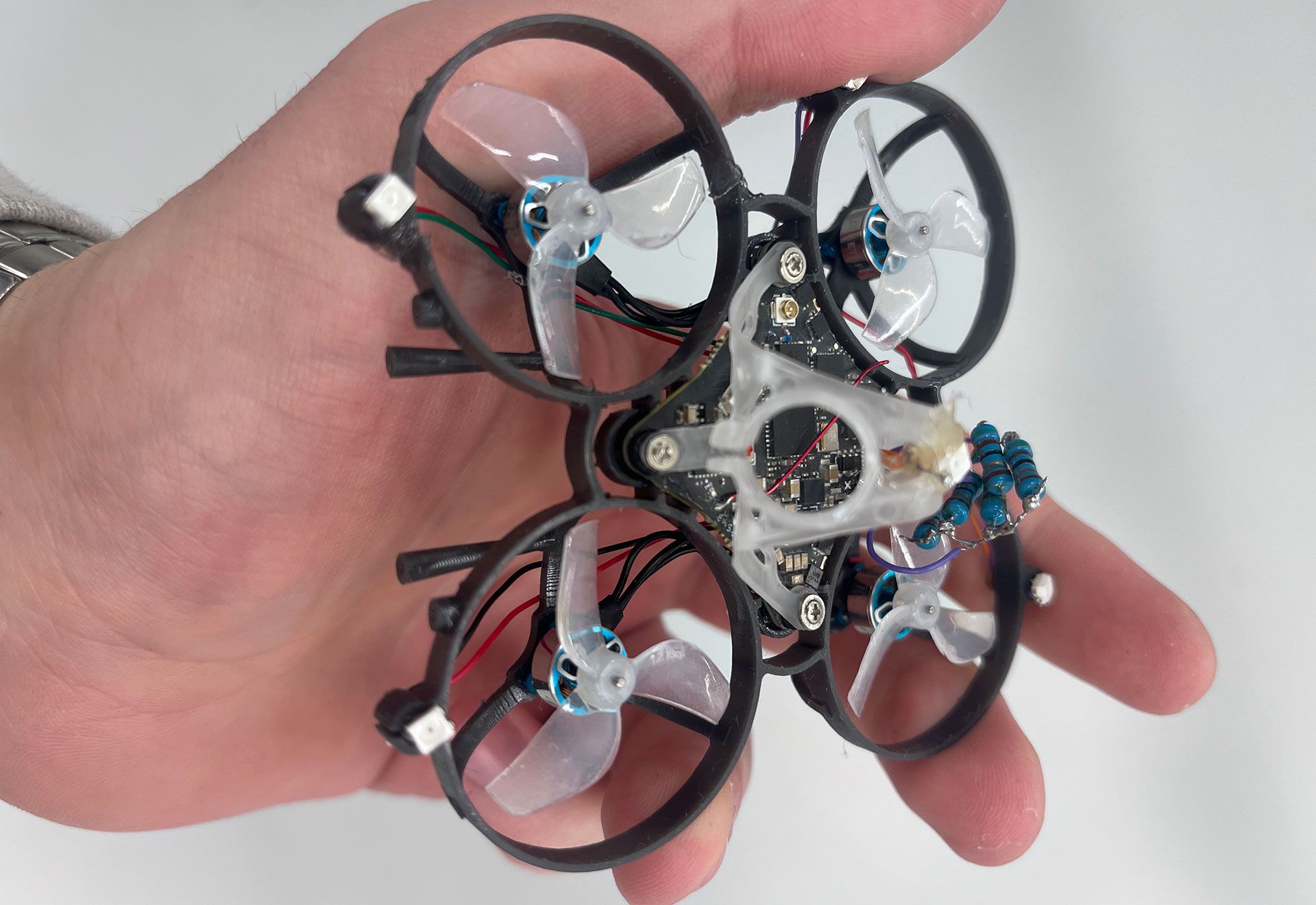
A significant technological milestone has been achieved in the persistent global battle against mosquito-borne diseases, as Tornyol Systems announced the successful live demonstration of its autonomous micro-drone designed for insect eradication. The company recently shared a video showcasing the eponymous drone executing its inaugural air-to-air kill, targeting a moth in what was described as a proof-of-concept for its precision targeting capabilities. This development, highlighted by Tornyol, represents a substantial advancement in their stated objective to "completely eradicate mosquitoes" from human-inhabited environments.
The Breakthrough: Air-to-Air Eradication
The demonstration, publicly shared via a tweet by Tornyol Systems co-founder Alex Toussaint on July 14, 2026, depicted the diminutive 40-gram (1.4 ounce) drone intercepting and neutralizing a flying moth. While the immediate target was not a mosquito, the company indicated that the moth served as a visible and convenient proxy to illustrate the drone’s accuracy and autonomous operational capacity in a dynamic aerial environment. This event marks a critical step forward from previous ground-based or stationary insect control systems, presenting the first documented instance of an autonomous, airborne platform specifically designed for direct interception of individual flying pests. Toussaint lauded his engineering team for their dedicated work on the project, which culminated in this successful test.
Tornyol Systems’ Vision: A War on Mosquitoes
The driving force behind Tornyol Systems’ innovative approach is articulated in its comprehensive "mosquito-hostile manifesto," available on the company’s official website. This mission statement underscores the severe and often underestimated global threat posed by mosquitoes. According to the firm, these insects are responsible for more than 700,000 human deaths annually, surpassing the fatalities caused by all ongoing conflicts worldwide. Furthermore, an alarming figure of over 700 million people contract mosquito-borne diseases each year. The manifesto specifically highlights the impact on regions including Western nations, citing thousands of annual cases of West Nile Virus in the United States alone.
Mosquitoes are vectors for a plethora of devastating diseases beyond West Nile Virus, including malaria, dengue fever, Zika virus, chikungunya, and yellow fever. Malaria alone, predominantly affecting sub-Saharan Africa, claimed an estimated 619,000 lives in 2021, according to the World Health Organization (WHO). Dengue, a rapidly spreading viral infection, poses a threat to nearly half of the world’s population, with an estimated 100-400 million infections occurring each year. The economic burden associated with these diseases, encompassing healthcare costs, lost productivity, and tourism impacts, runs into billions of dollars annually, emphasizing the critical need for effective control measures. Tornyol Systems aims to leverage advanced technology, including its "small, inexpensive, and yet very fast" micro-drone, to systematically eliminate mosquitoes from areas where human populations reside, thereby mitigating these severe health and economic consequences.
Technological Underpinnings: Precision and Autonomy
The technological foundation of Tornyol’s system is rooted in sophisticated acoustic sensing and processing. The platform relies on a central LeSonar2 phased array sonar base station, which integrates an impressive array of 380 smartphone microphones. This elaborate microphone setup, coupled with an Artix-7 Field-Programmable Gate Array (FPGA), enables the system to construct a precise 3D map of its environment. The FPGA, renowned for its reconfigurability and parallel processing capabilities, is crucial for handling the massive data streams generated by the microphone array in real-time.
This advanced sonar system grants the LeSonar2 base station the ability to detect movements as minute as 0.1 millimeters. Crucially, it employs proprietary algorithms to identify mosquitoes by their unique wingbeat signatures. Each species of mosquito, and even male and female mosquitoes within a species, produces a distinct wingbeat frequency, allowing for highly specific identification. Once a target is identified, the micro-drone receives precise commands from a connected PC. This command system currently integrates readily available components, such as "car park assist sensors," repurposed for spatial awareness, alongside advanced Digital Signal Processing (DSP) techniques. This integrated approach allows the drone to seek out and engage mosquitoes at distances of up to 8 meters (approximately 26 feet) from the base station.
Tornyol Systems has indicated that the current reliance on an external PC for command processing is temporary. The company plans to roll out deployment on embedded hardware "in the next few weeks," signifying a transition towards a more compact, self-contained, and potentially scalable solution that removes the need for a separate computing unit. This move is expected to enhance the system’s autonomy, reduce its footprint, and facilitate broader deployment.
Evolution of the Technology: From Concept to Combat
The origins of Tornyol Systems’ groundbreaking work can be traced back to Hackaday Supercon 2024. During this prominent gathering of hardware hackers and innovators, Alex Toussaint delivered a presentation titled "How to Detect (and Kill) Mosquitoes With Off-the-Shelf Electronics." This early presentation laid the conceptual groundwork for the current system, demonstrating Toussaint’s initial exploration into using accessible electronics for pest detection and elimination.
Since those initial public discussions, the technology has undergone significant refinement and miniaturization. The transition from a proof-of-concept utilizing standard components to a compact, autonomous micro-drone capable of precision air-to-air interception underscores a rapid pace of development. The evolution highlights the company’s ability to integrate complex sensor arrays, real-time data processing, and miniature flight control systems into a functional and effective pest control solution. This iterative development process, moving from theoretical possibility to tangible demonstration, is a testament to the engineering prowess and strategic vision of Tornyol Systems.
Broader Context: The Fight Against Mosquito-Borne Diseases
Humanity’s efforts to control mosquito populations have a long and varied history, ranging from traditional methods like draining stagnant water and using mosquito nets to more modern interventions. Chemical pesticides, such as DDT and pyrethroids, have been widely used, but concerns about environmental impact, insecticide resistance, and human health risks have necessitated a search for alternative strategies. Biological control methods, like introducing mosquito-eating fish or bacteria (e.g., Bacillus thuringiensis israelensis), offer more environmentally friendly options but often lack the precision and immediate impact desired for rapid disease containment.
More recently, advanced technologies have emerged in the fight against mosquitoes. Genetic modification techniques, such as those employed by companies like Oxitec, involve releasing genetically modified male mosquitoes that produce non-viable offspring, leading to population crashes. The Sterile Insect Technique (SIT) involves irradiating male mosquitoes to sterilize them before release, achieving a similar goal. On the technological front, ground-based AI-enhanced mosquito zappers, which use lasers and artificial intelligence to detect and neutralize pests, have shown promise. These systems typically operate from a fixed position, creating a defensive perimeter.
Tornyol Systems’ air-to-air drone represents a distinct departure and complement to these existing methods. While ground-based laser systems offer a stationary defense, an autonomous flying drone offers unprecedented mobility and the ability to actively hunt and eliminate individual mosquitoes within a defined airspace. This active, mobile interception capability could prove critical in settings where static defenses are insufficient or impractical, such as large outdoor areas or dynamic indoor environments. The ability to identify mosquitoes by their unique wingbeat signature also allows for highly targeted eradication, potentially minimizing impact on non-target insect species, a common concern with broad-spectrum insecticides.
Market Entry and Accessibility
Tornyol Systems is preparing for commercial deployment, initially targeting U.S. residents. The company has outlined a clear pricing structure for interested consumers. Prospective customers can secure their autonomous Tornyol drone and base station with a refundable deposit of $100. Following this, two primary payment plans are available to suit different consumer preferences. Customers can opt for a subscription model, priced at $50 per month, which likely includes ongoing software updates, maintenance, and potentially replacement parts. Alternatively, a one-time fee of $1,100 allows customers to "own it forever," implying a direct purchase with no recurring charges for the hardware itself, though software or support services might still entail future costs.
This dual-tier pricing strategy aims to make the technology accessible to a broader market, from those who prefer a lower upfront cost and predictable monthly expenses to those who prefer a single investment. The target demographic appears to be homeowners, businesses, or public spaces seeking a localized, autonomous solution to mosquito control.
Implications and Future Outlook
The introduction of Tornyol Systems’ micro-drone carries significant implications for public health, environmental management, and the future of pest control.
- Public Health: The most direct impact could be a substantial reduction in mosquito-borne disease transmission in localized areas. If proven effective at scale, widespread deployment could protect communities from diseases like West Nile Virus, potentially leading to fewer hospitalizations and deaths. The ability to create mosquito-free zones around homes, schools, and public parks could drastically improve quality of life and public health outcomes.
- Environmental Impact: Unlike chemical insecticides, which can harm beneficial insects, aquatic life, and human health, the drone’s targeted approach could offer a more environmentally benign solution. By identifying specific mosquito wingbeat signatures, the system theoretically could be programmed to target only harmful species, minimizing collateral damage to other insect populations crucial for local ecosystems. However, careful validation would be needed to ensure non-target species are truly unaffected.
- Scalability and Cost-Effectiveness: The current pricing model suggests a consumer-grade product. For broader impact, scalability to larger geographical areas beyond individual properties would require either a significant increase in drone density or the development of more powerful, longer-range systems. The cost-effectiveness compared to traditional methods (e.g., spraying programs) would need to be thoroughly evaluated for large-scale public health initiatives.
- Ethical and Regulatory Considerations: As autonomous drones become more prevalent, ethical considerations regarding their deployment, data collection (if any), and potential for misuse will arise. Regulatory bodies will need to establish guidelines for the operation of such devices, especially in shared airspace or public areas. Public acceptance will also play a crucial role, as people adapt to the idea of autonomous drones patrolling their environments.
- Technological Advancement: The success of Tornyol’s system could spur further innovation in micro-robotics, sensor technology, and AI-driven pest control. The repurposing of "off-the-shelf electronics" and "car park assist sensors" highlights a trend towards integrating readily available, cost-effective components into sophisticated solutions, making advanced technology more accessible.
Expert and Community Reactions
While specific expert reactions have not yet been publicly detailed, the announcement is likely to generate considerable interest and scrutiny from various fields. Public health officials and entomologists would likely greet the development with cautious optimism, emphasizing the need for rigorous, independent testing and validation of the drone’s efficacy and selectivity in real-world conditions. Questions regarding its operational range, battery life, ability to distinguish between closely related insect species, and performance in diverse environmental conditions (e.g., wind, rain) would be paramount.
The robotics and AI communities would likely be impressed by the miniaturization and precision achieved, particularly the real-time processing required for air-to-air interception of small, fast-moving targets. Enthusiasts of DIY and maker culture, familiar with Toussaint’s earlier work at Hackaday Supercon, would likely be excited by the practical application of advanced electronics. Consumers plagued by mosquitoes would undoubtedly view the technology as a promising, albeit potentially costly, solution to a perennial problem.
Challenges and Considerations
Despite its promise, several challenges and considerations remain for Tornyol Systems. The current effective range of 8 meters, while impressive for a micro-drone, suggests that multiple base stations or drones would be required to cover larger properties or communal areas. The operational parameters, such as battery life and resilience to adverse weather conditions, will be critical for widespread adoption. Furthermore, while the system claims to identify mosquitoes by wingbeat, ensuring it does not inadvertently target beneficial insects (e.g., pollinators) is crucial for ecological balance. The long-term impact of localized mosquito eradication on food chains and broader ecosystems also warrants careful study.
In conclusion, Tornyol Systems’ autonomous micro-drone represents a bold step into a new era of pest control. By leveraging advanced sonar, AI, and micro-robotics, the company aims to offer a precise, targeted, and environmentally conscious solution to the enduring threat of mosquito-borne diseases. As the technology moves towards embedded hardware deployment and commercial availability, its real-world efficacy and broader impact will be keenly observed by scientists, public health professionals, and consumers alike.