






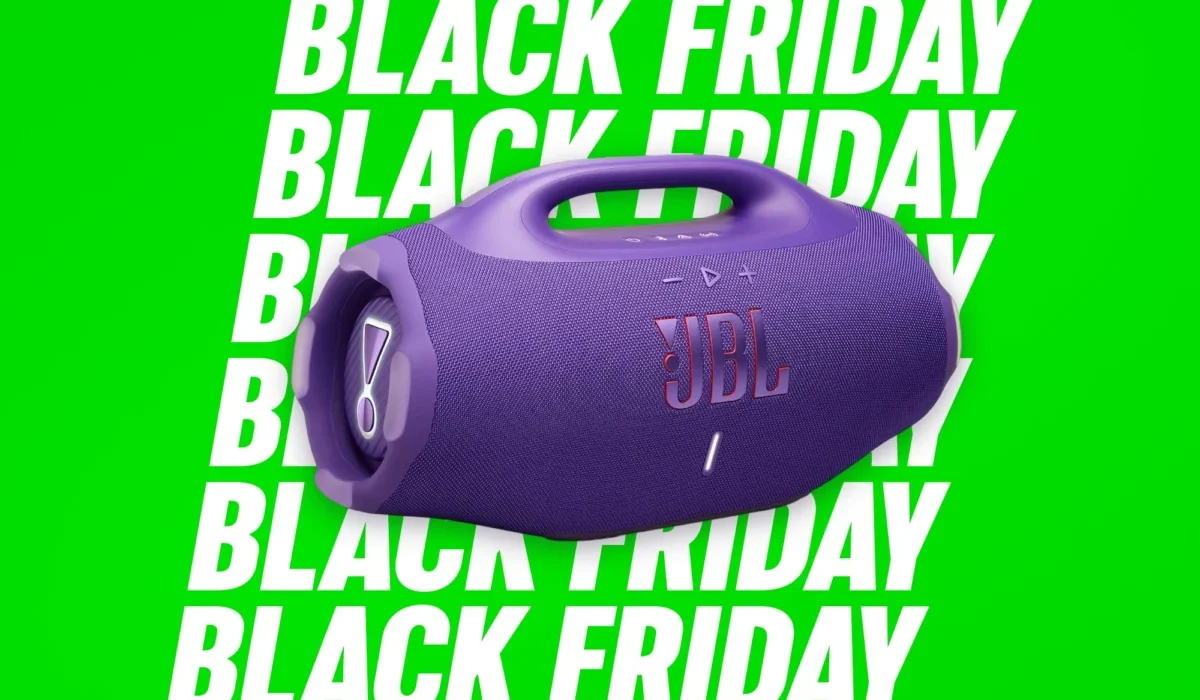
The annual Black Friday retail window has officially opened, bringing significant price reductions to the high-end consumer audio market. Historically, premium audio equipment—ranging from flagship noise-canceling headphones to heavy-duty Bluetooth speakers—commands a steep financial barrier to entry, frequently rivaling the cost of modern computing hardware and high-end smartphones. However, major electronic retailers, including Amazon and official manufacturer storefronts, have initiated substantial markdowns across top-tier brands, offering consumers rare opportunities to acquire luxury acoustic gear at more accessible price points.

Market Landscape and Price Corrections
The convergence of late-November promotional events has historically served as a critical sales period for consumer electronics manufacturers. Industry analysts note that brands such as Sony, Apple, Sennheiser, and JBL use this timeframe to clear existing inventory ahead of upcoming product cycles, resulting in price cuts ranging from 20% to over 50%.
For the average consumer, flagship audio investments often require careful budget allocation. Premium over-ear headphones routinely exceed the $450 threshold, while robust outdoor and home-entertainment speakers easily surpass $500. This year’s early holiday promotions have effectively compressed these costs, making advanced acoustic technologies—such as high-resolution wireless codecs, custom-tuned planar and dynamic drivers, and sophisticated active noise cancellation (ANC)—available to a broader demographic of buyers.

Premium Over-Ear Headphones Lead the Reductions
Over-ear noise-canceling headphones represent one of the most competitive segments in the current consumer technology market. Leading this category is the Sony WH-1000XM6, widely recognized for its robust active noise cancellation architecture powered by an array of 12 integrated microphones. Originally introduced at a manufacturer’s suggested retail price (MSRP) of $459.99, the WH-1000XM6 has been discounted by 24%, bringing its current retail price down to $348 on Amazon. The device features native LDAC support for high-bitrate wireless streaming and delivers up to 30 hours of continuous playback with ANC engaged, catering specifically to frequent travelers and metropolitan commuters.
Apple’s ecosystem users are similarly targeted with significant price adjustments on the second-generation AirPods Max. Featuring the proprietary H2 silicon chip, advanced computational audio processing, Adaptive Audio, and newly integrated lossless audio transmission over USB-C, the luxury headphones maintain a standard retail baseline of $549. Current holiday pricing reduces that figure to $419, representing a 24% saving for consumers invested in the Apple hardware ecosystem.

For purists prioritizing raw acoustic fidelity over digital processing features, the Sennheiser HDB 630 has also entered the promotional landscape. Tailored specifically for audiophiles, the HDB 630 incorporates custom 42mm transducers, an onboard parametric equalizer, and high-resolution audio decoding capabilities. Furthermore, Sennheiser bundles the BTD 700 USB-C Bluetooth dongle to ensure optimal latency and bandwidth across non-native source devices. With an impressive 60-hour maximum battery life, the headphones have seen a $100 reduction from their standard $499.95 price point, settling at $399.95.
Wireless Earbuds and Open-Ear Innovations
In the compact listening category, in-ear monitors (IEMs) and true wireless stereo (TWS) earbuds continue to see high demand due to their portability and advanced feature sets. Sony’s compact alternative to its flagship over-ears, the WF-1000XM6 wireless earbuds, incorporate the brand’s QN3e noise-canceling processor and upgraded microphone arrays for enhanced voice pickup during telecommunications. Normally retailing at $329.99, these earbuds are currently available for $248, reflecting a 25% price reduction.

Concurrently, the open-ear segment has experienced accelerated market growth, driven largely by athletic and outdoor demographics. The Shokz OpenFit Pro, designed to deliver ambient environmental awareness without sacrificing acoustic performance, features a secure ear-hook stabilization system, Dolby Atmos integration, and localized noise-reduction algorithms. Offering up to 12 hours of standalone playback—and extending up to 50 hours via the accompanying charging case when noise reduction is disabled—the OpenFit Pro has dropped from $249.95 to $174.95, marking a 30% discount.
Home Entertainment and Portable Speaker Promotions
Beyond personal listening devices, home theater and rugged portable audio hardware have received aggressive pricing treatments. TCL’s home entertainment division has introduced a promotional window running from November 23 through November 30 for the TCL S65K 5.1-channel Dolby Atmos soundbar system. Accompanied by a dedicated wireless subwoofer to reinforce low-frequency response, the unit is discounted from $399.99 to $249.99. Additionally, consumers who pair the soundbar with an eligible 2025 or 2026 TCL QD-Mini QM6 Series television or higher receive an additional $50 rebate, dropping the final price to $199.99.

In the portable Bluetooth speaker market, the JBL Boombox 4 targets users seeking high-output audio reinforcement for outdoor environments and social gatherings. Delivering up to 210 watts of total power output, dual bass-enhancement profiles, and an IP68 dust and water-resistance rating, the device supports up to 34 hours of continuous playback utilizing JBL’s Playtime Boost protocol. Originally priced at $549.95, the speaker is currently discounted by $150, bringing the transaction total to $399.95.
For stationary domestic environments, the Marshall Woburn III offers a distinct aesthetic blending retro guitar amplifier styling with modern multi-connectivity options, including Bluetooth 5.2, RCA, 3.5mm auxiliary, and HDMI inputs. Unlike battery-powered portable units, the Woburn III requires a continuous AC power connection. Typically retailed at $599.99, the home speaker is presently available at a 33% discount, priced at $399.99.

Economic Implications and Consumer Strategy
Industry observers note that these aggressive promotional strategies reflect broader macroeconomic trends characterized by cautious consumer spending and heightened retail competition. As manufacturers face saturated markets for personal electronics, temporary price corrections serve as an effective mechanism to stimulate consumer demand, accelerate inventory turnover, and capture market share ahead of the critical year-end closing quarter.
For prospective buyers, analysts advise verifying retailer return policies and warranty terms during high-volume shopping periods. While these Black Friday discounts offer substantial financial relief on premium audio engineering, consumers are encouraged to evaluate individual feature sets—such as active noise cancellation profiles, codec compatibilities, and form factor preferences—to ensure alignment with their specific listening requirements before committing capital to seasonal sales events.