







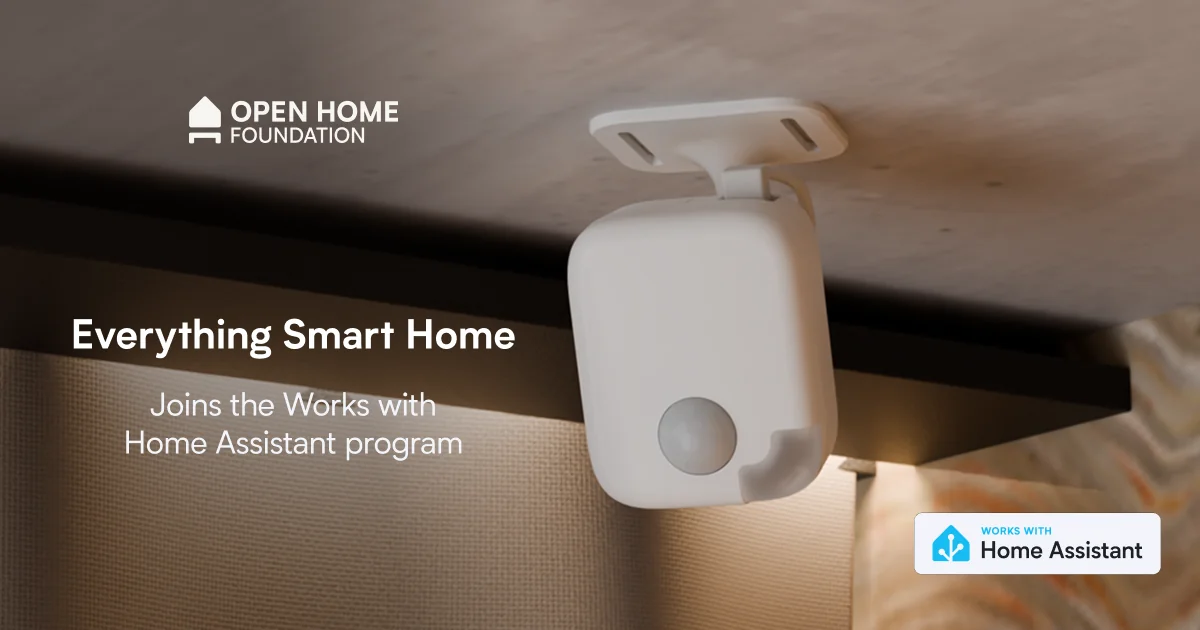
The smart home automation ecosystem has reached another significant milestone as the Works with Home Assistant certification program officially welcomes Everything Smart Home into its growing roster of hardware partners. Founded by prominent automation content creator Lewis Barclay and his father, electrical engineer Dave Barclay, the family-run enterprise brings its popular lineup of millimeter-wave radar presence detection hardware—namely the Everything Presence Lite, Everything Presence One, and the hardwired Everything Presence Pro—into formal alignment with the world’s leading open-source home automation platform.
This inclusion underscores a broader industry shift toward local-first processing, transparent hardware design, and privacy-centric consumer electronics. By utilizing the open-source ESPHome firmware architecture, the newly certified hardware operates entirely within local area networks, bypassing cloud-dependent servers and ensuring that user data remains strictly private. As privacy regulations tighten globally and consumers grow increasingly wary of subscription-based smart home ecosystems that rely on external cloud servers, the validation of community-driven hardware represents a maturing market for interoperable, user-owned technology.
From Community Forums to Hardware Manufacturing: A Chronological Evolution
The integration of Everything Smart Home into the official partner ecosystem is the culmination of a multi-year trajectory that reflects the democratization of hardware development. The journey began in 2020 when Lewis Barclay launched the Everything Smart Home YouTube channel from the United Kingdom. Amid a rapidly expanding market of proprietary smart home ecosystems, Barclay’s content focused on democratizing home automation, providing accessible tutorials, troubleshooting guides, and monthly reviews of Home Assistant software updates.
As the channel gained traction among DIY enthusiasts and professional integrators alike, the platform recognized its influence, inducting Barclay in 2022 as an inaugural member of the Home Assistant Creator Network. Recognizing a distinct gap in the market for hardware tailored specifically to advanced local automation enthusiasts, the father-son duo established Everything Smart Technology later that same year. What started as a retail distributor of trusted automation components quickly evolved into an original design manufacturer (ODM). Frustrated by the limitations of conventional passive infrared (PIR) motion sensors—which frequently fail to register occupants who remain stationary for extended periods—the team engineered the Everything Presence sensor line to address specific, unserved needs within the automation community.
Engineering Precision: The Technology Behind mmWave and ESPHome
The core engineering distinction of the Everything Presence sensor series lies in its utilization of millimeter-wave (mmWave) radar technology, paired in select models with traditional passive infrared sensors. Traditional PIR sensors detect broad thermal shifts caused by walking or large-scale movement, but they struggle to maintain detection states when occupants sit quietly to read, work, or watch television. In contrast, mmWave radar operates at high frequencies capable of capturing micro-movements, such as the rhythmic expansion of a human chest cavity during breathing.
By combining mmWave radar with traditional motion detection, the Lite, One, and Pro iterations deliver instantaneous response times upon entry while preventing lights from switching off prematurely or climate-control zones from cooling unoccupied rooms. Furthermore, all three models function as native Bluetooth proxies, actively extending the operational range of Home Assistant’s Bluetooth integration across complex residential layouts without requiring additional standalone hardware adapters.
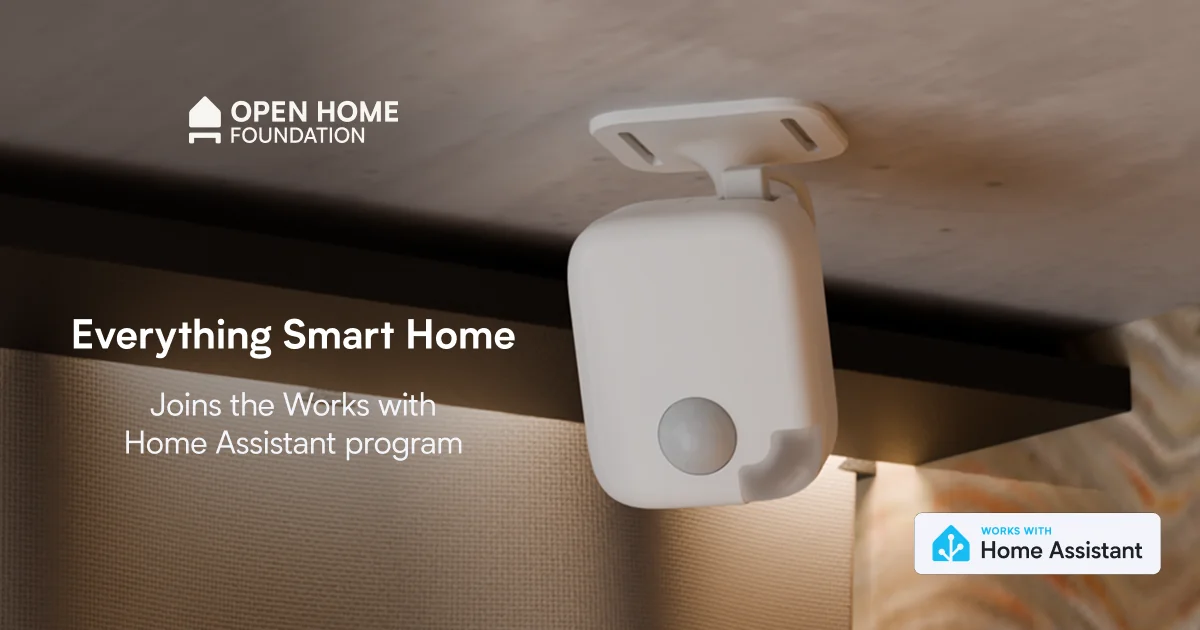
The flagship Everything Presence Pro introduces enterprise-grade networking features to consumer-tier installations by incorporating 802.3af Power over Ethernet (PoE) alongside standard data connectivity. This allows installers to deploy the sensor via a single Ethernet cable that supplies both uninterrupted power and reliable data transmission. This design mimics professional security cameras or commercial wireless access points, circumventing potential Wi-Fi interference, packet loss, or dependency on wall outlets.
Commitment to Open-Source Principles and Local Control
A defining prerequisite for admission into the Works with Home Assistant program is an unyielding commitment to local-first operational integrity. Every certified device undergoes rigorous evaluations by internal testing teams to verify that core functionalities execute locally without cloud dependencies. The Everything Smart Home sensor range fulfills these strict requirements through its reliance on ESPHome, an open-source system that enables users to configure and control ESP8266 and ESP32 devices via simple yet powerful configuration files.
Carrying the official "Made for ESPHome" certification badge, the sensors guarantee that firmware is accessible out-of-the-box, fully controllable without physical modification or soldering, and backed by completely public source code repositories. Development practices at Everything Smart Home reflect this collaborative ethos; user feedback, feature requests, and bug fixes are openly managed through public code repositories on GitHub. This collaborative approach mirrors the broader philosophy of the Open Home Foundation, the non-profit organization that oversees Home Assistant, ESPHome, and associated open-source infrastructure.
Industry Implications and Future Outlook
The partnership carries notable implications for the broader Internet of Things (IoT) landscape. For years, major technology conglomerates have attempted to lock consumers into proprietary ecosystems, frequently restricting data portability and forcing reliance on external cloud servers that introduce latency, security vulnerabilities, and obsolescence risks when corporate support is withdrawn.
By contrast, the validation of a community-engineered brand like Everything Smart Home demonstrates that sustainable hardware businesses can thrive on open standards, modular design, and radical transparency. Financial sustainability within this open ecosystem is further reinforced by infrastructure models such as Home Assistant Link (formerly Home Assistant Cloud). Optional remote-access subscriptions directly fund the ongoing research, development, and administrative operations of the Open Home Foundation, creating a self-sustaining financial loop that encourages further interoperability and hardware partnerships.
As smart home adoption accelerates, the formal certification of Everything Smart Home signals that consumers increasingly value devices built for longevity rather than planned obsolescence. With ongoing firmware support, rigorous third-party testing, and a direct line of communication between manufacturers and end-users, the collaboration sets a benchmark for how modern home automation hardware should be developed, maintained, and integrated.