







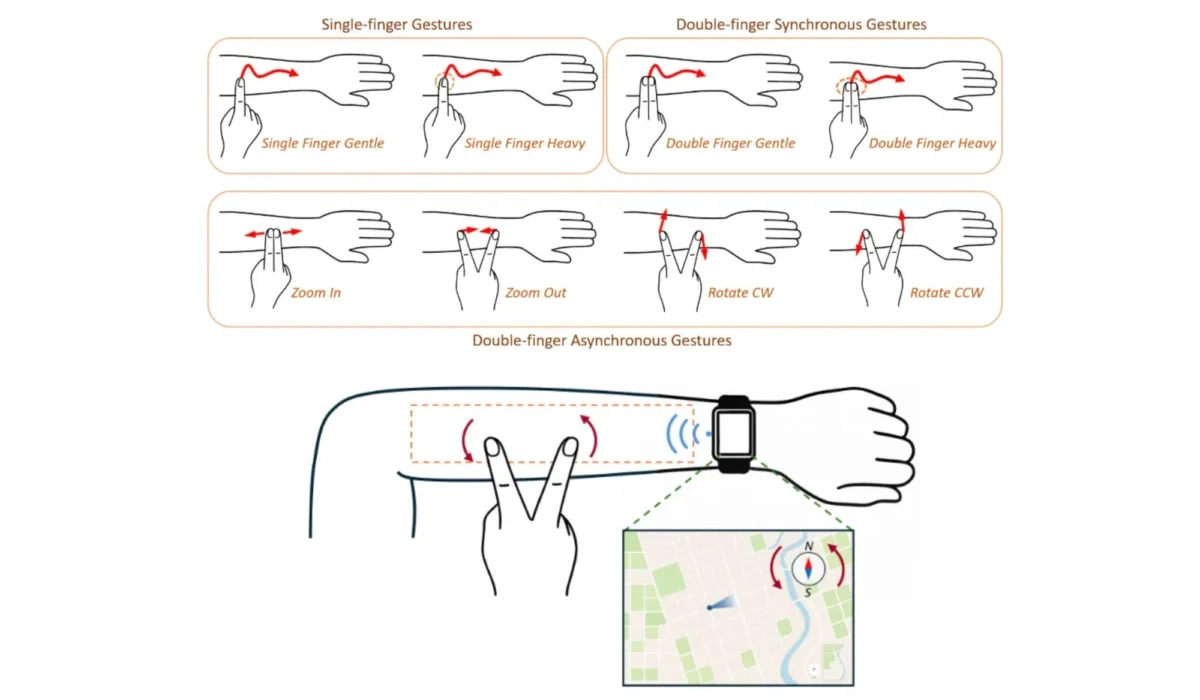
The quest to expand the input capabilities of smartwatches has long been a pursuit for consumer electronics manufacturers and academic researchers alike. While current devices rely primarily on small touchscreens, physical crowns, or basic motion-based gestures, a new development from North Carolina State University (NCSU) proposes a paradigm shift. Known as "EpiPad," this innovation utilizes millimeter-wave (mmWave) radar technology to turn the user’s own forearm into a high-precision trackpad, potentially bridging the gap between the limited surface area of a wrist-worn display and the complex navigation required for modern computing.
The Evolution of Smartwatch Input Methods
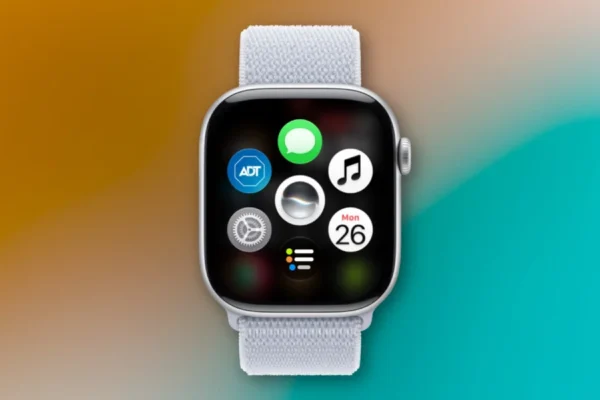
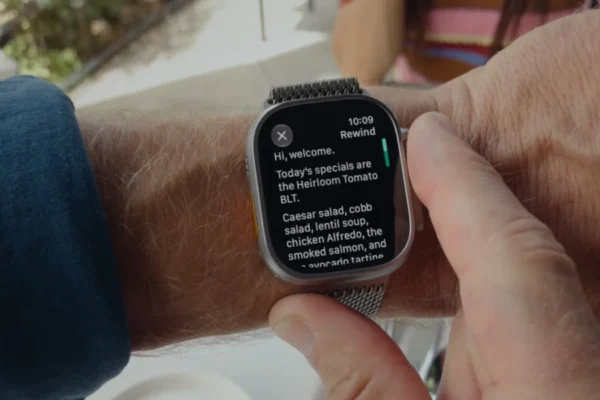
For years, the industry has grappled with the "fat finger" problem: the physical constraints of a display that is often smaller than the user’s fingertip. To mitigate this, companies have explored various auxiliary input methods. Apple’s "Double Tap" feature, which debuted on recent Apple Watch models, uses the device’s accelerometer, gyroscope, and optical heart sensor to detect the pinch of a thumb and index finger. Similarly, third-party software developers have introduced solutions like Doublepoint, an application that enables users to control a desktop cursor by tracking hand movements via the smartwatch’s internal sensors.
However, these methods have historically been limited to binary actions—clicks, swipes, or simple toggles. They lack the spatial resolution required for fine-tuned control, such as dragging, drawing, or pressure-sensitive interactions. The EpiPad project, led by researchers at NCSU, seeks to elevate these interactions by providing a continuous, high-resolution tracking surface directly on the skin of the forearm.
Technical Foundations: How EpiPad Operates
At the core of the EpiPad system is a compact radar sensor array measuring approximately 5 x 4 millimeters. Unlike optical sensors, which can be obscured by sweat or varying lighting conditions, the mmWave radar is designed to penetrate the skin’s surface layers to detect minute mechanical changes.
When a user presses their finger against the skin of their forearm, the radar detects the localized deformation. Because the skin is flexible and elastic, it reacts to pressure in a predictable way. The EpiPad sensor is sensitive enough to register not only the coordinates of the touch—essentially mapping the forearm as a trackpad—but also the force applied during the interaction. By measuring the "dents" or indentations made by fingertips, the system can distinguish between a light tap, a firm press, or a multi-finger gesture, allowing for a diverse range of commands that can be mapped to specific software functions.

Calibration and Performance Metrics
The research, published in the Proceedings of the ACM on Interactive, Mobile, Wearable and Ubiquitous Technologies, outlines rigorous testing conducted with 20 participants. A critical finding in the study involves the necessity of a calibration phase. Without initial calibration, the system demonstrated an accuracy rate of 56.7%. However, after a brief, one-time setup process lasting less than four minutes, the system’s gesture recognition accuracy surged to 92.8%.
This level of precision is comparable to existing commercial trackpads. The research team noted that latency is managed within acceptable bounds: 90 milliseconds for gesture recognition and 470 milliseconds for force detection. While the force detection latency is higher, it remains within a range that the average user perceives as responsive for non-real-time inputs.
Furthermore, the team addressed the environmental challenges of wearable technology, specifically the role of clothing. The radar system performs optimally when the skin is exposed or covered by skin-tight materials, such as athletic sleeves. In these conditions, the device achieved 88.4% accuracy for gestures and 89.9% for force detection. When worn under looser garments, such as jackets, the accuracy declined, though the researchers suggest that future iterations of the antenna array could be optimized to filter out these material-based interferences.
Economic and Engineering Feasibility
One of the most significant barriers to the adoption of advanced sensor technology in consumer electronics is the bill of materials (BOM) cost. The NCSU team reports that the components required for the EpiPad system are remarkably affordable, estimating that the radar module can be integrated for under $10.
From an engineering perspective, the integration of such hardware into a commercial smartwatch requires addressing the "z-height" or thickness of the sensor. The current prototype, modeled after the dimensions of the Apple Watch Ultra 2, sits 14 millimeters above the skin. To accommodate slimmer smartwatches, the researchers propose a custom design using a distributed array of transmitters, which would allow the technology to sit flush against the bezel of a device, essentially becoming an invisible component of the watch’s architecture.
Implications for Future Wearable Interaction
The implications of the EpiPad extend far beyond simple cursor control. By effectively turning the arm into an input device, developers could design complex interfaces that do not require the user to look at the watch screen at all. This "eyes-free" interaction is a holy grail for wearable technology, particularly for users engaged in activities like running or cycling, or for those in professional settings where looking at a watch may be disruptive.

Beyond smartwatches, the research team has indicated that this technology could be adapted for smartglasses. In the context of augmented reality (AR) or heads-up displays, the EpiPad could serve as a secondary input mechanism, allowing users to navigate through floating virtual menus by tapping their arm, thereby solving the awkwardness of "air-gesturing" in public spaces.
Chronology and Research Context
The development of EpiPad follows a series of breakthroughs in near-field sensing.
- 2023: Industry focus shifts toward "gesture-based" control as a core feature for major OS updates in the wearable sector.
- 2024: Research begins at NCSU on utilizing mmWave radar for non-invasive skin-surface sensing.
- November 2026: The findings are officially published, detailing the 5 x 4 mm sensor array and the success of the 20-participant study.
- Current Status: The technology is currently in the prototype stage, with the research team seeking partnerships with hardware manufacturers to move toward miniaturization and commercial integration.
Expert Analysis and Industry Outlook
Industry observers suggest that while the technology is promising, its success will depend on its ability to integrate seamlessly with existing operating systems like watchOS or Wear OS. The "calibration hurdle" is perhaps the most significant friction point; consumers are generally accustomed to "plug-and-play" experiences. If the system requires a multi-minute setup, manufacturers will need to ensure that the experience is intuitive, perhaps by integrating the calibration into the initial watch pairing process.
Furthermore, the power consumption profile of the EpiPad is a major selling point. The research indicates that the radar module operates at a power draw significantly lower than that of the watch’s display. This efficiency is critical, as battery life remains the most persistent limitation for all-day wearable devices. By offloading interaction from the power-hungry screen to a low-energy radar sensor, manufacturers could potentially extend the active usage time of their devices.
As hardware manufacturers continue to compete on the features of their flagship wearables, the ability to offer a unique, high-precision interface could be a key differentiator. If the EpiPad can transition from a university lab to a production line, it may well define the next decade of how we interact with the computers on our wrists. The work performed at North Carolina State University provides the fundamental blueprint for such a transition, proving that the human body itself can serve as a sophisticated interface for the digital world.