






atus to Introduce the KEI-01 Compact Utility Truck to the United States Market
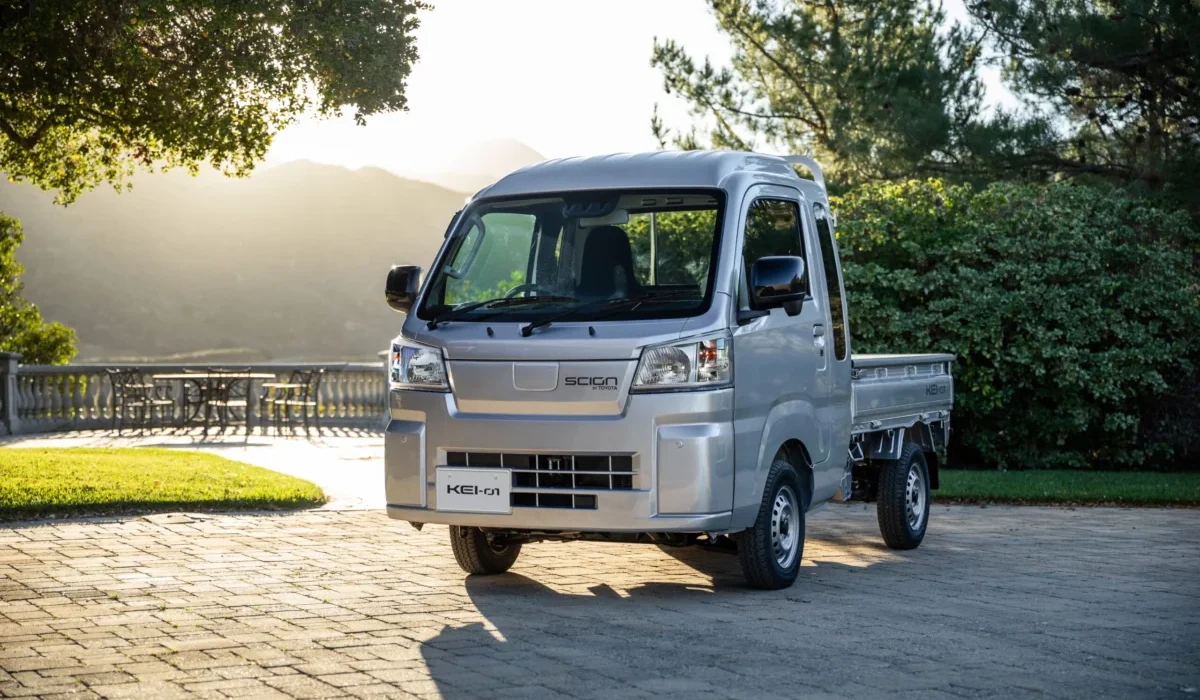
Toyota Motor Corporation has officially resurrected its dormant youth-oriented brand, Scion, transforming the once-defunct nameplate into an experimental division titled the Freedom Lab. Dedicated to exploring unconventional mobility solutions and niche automotive concepts, the rebranded incubator has revealed its inaugural production vehicle: the KEI-01. This compact utility truck brings the immensely popular Japanese micro-truck segment directly to the United States market, blending traditional kei car dimensions with modern safety, comfort, and utility features tailored for specific domestic applications.
The announcement marks a significant strategic pivot for Toyota, which originally retired the Scion brand in 2016 after a twelve-year run targeting millennial buyers. Rather than reviving Scion as a traditional volume-selling passenger car division, corporate leadership has repurposed the brand as a nimble skunkworks project. The Freedom Lab is designed to bypass standard bureaucratic development cycles, allowing Toyota to test market appetite for unconventional vehicle classes that do not fit neatly into traditional light-truck or passenger car lineups.
Engineering Specifications and Powertrain Architecture
At the heart of the newly unveiled Scion KEI-01 is a diminutive yet efficient 660cc three-cylinder engine. Adhering closely to the philosophy of traditional Japanese kei trucks—which are legally restricted in their home market by strict exterior dimensions and engine displacement caps—the KEI-01 maximizes spatial efficiency. Power is routed to the wheels via a continuously variable transmission (CVT), designed to optimize fuel delivery and ease of operation across varying load conditions.
To ensure functional versatility, the KEI-01 comes standard with a selectable four-wheel-drive system. This advanced setup incorporates an automatic mode for standard driving conditions, alongside a dedicated push-button differential lock-up designed to maintain traction on challenging off-road trails, muddy job sites, or unpaved rural properties. Despite its micro-footprint, the vehicle features a practical three-way fold-down cargo bed, allowing users to drop the sides and rear gate independently for simplified loading and unloading of bulky equipment or cargo.
Interior Packaging and Ergonomics
Addressing one of the primary criticisms traditionally leveled against vintage or imported kei trucks—namely, a cramped cabin and lack of adjustability—Scion’s engineering team prioritized interior ergonomics within the KEI-01. The vehicle features an extended cabin architecture paired with a noticeably raised roofline. This structural adjustment generates crucial extra headroom, enabling adjustable seat recline functionality and sliding seats that accommodate a wider variety of driver and passenger statures.
Furthermore, the cabin incorporates integrated interior storage compartments to secure small tools, documents, and personal items. Unlike stripped-down utilitarian work vehicles of the past, the KEI-01 comes fully equipped with modern creature comforts, including functional heating and air conditioning systems. These additions ensure year-round usability, making the micro-truck hospitable during freezing winter months and sweltering summer conditions alike.
Performance Metrics and Regulatory Classifications
Performance-wise, the Scion KEI-01 is engineered specifically for targeted utility rather than highway commuting. Classified structurally as a low-speed vehicle (LSV), the micro-truck is electronically limited to a maximum operating speed of 25 miles per hour. This classification places the KEI-01 squarely in a specialized niche, making it an optimal transportation solution for closed campuses, large agricultural estates, municipal parks, industrial complexes, and planned urban communities where low-speed mobility is preferred or mandated.
Despite its compact size and speed restrictions, the KEI-01 boasts a robust utility profile, supporting a maximum payload capacity of up to 600 pounds. This balance of hauling capability, nimble maneuverability, and low operating costs positions the vehicle as a sustainable alternative to larger, heavier utility vehicles and golf carts currently utilized in commercial fleets.
Rollout Strategy and Distribution Channels

In its initial market phase, Scion will distribute the KEI-01 exclusively through Toyota’s established commercial fleet channels. By targeting fleet operators first—such as municipal maintenance departments, corporate campuses, logistics hubs, and large-scale agricultural enterprises—Toyota can closely monitor vehicle performance, gather extensive operational telemetry, and assess durability under rigorous daily working conditions.
According to representatives close to the Freedom Lab initiative, broader retail sales for individual consumer buyers are currently under active evaluation. Should initial fleet deployment prove successful and regulatory frameworks permit wider adoption, individual consumers seeking a compact, eco-friendly runabout or weekend property vehicle could see the KEI-01 at select domestic dealerships in the near future.
Historical Context: The Rise, Fall, and Rebirth of Scion
To understand the significance of the KEI-01 launch, one must examine the trajectory of the Scion brand. Launched by Toyota Motor Sales, U.S.A. in 2003, Scion was originally conceived as an automotive laboratory aimed at capturing younger, trendsetting demographics who felt alienated by traditional car-buying processes. Featuring a "pure price" no-haggle sales model and a heavily customizable lineup—including the iconic xB, xD, and tC models—Scion achieved early success.
However, shifting consumer preferences toward crossovers and SUVs, combined with an aging target demographic that eventually transitioned into mainstream Toyota and Lexus products, led to declining sales. Toyota officially discontinued the Scion brand in August 2016, absorbing several models into the core Toyota lineup.
The resurrection of Scion as the Freedom Lab represents a modern evolution of its original charter. Rather than focusing on youthful styling and segmented marketing, the reborn division utilizes the heritage nameplate as an agile testing ground for mobility trends that challenge conventional automotive design paradigms.
Industry Implications of the Micro-Truck Trend
The introduction of the KEI-01 to the United States reflects a broader, growing fascination with micro-mobility and imported Japanese kei trucks among American automotive enthusiasts. Over the past decade, imported vintage kei trucks have surged in popularity across North America, driven by hobbyists, farmers, and small business owners seeking affordable, highly efficient utility vehicles.
However, importing grey-market vehicles built decades ago often presents significant hurdles regarding parts availability, safety compliance, and consistency. By introducing a factory-backed, modern micro-truck equipped with contemporary safety features, climate control, and a localized dealer support network, Toyota aims to legitimize the segment for commercial and institutional buyers.
From an environmental and infrastructural perspective, the proliferation of low-speed compact utility vehicles like the KEI-01 aligns with corporate sustainability goals. As cities and corporate campuses increasingly seek to reduce their carbon footprint and minimize traffic congestion, replacing heavy-duty pickup trucks with lightweight, efficient utility vehicles offers a compelling alternative for short-distance logistical tasks.
Future Outlook for the Freedom Lab
As the automotive industry navigates a complex transition toward electrification, autonomous driving, and alternative ownership models, specialized divisions like Scion’s Freedom Lab provide major manufacturers with the necessary flexibility to innovate without risking the core brand identity.
The market performance of the KEI-01 will likely serve as a litmus test for future niche offerings from the Freedom Lab. If commercial fleet operators embrace the micro-truck’s blend of utility, efficiency, and comfort, Toyota may expand the Freedom Lab’s portfolio to include other unconventional mobility solutions. For now, the automotive world is watching closely as Scion steps back onto the stage, proving that sometimes, the biggest innovations come in the smallest packages.