The evolution of cutlery steel has reached a pivotal juncture with the introduction of MagnaMax, a high-performance alloy designed to push the boundaries of edge retention and toughness. As the knife-making community prepares for the upcoming Blade Show in Atlanta, scheduled for June 5-7, the focus has shifted toward the technical nuances of heat treatment. Central to this discussion is the performance variance between custom, small-scale heat treating and large-scale industrial processes. Recent experimental data provides a comprehensive look at how cooling rates, furnace types, and quenching mediums affect the final mechanical properties of this advanced steel.
The Metallurgical Foundation of Heat Treatment
Heat treatment is the critical phase in knife manufacturing where the latent potential of a steel alloy is realized. For a high-alloy steel like MagnaMax, the process involves heating the material to an austenitizing temperature—typically between 2050°F and 2150°F—to dissolve carbides into the iron matrix, followed by a rapid cooling phase known as quenching. The speed of this quench determines the transformation of the steel’s microstructure into martensite, the hard crystalline structure required for a functional blade.
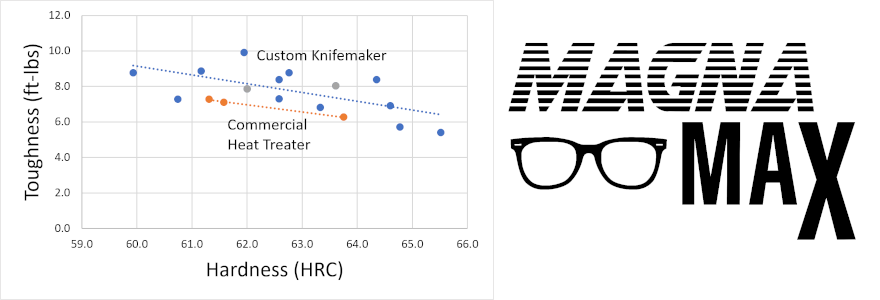
In the custom knife-making world, "plate quenching" is the standard for air-hardening steels. This involves compressing the heated blade between two large aluminum blocks, which draw heat out of the steel rapidly through conduction. In contrast, industrial heat treaters and large-scale knife manufacturers utilize vacuum furnaces equipped with pressurized gas quenches. These systems use nitrogen or argon gas, often pressurized to 2 bars or higher, to cool large batches of steel simultaneously.
The fundamental challenge addressed in recent metallurgical studies is the inherent difference in cooling rates between these two methods. While plate quenching is highly efficient for thin, individual items, the pressurized gas quench used in industrial vacuum furnaces is generally slower. This difference in cooling velocity can lead to the formation of undesirable carbides at the grain boundaries, potentially compromising both the hardness and the impact toughness of the final product.
The Role of Molybdenum in Hardenability
To mitigate the risks associated with slower industrial cooling rates, the chemical composition of the steel must be engineered for high "hardenability." Hardenability refers to the steel’s ability to achieve full martensitic transformation even when cooled at a relatively slow rate.
MagnaMax incorporates approximately 2% molybdenum (Mo), a strategic addition designed to enhance this specific property. Molybdenum acts as a stabilizing agent that delays the pearlite and bainite transformations during cooling, allowing more time for the steel to reach the martensite start temperature without the interference of brittle precipitates.
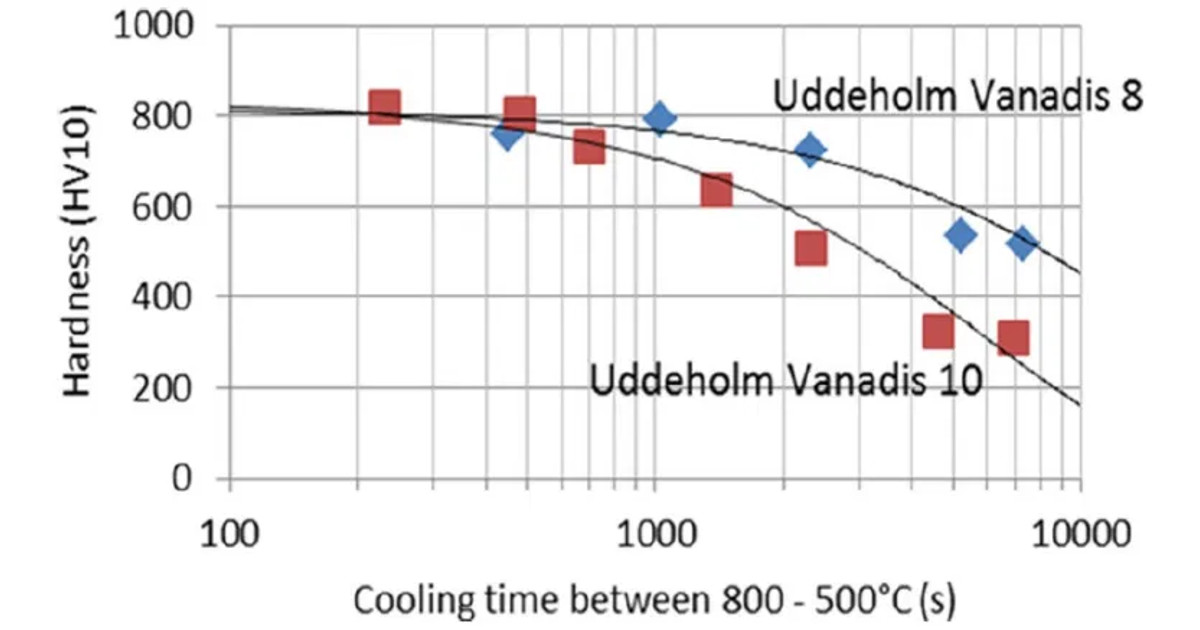
Comparative data from similar alloys, such as Uddeholm’s Vanadis 8 and Vanadis 10, illustrates this principle. By increasing molybdenum content from 1.5% to 3.6% in the Vanadis series, researchers demonstrated that the steel could maintain consistent hardness across a wider range of cooling speeds. MagnaMax’s 2% molybdenum content provides a balanced approach, ensuring that industrial manufacturers using 2-bar gas quenches can still achieve high performance levels comparable to custom makers using plate quenches.
Chronology of MagnaMax Industrial Testing
The transition of MagnaMax from laboratory theory to industrial application involved a series of rigorous tests conducted in collaboration with Peters’ Heat Treating, a leading firm in the specialty tool steel sector. This phase of testing sought to establish a reliable baseline for industrial users.
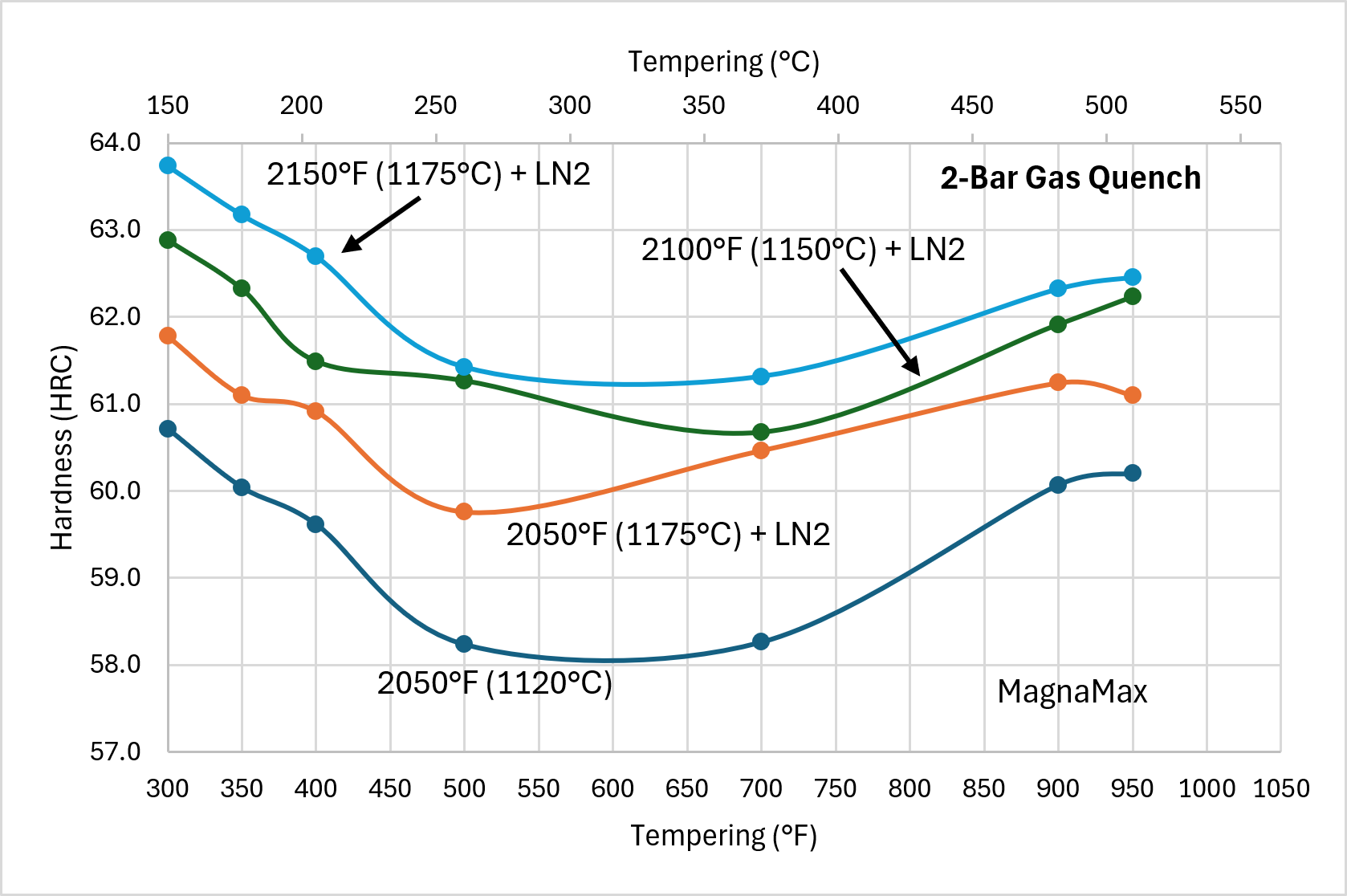
The experimental timeline began with the establishment of plate-quench data, which served as the "ideal" benchmark. Following this, researchers moved to vacuum furnace testing to simulate a factory environment. The testing protocol utilized 1 x 3-inch coupons of MagnaMax, subjected to various heat treatment cycles:
- Austenitizing: Samples were heated to 2050°F, 2100°F, and 2150°F.
- Quenching: A 2-bar pressurized gas quench was employed to mimic standard industrial vacuum furnace operations.
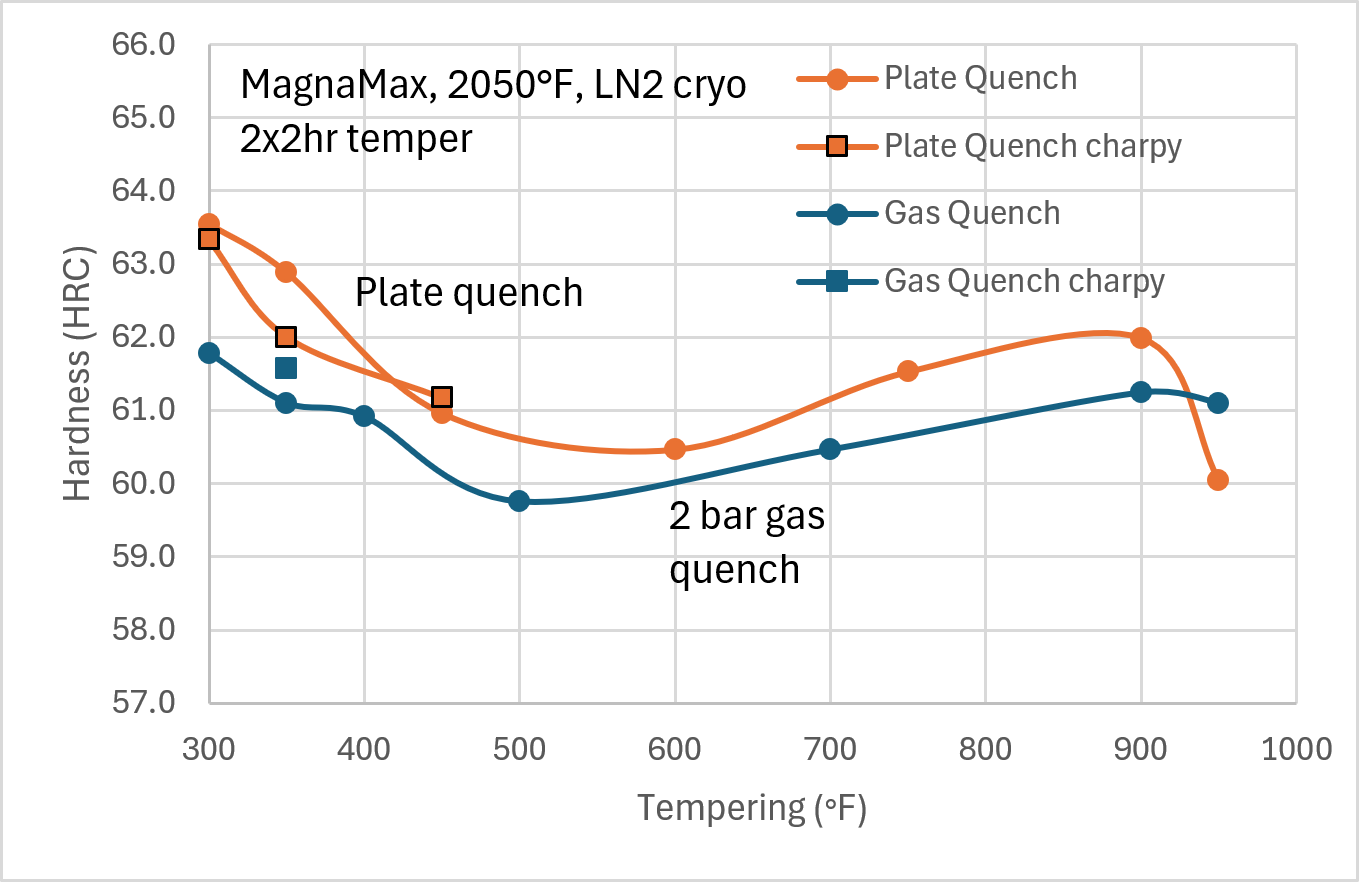
- Cryogenic Processing: Tests were conducted both with and without sub-zero treatments to measure the effect on retained austenite.
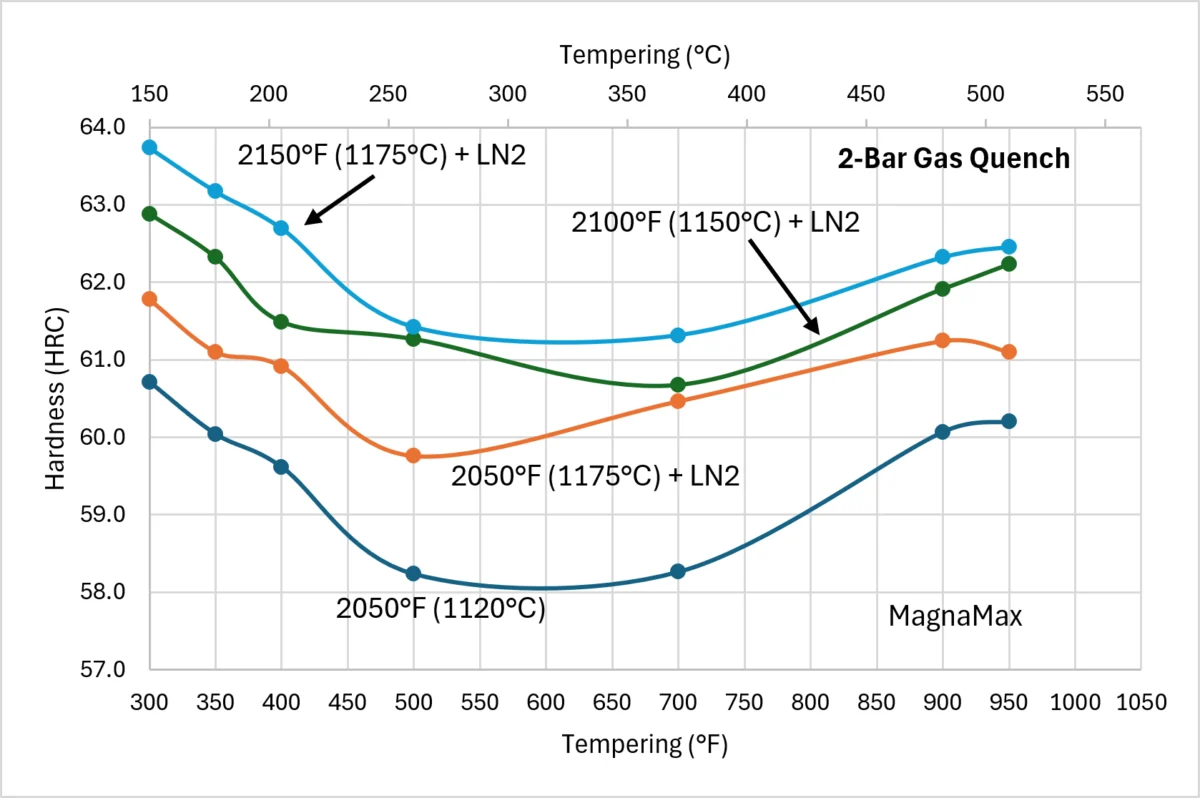
- Tempering: Each set of samples was tempered at a range of temperatures from 300°F to 950°F to find the optimal balance of hardness and stability.
Comparative Data: Hardness and Toughness
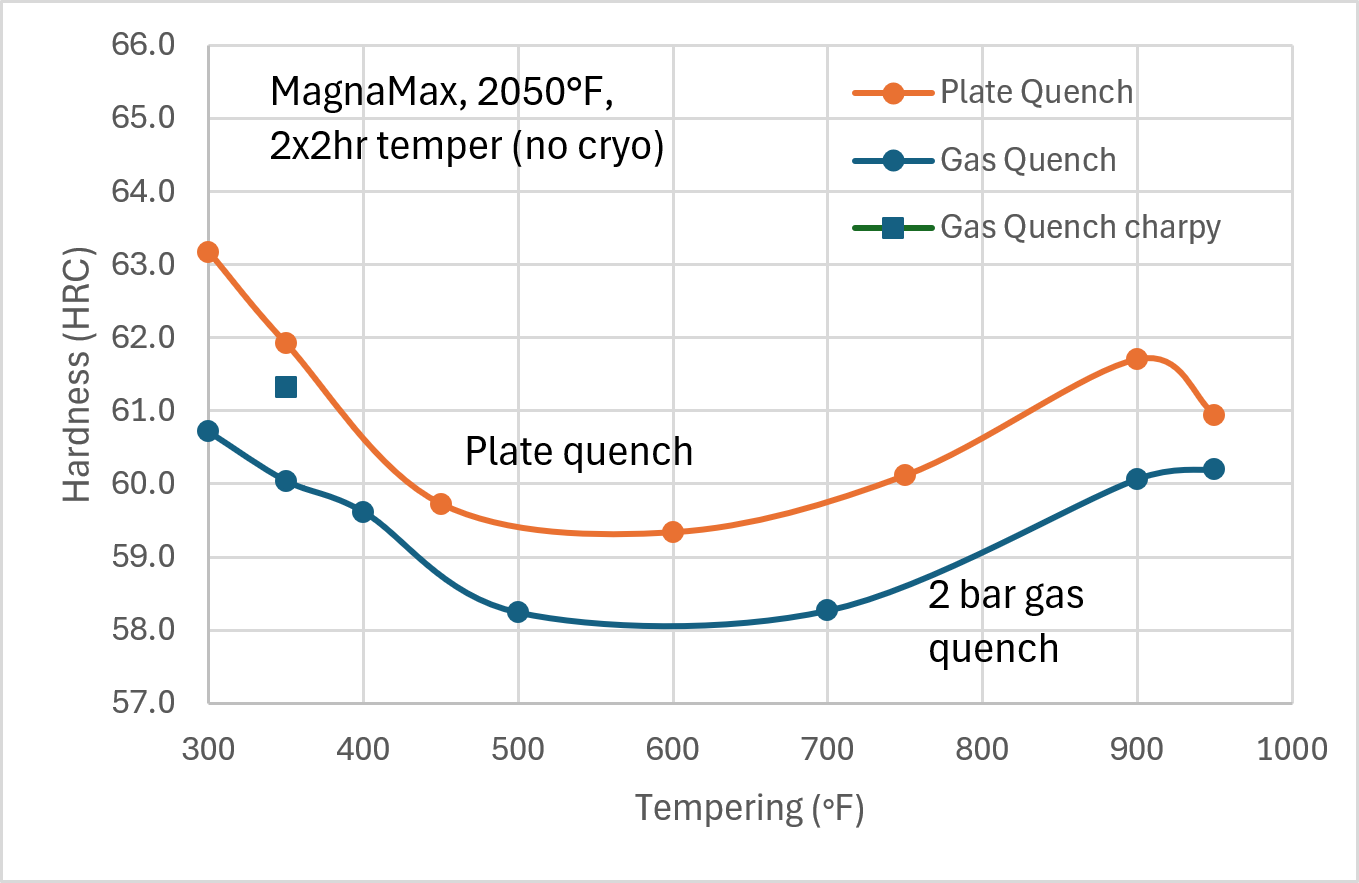
The results of the 2-bar gas quench tests revealed a slight but measurable decrease in hardness compared to plate-quenched samples. For instance, at an austenitizing temperature of 2050°F with a 350°F temper, the gas-quenched samples yielded hardness values approximately 1 HRC lower than their plate-quenched counterparts.
Interestingly, the geometry of the steel played a significant role in the data. Charpy V-notch coupons (used for toughness testing), which are smaller at 0.4 x 2.17 inches, showed slightly higher hardness than the larger 1 x 3-inch hardness coupons. This suggests that even within a gas-quench environment, the mass of the individual part influences the cooling rate and the resulting metallurgy.
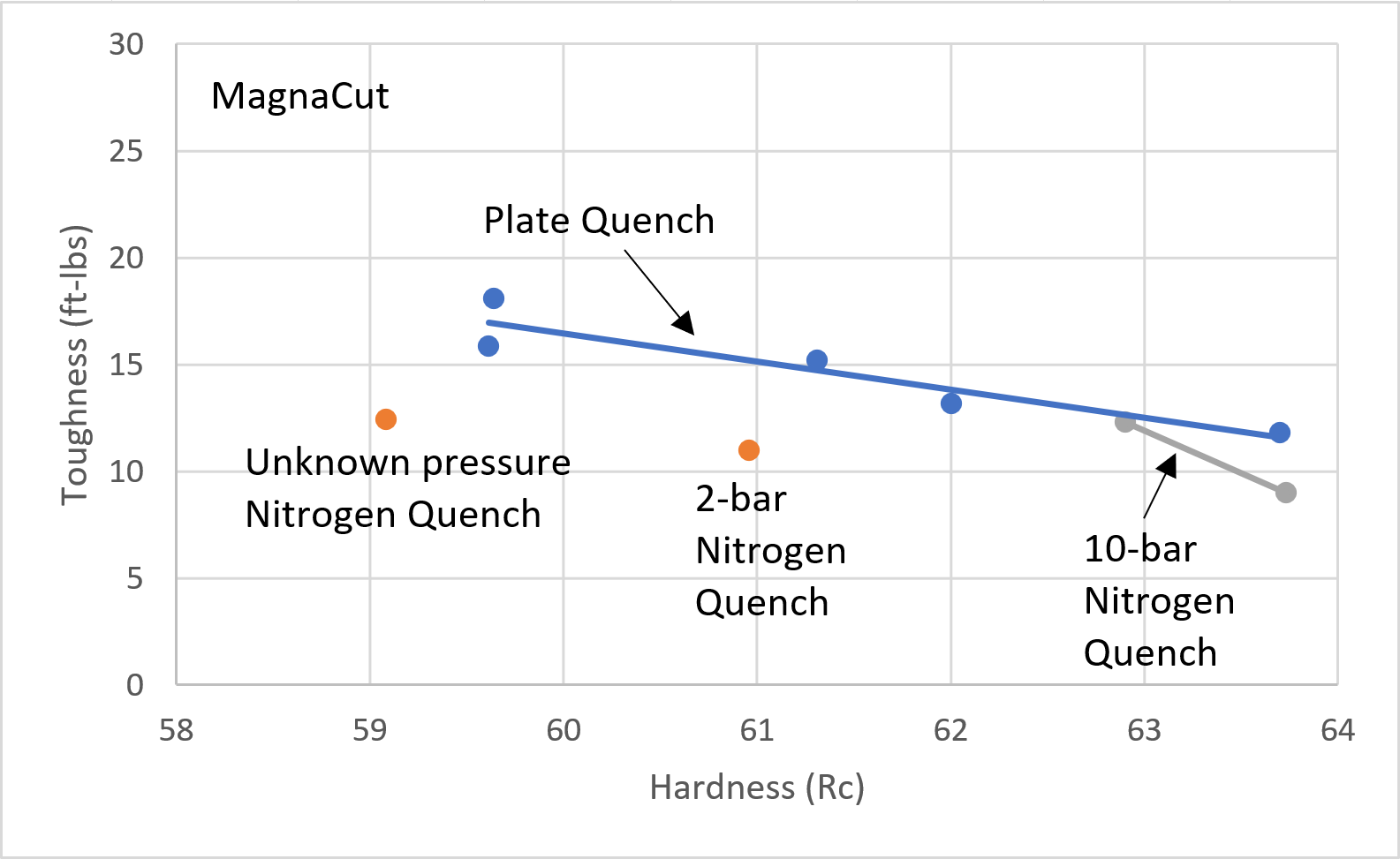
The toughness data followed a linear inverse relationship with hardness. As the hardness increased through higher austenitizing temperatures, the impact toughness (measured in ft-lbs) decreased. However, MagnaMax demonstrated remarkable resilience; even at high hardness levels (63-64 HRC), the toughness remained competitive with existing high-wear-resistance steels like CPM-10V or Vanadis 8, making it an attractive option for premium cutlery.
Implications for the Knife Manufacturing Industry
The findings from these experiments have significant implications for how knife companies market and manufacture their products. The data explains why industrial manufacturers often provide a range for hardness (e.g., 61-63 HRC) rather than a single number.
Several factors contribute to this industrial variability:
- Furnace Loading: A vacuum furnace filled with hundreds of blades will cool more slowly than one containing only a few dozen, affecting the quench speed.
- Temperature Uniformity: Large industrial furnaces may have slight temperature gradients, meaning a blade in the corner may experience a different thermal history than one in the center.
- Steel Batch Variation: Manufacturers often source steel from different production heats over several years, leading to minor fluctuations in alloy chemistry.
- Statistical Variability: Hardness testing equipment has an inherent margin of error, which is compounded when testing large volumes of product.
Despite these variables, the research indicates that MagnaMax is robust enough to handle industrial processing without a catastrophic loss in properties. The inclusion of the new MagnaMax Data Sheet provides a roadmap for manufacturers to "dial in" their specific processes.
Expert Recommendations and Future Outlook
Dr. Larrin Thomas, the metallurgist behind the development of MagnaMax, continues to advocate for a specific "sweet spot" in heat treatment: an austenitizing temperature of 2150°F followed by a 350°F temper and a cryogenic treatment. This combination appears to offer the most versatile performance profile for both custom and industrial applications.
The upcoming Blade Show in Atlanta will serve as a platform for further dissemination of this data. Dr. Thomas is scheduled to teach two specialized classes: "Factors that Affect Edge Retention" and "What is Coming Next for Knife Steel?" These sessions are expected to draw significant attention from both hobbyist knifemakers and industry engineers looking to optimize their use of high-tech alloys.
The release of the official MagnaMax Data Sheet marks a transition for the alloy from an experimental phase to a commercial standard. By providing transparent data on the differences between gas and plate quenching, the research empowers makers at all levels to make informed decisions about their heat treatment protocols.
As the industry moves forward, the focus will likely remain on refining these industrial processes to bridge the gap between custom-level performance and mass-production efficiency. The success of MagnaMax suggests that through careful alloying—specifically the use of molybdenum to enhance hardenability—the performance disparity between "factory" and "custom" heat treating is narrowing, resulting in better tools for the end user.
The ongoing dialogue between metallurgists and manufacturers ensures that the cutlery industry remains at the cutting edge of material science. With the data now available, the path is clear for MagnaMax to become a staple in the high-end knife market, offering a blend of wear resistance and toughness that was previously difficult to achieve in a production environment.