






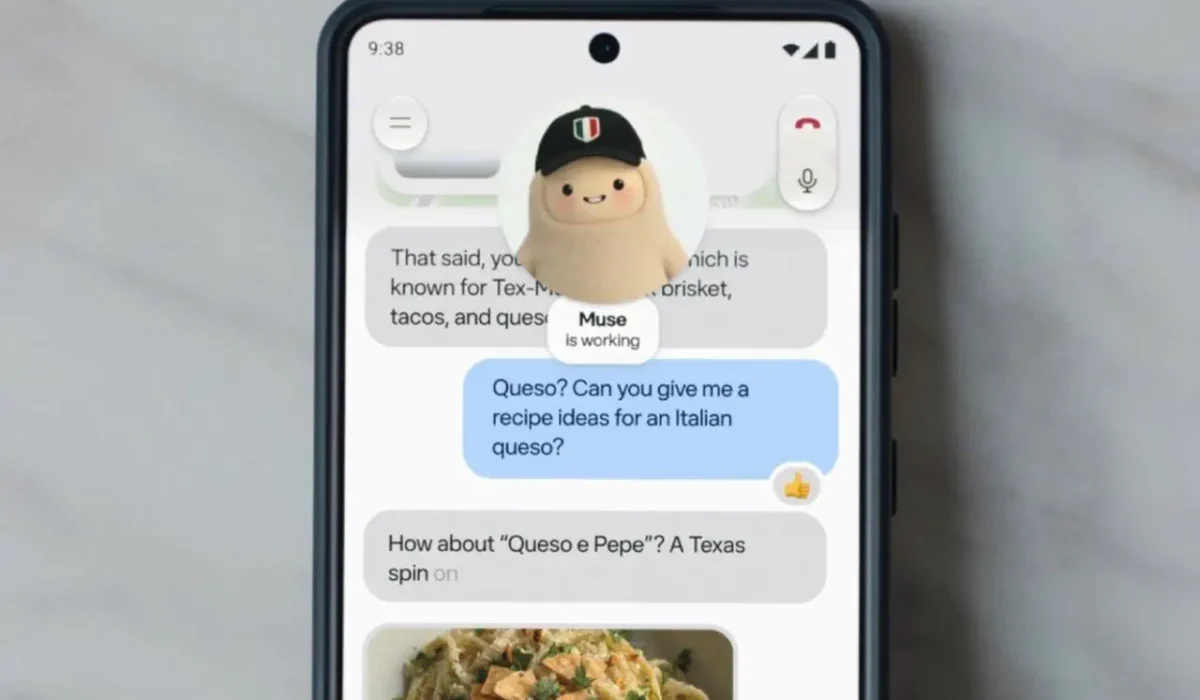
Meta Platforms has officially announced its latest artificial intelligence breakthrough, Muse, a cutting-edge multimodal AI system designed to fundamentally transform real-time voice and avatar interactions. The introduction of Muse marks a significant milestone in Meta’s ongoing evolution within the generative artificial intelligence sector, bridging the gap between human-like conversational fluidity and hyper-realistic digital representation. By combining advanced natural language processing with instantaneous acoustic and visual synthesis, Muse establishes a new benchmark for how humans interact with artificial intelligence across digital platforms, virtual reality, and communication tools.
The unveiling of Muse comes at a time of rapid acceleration in the global artificial intelligence landscape. Over the past several years, tech giants and specialized startups alike have invested heavily in conversational AI technologies, moving beyond text-based interfaces toward rich, multimodal systems capable of processing and generating speech, video, and contextual cues simultaneously. Meta’s introduction of Muse positions the company at the forefront of this technological wave, addressing the growing consumer and enterprise demand for more natural, responsive, and immersive digital interactions.
Core Architectural Innovations of the Muse System
At the heart of the Muse platform are two flagship technologies: Muse Realtime Voice and Muse Realtime Avatar. These systems represent a departure from traditional legacy AI models, which typically process inputs and generate outputs sequentially, often resulting in noticeable latency and robotic cadence. Instead, Muse utilizes a unified architecture capable of near-instantaneous multimodal generation, drastically reducing response times to levels that mirror natural human conversation.
Muse Realtime Voice is engineered to capture the nuances of human speech, including emotional inflection, pacing, rhythm, and tone. Rather than relying on rigid text-to-speech pipelines that concatenate pre-recorded phonemes, the system generates audio dynamically, adapting to the emotional context of the dialogue in real time. This allows the AI to express empathy, excitement, or hesitation naturally, making the conversational experience remarkably lifelike.
Complementing the voice engine is Muse Realtime Avatar, which introduces high-fidelity visual synthesis. The avatar system renders facial expressions, eye movements, and micro-gestures synchronously with the generated speech. By mapping complex facial topologies and leveraging deep learning models trained on vast datasets of human expression, the technology avoids the unsettling "uncanny valley" effect that has historically plagued digital avatars. The result is a seamless synthesis where audio and visual cues are perfectly synchronized, creating a cohesive and believable digital persona.
Technical Benchmarks and Latency Reduction
Industry analysts and early technical briefings indicate that one of Muse’s most impressive engineering achievements is its reduction of end-to-end latency. In conversational artificial intelligence, latency is the primary barrier to seamless interaction; even a delay of a few hundred milliseconds can disrupt the natural flow of dialogue and cause participants to talk over one another.
Meta’s engineering teams have optimized the Muse architecture to operate within ultra-low latency thresholds. By streamlining the processing pipeline—handling acoustic and linguistic data concurrently rather than consecutively—the system achieves response times that rival human reaction speeds. This breakthrough is critical for real-time applications such as customer service automation, interactive language learning, live translation, and immersive social experiences within virtual and augmented reality environments.
Furthermore, the scalability of the Muse infrastructure suggests that Meta intends to integrate these capabilities deeply into its existing ecosystem. Analysts project that elements of Muse could eventually find their way into WhatsApp, Messenger, Ray-Ban Meta smart glasses, and Horizon OS, providing hundreds of millions of users with direct access to advanced multimodal AI assistants.
The Broader Context of Multimodal AI Development
The announcement of Muse reflects a broader industry shift toward multimodal artificial intelligence. While early generative AI models focused heavily on single modalities—such as text generation via large language models or image generation via diffusion models—the current frontier of research prioritizes systems that can seamlessly integrate text, audio, video, and spatial data.
Competitors in the technology sector have also made significant strides in real-time voice and video generation. OpenAI’s introduction of advanced voice capabilities for its GPT models and Google’s continuous development of Gemini’s multimodal features have intensified competition in the space. Meta’s response with Muse demonstrates the company’s commitment to maintaining its competitive edge by focusing on deeply integrated, real-time performance tailored for both consumer communication and spatial computing platforms.
Industry observers note that Meta’s open-science approach to AI research could also play a role in the deployment and adoption of Muse. While specific commercial licensing and proprietary software details are still emerging, Meta has historically open-sourced significant portions of its Llama foundational models, fostering a robust developer community that builds upon its technology. Whether Muse will follow a similar open-access trajectory or remain strictly proprietary within Meta’s product ecosystem remains a subject of intense discussion among industry analysts.
Future Implications and Consumer Applications
The introduction of Muse opens up a wide array of potential use cases across multiple industries, ranging from entertainment and education to enterprise communications and accessibility.
In the realm of customer service and enterprise operations, Muse-powered avatars could replace traditional, rigid chatbots with empathetic, highly capable virtual representatives. These digital agents would be capable of handling complex customer inquiries with nuance, reading emotional cues to de-escalate frustration, and providing a more personalized support experience.
In education and professional training, real-time interactive avatars can serve as personalized tutors, simulation partners for medical or corporate training, or language practice companions. Because Muse can adapt its voice and demeanor dynamically, learners can practice conversational skills in a low-stakes, highly realistic environment.
Moreover, the integration of Muse into spatial computing and smart wearables points toward a future where digital assistants are not merely voices emanating from a device, but persistent, interactive visual entities sharing the user’s physical or virtual space. This convergence of AI and spatial hardware aligns closely with Meta’s long-term strategic vision for the metaverse and ambient computing.
Ecosystem Expansion: Introducing Muse Charm
Alongside the core voice and avatar technologies, reports indicate that Meta is already looking toward hardware and wearable integration. Industry whispers suggest that the company is exploring specialized hardware accelerators or companion form factors designed specifically to run Muse-powered AI locally or in a hybrid cloud configuration. Among these rumored concepts is Muse Charm, a compact accessory or wearable device intended to bring the capabilities of Meta’s new AI ecosystem directly to the user in a lightweight, accessible format.
While official details regarding Muse Charm remain scarce, the concept underscores Meta’s hardware-software co-design strategy. By developing proprietary silicon optimizations and efficient model compression techniques, Meta aims to run resource-intensive multimodal models on increasingly smaller devices, reducing reliance on cloud infrastructure and lowering latency even further.
Conclusion and Market Outlook
Meta’s unveiling of Muse represents a pivotal moment in the ongoing evolution of conversational artificial intelligence. By successfully merging ultra-low latency acoustic synthesis with hyper-realistic visual avatars, Meta has addressed some of the most persistent technical challenges in human-computer interaction.
As the technology transitions from research laboratories to public availability and commercial deployment, its impact on digital communication, consumer electronics, and enterprise software will become clearer. While questions regarding safety, privacy, and digital impersonation will inevitably accompany the rollout of such powerful synthetic media tools, Muse undeniably sets a new standard for what is possible in the realm of artificial intelligence. Meta’s latest innovation signals that the future of digital interaction will not be defined by text boxes and static screens, but by fluid, empathetic, and truly conversational multimodal systems.