










The European automotive industry stands at a critical juncture as policymakers push to localize the supply chain for electric vehicles (EVs). While the strategic goal of reducing reliance on Chinese imports and safeguarding the continent’s 14-million-strong automotive workforce is clear, a recent policy brief from the Brussels-based think tank Bruegel warns that this transition comes with a steep financial toll. The report suggests that stringent requirements for European-made batteries and sustainable materials could inflate the purchase price of an average electric car by over €2,000, placing the greatest burden on budget-conscious consumers.
The Economic Math of Localization
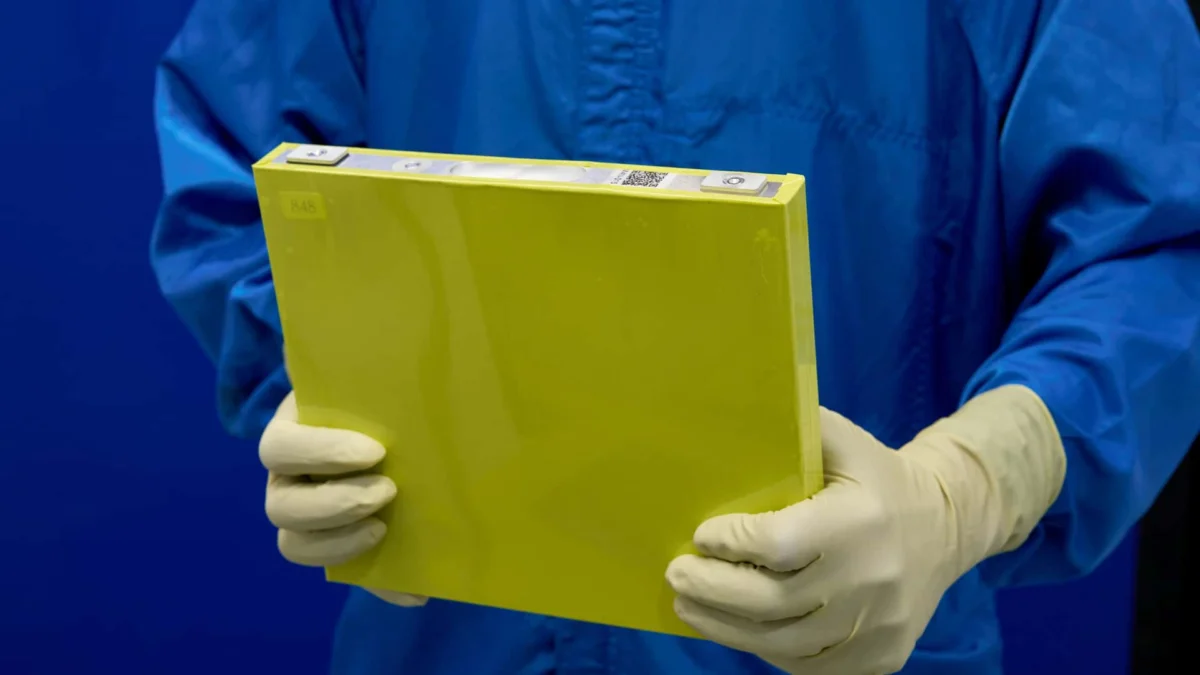
The Bruegel report breaks down the fiscal impact of supply chain protectionism with clinical precision. Currently, the cost of battery cells—the core component of any EV—is significantly lower when sourced from established Asian markets, which benefit from mature infrastructure and economies of scale. Requiring these cells to be manufactured within the European Union is projected to increase production costs from approximately €50 per kilowatt-hour (kWh) to €85 per kWh.
For a standard passenger EV equipped with a 60 kWh battery pack, this delta results in a direct cost increase of €2,100 per vehicle. Furthermore, additional proposed regulations, such as mandates for the use of "low-carbon" steel, could tack on an additional €200 per unit. While the report acknowledges that streamlining vehicle approval processes could offer manufacturers a modest saving of roughly €61 per car, this figure is negligible compared to the mounting manufacturing expenses.
A Shrinking Industrial Landscape
The urgency behind these protectionist measures is rooted in a sobering set of statistics regarding Europe’s industrial decline. Since 2019, total car production across the European Union has plummeted by 19%. Consumer demand has weakened in parallel, with 2.2 million fewer new cars sold in 2025 compared to the pre-pandemic levels of 2019.
This decline is not merely a matter of shifting consumer preferences; it is a symptom of a broader industrial struggle. Europe is currently fighting to retain its technological edge in an era where software, digital integration, and battery efficiency define vehicle desirability. At the 2024 Paris Motor Show, the disparity was on full display. Chinese manufacturers showcased vehicles equipped with advanced infotainment, sophisticated software ecosystems, and high-density battery technology. In contrast, European legacy automakers frequently relied on historical brand prestige and traditional design language. While domestic manufacturers like BMW, with its iX3, and Mercedes-Benz, with its electric GLC, have demonstrated that Europe remains capable of producing world-class EVs, the report notes that a premium badge is no longer a guaranteed substitute for cutting-edge EV technology.
The Struggle for Domestic Battery Capacity
The path to "Made in Europe" battery production has been fraught with structural obstacles. The continent’s attempt to foster a domestic battery champion has seen high-profile failures and retreats, including the collapse of Swedish battery developer Northvolt, Porsche’s decision to scale back manufacturing at its Cellforce venture, and the shelving of several Automotive Cells Company (ACC) factory projects.
These setbacks highlight the immense difficulty of competing with the cost structure and expertise currently dominated by China. Even when production does occur within European borders, the facilities often rely on critical equipment, specialized materials, and technical expertise imported from Asia. The Bruegel report explicitly notes that South Korean firms hold a 65% stake in existing European battery cell manufacturing capacity, while Chinese companies control 55% of the capacity currently under development. This reliance underscores a paradoxical reality: European factories often function as assembly hubs for foreign-owned technology rather than as centers of indigenous innovation.

Trade Barriers and the Hybrid Pivot
In response to the influx of competitive, low-cost EVs from China, the European Union implemented additional import duties that, in some instances, reach 35.3%. However, these duties specifically target battery-electric vehicles (BEVs), leaving a loophole for plug-in hybrid electric vehicles (PHEVs).
The market response was immediate. Data shows that while BEV imports from China have flattened, imports of plug-in hybrids have surged as manufacturers navigate around the trade barriers. This shift highlights the volatility of subsidy-driven markets. Research from France, cited in the Bruegel report, indicates that when EVs are excluded from purchase subsidies, sales drop by as much as 60% compared to eligible models. This suggests that without financial incentives, the transition to full electrification risks stalling, further complicating the industry’s recovery.
Proposed Solutions and Long-term Implications
To mitigate the risk of a total market disruption, the Bruegel report suggests that the European Commission should pursue a negotiated agreement with China to cap the volume of EVs and plug-in hybrids imported into the EU. The proposed strategy involves setting a fixed limit on annual imports, providing a temporary shield that would grant European manufacturers the breathing room required to scale up their own production and lower costs. Such a deal would require a clear sunset clause, with the threat of tighter restrictions if China fails to adhere to the agreed-upon quotas.
However, history suggests that trade protectionism is a double-edged sword. Previous efforts by European nations to limit Japanese car imports, and contemporary moves by Canada to impose heavy tariffs on Chinese EVs, demonstrate a recurring pattern: when competition is artificially restricted, the consumer inevitably pays a premium. By limiting the supply of affordable, high-tech vehicles, the European market risks becoming a high-cost environment, potentially alienating the very buyers the transition to electric mobility needs to reach.
The Human and Economic Cost
The automotive sector remains the backbone of the European economy, employing approximately 14 million people. Every factory closure or shift in production strategy carries significant socio-economic weight. While the Bruegel report highlights that roughly €3 billion is being invested quarterly into European battery and EV manufacturing, the question remains whether this investment is arriving quickly enough to offset the loss of technological relevance and the potential erosion of the supplier base.
The report concludes that Europe must prioritize a plan over mere protectionism. Relying on foreign investment—specifically from companies that bring the necessary technical expertise—is seen as a vital, if uncomfortable, necessity. If the European Union chooses to isolate its market without a robust strategy for domestic innovation, it risks becoming a niche market, defined by high costs and a limited range of products, while the global automotive center of gravity continues to shift toward more agile, cost-efficient manufacturing hubs.
Conclusion: A Strategic Crossroads
The coming years will be definitive for the European automotive sector. The tension between the need to maintain affordable prices for the average driver and the imperative to build a secure, sovereign industrial base is the central challenge of the decade. Policymakers are faced with a difficult balancing act: implementing regulations that ensure the longevity of the European industry without stifling the consumer demand necessary to support that very industry.
Whether the €2,100 price hike predicted by Bruegel becomes a reality depends heavily on the final form of EU regulations, the efficacy of future government subsidies, and the willingness of automakers to absorb, rather than pass on, the costs of the energy transition. For now, the message from the think tank is clear: the road to industrial autonomy is expensive, and it is the European car buyer who will likely be footing the bill.