







In the high-pressure environment of professional wedding and event photography, the ability to execute complex lighting setups with speed and precision is the primary factor distinguishing proficient practitioners from amateurs. Large group portraits, often involving dozens of participants, present significant logistical challenges, particularly as event timelines frequently compress and environmental conditions shift unpredictably. Successfully managing these scenarios requires a technical framework that balances ambient light integration with high-quality, artificial illumination.
Technical Foundations and Equipment Requirements
Achieving professional-grade results in group photography is contingent upon the quality of the flash equipment and the efficiency of the triggering system. While traditional manual radio transceivers remain functional, modern workflows favor full-feature speedlights equipped with integrated radio-frequency (RF) capabilities. This shift in hardware allows photographers to trigger and adjust multiple off-camera light sources directly from the camera, minimizing the time spent moving between lights to manually alter settings.
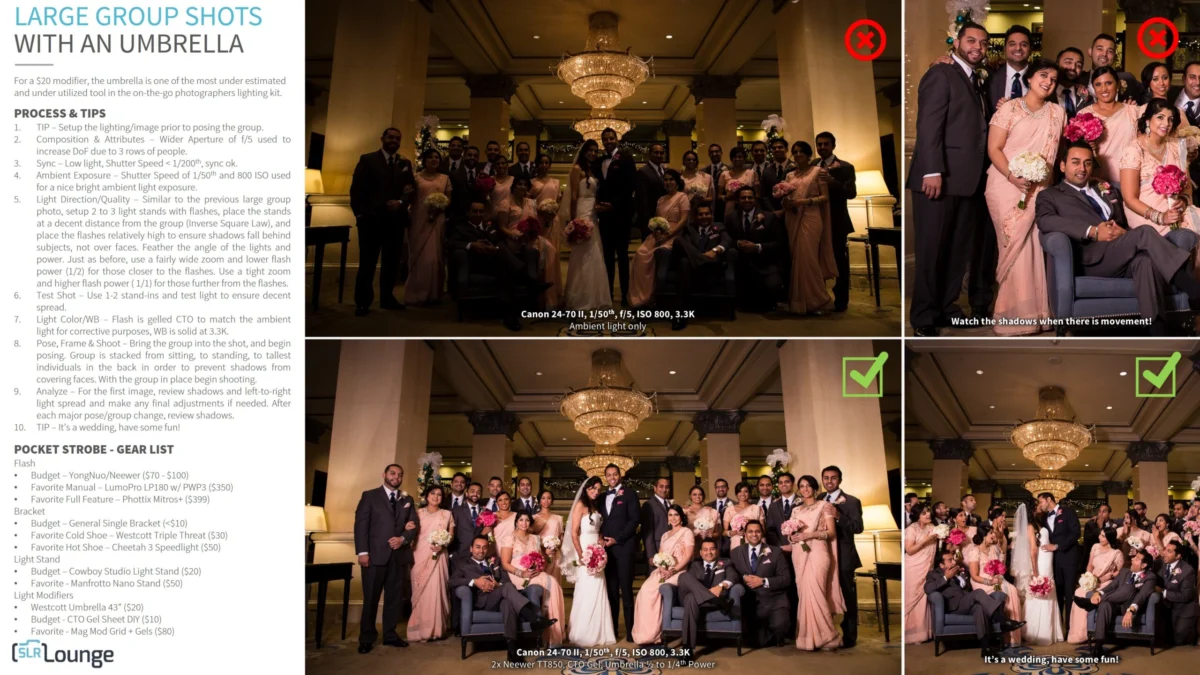
Industry standards for such setups generally involve a three-flash configuration: one mounted on-camera to serve as the master trigger, and two off-camera units positioned to provide the primary illumination. Incorporating three to four full-feature flashes into a kit provides essential redundancy; a spare unit ensures that hardware failure does not derail a critical photo session, while additional units allow for the expansion of the light pool when faced with exceptionally large groups or challenging architectural spaces.
The support system for these lights must emphasize durability and rapid deployment. Manfrotto Nano stands are widely recognized for their compact footprint and structural integrity, making them the preferred choice for rapid setups in crowded environments. When combined with 43-inch optical white satin collapsible umbrellas, photographers can achieve a broad, even distribution of light. The convex architecture of these umbrellas is specifically designed to project light forward while allowing controlled spill, which effectively fills the large volume of space occupied by a full bridal party or family group.
Environmental Analysis and Lighting Calibration
Before engaging the lighting equipment, the photographer must conduct an assessment of the existing ambient light. This includes identifying the color temperature of the room—such as the warm tungsten glow of interior lamps versus the cool tones of natural light—and applying the appropriate Color Temperature Orange (CTO) gels to the flash units. Adjusting the camera’s white balance in-camera is a critical step in ensuring that the light emitted by the strobes matches the ambient environment, preventing unnatural color shifts in the final image.

The positioning of the lighting stands is a matter of both physics and spatial awareness. Placing both stands to one side of the camera, elevated to five or six feet, helps avoid low-angle "campfire" shadows that can distort facial features. By feathering the light—angling the softboxes or umbrellas slightly away from the center of the subject group—photographers can ensure that the light fall-off is gradual, creating a more uniform exposure across the entire breadth of the frame.
Case Study: Optimizing Settings for Large Groups
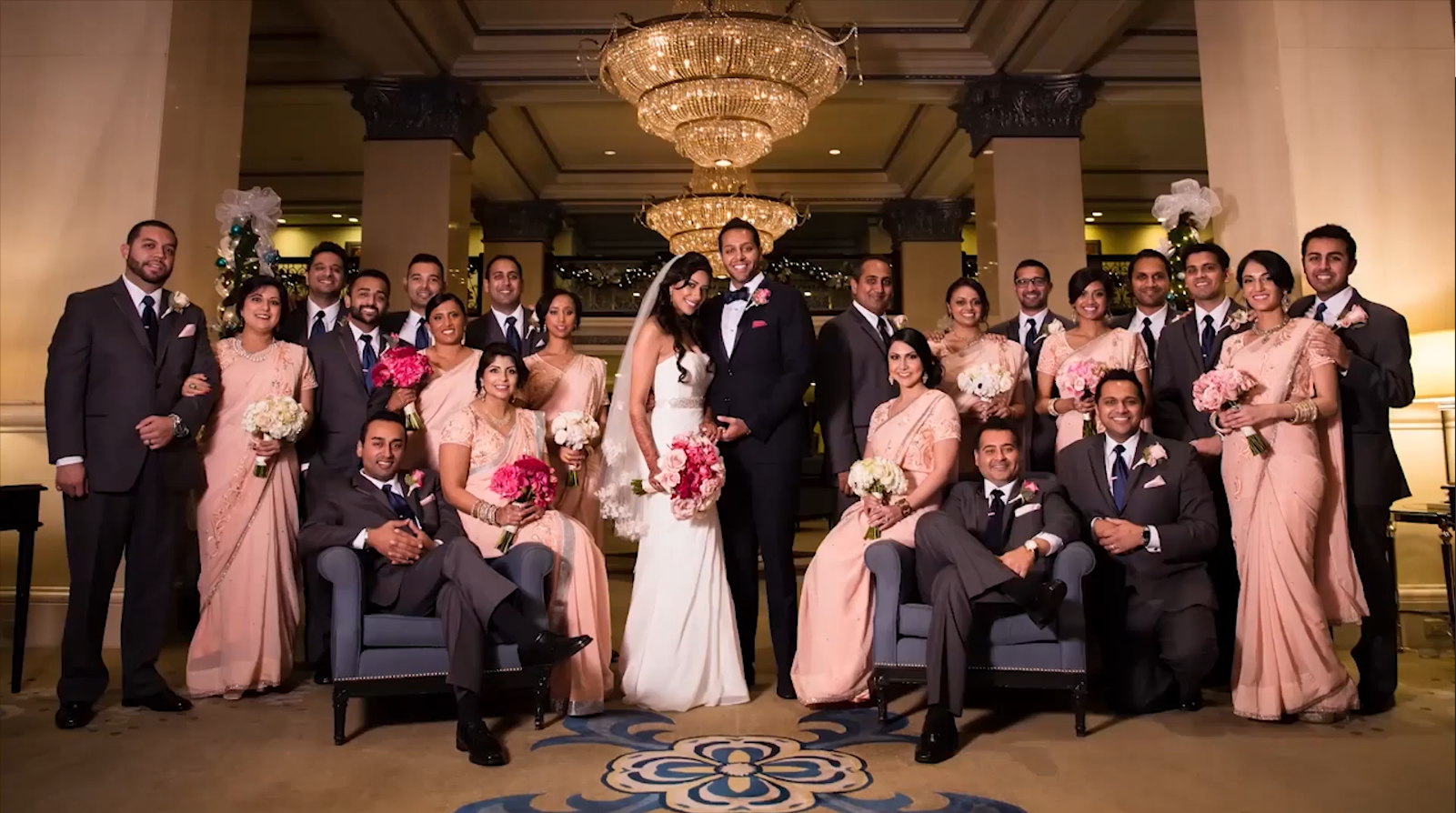
When managing a large, layered bridal party, the photographic variables must be carefully balanced to maintain focus and exposure across multiple planes. In a scenario where subjects are standing in three distinct rows, a wider aperture, such as f/5, is necessary to achieve a sufficient depth of field. This ensures that every individual, from the front row to the back, remains sharp.
To maintain this depth of field while ensuring the flash and ambient light are properly integrated, professional standards often dictate a shutter speed of approximately 1/50th of a second and an ISO setting of 800. This combination serves a strategic purpose: the aperture and ISO settings influence the entire exposure, whereas the shutter speed acts as a lever for the ambient light balance. By raising the ISO, the photographer avoids the necessity of blasting the flashes at full power, which significantly improves the recycle time of the batteries and reduces the risk of overheating the flash capacitors.

The Role of Data and Efficiency in Modern Workflow
Efficiency is not merely a matter of convenience; it is a critical component of risk management in time-sensitive environments. According to industry workflow analysts, the "window of opportunity" for formal group portraits at a standard wedding is often limited to less than 20 minutes. Data collected from professional wedding photographers indicates that those using integrated radio-trigger systems reduce their setup time by an average of 40% compared to those using older, wired, or manual-triggering systems.
Furthermore, the integration of flash in low-light scenarios provides a quantifiable improvement in image quality. Analytical comparisons of RAW image files taken with and without modified flash show a significant reduction in digital noise—a byproduct of lower ISO requirements—and a marked improvement in skin tone rendering.
Broader Implications and Strategic Adjustments
The reliance on umbrellas for group lighting reflects a broader shift toward "portable studio" aesthetics. While softboxes offer greater control over light spill, their bulk often makes them impractical for fast-paced events. Umbrellas, by contrast, offer a high-efficiency solution that prioritizes volume of light over surgical precision. This is particularly relevant when working in historical venues or outdoor environments where the physical footprint of the equipment must remain minimal.

However, the lack of light control inherent in the umbrella design requires the photographer to be highly disciplined regarding the placement of subjects. If subjects are positioned too close to walls or reflective surfaces, the spill light from the umbrella can create unwanted glare or secondary shadows. Practitioners are encouraged to maintain a "safety distance" between the subjects and the background to mitigate these optical issues.
For photographers seeking to refine these skills, professional workshops such as "Lighting 201" emphasize the importance of understanding the "inverse square law" as it pertains to light fall-off. This principle dictates that the intensity of light diminishes rapidly as the distance from the source increases; understanding this allows the photographer to place the umbrellas at a precise distance that ensures the individuals in the front row are not overexposed compared to those in the back row.
Conclusion and Future Outlook
The landscape of event photography is continuously evolving, yet the core principles of light manipulation remain constant. The use of high-feature flashes, paired with reliable support stands and versatile modifiers, allows photographers to deliver high-quality, professional results regardless of the ambient conditions.

As technology continues to advance, the trend toward more compact, powerful, and wirelessly integrated equipment is expected to continue. Future developments in high-speed sync (HSS) technology and battery efficiency will likely further reduce the barriers to entry for high-end lighting, enabling photographers to capture increasingly complex group compositions with even greater speed. For the modern professional, the objective remains the same: to deliver exceptional imagery while maintaining an unobtrusive presence, ensuring that the integrity of the event is preserved while the technical requirements of the craft are met with precision. Through the diligent application of these lighting techniques, photographers can ensure that even the most chaotic group portraits are executed with a professional, cinematic polish.