








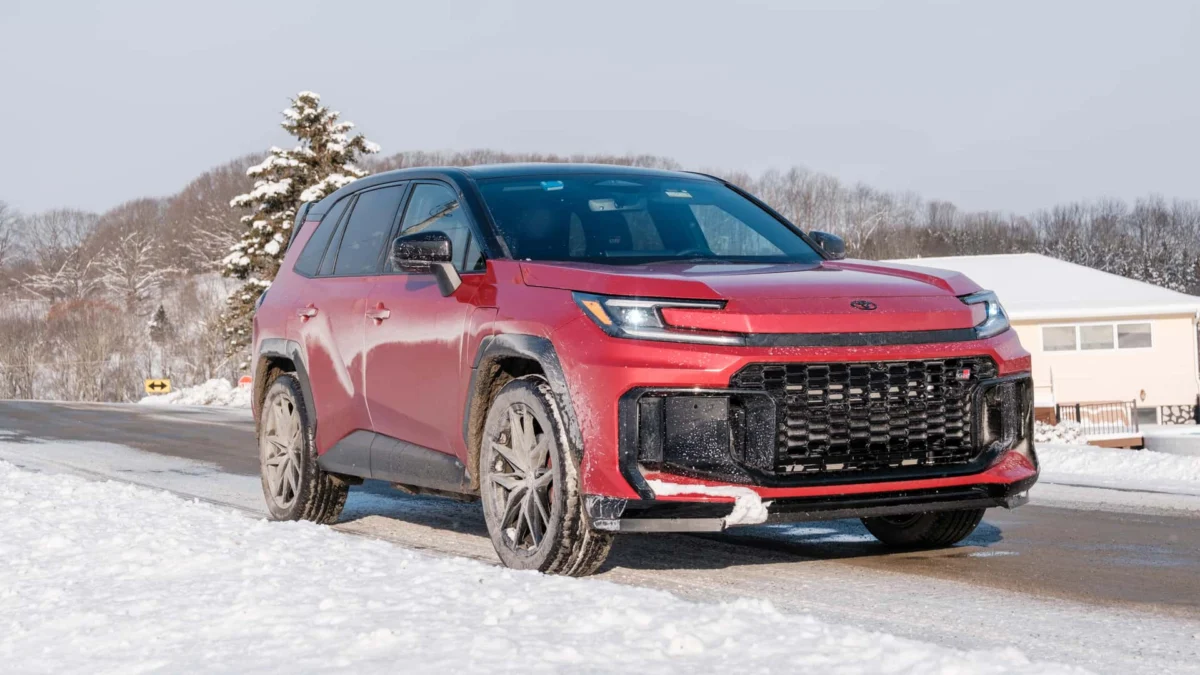
The Shift to NACS: A Strategic Standardization
The adoption of the NACS port—the charging interface originally developed by Tesla and now widely adopted by virtually every major automaker—represents a pivotal moment for the RAV4 Plug-in Hybrid. When the current generation launched, it relied on the Combined Charging System (CCS) standard. At that time, the automotive industry was divided between various connector types. However, following a cascade of announcements from Ford, General Motors, and eventually the entire industry, the NACS connector has emerged as the de facto standard for the North American market.
For the 2027 model year, Toyota has moved beyond merely adding an adapter; it has engineered the NACS port directly into the vehicle’s bodywork. This factory-integrated solution removes the friction associated with external adapters, which can be bulky, prone to loss, or susceptible to wear and tear. Furthermore, this change democratizes fast-charging access across the entire lineup. Previously, fast-charging capability was restricted to the higher-end XSE and Woodland trims, creating a $4,000 "paywall" for owners who wanted the flexibility of DC fast charging. By making this feature standard on the entry-level SE trim, which starts at $42,100, Toyota is effectively lowering the barrier to entry for high-speed charging functionality.
Technical Specifications and Performance Gains
The technical refinements for the 2027 model year extend beyond the port geometry. The RAV4 PHEV maintains its competitive edge with a 22.7 kilowatt-hour lithium-ion battery, which provides an EPA-estimated electric-only range of up to 52 miles. This range is sufficient for the vast majority of daily commuting needs, allowing many owners to operate the vehicle as a pure EV during the week while retaining the gas engine as a fallback for long-distance travel.
Regarding charging speeds, the vehicle’s DC fast-charging capacity allows it to replenish from 10% to 80% in approximately 30 minutes. This is a critical threshold for long-distance travelers who may occasionally need to utilize public charging infrastructure.
Home charging has also seen a marked improvement. While the XSE and Woodland trims were already equipped with an 11 kW onboard AC charger, the entry-level SE and the sporty GR Sport trims have now been upgraded from 7 kW to 11 kW. This increase significantly reduces the time required to achieve a full charge at home, provided the owner has the appropriate Level 2 residential charging equipment. For an owner returning home with a depleted battery, the move to 11 kW ensures the vehicle is ready for the next day’s drive much faster than the previous 7 kW limitation allowed.
Relocating the Charging Port: Ergonomics and Infrastructure
One of the most nuanced changes for the 2027 model is the relocation of the charging port from the passenger’s side to the driver’s side. While this may seem like a minor aesthetic adjustment, it reflects the ongoing challenges of public charging infrastructure, where there is no universal mandate regarding stall design or cable length.
The transition to the driver’s side placement is designed to improve compatibility with newer, more ergonomic charging stations. Modern deployments, such as the Ionna network or the latest V4 Tesla Superchargers, feature longer cables and improved cable management systems designed to accommodate various vehicle architectures. However, the legacy V3 Supercharger infrastructure, which was designed specifically for vehicles with rear-left charging ports, remains a challenge for many non-Tesla vehicles. Toyota’s decision to move the port aligns with a general industry trend toward a more standardized layout, though the lack of a universal industry standard for port placement means that drivers will still need to be mindful of how they approach charging stalls.
Contextualizing the Market Position
To understand the significance of this update, one must look at the competitive landscape. Plug-in Hybrids (PHEVs) often occupy a middle ground between traditional hybrids and full battery-electric vehicles (BEVs). Historically, many PHEVs were not engineered for DC fast charging because manufacturers viewed them as "gas-first" vehicles intended to be charged primarily at home.
The RAV4 PHEV is now a notable outlier in the market. While competitors like the Mercedes-Benz GLC 350e continue to utilize the CCS standard, and the Mitsubishi Outlander PHEV remains tethered to the aging CHAdeMO connector, Toyota has proactively aligned its hardware with the future of the American grid. This move is particularly aggressive given that most PHEVs on the market today do not offer DC fast charging at all. By offering both the convenience of a gasoline engine and the capability of modern high-speed charging, the RAV4 PHEV offers a unique value proposition that is becoming increasingly rare as manufacturers lean further into pure BEV platforms.
Chronology of the RAV4 Electrification Strategy
- 2021: Toyota introduces the RAV4 Prime (PHEV), setting a high benchmark for power and electric-only range in the compact SUV segment.
- 2023: As the industry begins to rally behind the NACS connector, speculation grows regarding when Toyota will pivot its popular hybrid and plug-in models to the new standard.
- 2024: Toyota officially commits to the adoption of the North American Charging Standard, signaling that future vehicle iterations will ditch CCS.
- 2026: The RAV4 platform receives a mid-cycle update, reinforcing its status as a market leader in the hybrid segment.
- 2027: The current model year marks the full transition to NACS and the standardization of DC fast charging across all PHEV trims.
Industry Implications and Future Outlook
The decision to include NACS and universal fast charging is not merely a technical update; it is a signal of Toyota’s broader commitment to its "multi-pathway" strategy. By ensuring that its most popular plug-in models are "future-proofed" for the next decade of infrastructure development, Toyota is protecting the resale value of its vehicles and ensuring that owners are not stranded by obsolete hardware.
From a manufacturing perspective, standardizing the charging port and charging capabilities across all trims simplifies the assembly process. By moving toward a uniform electrical architecture, Toyota can optimize its supply chain and reduce the complexity of the vehicle’s internal power management systems. This, in turn, can help keep production costs stable despite the added technological features.
Furthermore, the integration of fast-charging across all trims, including the base SE, reflects a change in consumer behavior. Data suggests that even PHEV owners are increasingly utilizing public charging networks. As more households transition to electric vehicles, the demand for reliable, accessible public charging has become a primary factor in vehicle purchase decisions. Toyota’s update directly addresses this, making the RAV4 PHEV a more viable "only vehicle" for households that lack a dedicated garage or home charging station.
Conclusion: A Quiet Evolution
Toyota’s approach to the 2027 RAV4 PHEV is characteristic of the company’s conservative yet effective engineering philosophy. Rather than announcing a radical overhaul, the company has implemented a series of well-calculated improvements that directly impact the daily experience of the owner. By adopting the NACS standard, democratizing fast-charging access, and increasing home charging efficiency, Toyota has ensured that the RAV4 PHEV remains a top contender in a rapidly evolving market.
As the automotive sector moves closer to a fully electrified future, vehicles like the RAV4 PHEV serve as a vital bridge. By bridging the gap between internal combustion convenience and electric infrastructure compatibility, Toyota is positioning its best-selling SUV to maintain its dominance well into the 2030s. The 2027 model year update confirms that Toyota is not merely following the industry’s shift toward NACS; it is actively integrating that shift into the foundation of its core product lineup. For consumers, the result is a more capable, more flexible, and more future-ready vehicle that sets a high bar for what a plug-in hybrid should offer in the current era.