



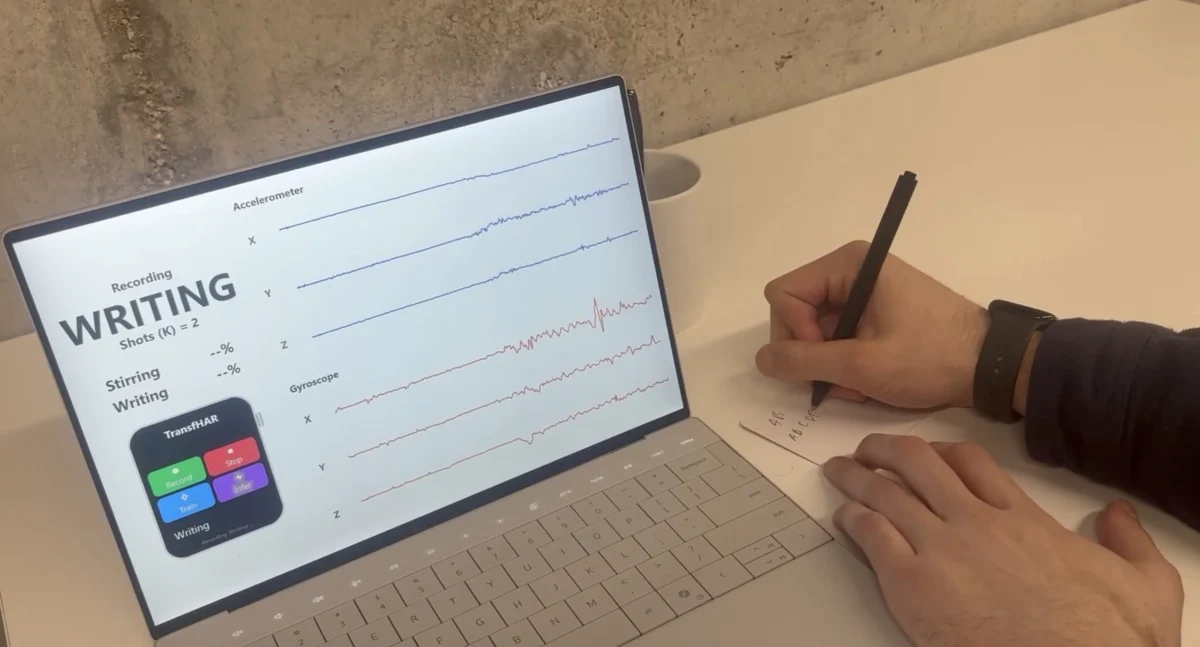
The current landscape of wearable technology is defined by a paradox: our smartwatches are equipped with sophisticated arrays of motion sensors, yet our interaction with them remains largely confined to touchscreens or, at best, a handful of rudimentary gestures. While Apple recently introduced “Double Tap” functionality—allowing users to trigger actions by pinching their fingers—this capability remains limited in scope and highly specific in execution. However, a breakthrough study from researchers at Northwestern University and Carnegie Mellon University, titled TransfHAR, suggests that the hardware already resting on millions of wrists is capable of far more complex tasks than manufacturers currently leverage. By utilizing existing accelerometers and gyroscopes, this new system demonstrates that smartwatches can be trained to recognize a vast, user-defined vocabulary of hand movements with remarkable precision.
The Evolution of Wearable Motion Tracking
For the past decade, the primary utility of the Apple Watch’s 6-axis Inertial Measurement Unit (IMU)—a combination of the accelerometer and the gyroscope—has been centered on health metrics and activity tracking. These sensors were designed to distinguish between walking, running, and swimming. The transition from passive activity tracking to active gesture-based input has been slow, often hindered by the computational cost of processing high-frequency motion data and the lack of a standardized framework for "on-device" learning.
The TransfHAR system changes this paradigm by employing a self-supervised learning model. The researchers adapted the core architecture from Google’s LSM-2, a previously established wearable sensor model. By leveraging this existing foundation, the research team created a pipeline that enables a smartwatch to "learn" a specific, repetitive user movement in near real-time. This marks a departure from the traditional approach, where gestures are hard-coded by engineers at the factory level, limiting the user to a pre-defined set of commands.

Chronology of the Research and Implementation
The development of TransfHAR unfolded through a rigorous multi-stage experimental process. Initially, the researchers established a massive baseline by training their model on 2,760 hours of publicly available wrist-movement data, sourced from a cohort of 381 individuals. This foundational training allowed the AI to understand the general mechanics of human movement, providing the context necessary to distinguish between ambient motion and intentional activity.
Following this, 10 participants were tasked with performing a variety of daily activities, ranging from mundane tasks like applying hand sanitizer and opening a Gatorade bottle to more complex physical routines such as stirring coffee, drawing shapes in the air, filing nails, and tying shoelaces. The Apple Watch Series 10 served as the primary data collection device. The most striking finding in this timeline was the speed of the system’s adaptation: once the model was primed with the baseline data, it required only seconds of user-specific input to achieve high-accuracy recognition.
Data-Driven Performance and Technical Efficiency
The efficacy of the TransfHAR system is best understood through its performance metrics. Accuracy scales predictably with the amount of data provided by the user. A single 2.56-second motion clip is sufficient for the system to achieve a balanced accuracy of 75.2%. As the user performs the gesture more frequently, the system’s confidence grows rapidly. By providing five clips (approximately 13 seconds of total data), accuracy climbs to 86.7%. A total of 20 clips, or roughly 51 seconds of movement, pushes the accuracy rate to 89.3%.
Perhaps the most significant technical achievement is the system’s requirement for local processing. In an era where "cloud-first" AI often requires latency-prone server communication, TransfHAR operates entirely on the watch. Prediction times clock in at approximately 24 milliseconds, a threshold well within the range of "instantaneous" human perception. This local processing capability ensures that privacy remains intact, as motion data never needs to leave the device to be interpreted.

Broadening the Horizon: Wear OS and Future Ecosystems
While the study utilized Apple hardware, the participation of Google researchers in the study suggests that this technology is not proprietary to any single ecosystem. The reliance on standard 6-axis IMU data means the model is, in theory, platform-agnostic. Wear OS devices, which share the same sensor architecture as the Apple Watch, are equally capable of adopting this framework.
If integrated into consumer-facing firmware, this technology could revolutionize the concept of "Shortcuts" and "Automations." Currently, triggering a smart home event usually requires a voice command to Siri or Google Assistant, or a tap on a screen. With TransfHAR, a user could train their watch to recognize the specific wrist rotation used to turn on a lamp or the movement associated with starting a coffee machine. The device would function as an invisible interface, interpreting the user’s natural environment rather than requiring the user to adapt to the device’s interface.
Limitations and Practical Challenges
Despite the excitement surrounding the results, the research team was transparent about the system’s current limitations. The primary challenge lies in "fine-grained" activity recognition. The system occasionally struggles to differentiate between movements that are physically similar but contextually distinct—such as the motion of writing with a pen versus the motion of scrolling through a feed on a smartphone.
Furthermore, multi-step routines, like the sequential motions required to prepare a latte, remain a hurdle. While the model is excellent at identifying discrete, repetitive motions, it is currently less effective at mapping complex, multi-modal workflows. Additionally, the study did not account for the long-term impact of running such models on the device’s battery life. Continuous background monitoring for gestures requires consistent sensor polling, which is notoriously power-intensive. Future iterations will likely need to focus on "trigger-based" activation, where the watch only engages its high-precision detection mode when it suspects a gesture is about to occur.

Implications for Accessibility and Industry
The potential applications for this technology extend far beyond convenience. For individuals with motor impairments or those who require hands-free interaction, the ability to train a watch to recognize specific, personalized gestures could provide a significant boost in accessibility. In industrial settings, the system could be used to track the efficiency of assembly line workers or ensure safety protocols are followed, all without the need for additional, bulky equipment.
From an industry perspective, the success of TransfHAR challenges the status quo of "feature bloat." Instead of adding more hardware sensors, software-driven innovations like this prove that the path to a smarter watch lies in more intelligent software. As we look toward future iterations of wearable technology, the focus will likely shift from what the device can measure to how the device can understand the user’s intent.
The Path Forward: When Will We See This in Production?
While the researchers have demonstrated the efficacy of TransfHAR in a controlled setting, the transition to a consumer product remains a work in progress. There is no official timeline for when Apple or Google might integrate self-supervised gesture learning into watchOS or Wear OS. However, the open-source nature of such research often acts as a catalyst for third-party developers.
If training tools are made available to the broader developer community, we could see an influx of third-party applications that allow users to customize their watch behavior without waiting for a system-level update. Whether it is through official manufacturer adoption or the ingenuity of independent developers, the trajectory is clear: the era of the "smart" watch is evolving into the era of the "intuitive" watch. By turning raw sensor data into meaningful, user-defined actions, technology is finally beginning to fade into the background of our daily lives, acting as an extension of our own physical presence rather than a digital barrier. The success of this study serves as a proof-of-concept that the next major upgrade to our wearables might not come in the form of a brighter screen or a faster processor, but in a deeper, more nuanced understanding of how we move through the world.