











The intersection of mechanical gameplay and narrative cohesion remains one of the most debated subjects in interactive media, often referred to as ludonarrative harmony or dissonance. While many developers struggle to align their core gameplay loops with the aesthetic and thematic framing of their projects, Grey Alien Games has established a distinctive reputation for mastering this balance. Their latest title, Forbidden Solitaire, represents the culmination of a decade-long evolution in "solitaire-as-narrative" design, proving that even the most well-trodden mechanics can be revitalized through rigorous, intentional recontextualization.
The Evolution of Grey Alien Games’ Design Philosophy
To understand the significance of Forbidden Solitaire, one must examine the trajectory of Grey Alien Games. Since their 2015 breakthrough with Regency Solitaire, the developer has consistently utilized a standardized set of mechanics: players clear screens of playing cards by matching values one increment higher or lower than the card currently held in their "hand." This fundamental structure—which draws heavily from traditional solitaire—has served as the foundation for a diverse portfolio of titles, including Shadowhand and Ancient Enemy.
The core loop—clearing stacks, managing special cards that reshuffle the board, and utilizing utility items like "key" cards to unlock obstacles—has remained remarkably consistent over the last nine years. However, the success of the studio’s catalog lies not in the innovation of the card mechanics themselves, but in the sophisticated thematic layers applied to them. By pivoting from the refined, historical setting of the Regency era to the high-stakes, supernatural tension of a 1995-inspired horror experience, the developers have demonstrated how a consistent gameplay framework can be adapted to serve entirely different atmospheric goals.
Chronology and Narrative Framing in Forbidden Solitaire
Forbidden Solitaire introduces a meta-narrative layer that distinguishes it from its predecessors. The game is set in 2019, where the player acts as an individual uncovering a mysterious, long-lost 1995 CD-ROM game found in a second-hand shop. This "game within a game" structure serves a dual purpose: it provides an aesthetic justification for the card-based mechanics while immersing the player in a narrative regarding the dark history of the fictional software’s development.
The timeline of the experience unfolds through several channels:
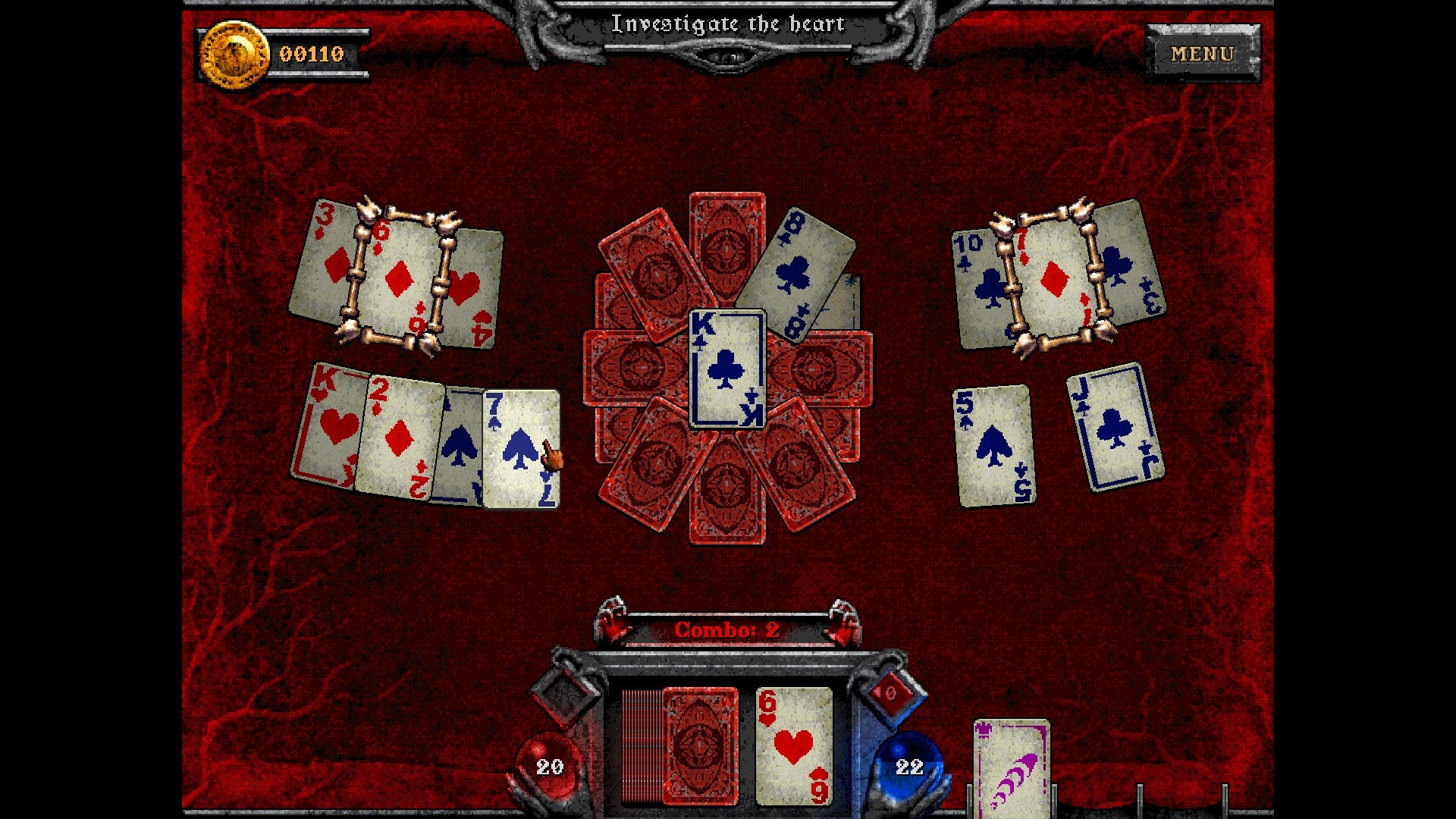
- The In-Game 1995 Experience: Players explore a dungeon environment where every mechanical action—clearing a screen, opening a lock, or defeating an enemy—is represented by card manipulation.
- The Present-Day Investigation: As the player navigates the 1995 dungeon, they receive intermittent communications from an in-game sister character. This character serves as the primary conduit for the broader mystery, providing evidence through police reports, digitized news clippings, and recovered documents detailing the activities of a centuries-old cult.
- The Meta-Controversy: The narrative centers on the historical controversy surrounding the original 1995 software release, drawing on tropes of "haunted media" and the secretive, potentially dangerous nature of the cult-linked developers.
This tiered approach allows the developer to bridge the gap between the simplicity of solitaire-based mechanics and the complexity of an interactive thriller. By frame-shifting the context, the developers transform what would otherwise be a purely abstract puzzle into a thematic puzzle where the act of "clearing the board" translates to "freeing a prisoner" or "unlocking a forbidden chamber."
Analytical Comparison: Mechanical Familiarity vs. Thematic Freshness
The efficacy of this design approach can be analyzed by looking at how specific gameplay elements are repurposed. In previous titles like Ancient Enemy, the card-matching mechanic was framed through the lens of combat and dark fantasy. In Forbidden Solitaire, these same tools are applied to the act of unraveling a conspiracy.
For example, the "lock and key" mechanism—a staple of the studio’s design—is utilized during high-tension narrative beats where the player is attempting to rescue a character marked for sacrifice. By requiring the player to match specific suits to "unlock" the character, the game creates a logical connection between the interface and the stakes of the story. This synthesis prevents the player from viewing the cards merely as numbers, instead treating them as interactive components of the environment.
Industry observers have noted that this consistency is not a limitation but a deliberate stylistic choice. By keeping the mechanics static, the developers reduce the cognitive load for returning players, allowing them to focus entirely on the new thematic environment. This is a common strategy in puzzle-heavy genres, but Grey Alien Games elevates it by ensuring the "flavor" of the story matches the "function" of the cards.
Broader Implications for Interactive Narrative Design
The release of Forbidden Solitaire invites a broader discussion regarding the longevity of simple mechanics. When a game design is "well-mannered"—a term famously used to describe Regency Solitaire—it does not need to reinvent the wheel to provide a meaningful experience. Instead, it relies on the quality of its framing and the restraint of its narrative delivery.
Critics and historians of the medium have long argued that excessive exposition often hampers the enjoyment of games built on simple loops. Forbidden Solitaire follows this principle by avoiding long-winded dialogue, opting instead for environmental storytelling and document-based discovery. The reliance on the player’s own investigation—mirroring the character’s research into the 1995 software—creates a sense of agency that is often missing from titles that rely on scripted cinematics.

The implications for developers are clear: the coherence between the "how" (mechanics) and the "why" (theme) is often more vital to a game’s success than the complexity of the mechanics themselves. By successfully grounding the familiar card-matching loop in the aesthetic of 1990s retro-horror, the developers have created a blueprint for how narrative can be effectively grafted onto existing, tested systems without causing the "ludonarrative dissonance" that plagues so many larger-budget productions.
The Role of User Perception and Legacy
The reception of Forbidden Solitaire within the wider gaming community underscores a shift in how players value "refined" design over "innovative" design. While the industry frequently prioritizes technological leaps, there remains a significant audience for titles that demonstrate mastery of a specific, narrow design niche.
As the digital landscape becomes increasingly saturated with high-fidelity, high-complexity experiences, the success of titles like Forbidden Solitaire serves as a reminder of the enduring power of thematic focus. The studio has managed to maintain a decade-long consistency while keeping their output feeling fresh, primarily through the careful curation of tone. By treating their game design as a persistent system that evolves through new thematic skins, Grey Alien Games has effectively created a brand identity that values intellectual cohesion above all else.
Ultimately, the lesson of Forbidden Solitaire is one of balance. The game does not attempt to be more than it is—a challenging, well-constructed card puzzle—but it manages to be "more than the sum of its parts" through the application of a strong, consistent narrative frame. For developers, this provides a compelling case study on the value of iterative design, suggesting that the most effective way to engage an audience is not always to build a new system, but to recontextualize the existing one in a way that respects the player’s intelligence and desire for a unified, atmospheric experience. As the industry continues to grapple with the definition of "meaningful" interaction, Forbidden Solitaire stands as a testament to the fact that sometimes, the most effective way to tell a story is to frame it within a game that knows exactly what it is, and executes that vision with absolute precision.