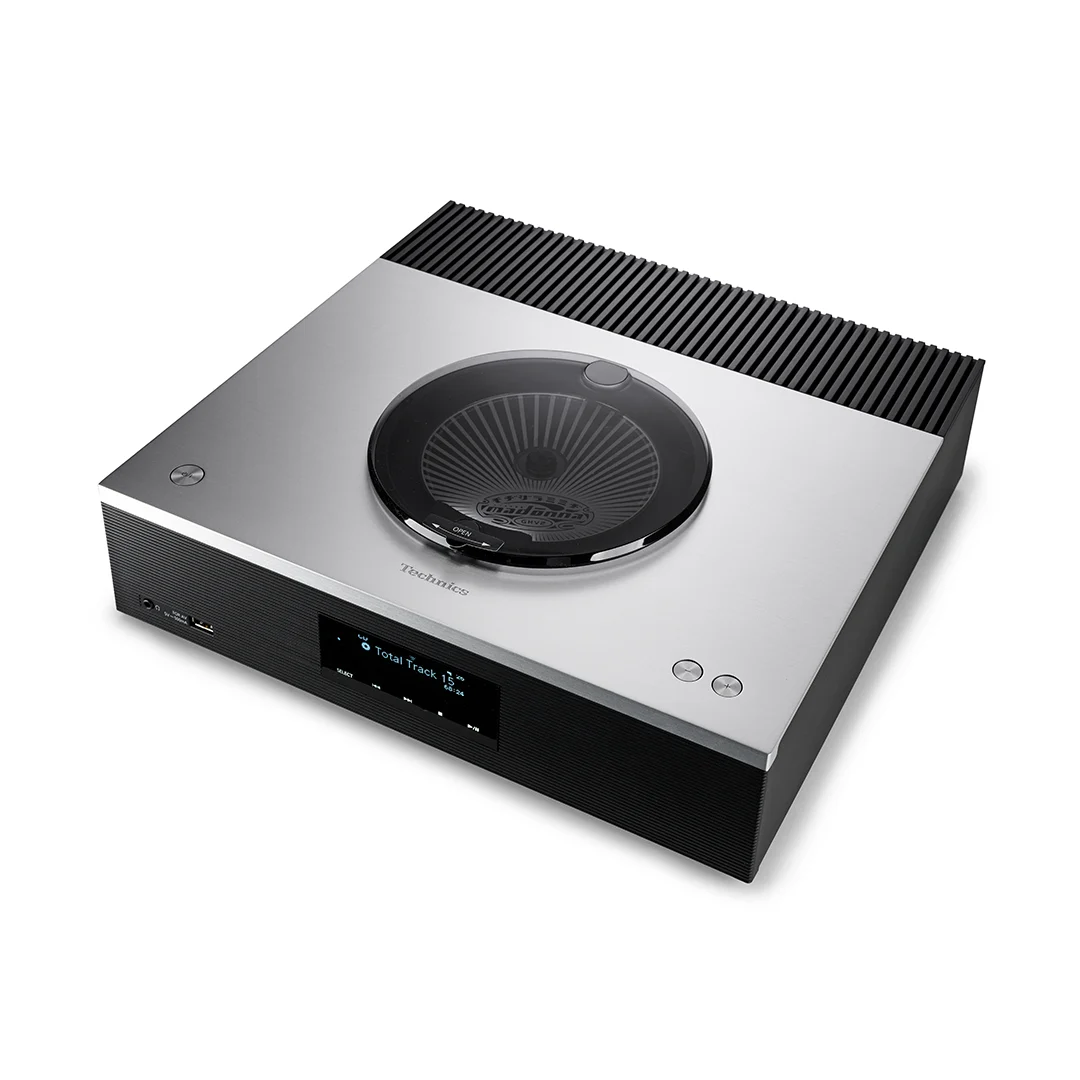









Musical Fidelity has officially expanded its "B-Line" range of hi-fi separates with the introduction of the B1xcd, a dedicated CD player engineered to bring high-end audio performance to a more accessible market segment. This launch follows the positive market reception of the B1xi integrated amplifier, which debuted late last year, signaling a strategic effort by the manufacturer to solidify a cohesive, entry-to-mid-level ecosystem for audiophiles who continue to prioritize physical media.
The Evolution of the B-Line Series
The B-Line series represents a departure from some of Musical Fidelity’s more boutique, ultra-high-end offerings, focusing instead on build quality, component precision, and acoustic neutrality. The introduction of the B1xcd acts as a logical companion to the B1xi amplifier, which established a design language characterized by robust metalwork and minimalist aesthetics.
The chronology of this release is significant. In an era dominated by streaming services and high-resolution digital files, the persistence of the CD format remains a point of interest for manufacturers. By releasing the B1xi in late 2023, Musical Fidelity laid the groundwork for a stereo system approach. The B1xcd arrives roughly nine months later, completing the "stack" and providing a dedicated source component that matches the electrical and physical specifications of its amplification counterpart.
Engineering and Technical Specifications
At the core of the B1xcd is the BlueTiger CD-88 servo mechanism. This component serves as the processing hub for the player, specifically optimized for high-fidelity data extraction. The primary challenge in CD playback is the maintenance of clock stability and the minimization of read errors caused by disc defects or physical vibrations. The BlueTiger servo is designed to mitigate these issues through an advanced error-correction algorithm that ensures the data stream remains as close to the original digital encoding as possible.
The mechanical architecture of the player further addresses the issue of jitter—a common bane of digital-to-analogue conversion. The B1xcd utilizes a tray-loading mechanism mounted on a specialized low-vibration chassis. By housing this assembly within an all-metal enclosure, Musical Fidelity aims to suppress the micro-vibrations that can introduce noise into the laser tracking assembly.
For digital-to-analogue conversion, the company has opted for the ESS9018Q2M Sabre DAC chip. This particular silicon is widely regarded in the industry for its high dynamic range and low total harmonic distortion (THD). Musical Fidelity states that the implementation of this chip within the B1xcd’s output stage results in a signature "warm, natural, and engaging" sound profile, attempting to bridge the gap between clinical digital precision and the sought-after organic qualities of analogue playback.
Connectivity and System Integration
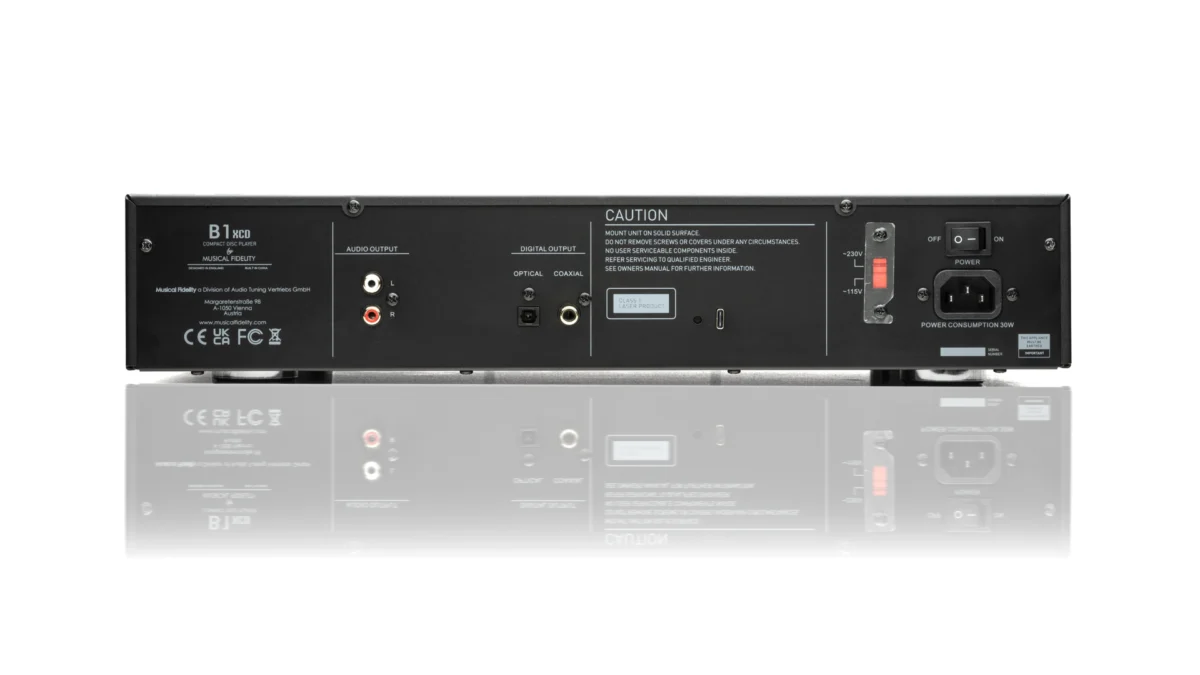
Flexibility remains a hallmark of the B1xcd’s design. The rear panel is equipped with standard analogue RCA outputs, allowing for immediate connection to any standard integrated amplifier or pre-amplifier. Recognizing that some users may already own high-performance external DACs, Musical Fidelity has included both coaxial and optical digital outputs. This enables the B1xcd to function strictly as a CD transport, bypassing its internal DAC in favor of an external processor, a feature often demanded by enthusiasts seeking to upgrade their systems incrementally.
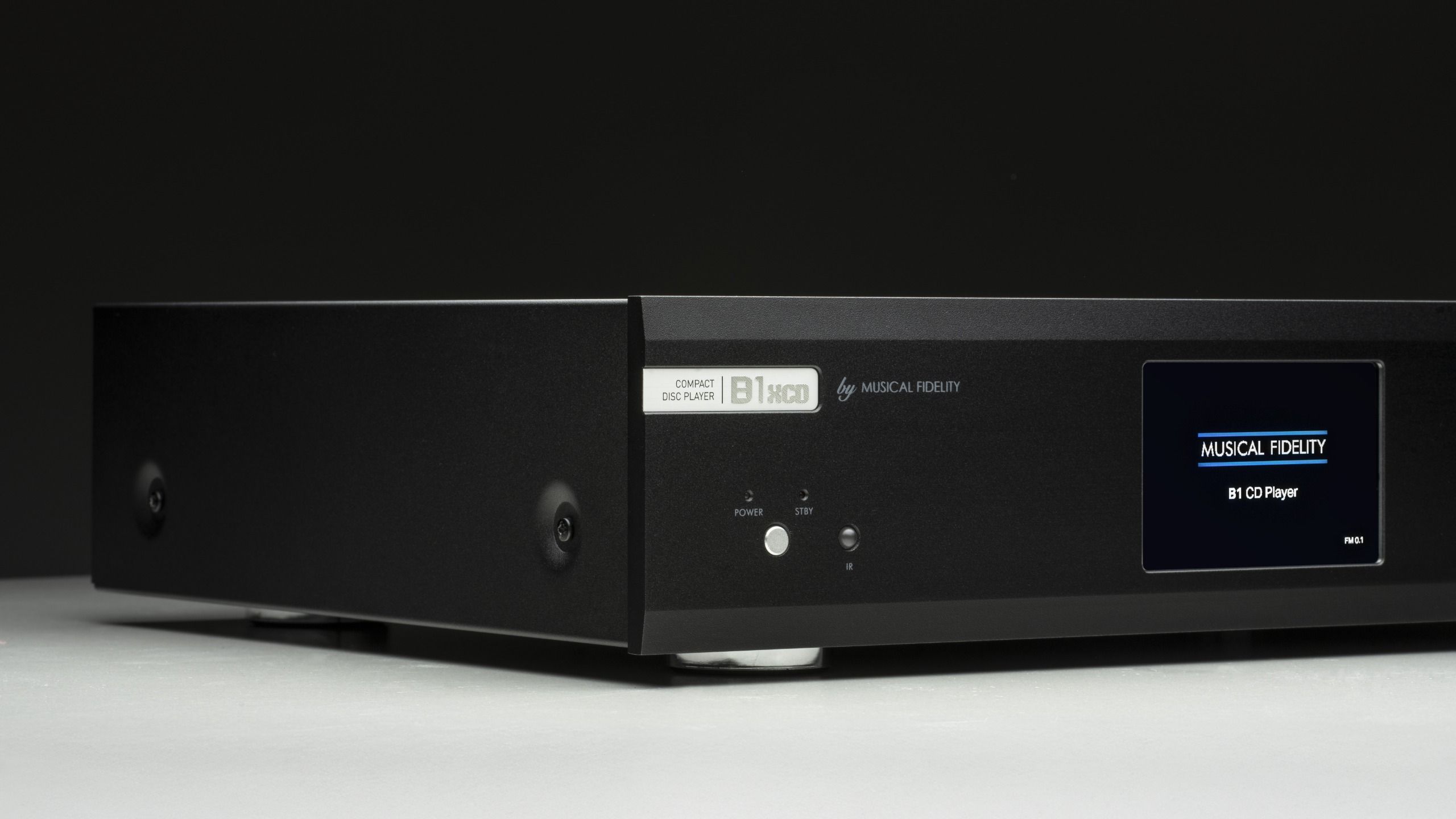
The unit’s exterior reflects a commitment to industrial design, featuring a brushed aluminium front panel and reinforced metal housing. The tactile experience of the player is managed through metal-faced controls, and a dedicated remote control is included to ensure seamless operation. The integration of a large, high-contrast LCD display provides necessary metadata, maintaining a balance between functional utility and aesthetic simplicity.
Market Position and Competitive Analysis
Priced at £549 / $799, the B1xcd enters a crowded and competitive segment of the hi-fi market. It occupies a strategic middle ground between two major industry benchmarks: the Marantz CD 70, which retails for approximately £499 / $750, and the Arcam CD5, priced at £699 / $699.
This positioning indicates that Musical Fidelity is targeting the "value-conscious enthusiast" category. The Marantz CD 70 is frequently lauded for its refined, balanced performance, while the Arcam CD5 is noted for its modern connectivity and musicality. To succeed, the B1xcd must offer a sound-per-pound ratio that distinguishes it from these established contenders.
Industry analysts suggest that the "sound-per-pound" metric is becoming increasingly difficult to satisfy as the cost of raw materials—specifically aluminium and specialized electronic components—continues to fluctuate. However, by leveraging a unified design language across the B-Line series, Musical Fidelity likely achieves economies of scale that allow for the inclusion of premium components like the ESS9018Q2M at a sub-£600 price point.
Broader Implications for the Physical Media Market
The launch of the B1xcd is not an isolated event; it is part of a broader trend of "legacy revitalization" within the hi-fi industry. While high-resolution streaming platforms offer convenience, a segment of the market continues to invest in physical media, citing the tangibility of the format and the lack of reliance on network stability.
The implications for the industry are twofold. First, it demonstrates that manufacturers believe there is sufficient market longevity in the CD format to warrant new product development cycles. Second, it highlights a move toward "system-matching." By creating components that are designed to work together electrically and aesthetically, brands like Musical Fidelity are catering to consumers who prefer a "one-brand" solution to minimize compatibility issues and maximize visual cohesion.
Impact on the Audiophile Ecosystem
The inclusion of optical and coaxial outputs on the B1xcd is a calculated nod to the future-proofing of the device. By allowing the player to act as a transport, the manufacturer acknowledges that a user’s DAC preferences may change over time, even if their physical collection of discs remains constant. This modular approach is highly valued in the audiophile community, as it protects the user’s investment against the rapid obsolescence often associated with digital audio technology.
Furthermore, the emphasis on a robust metal chassis and low-vibration mounting suggests that the company is leaning into the "build-quality-first" philosophy. In an age of plastic-heavy consumer electronics, the tactile experience of a heavy-duty tray loader and a brushed-metal faceplate serves as a psychological indicator of longevity and performance.
Final Outlook
As the B1xcd reaches retail shelves, its success will ultimately be measured by its ability to extract performance that warrants its price point in a saturated market. The combination of the BlueTiger servo, the ESS Sabre DAC, and a heavy-duty, vibration-damped chassis provides a compelling technical narrative.
Whether the B1xcd can displace the incumbent Award-winners from Marantz and Arcam will depend on subjective listening tests and long-term reliability reports. However, for those already invested in the B1xi amplifier, or those looking for a dedicated, well-built CD source that respects the heritage of the format while incorporating modern digital-to-analogue standards, the B1xcd appears to be a robust and well-considered addition to the Musical Fidelity lineup.
The company has confirmed that the player is available immediately through authorized retailers globally. As the hi-fi market continues to balance the convenience of the digital streaming era with the enduring appeal of physical media, the B1xcd stands as a testament to the fact that the CD player is far from becoming an obsolete piece of technology, but rather a refined, mature component within the modern home audio system.