










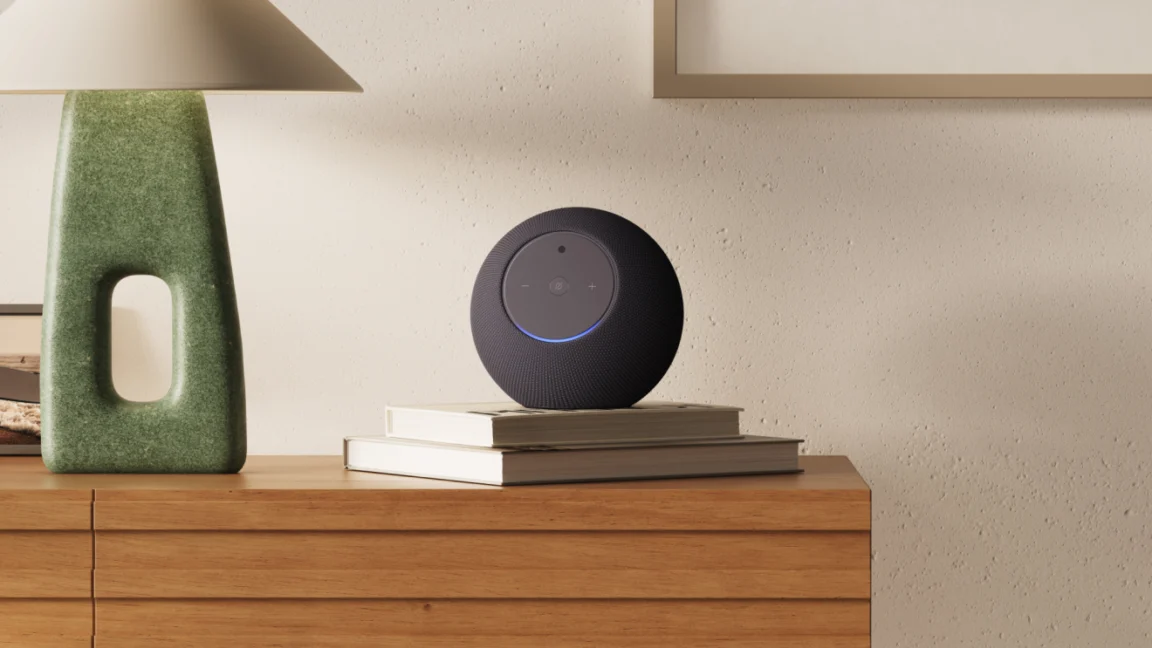
Since its original market introduction in 2019, Amazon’s Echo Studio has occupied a distinct niche within the smart speaker ecosystem, specifically targeting audiophiles and consumers seeking high-fidelity sound performance integrated with the Alexa voice assistant. However, the latest iteration of this flagship hardware represents a significant strategic pivot for the retail and technology giant. By integrating a high-definition camera into the chassis of its most capable speaker, Amazon is no longer merely selling an audio device; it is marketing a multi-modal hub that fuses premium sound engineering with sophisticated computer vision.
The launch of the Echo Studio with Home Camera occurred alongside a broader rollout of next-generation Alexa-enabled devices, signaling Amazon’s aggressive commitment to its “Alexa+” generative AI infrastructure. While the internal audio architecture remains largely consistent with its predecessors—retaining the 3.75-inch high-excursion woofer and three-driver array—the inclusion of a 13MP camera transforms the unit from a stationary music player into a dynamic, observational presence within the domestic sphere.
The Evolution of the Echo Studio Line
To understand the significance of this release, one must look at the trajectory of Amazon’s hardware division. When the first Echo Studio launched in 2019, it was a direct response to the popularity of the Apple HomePod and the Sonos ecosystem. Amazon sought to prove that a voice-controlled speaker could provide a legitimate “concert-hall” experience through support for Dolby Atmos and 3D audio technologies.
Over the subsequent five years, Amazon refined the software layer, introducing features like lossless HD audio and noise distortion mitigation. The timeline of this progression is marked by incremental but impactful updates:
- 2019: The original Echo Studio is launched, establishing the 3D audio standard for the Alexa lineup.
- 2022: Amazon introduces the AZ3 Pro processor, significantly boosting the device’s on-device processing capabilities.
- 2024: Integration of Advanced Room Adaptation, a feature designed to continuously analyze a room’s geometry and acoustic properties to optimize sound output in real-time.
- 2025: The Echo Studio with Home Camera is introduced, marking the first time the high-end speaker line has incorporated visual sensing hardware.
Technical Specifications and Audio Engineering
Despite the inclusion of the camera, the core acoustic performance of the new Echo Studio remains grounded in the hardware benchmarks that established its reputation. The device maintains its signature 3.75-inch woofer, which is responsible for the deep, resonant bass that has been the hallmark of the product line. Complementing this are three full-range drivers—one aimed upward and two aimed laterally—to create a wide soundstage.
The integration of the AZ3 Pro processor remains the backbone of the device’s intelligence. This processor is not merely handling audio; it acts as an AI accelerator for the newly unveiled Alexa+ generative AI chatbot. This shift toward local AI processing is critical. By handling complex generative tasks on the device rather than relying exclusively on cloud-based round trips, the latency for voice commands is expected to decrease, and the responsiveness of the “visual intelligence” features is expected to improve.
A key development announced alongside the new hardware is the refined “Advanced Room Adaptation.” While previous iterations of room correction required a one-time calibration or an initial setup phase, the current version is continuous. Using internal microphones, the speaker monitors the audio reflections in the room, automatically adjusting the EQ and sound projection as furniture is moved or as the listener shifts their position.
The Role of the 13MP Integrated Camera
The most polarizing and innovative aspect of this device is the 13MP camera. By embedding this sensor into the speaker’s housing, Amazon has effectively enabled a new class of utility. The company has identified three primary use cases for this visual integration:
- Adaptive Audio Volumetric Correction: The camera can detect the presence and location of individuals within the room. By tracking the listener, the device can adjust the volume and directionality of the audio output to ensure a consistent listening experience regardless of where the user moves.
- Remote Home Monitoring: Positioned as a security and convenience feature, users can remotely access the camera feed to check on pets, monitor home security, or verify the status of household appliances, such as ensuring lights are turned off.
- Computer Vision and Generative Assistance: Perhaps the most futuristic application involves the camera’s ability to recognize physical objects. By holding a board game box or a household item in front of the lens, users can interact with Alexa+ to receive real-time instructions, rules explanations, or automated replenishment of groceries.
Market Implications and Competitive Analysis
Industry analysts suggest that the decision to pair high-end audio with a camera is a defensive maneuver in a tightening smart-home market. With the rise of specialized home security cameras and high-fidelity smart speakers from competitors like Sonos and Apple, Amazon is leveraging its ecosystem’s scale to consolidate these features into a single unit.
From a consumer behavior perspective, the device addresses the “clutter” problem. By combining a security camera, a smart speaker, and an AI-driven home assistant, Amazon is reducing the number of devices required in a typical living room. However, this also raises significant questions regarding privacy and data security. The inclusion of a camera in a living area—a space typically reserved for personal relaxation—will likely invite scrutiny from privacy advocates.
Amazon has responded to these concerns by emphasizing its privacy-by-design architecture, including physical camera shutters and localized processing for visual data. The company has stated that the AI-driven recognition features, such as identifying a cereal box for reordering, occur primarily on the local device to minimize the transmission of raw visual data to the cloud.
The Rise of Alexa+ and Generative AI
The integration of Alexa+ represents a fundamental shift in how users will interact with their home hardware. Previous generations of Alexa were limited by rigid, intent-based voice recognition. If a user did not phrase a command perfectly, the request would often fail. Alexa+ utilizes large language models (LLMs) to understand context, nuance, and intent.
When combined with the camera, the speaker becomes an “omnipresent” assistant. The ability for the device to “see” what the user is seeing creates a shared context. For instance, if a user holds up a broken piece of furniture and asks, “How do I fix this?”, the AI can analyze the visual input, identify the object, and provide step-by-step instructions. This level of interaction moves the Echo Studio from a passive audio device to an active, collaborative tool for household management.
Analyzing the "Intelligent Home" Trajectory
Data from the consumer electronics sector indicates that the smart speaker market is shifting from "voice-only" to "voice-plus-vision." While sales of entry-level smart speakers have plateaued, devices that incorporate screens or cameras are seeing higher adoption rates among power users. By targeting the premium audio segment with this visual upgrade, Amazon is betting that users are willing to pay a premium for hardware that can bridge the gap between media consumption and utility.
The manufacturing consistency—maintaining the same dimensions as previous models despite the addition of the camera—suggests that Amazon is attempting to create a seamless upgrade path for existing owners of the Echo Studio line. This strategy minimizes the friction associated with physical installation and accessory compatibility, such as speaker stands or wall mounts.
Future Outlook and Conclusion
The release of the Echo Studio with Home Camera is a calculated risk. It tests the consumer’s appetite for a multi-functional device that blurs the lines between entertainment and surveillance. If the market reception is positive, it is highly likely that this architecture will serve as the blueprint for future Echo devices, potentially leading to a standard where every smart speaker features a visual component.
The objective success of this device will depend on the performance of the Alexa+ generative AI. If the AI can consistently and accurately interpret visual data in diverse lighting conditions, the Echo Studio could become an essential tool in the modern household. Conversely, if the visual features are perceived as gimmicky or if the privacy implications outweigh the utility, the device may struggle to justify its price point compared to standard, non-visual high-fidelity speakers.
In conclusion, Amazon’s latest hardware release is a testament to the company’s vision of the “ambient home.” By prioritizing AI-driven interactivity, high-fidelity acoustics, and visual awareness, the new Echo Studio serves as a centerpiece for a broader ecosystem where technology is expected to be as reactive to the environment as it is to the user’s voice. As this technology matures, the definition of what constitutes a “smart speaker” will likely be permanently redefined, moving away from a single-purpose device toward a comprehensive, context-aware digital concierge.