






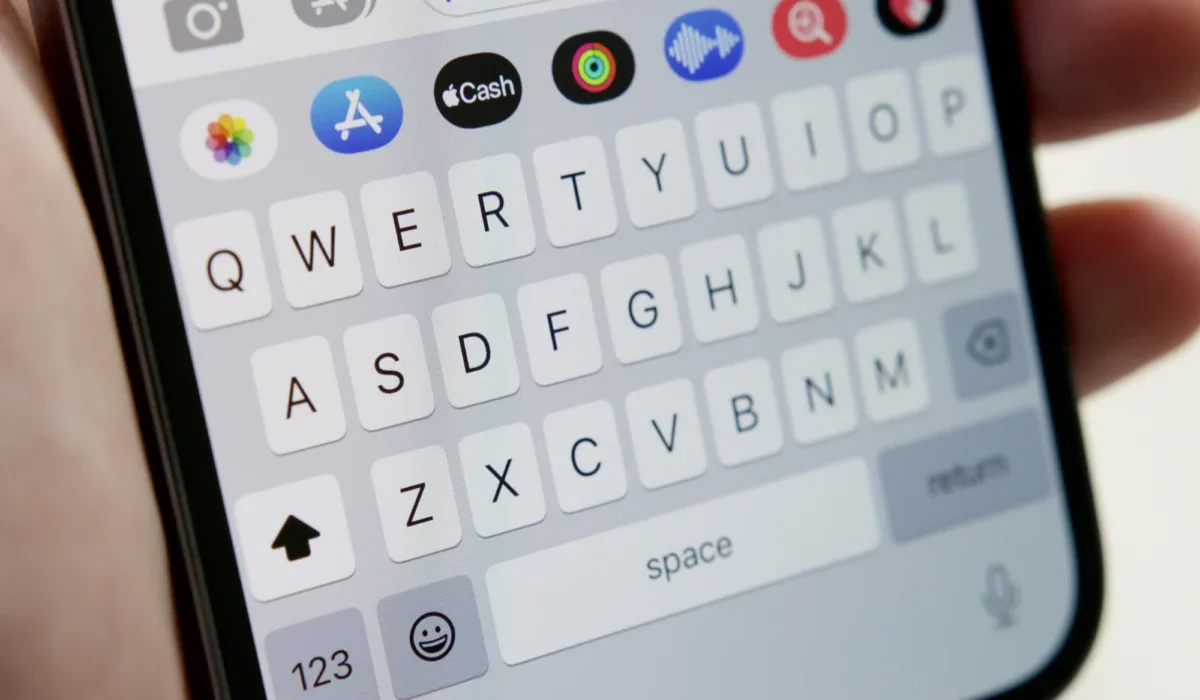
For years, users of mobile operating systems have operated under the assumption that predictive text and autocorrect functions are neutral tools designed solely to enhance typing speed and accuracy. However, recent findings from independent research have illuminated a more complex reality: Apple’s iOS keyboard architecture contains an extensive, undisclosed "gray list" of thousands of words and phrases that the system is programmed to ignore during predictive text and swipe-typing operations. While these terms are not entirely blocked from the device—users remain free to type them manually—they are conspicuously absent from the autocomplete suggestions and swipe-typing algorithms that define the modern smartphone user experience.
The discovery, brought to light by researcher Derik Kauffman and detailed via the project Swipe Blocked, underscores a significant intersection between software engineering, corporate policy, and global political sensitivity. The list is not limited to profanity or hate speech; it encompasses a diverse range of politically charged terminology, references to geopolitical conflicts, and even satirical remarks concerning world leaders.

The Mechanics of Invisible Censorship
At the system level, the iOS keyboard relies on a sophisticated predictive engine that learns user patterns and suggests upcoming words. This engine is governed by a foundational dictionary and a set of heuristic rules. The "gray list" discovered by researchers functions as a filter that sits atop this engine. When a user begins to swipe or type a phrase contained within this hidden list, the software purposefully bypasses the inclusion of that specific term in the suggestion bar.
In some cases, the system appears to autocorrect the intended input into a phonetically similar but contextually different word. For instance, testing performed by various outlets confirms that attempting to swipe-type "Tibetan independence" often results in the system suggesting "Tibetan independences," while "United Ireland" is frequently corrected to "United Iceland." These behavioral patterns suggest that the filtering is not merely an omission but an active redirection of the user’s input toward non-sensitive alternatives.
A Chronology of Discovery
The scrutiny surrounding Apple’s keyboard began with anecdotal reports from users who noticed that certain phrases—ranging from innocuous colloquialisms to specific political commentary—consistently failed to appear in the predictive text window.

- Early Indications: Over the past several years, scattered reports surfaced on forums and social media platforms where users complained of "broken" autocomplete functionality regarding specific topics.
- The Investigative Phase: Independent researcher Derik Kauffman began a systematic analysis of the iOS keyboard’s behavior, testing various inputs to identify patterns.
- Methodology: Utilizing advanced AI tools such as OpenAI’s Codex and Anthropic’s Claude, researchers were able to probe the underlying structure of the iOS keyboard’s dictionary and predictive constraints, effectively mapping the hidden list of restricted phrases.
- Public Disclosure: Following the verification of these findings, the existence of the gray list was reported widely, bringing the issue of "algorithmic curation" to the forefront of tech policy discussions.
The Scope of the Gray List
The breadth of the restricted list is extensive and reflects a globalized approach to content moderation. The entries on this list are not confined to American political discourse. While phrases like "dictator Trump" and "sleepy Joe" are flagged, the list also includes highly specific geopolitical terms.
Among the identified phrases are:
- Geopolitical References: "Tibetan independence" and "United Ireland," both of which are central to ongoing, often contentious, international debates.
- Political Satire: Terms mocking Indian Prime Minister Narendra Modi and Leader of the Opposition Rahul Gandhi, indicating that the filtering system is localized and sensitive to the specific political climates of the regions in which the iPhones are sold.
- General Sensitivity: A vast array of terms related to violence, illicit substances, and sexually explicit content, which constitute the majority of the list and are arguably consistent with typical corporate safety guidelines.
The inclusion of political figures and geopolitical movements, however, marks a departure from standard safety-based filtering. It suggests that Apple is navigating a complex landscape of regional regulatory requirements, where maintaining market access in various countries may necessitate compliance with local norms regarding what is considered "sensitive" or "inappropriate" speech.

Corporate Stance and Official Response
In response to inquiries from global media organizations, including Reuters, Apple has maintained a relatively brief stance. A company spokesperson indicated that the iPhone’s keyboard is designed to prevent the suggestion of language that could be deemed offensive, inappropriate, or harmful.
However, Apple has notably refrained from providing a comprehensive explanation regarding the criteria used to select which phrases are included in the gray list. The company has not clarified whether these lists are dynamic—updated based on current events—or if they are static files embedded into the operating system during development. This lack of transparency has fueled criticism from digital rights advocates, who argue that the line between "offensive content" and "protected political discourse" is being drawn by a private corporation without public oversight or clear standards.
Broader Implications and Ethical Analysis
The existence of this hidden list raises fundamental questions about the role of technology companies as arbiters of communication. When a keyboard—the primary interface for human-to-digital interaction—begins to shape the vocabulary of its users, the implications for free speech are profound.

The "Creepiness" Factor
David Greene, a lawyer representing the Electronic Frontier Foundation, characterized the presence of such a list as "creepy." The concern is not necessarily that the company is preventing communication, as users can still type these words by hand. Rather, the concern is the "nudge" factor. By systematically omitting certain words from predictive suggestions, the system effectively discourages the use of those terms. Over time, this can lead to a subtle narrowing of the discourse, as users gravitate toward the words that the predictive engine easily offers.
Algorithmic Bias and Regional Compliance
The fact that the list varies by region and includes specific political figures suggests that Apple is engaging in a form of algorithmic compliance to satisfy the sensibilities—or the legal demands—of various governments. In markets where criticism of the government or political figures is restricted, the inclusion of such names on an "inappropriate" list serves as a soft form of censorship. This highlights the tension between a company’s desire to provide a universal, "safe" user experience and the reality of a fragmented global political landscape.
The Role of Artificial Intelligence
As predictive text evolves into more advanced generative AI models (such as those integrated into the latest versions of iOS), the ability to "filter" language becomes even more powerful. While current keyboard limitations are primarily focused on autocomplete, future iterations could theoretically influence the drafting of emails, messages, and long-form content. The precedent set by this current gray list suggests that users will need to remain vigilant about how their devices are mediating their thoughts and communications.

Conclusion
The discovery of the iOS gray list serves as a reminder that the tools we use to communicate are not passive conduits for our thoughts. They are designed environments that reflect the priorities, constraints, and occasionally the political hedging of the companies that build them. While Apple’s desire to maintain a "clean" user experience is a standard corporate goal, the inclusion of specific political terminology on a hidden list of filtered words necessitates a broader conversation about transparency.
As the line between helpful automation and editorial oversight continues to blur, the responsibility falls on technology companies to be more transparent about the rules governing their systems. Until such transparency is provided, the "hidden" nature of these lists will continue to spark concerns regarding the influence of major tech firms on the public discourse, transforming the simple act of typing into a subject of significant ethical and political inquiry.