The landscape of wearable health technology has reached a significant milestone with the introduction of the Signal Ring, a specialized smart ring designed by the startup Vital Signals. While industry leaders such as Apple and Oura have integrated various cardiovascular health features into their devices, the Signal Ring distinguishes itself by offering full systolic and diastolic blood pressure readings without the need for traditional cuff-based calibration. This development addresses a long-standing technical hurdle in the wearable sector: the ability to provide accurate, medical-grade blood pressure data in a form factor that is both unobtrusive and easy to use for the average consumer.
The Medical Context: Understanding the Silent Killer
Hypertension, or high blood pressure, is frequently categorized by medical professionals as the "silent killer." This moniker stems from the condition’s ability to inflict severe, irreversible damage on the cardiovascular system and vital organs without presenting overt symptoms. According to data from the World Health Organization (WHO) and the Centers for Disease Control and Prevention (CDC), hypertension is a primary risk factor for heart attacks, strokes, and chronic kidney disease.
Global health statistics indicate that nearly 1.3 billion adults aged 30–79 years worldwide have hypertension, yet a significant percentage remain unaware of their condition. The primary challenge in managing blood pressure lies in the frequency of monitoring. Traditional arm cuffs, while accurate, are often perceived as cumbersome, leading to infrequent testing. Furthermore, "white coat hypertension"—a phenomenon where a patient’s blood pressure spikes in a clinical setting due to anxiety—can often lead to inaccurate diagnoses. The Signal Ring aims to mitigate these issues by providing continuous, passive monitoring in a real-world environment.
Apple Watch and the Current State of Wearable Blood Pressure
The release of watchOS 26 brought advanced cardiovascular alerts to five Apple Watch models, allowing the devices to identify patterns indicative of potential hypertension. However, Apple’s implementation remains conservative. Instead of providing specific numerical values for systolic and diastolic pressure, the Apple Watch monitors trends and issues notifications if the user’s readings deviate from their baseline in a concerning manner.

This approach is largely dictated by the limitations of current optical sensors and the rigorous standards required by regulatory bodies like the U.S. Food and Drug Administration (FDA). Most existing wearable devices that claim to offer blood pressure readings require "calibration"—a process where the user must take a manual reading with a traditional inflatable cuff and input that data into the device’s app. This allows the wearable’s sensors to "sync" with a known value. Without frequent recalibration, the accuracy of these devices tends to drift, rendering the data unreliable for medical decision-making.
The Signal Ring claims to have bypassed this requirement entirely. By utilizing advanced proprietary algorithms and high-fidelity PPG (photoplethysmography) sensors, the device is designed to interpret arterial pressure waves directly from the finger, providing raw data that correlates with cuff-based measurements without the need for a secondary device.
The Genesis of Vital Signals and the Signal Ring
The development of the Signal Ring was driven by personal necessity. Tom Moss, the CEO of Vital Signals, founded the company following a near-fatal health crisis involving undiagnosed hypertension. Moss, a veteran of the technology industry with previous leadership roles at drone manufacturer Skydio, Razer Inc., and Nextbit Systems, sought to apply his expertise in hardware and software to a critical gap in the medical technology market.
Moss has been vocal about the inadequacy of current consumer health tools for those at high risk. In a statement regarding the launch, Moss emphasized that for many consumers, there is currently no practical way to know their blood pressure outside of a doctor’s office or the use of an inconvenient home cuff. This realization led to the engineering of the Signal Ring, which prioritizes blood pressure accuracy over the broad suite of lifestyle features—such as step counting or sleep stage tracking—found in general-purpose smart rings.
Technical Innovation and Clinical Validation
The Signal Ring’s ability to operate without calibration is rooted in its sensor architecture. Most smart rings use green LED sensors to measure heart rate, but these sensors do not penetrate deep enough into the tissue to accurately gauge blood pressure. The Signal Ring employs a more sophisticated array of sensors that can measure the velocity and shape of the pulse wave as it travels through the digital arteries in the finger.
To support its claims of accuracy, Vital Signals conducted a large-scale clinical trial involving thousands of participants. The company reports that the device’s readings are as accurate as those obtained from traditional arm cuffs. While the Signal Ring has not yet received official clearance from the FDA, the data from these trials is being used to support its regulatory submissions. In the interim, the device is being marketed as a wellness tool for those who need to keep a close eye on their cardiovascular trends.
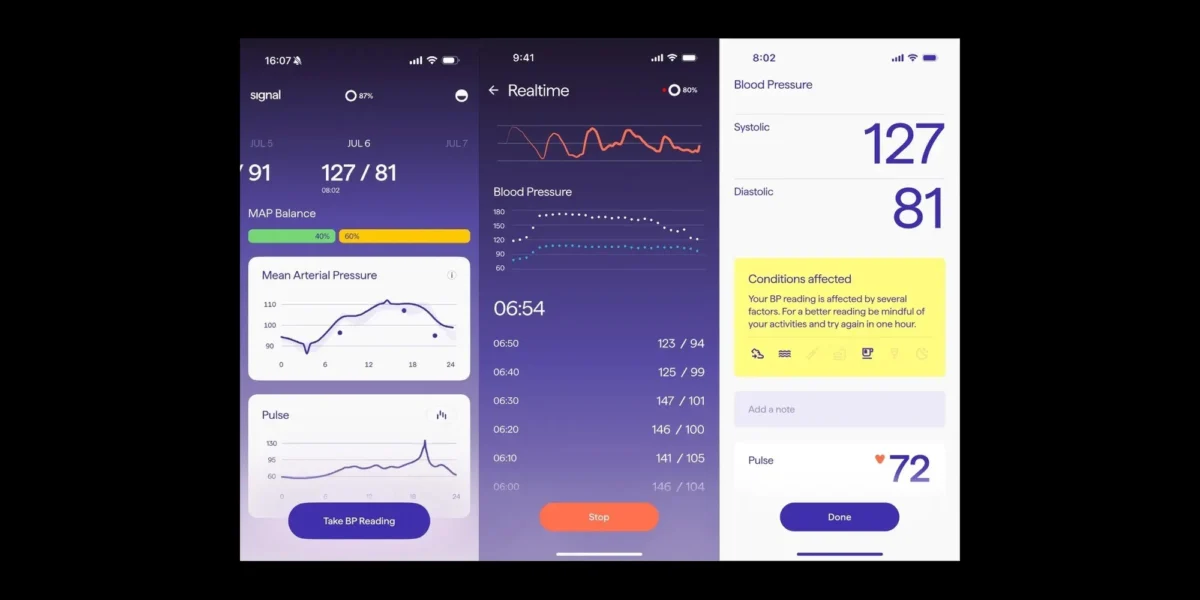
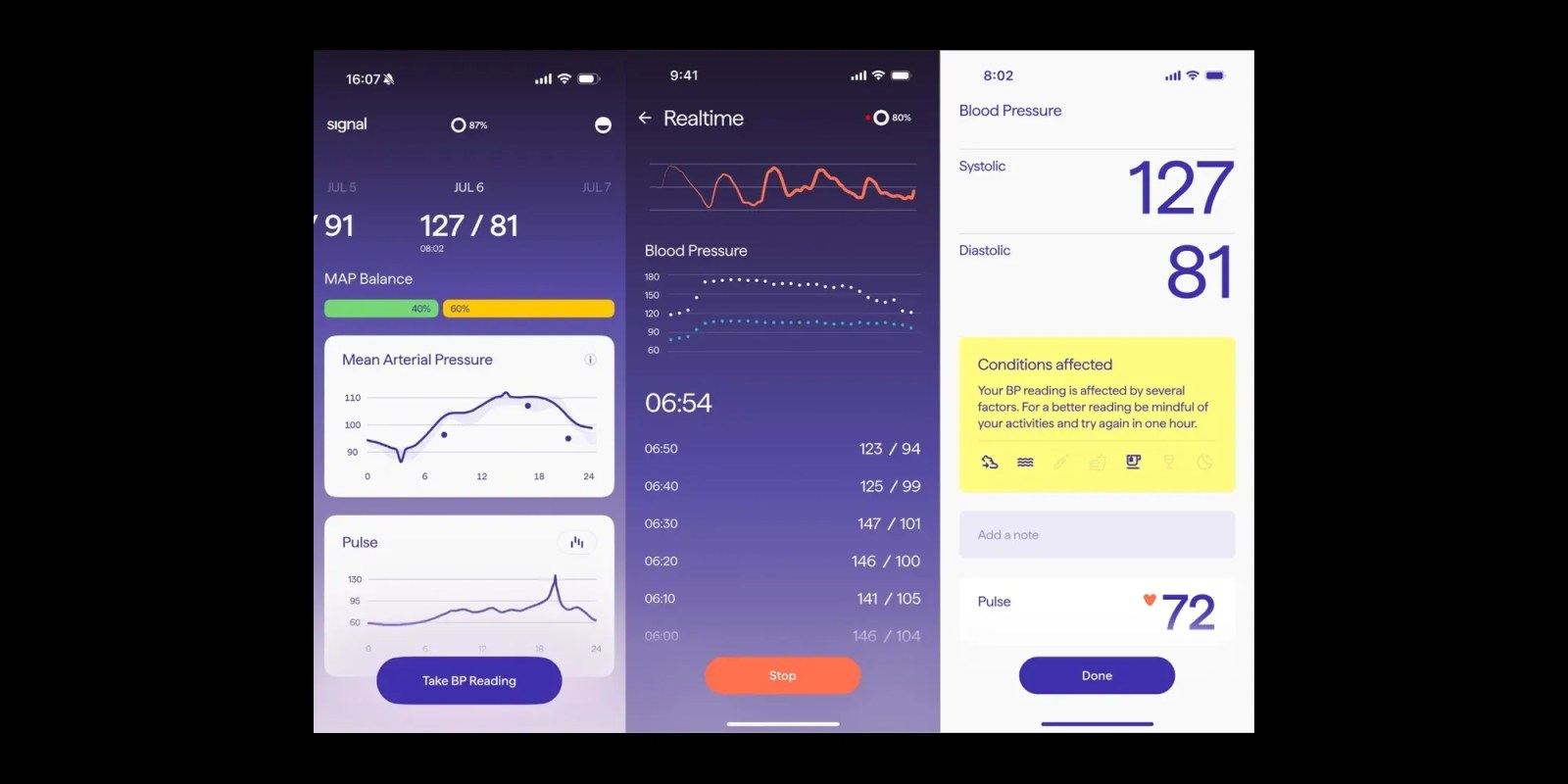
The companion app for the Signal Ring provides a comprehensive dashboard for users. It displays live blood pressure readings and tracks fluctuations over days, weeks, and months. This longitudinal data is particularly valuable for physicians, as it provides a clearer picture of how a patient’s blood pressure responds to medication, diet, exercise, and stress in their daily lives.
Market Positioning and Pricing
The Signal Ring is entering a competitive but fragmented market. With a pre-sale price of $399 and no required monthly subscription, the device is positioned as a premium medical-focused wearable. This stands in contrast to the Oura Ring, which requires a monthly fee to access deep data insights, and the Apple Watch, which serves as a multi-purpose smartwatch.
Interestingly, Moss is not positioning the Signal Ring as a direct competitor to the Apple Watch or the Oura Ring for the general population. During the product announcement, he noted that the Signal Ring is a specialized tool for older populations and individuals specifically advised by medical professionals to monitor their hypertension risks. For younger, healthy individuals who do not have a family history of heart disease, Moss suggested that an Apple Watch or an Oura Ring remains a more suitable choice due to their broader feature sets.
The Signal Ring’s design reflects this focus. It lacks the sleep-tracking depth and "readiness scores" found in lifestyle rings, focusing instead on the integrity of its cardiovascular data. The device is scheduled for delivery starting in October 2026, with pre-orders beginning immediately.

Chronology of Wearable Blood Pressure Development
The journey toward calibration-free blood pressure monitoring has been a decade-long pursuit in the tech industry:
- 2015–2018: Early research into PPG-based blood pressure estimation begins, but accuracy remains low, and calibration requirements are strict.
- 2019: Small-scale startups begin releasing blood pressure "watches" that require monthly cuff calibrations.
- 2022: Apple and Samsung begin integrating "trend-based" blood pressure features, focusing on alerts rather than raw data.
- 2024: The smart ring market expands with the entry of major players, but most focus on sleep and recovery metrics.
- 2026 (July): Vital Signals announces the Signal Ring, claiming the first successful implementation of calibration-free, medical-grade monitoring in a ring form factor.
Broader Implications for the Healthcare Industry
The success of a device like the Signal Ring could signal a shift in how chronic conditions are managed. Remote Patient Monitoring (RPM) is a growing field in healthcare, where doctors use technology to monitor patients outside of conventional clinical settings. A reliable, calibration-free blood pressure ring would allow for a level of data density that was previously impossible.
Insurance providers and healthcare systems are likely to take an interest in such technology. If continuous monitoring can lead to earlier intervention and a reduction in emergency room visits for strokes and heart attacks, the long-term cost savings could be substantial. Furthermore, the removal of the calibration barrier increases user compliance, as the "friction" of maintaining the device is significantly reduced.
However, the lack of FDA clearance remains a hurdle for full clinical adoption. Until the device receives a formal "De Novo" or 510(k) clearance, healthcare providers may be hesitant to base prescriptions or treatment changes solely on its data. Nevertheless, the Signal Ring represents a bold step toward the "democratization" of medical data, putting clinical-grade insights directly into the hands—and onto the fingers—of the consumers who need them most.
As the October delivery date approaches, the industry will be watching closely to see if the Signal Ring can live up to its promise of accuracy and ease of use. If successful, it may force larger tech giants to accelerate their own blood pressure monitoring roadmaps, potentially leading to a new era of preventative cardiovascular care.