For decades, an invisible redundancy has quietly permeated the global outdoor apparel industry, hiding in plain sight along the aisles of countless specialty retail stores. It exists in the most ubiquitous colorway produced by the sector: black. A walk down the fleece section of any major outdoor outfitter reveals dozens of variations of black garments hanging side by side. To the untrained eye, they appear identical. Yet, upon closer scientific inspection under proper lighting conditions, these garments reveal minute discrepancies in tone, saturation, and hue. These variations are not aesthetic choices born of design creativity; rather, they are the physical evidence of a fragmented, highly inefficient industrial manufacturing ecosystem.
This systemic oversight has prompted a groundbreaking collaborative initiative between Swedish outdoor brand Haglöfs and performance textile innovator Polartec. Together, they have introduced a disruptive concept known as Standard Issue Black, spearheaded by an eye-opening marketing and design initiative called the Black Capsule Project. By confronting the hidden environmental toll of custom dye batches, these companies are calling for a universal color standard that could fundamentally reshape how synthetic mid-layers are produced worldwide.
The Hidden Toll of Synthetic Dyeing Operations
To comprehend the scale of the problem addressed by Standard Issue Black, one must examine the complex chemistry and resource-intensive mechanics of modern textile dyeing, particularly concerning synthetic materials. Polvester fleece, which forms the backbone of the outdoor industry’s mid-layer market, behaves fundamentally differently than natural fibers such as cotton, wool, or silk.
Natural fibers readily accept water-based dyes under relatively mild conditions and moderate temperatures. Polyester, conversely, is an inherently hydrophobic synthetic polymer that repels moisture. To introduce color into polyester fibers, textile manufacturers must utilize a specialized class of colorants known as disperse dyes. These chemical compounds are applied under intense physical conditions—typically requiring high-pressure vessels and thermal baths operating at 130 degrees Celsius or higher. This extreme heat and pressure forces the microscopic dye molecules to penetrate and lock within the polymer matrix of the synthetic fiber itself.
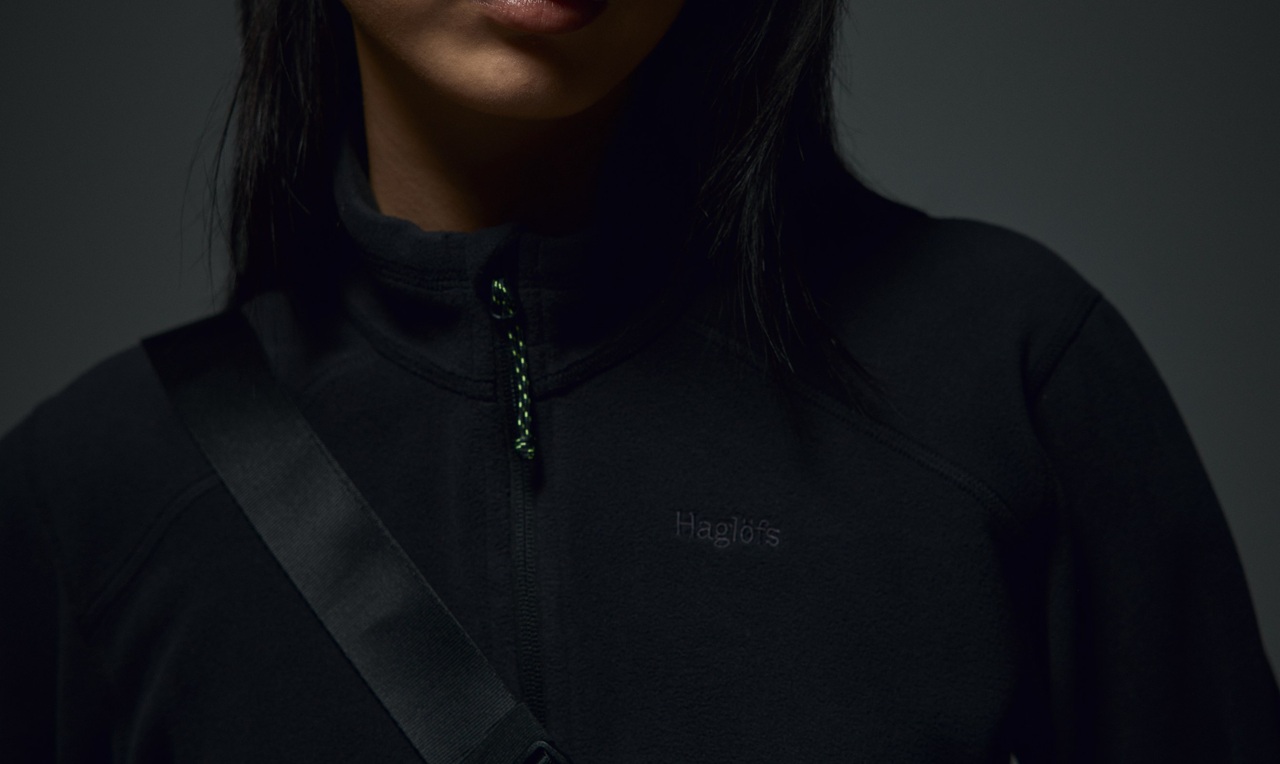
Among all available colors, black demands the most intense application of energy and chemistry. Creating a deep, consistent, color-fast, and neutral black requires the simultaneous layering of multiple disperse dye formulas. Each additional dye component increases the required chemical load, demands multiple fixation cycles, and consumes vast quantities of thermal energy and water.
Globally, the textile and apparel sector accounts for approximately 20 percent of all industrial water pollution, with wet processing—specifically dyeing and finishing operations—generating the largest share of that environmental footprint. Depending on the efficiency of the facility, the processing method, and the target depth of shade, producing a single kilogram of dyed polyester fabric can require anywhere from 30 to 150 liters of water. Because black sits at the absolute peak of the shade spectrum, it consistently registers at the highest end of this resource-consumption scale.
The Economics of Fragmented Minimum Order Quantities
Beyond environmental costs, the proliferation of distinct black shades is driven by deeply entrenched operational constraints within global supply chains, specifically Minimum Order Quantities (MOQs).
Commercial dye houses operate on batch economics. To run a dye cycle cost-effectively, a manufacturer requires a minimum volume of raw fabric—often several hundred kilograms per run, if not thousands. Traditionally, individual outdoor apparel brands commission proprietary dye recipes tailored to their specific brand identity guidelines. Brand A requests a slightly cooler, blue-undertone black, while Brand B specifies a warmer, carbon-toned black.
Individually, these decisions appear rational and minor. However, when aggregated across the hundreds of brands operating within the global outdoor and athletic apparel markets, the collective outcome is staggering inefficiency. Dozens of separate companies independently commission dozens of marginally different black dye runs. Each run requires its own laboratory recipe development, its own rigorous quality approval cycles, specialized chemical inputs, high-temperature water baths, and distinct wastewater treatment protocols.
The resulting waste is not concentrated in any single corporate failure, but rather in the cumulative friction of an uncoordinated industrial system where competitors duplicate identical processes to achieve virtually indistinguishable end products.
Genesis of the Black Capsule Project
Before formally launching a commercial collection based on their new initiative, Haglöfs and Polartec chose to demonstrate the absurdity of this hidden redundancy through a conceptual design exercise known as the Black Capsule Project.
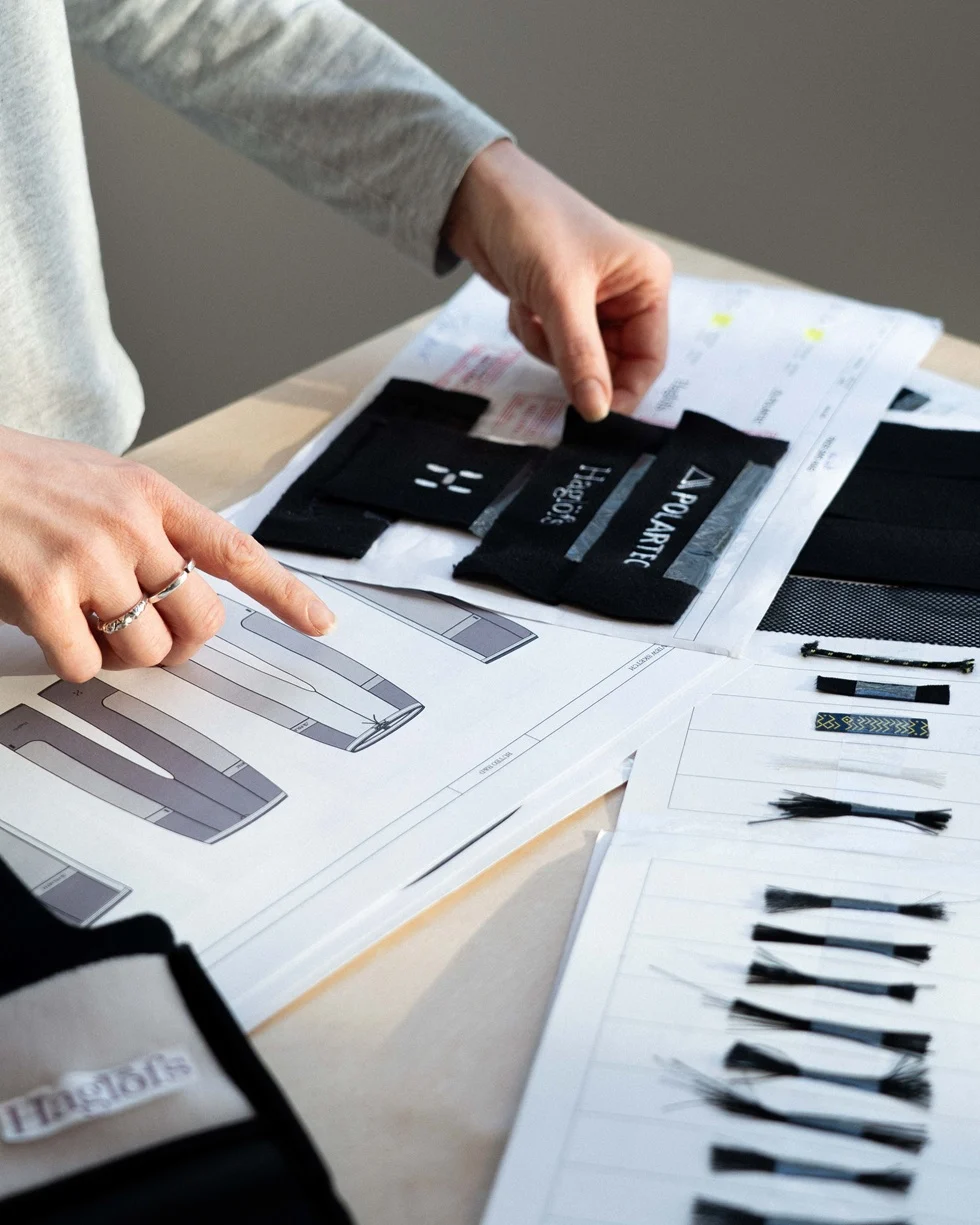
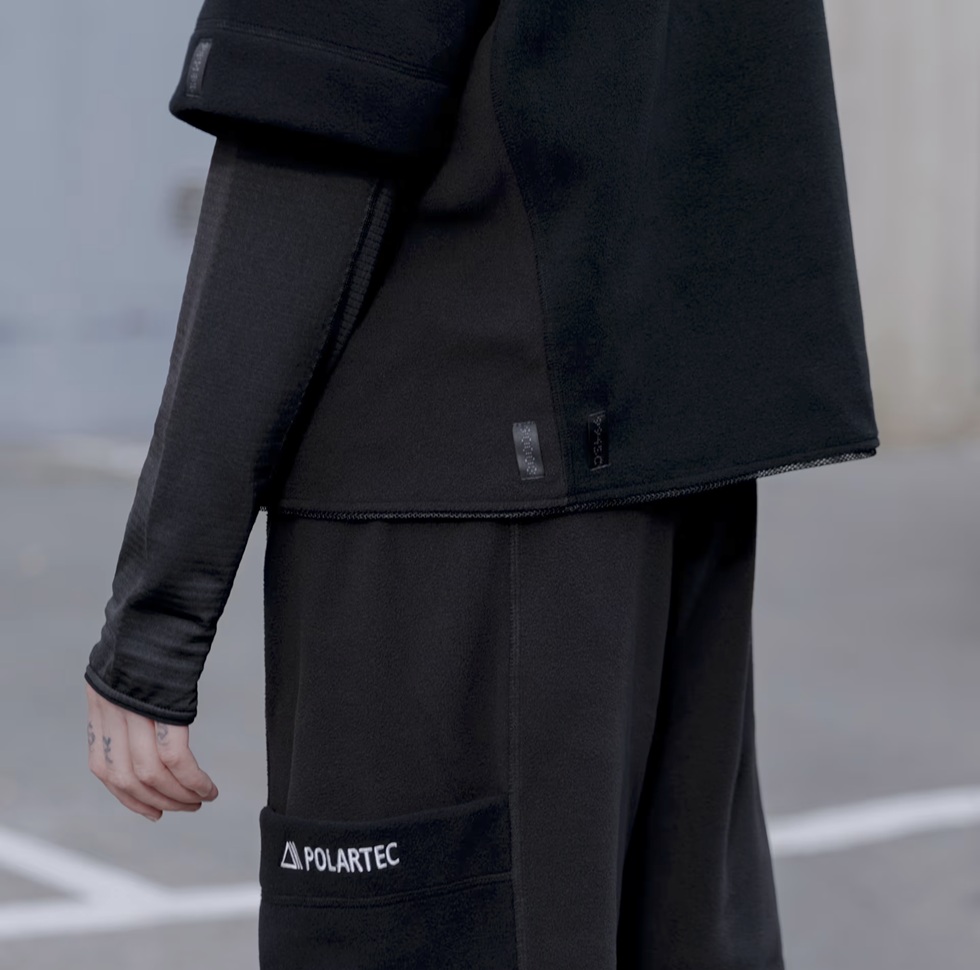
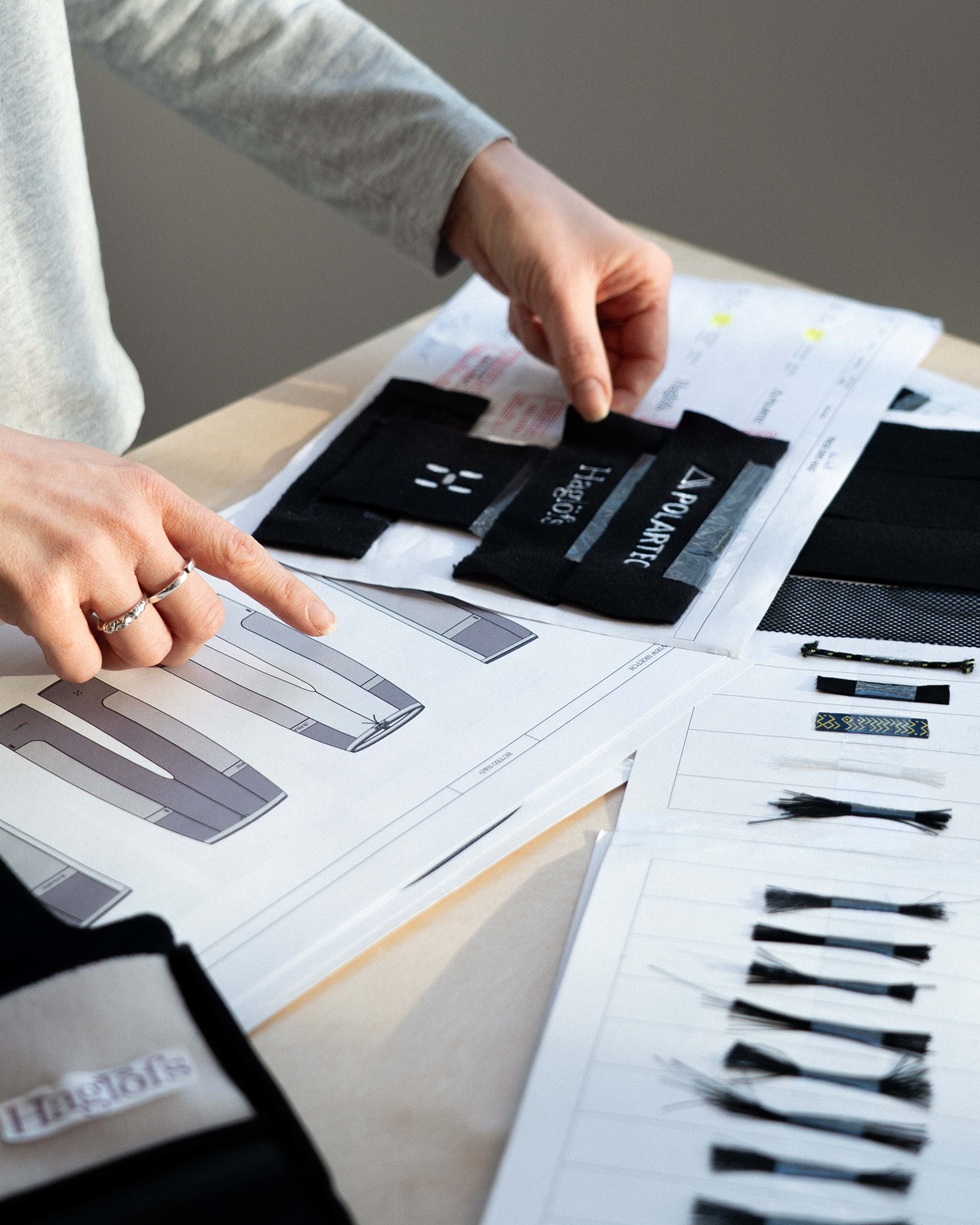
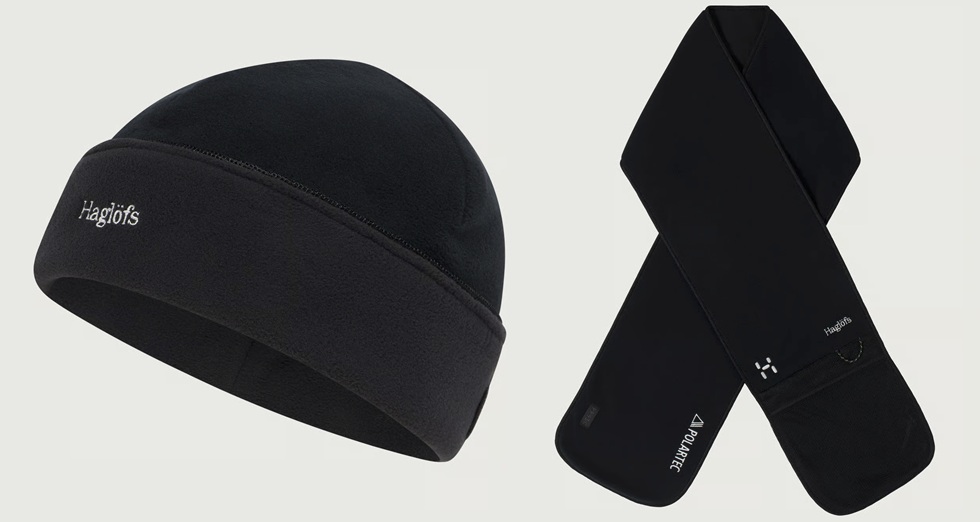
The limited-edition collection comprises a Project Tee, a matching Beanie, a Scarf, and a pair of Pants. Each garment is constructed not from a single uniform roll of fabric, but rather by stitching together multiple panels of leftover black Polartec fleece sourced from various independent dye runs.
To make their point unmistakable, every pattern piece on every garment in the Black Capsule collection features a prominent woven label stamped with its original color batch number. These numbers explicitly identify which separate dye run produced each specific panel. When consumers or industry insiders handle the garment, they can physically see and feel the subtle variances between batch shades—shades that were engineered separately, consumed separate energy and water resources, and arrived at the same retail rack by entirely independent industrial pathways.
The Evolution Toward a Universal Standard
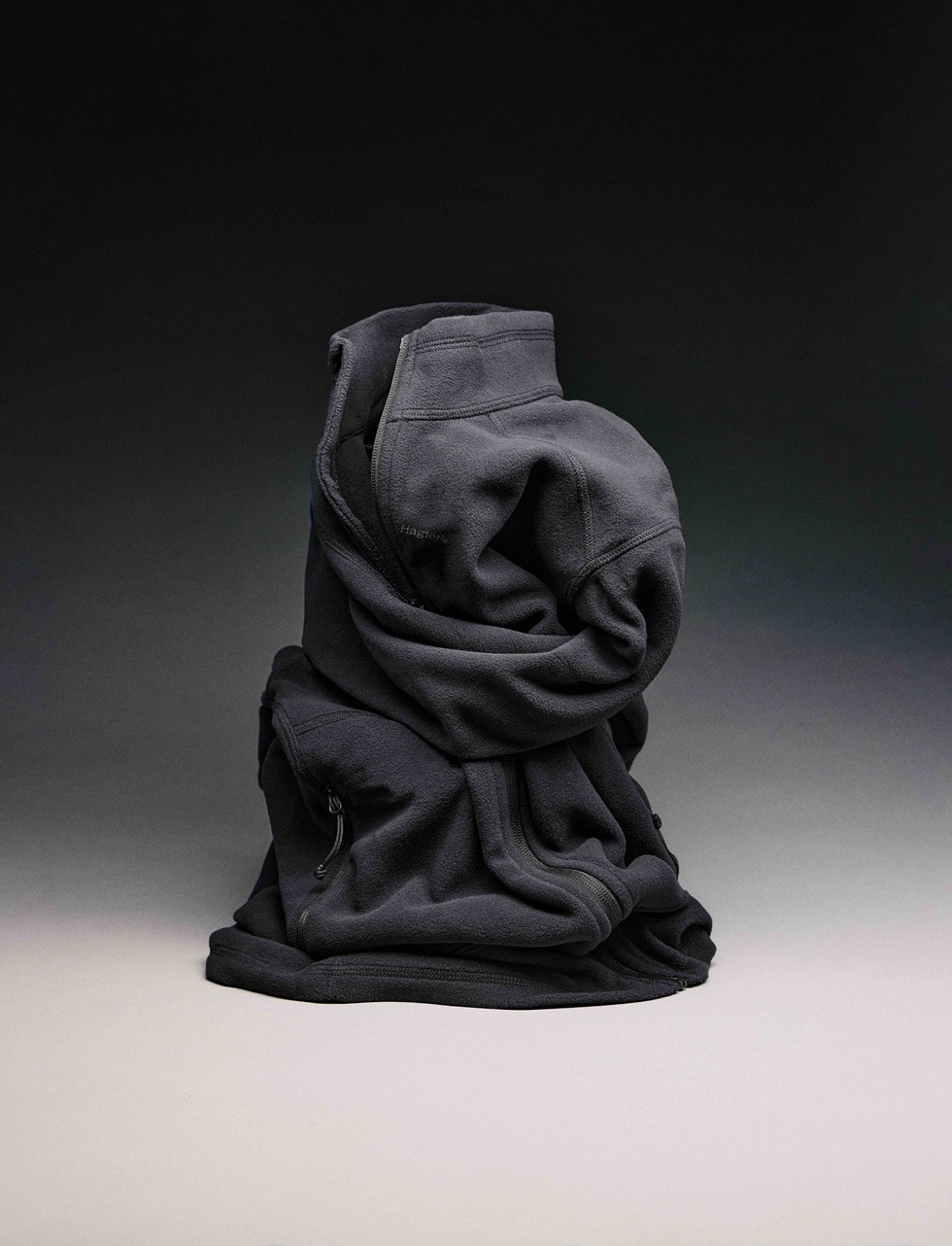
The pragmatic solution proposed by Haglöfs and Polartec is conceptually straightforward: establish a single, optimized, universally shared shade of black for the entire outdoor industry.
Under this model, Polartec produces this designated standard black at scale as part of its core, continuous manufacturing operations. Crucially, the formulation is made openly available to any apparel brand wishing to adopt it, devoid of proprietary lock-ins, restrictive licensing fees, or withheld competitive advantages. By consolidating what would otherwise manifest as dozens of fragmented, small-to-medium dye batches into massive, continuous production runs, the operational efficiencies multiply exponentially.
Internal assessments conducted by Haglöfs suggest that consolidating dye batches through Standard Issue Black yields dramatic resource savings. The company estimates a reduction of over 50 percent in water usage and at least a 20 percent decrease in energy consumption compared to traditional, fragmented piece-dyed black synthetic fabrics. While these figures represent corporate projections rather than third-party verified lifecycle analyses, the underlying industrial chemistry principles are well-established. Economies of scale in textile dyeing reliably drive down per-unit environmental impacts.
Commercial Implementation and the Buteo Mid II Jacket
The transition from conceptual communication to commercial reality begins in earnest with Haglöfs’ Fall/Winter 2026 collection cycle. Rather than relegating Standard Issue Black to a niche, limited-run sustainability collection, the brand has integrated the standard directly into one of its highest-volume commercial staples: the Buteo Mid II Jacket.
Eva Weiss, Head of Design and Research & Development at Haglöfs, emphasized the strategic importance of applying the standard to a best-selling volume driver rather than an exclusive product line. The environmental rationale behind Standard Issue Black depends entirely on scale. Deploying the initiative in a mass-market silhouette ensures that the material achieves the high-volume yardage required to fundamentally shift dye-house output metrics.
Industry Response, Creativity Concerns, and Standardization Parallels
Despite the clear environmental and economic logic supporting Standard Issue Black, widespread adoption across the wider outdoor apparel sector faces predictable headwinds. The primary objection raised by apparel designers concerns creative limitation. The foundational fear within design departments is that universal color standardization will lead to homogenized aesthetics, eroding brand differentiation in a crowded marketplace.
Industry analysts and brand leaders, however, argue that this concern misallocates where differentiation truly occurs. In technical outerwear and mid-layer design, brand identity is rarely established by subtle, microscopic undertones of black fleece. Instead, differentiation is driven by silhouette, tailoring, structural architecture, hardware selection, technical fabric performance, pocket configurations, trim details, branding placement, and seasonal accent colorways. Black has historically served as a neutral, reliable foundation across the industry.
Proponents of the initiative often draw parallels to other structural standardizations within the textile and apparel trades. Decades ago, the outdoor industry quietly standardized around a small number of fastener systems, most notably allowing YKK to dominate the zipper market. The ubiquity of standardized hardware did not suppress creative expression; rather, it freed design teams to focus their creative energy on functional innovation and aesthetic execution. Standard Issue Black applies this exact philosophy to color chemistry.
Overcoming Institutional Inertia and the Green Premium
The ultimate test for Standard Issue Black is not technical feasibility or consumer acceptance, but institutional inertia. The outdoor industry possesses a long-established history of launching well-intentioned, highly sustainable initiatives that struggle to gain traction outside of their originating brand partnerships due to competitive silos and entrenched supply chain habits.
Furthermore, many sustainability initiatives stumble over the "green premium" dilemma—the invisible economic barrier where eco-friendly alternatives cost significantly more to produce, forcing brands to pass costs onto price-sensitive consumers. Standard Issue Black neatly bypasses this obstacle because its economic structure is neutral to positive. By streamlining manufacturing and leveraging batch efficiencies, production costs remain stable or decrease, removing financial disincentives for competing brands.
As Haglöfs rolls out the Buteo Mid II Jacket and Polartec continues to market the universal standard to global apparel partners, the broader industry faces a decisive moment. Standard Issue Black does not demand that brands halt their manufacturing engines or fundamentally compromise their design autonomy. It simply asks the industry to do less of what is redundant, resource-intensive, and entirely invisible to the end user. Whether rival outdoor brands are prepared to answer that call will determine whether Standard Issue Black remains a visionary corporate initiative or evolves into a new global standard for the entire textile sector.