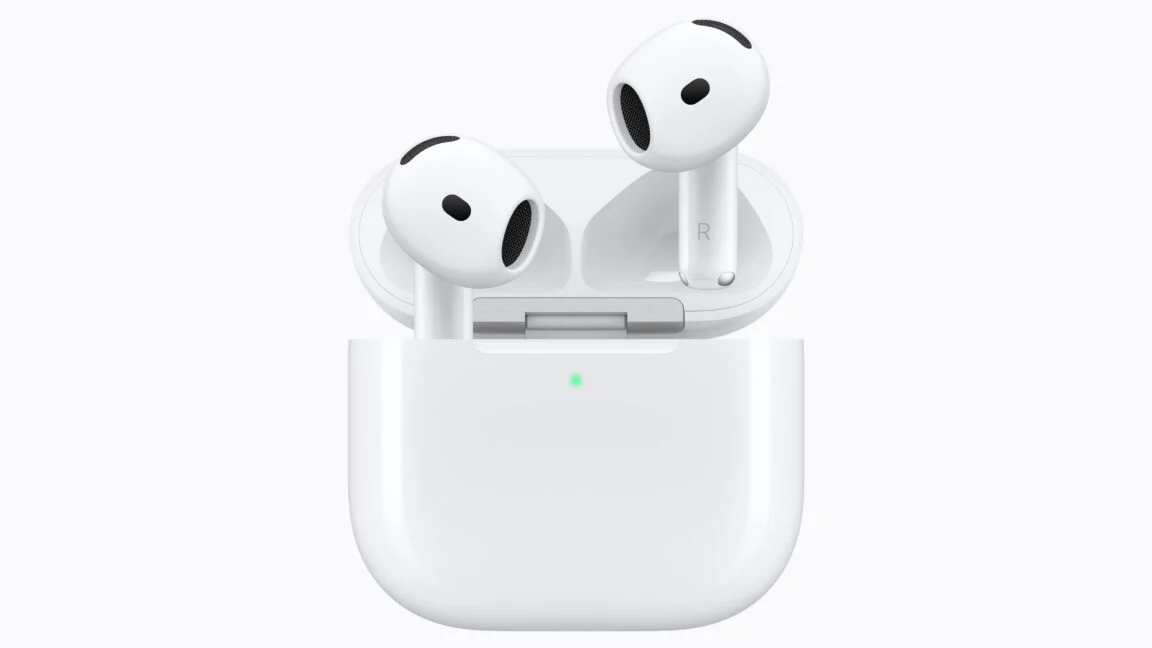
Apple has officially unveiled the AirPods 5, a significant iteration in its audio lineup that promises to redefine the standards for open-ear listening experiences. Announced during the company’s surprise "Surprise and Shine" event, the new devices arrive with a focus on superior acoustic performance and advanced computational processing. By positioning the entry-level model at $129 and a feature-rich wireless charging variant at $149, Apple is making a calculated move to capture a larger segment of the consumer audio market, directly addressing previous critiques regarding the cost-to-feature ratio of its predecessors.
A New Chapter in Apple Audio Engineering
The AirPods 5 represent a notable shift in how Apple approaches the open-ear design philosophy. While the AirPods 4, released in September 2024, established a baseline for high-fidelity audio, the AirPods 5 aim to bridge the gap between casual listening and professional-grade noise management. The core of this upgrade lies in the integration of a redesigned multiport acoustic architecture. By optimizing the internal airflow and the placement of microphone arrays, Apple engineers have managed to achieve a 50 percent increase in noise cancellation efficacy compared to the previous generation.
This improvement is not merely hardware-dependent. The AirPods 5 utilize updated computational audio algorithms that process ambient sound in real-time, allowing for a more nuanced distinction between disruptive background noise and essential auditory cues. This advancement is paired with an upgraded transparency mode, which Apple claims provides a more natural, lifelike representation of the user’s surroundings, making it easier for wearers to engage in conversation without removing the earbuds.
Chronology of the AirPods Lineup
To understand the trajectory of the AirPods 5, one must look at the evolution of Apple’s audio hardware over the last decade. Since the launch of the original AirPods in 2016, which sparked the industry-wide trend toward truly wireless stereo (TWS) earbuds, Apple has maintained a consistent cycle of innovation.
- December 2016: The original AirPods launch, setting the standard for connectivity and ease of use within the Apple ecosystem.
- March 2019: The second-generation AirPods arrive, introducing "Hey Siri" functionality and the H1 chip.
- October 2019: Apple expands the portfolio with the AirPods Pro, bringing active noise cancellation (ANC) to the in-ear form factor.
- October 2021: The third-generation AirPods are released, featuring a redesigned chassis and spatial audio support.
- September 2024: The AirPods 4 are launched at $129, with an ANC-capable version priced at $179, creating a tiered experience that segmented the market based on feature access.
- September 2026: The AirPods 5 debut, consolidating the value proposition by offering enhanced ANC capabilities at a significantly lower entry point than the ANC-capable variants of the past.
Market Strategy and Pricing Analysis
The pricing strategy for the AirPods 5 is perhaps the most significant element of the announcement. In 2024, consumers were faced with a decision: purchase the entry-level AirPods 4 for $129 or pay a $50 premium to access the Active Noise Cancellation model at $179. With the AirPods 5, Apple has effectively eliminated that price gap for the core experience. By offering a robust set of features starting at $129, Apple is likely attempting to neutralize competition from third-party manufacturers that have flooded the sub-$150 market with aggressive feature sets.
The $149 model, which includes a wireless charging case, on-stem volume control, and extended battery life, provides an upsell path for power users without creating a prohibitive price barrier. This strategy is indicative of Apple’s current focus on service integration and ecosystem lock-in, where the primary goal is to ensure as many users as possible are utilizing premium, high-functioning hardware that reinforces the value of Apple Music and spatial audio content.
Technical Insights: Adaptive Audio and Hardware Integration
During the "Surprise and Shine" presentation, Dave Pakula, Apple’s Vice President of Hardware Engineering, highlighted the sophisticated nature of the device’s adaptive audio system. "The AirPods 5 are designed to operate as an extension of the user’s sensory perception," Pakula noted. "By dynamically shifting between active noise cancellation and transparency modes based on environmental cues, the device ensures that the user is never disconnected from their surroundings unless they choose to be."
This adaptive behavior is facilitated by high-speed sensors that monitor ambient decibel levels thousands of times per second. When the system detects a sharp change—such as a sudden loud noise or a shift in wind speed—it adjusts the audio output instantaneously. This is a marked improvement over previous iterations, which often required manual toggling or experienced a slight latency in mode switching.
The hardware itself has also undergone a design refinement. The stem of the AirPods 5 is slightly more ergonomic, housing the haptic sensors for volume control and playback navigation. By moving these controls to the stem, Apple has minimized the chance of accidental inputs, a common user complaint in earlier models that relied on tap-based gesture controls.
Industry Implications and Competitive Landscape
The release of the AirPods 5 arrives at a time when the TWS market is nearing a saturation point. Major competitors, including Sony, Bose, and Samsung, have long offered noise-canceling capabilities across various price points. However, Apple’s ability to leverage the H-series silicon—now in its most advanced iteration within the AirPods 5—grants it a unique advantage in terms of power efficiency and ecosystem integration.
Industry analysts suggest that this launch could exert significant downward pressure on the market. If Apple, the dominant player in the premium audio segment, sets a high technical standard at a sub-$150 price, other manufacturers may be forced to either lower their prices or accelerate their own R&D cycles to remain competitive. This cycle of "competitive innovation" is beneficial for the consumer, who now has access to features like professional-grade noise cancellation that were reserved for flagship models only two years ago.
Furthermore, the emphasis on "open-ear" design serves a specific demographic: those who prioritize comfort and situational awareness over the vacuum-sealed isolation of in-ear tips. By perfecting the open-ear ANC experience, Apple is effectively carving out a new niche that satisfies both the office professional needing to hear colleagues and the commuter needing to block out city noise.
Environmental and Sustainability Considerations
As part of its ongoing environmental commitments, Apple confirmed that the AirPods 5 incorporate a higher percentage of recycled materials than any previous generation. The internal magnets utilize 100 percent recycled rare earth elements, and the solder used in the logic board is composed of 100 percent recycled tin.
This move aligns with Apple’s broader "Apple 2030" initiative, which aims to make the company’s entire carbon footprint neutral by the end of the decade. While the release of new hardware is inherently resource-intensive, Apple’s focus on longevity—improving battery efficiency and utilizing more sustainable components—is a key part of its narrative to justify frequent hardware refreshes to a sustainability-conscious consumer base.
The Consumer Outlook
With preorders now live and a retail availability date set for September 18, the initial consumer reception appears to be overwhelmingly positive. Early reviews suggest that the "Surprise and Shine" event was well-timed, coming just ahead of the holiday shopping season. For those currently using older AirPods models, the AirPods 5 offer a compelling upgrade path that balances cost with tangible performance gains.
As Apple continues to iterate on its audio hardware, the focus is clearly moving away from simple connectivity and toward intelligence. The AirPods 5 are not just headphones; they are an intelligent audio processing device. Whether this will lead to further integration with AI-driven voice assistants or advanced health-tracking features in the future remains a subject of intense speculation. However, for the present, the AirPods 5 stand as a testament to Apple’s ability to refine, repackage, and reprice its technology in a way that consistently moves the needle in the consumer electronics industry.
Conclusion
The AirPods 5 serve as a landmark release that demonstrates Apple’s commitment to maintaining its market leadership through strategic innovation and aggressive pricing. By successfully integrating complex computational audio features into a more accessible price bracket, Apple has not only addressed the limitations of the AirPods 4 but has also set a new benchmark for the entire TWS industry. As the product hits shelves on September 18, the tech world will be watching to see how competitors respond to this shift, and how quickly these high-end features become the industry standard for all consumer-grade wireless audio devices. The evolution of the AirPods remains one of the most successful product arcs in modern tech history, and the AirPods 5 are poised to continue that legacy with significant impact.