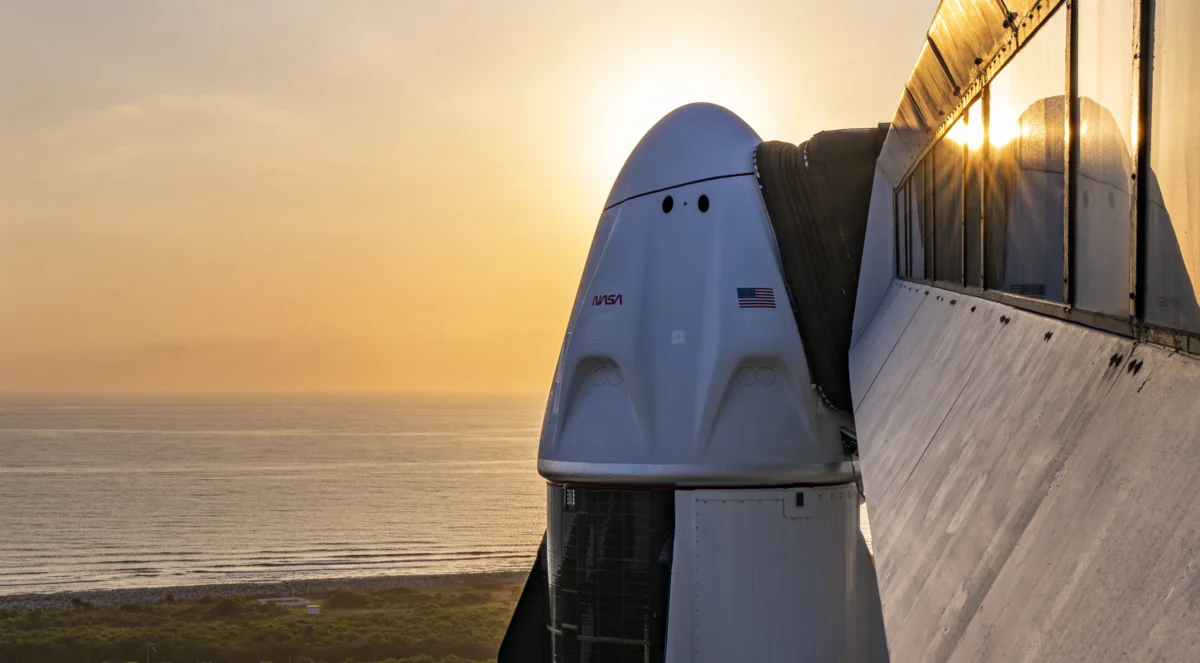
The National Aeronautics and Space Administration (NASA) has officially finalized a $946 million contract modification with SpaceX, securing three additional crewed flights to the International Space Station (ISS). Announced on Friday, the agreement extends SpaceX’s foundational Commercial Crew Transportation Capability (CCtTcap) contract, bringing its aggregate value to $5.92 billion across 17 distinct operational missions.
The newly added flights—designated Crew-15, Crew-16, and Crew-17—will utilize SpaceX’s Falcon 9 rockets and Crew Dragon spacecraft, lifting off from launch complexes in Florida. The comprehensive performance period stretches through the end of the decade, cementing SpaceX’s status as the primary transport provider for American and international astronauts traveling to low-Earth orbit.
Scope of the Agreement and Operational Responsibilities
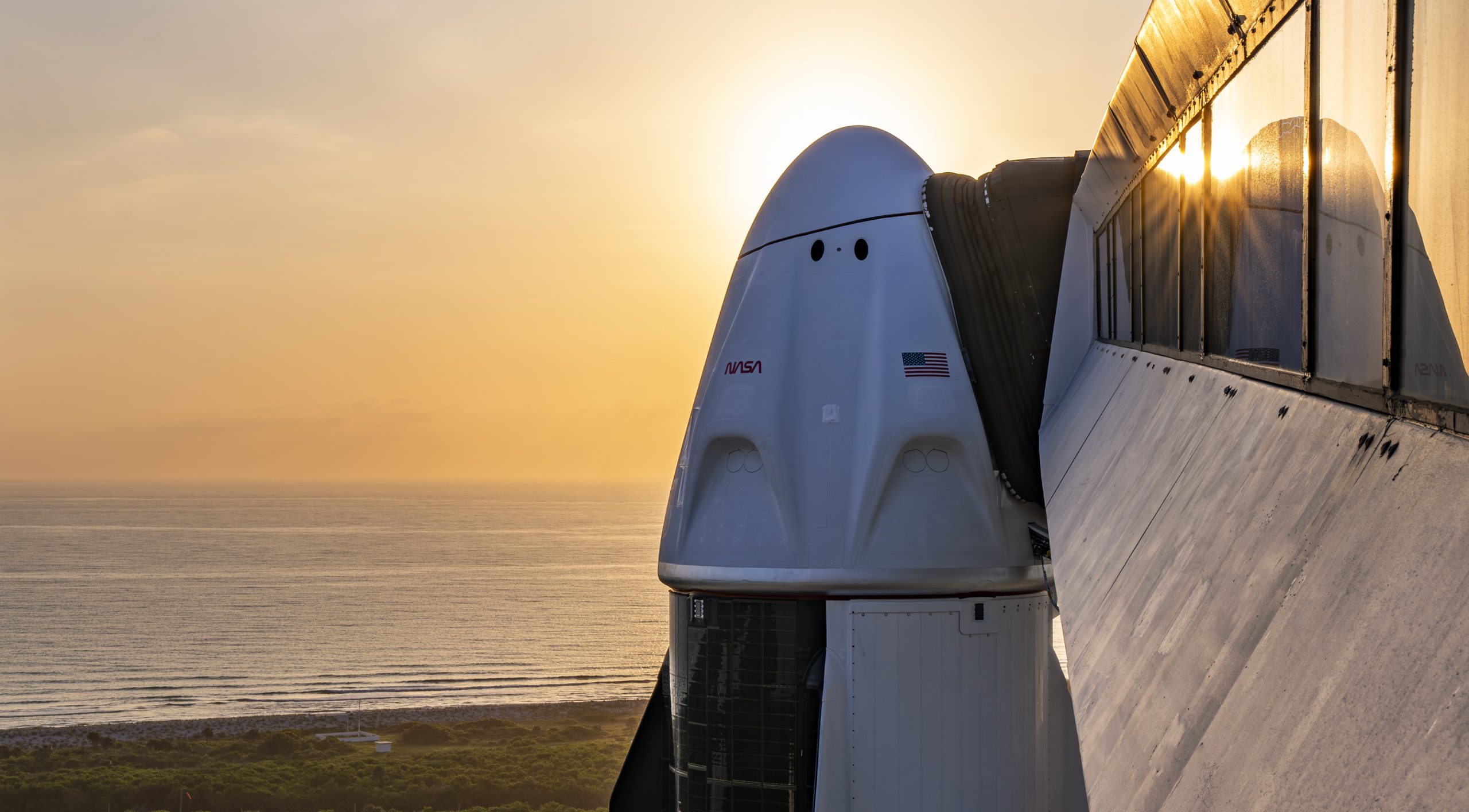
The nearly $1 billion contract modification encompasses a wide array of mission-critical services. Beyond the core objective of transporting human crews to and from the orbiting laboratory, the agreement covers comprehensive ground operations, pre-flight preparations, launch sequences, in-orbit monitoring, and precision splashdown and recovery operations.
Furthermore, the contract stipulates that the assigned Crew Dragon vehicles will provide ongoing cargo transport capabilities and serve as a reliable "lifeboat" while docked at the space station. This emergency egress capability is a mandatory safety requirement for all commercial crew vehicles, ensuring that astronauts can evacuate the ISS rapidly if an unforeseen orbital hazard or structural emergency arises.
SpaceX formally acknowledged the award on social media platform X, stating its enthusiasm for continuing to support NASA’s scientific and operational goals. "We’re excited for Falcon 9 and Dragon to launch NASA’s Crew-15, 16, and 17 missions to the Space Station from Florida," the company posted.
Chronology and Strategic Context
The formal contract award follows a formal notice of intent issued by NASA in May, during which the space agency signaled its intention to procure up to six additional post-certification missions from SpaceX. That procurement decision was heavily influenced by ongoing technical hurdles and schedule delays experienced by Boeing, NASA’s other commercial crew partner.
Boeing’s CST-100 Starliner program has faced numerous setbacks, notably during its crewed flight test in 2024. While the spacecraft successfully reached the ISS, persistent thruster anomalies and helium leaks prompted mission managers to return the spacecraft uncrewed, leaving the astronauts to return later aboard a SpaceX vehicle. Consequently, Boeing has spent the intervening months conducting extensive root-cause analyses and ground testing, and it has yet to fly an operational, multi-month crew rotation mission for NASA.
By locking in Crew-15 through Crew-17, NASA has guaranteed uninterrupted access to the ISS, mitigating the risk of operational gaps. Meanwhile, the remaining three missions from the May notice of intent remain unallocated, leaving open the possibility that Boeing could secure those flights should Starliner successfully achieve final NASA certification.

Current ISS Operations and Industry Reactions
The cadence of the Commercial Crew Program remains active. Crew-12 is currently docked at the space station, carrying out scientific research and station maintenance, while NASA has confirmed that preparations for the launch of Crew-13 are targeted for the coming weeks.
Industry leaders have been candid about the shifting landscape of orbital logistics. Speaking at an industry event, SpaceX President Gwynne Shotwell addressed the long-term viability of the company’s human spaceflight hardware, noting that while Crew Dragon is not being retired in the near term, the company remains focused on meeting its contractual obligations through 2030. This timeline aligns closely with the anticipated decommissioning window of the International Space Station, after which orbital infrastructure is expected to transition toward commercially operated private space stations.
Despite concurrent advancements by SpaceX on its next-generation Starship architecture—designed for deep-space exploration to the Moon and Mars—the Falcon 9 and Crew Dragon ecosystem remains the indispensable workhorse for near-Earth orbital transport.

Broader Implications for Commercial Spaceflight
The consolidation of long-term crew transportation services under SpaceX underscores a pivotal era in aerospace history. When NASA initially awarded the Commercial Crew contracts to both SpaceX and Boeing in 2014, the dual-provider strategy was explicitly designed to ensure redundancy, competitive pricing, and uninterrupted access to space.
However, aerospace analysts note that the widening capability gap between the two providers has concentrated a significant portion of NASA’s operational reliance onto a single platform. While this ensures mission safety and schedule reliability for the remainder of the decade, it also highlights the inherent financial and technical complexities of human-rated spacecraft development.
As NASA looks toward the late 2020s and the eventual transition from the ISS to commercial low-Earth orbit destinations, agreements like the $946 million modification provide the fiscal and operational stability required to maintain a continuous human presence in space. With Crew-15 through Crew-17 now officially on the manifest, SpaceX’s operational footprint in low-Earth orbit is guaranteed well into the back half of the decade.