The Evolution of the Budget Laptop Market
The landscape for affordable computing has shifted dramatically over the last five years. Historically, sub-$500 laptops were synonymous with sluggish performance, poor battery life, and fragile chassis designs. This was largely due to the reliance on low-power, inefficient processors and inferior storage solutions like eMMC drives. Today, however, the industry has benefited from the "Chromebook Plus" initiative and more efficient x86 architecture from Intel and AMD.

These developments have arrived at a critical juncture. As inflation and potential supply chain shifts—including discussions around hardware tariffs—loom over the tech sector, consumers are increasingly seeking value-oriented hardware that can withstand three to four years of academic or light professional use. The current crop of budget laptops is no longer just "disposable" hardware; they are sophisticated tools capable of managing web-heavy workflows, document creation, and multimedia consumption.
Top Performers in the 2025 Budget Category
Our evaluation process, which includes rigorous testing for display accuracy, multi-core processing speeds, and real-world battery endurance, has identified four standout devices that currently lead the market.
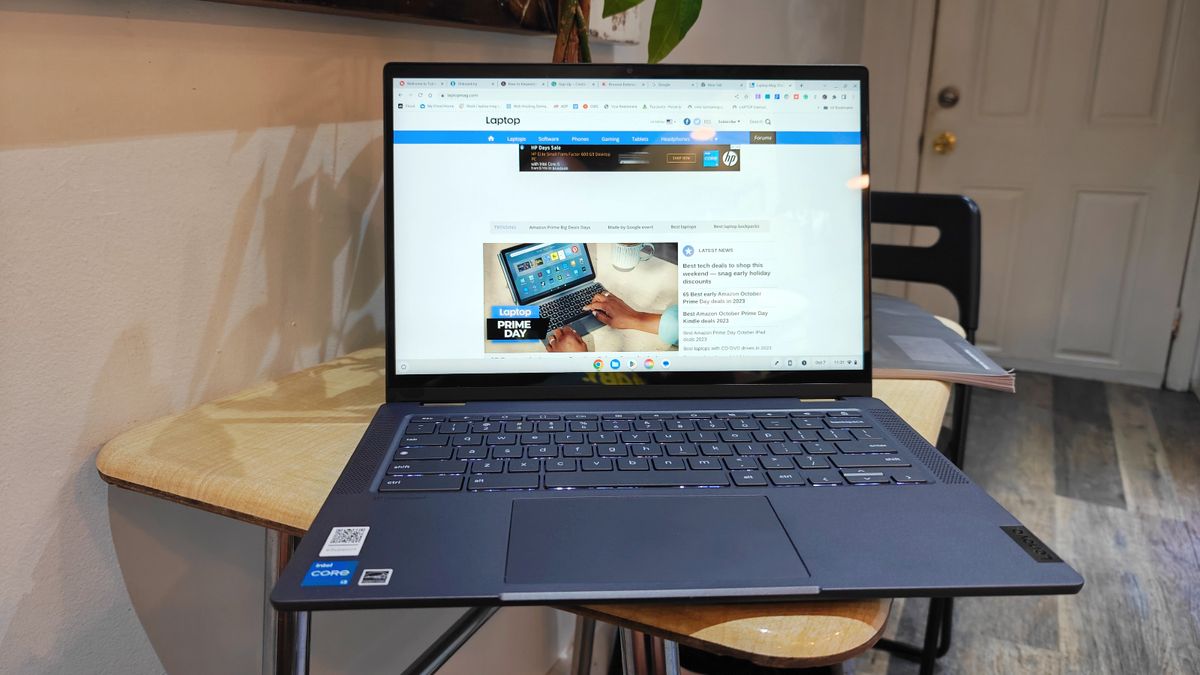
1. Lenovo IdeaPad Flex 5i Chromebook Plus (Best Overall)
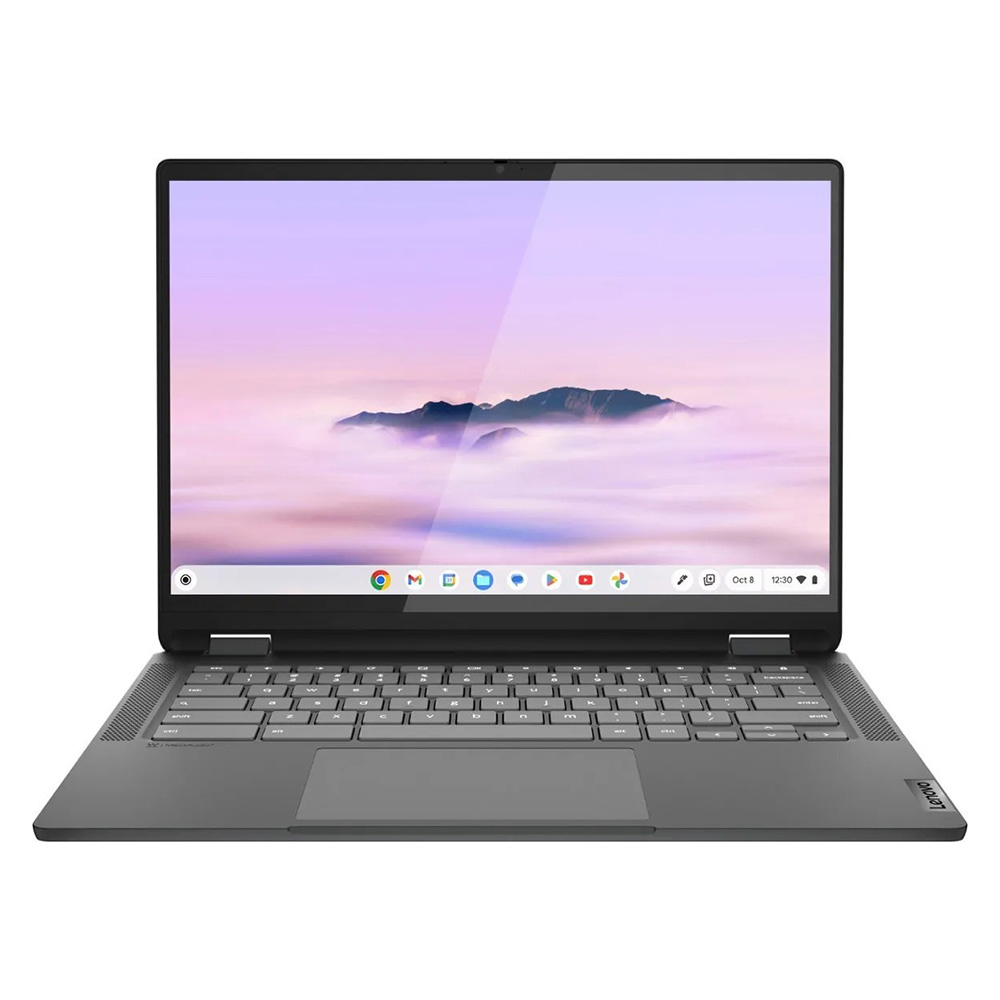
The Lenovo IdeaPad Flex 5i Chromebook Plus stands as the gold standard for the sub-$500 category. Utilizing an Intel Core i3-1315U processor, it offers a level of responsiveness rarely seen in this bracket. With a Geekbench 6 multi-core score of 5,384, it significantly outperforms the average Chromebook. Its 14-inch IPS touch display, featuring a 16:10 aspect ratio, provides the vertical workspace necessary for efficient multitasking. The integration of AI-backed performance enhancements, coupled with a robust, sturdy hinge design, makes this the most versatile option for users who demand a premium experience without the premium price tag.
2. Lenovo Duet 5 Chromebook (Best Under $300)
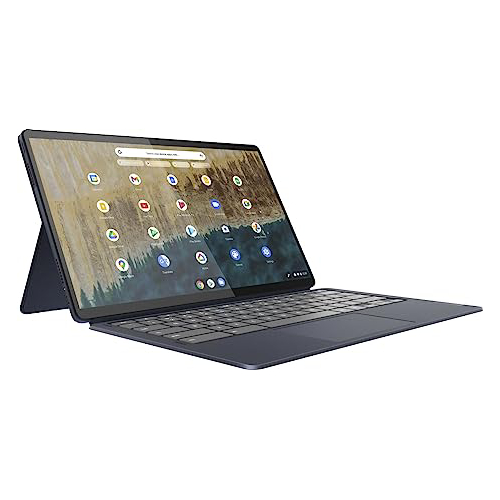
For those operating on a stricter budget, the Lenovo Duet 5 Chromebook remains a market anomaly. Priced consistently under $300, it defies expectations by offering a 13.3-inch OLED display. OLED technology is typically reserved for high-end gaming laptops or flagship ultrabooks, yet here it delivers vibrant colors and deep blacks. While its processing power, driven by the Qualcomm Snapdragon 7c Gen 2, is lower than the Flex 5i, its 13-hour, 31-minute battery life and detachable form factor make it an exceptional secondary device for media streaming and light productivity.
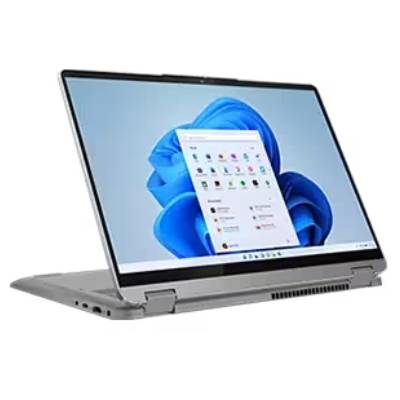
3. Lenovo IdeaPad Flex 5 14 (Best Windows Option)
Finding a Windows laptop under $500 that does not suffer from immediate performance degradation is difficult, but the Lenovo IdeaPad Flex 5 14 (Intel) succeeds where others fail. It provides a tactile, responsive typing experience and a reliable Intel Core i5-1135G7 processor. While the display is arguably its weakest link, the internal hardware is capable of handling more intensive tasks than the average Chromebook. With a battery life exceeding 14 hours in our web-surfing tests, it remains a highly competitive choice for users who require the flexibility of the Windows ecosystem.
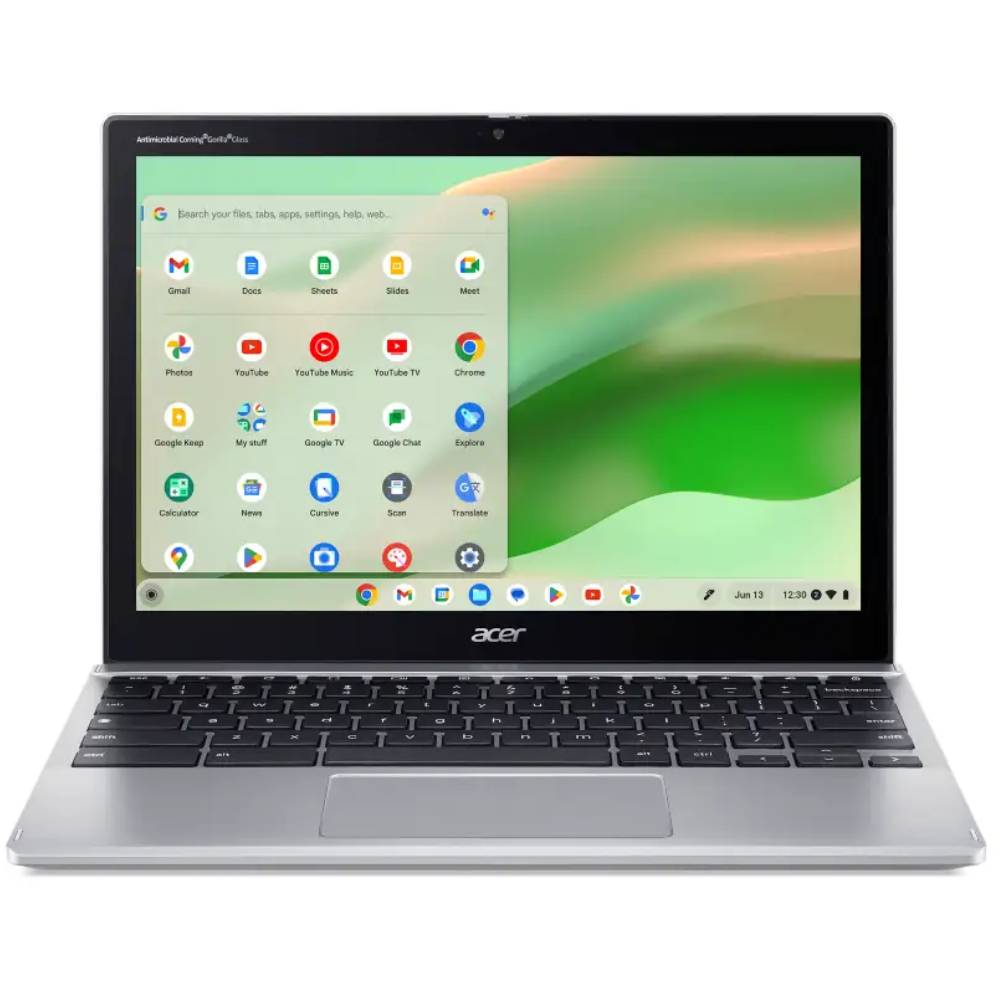
4. Acer Chromebook Spin 312 (Best for Students)
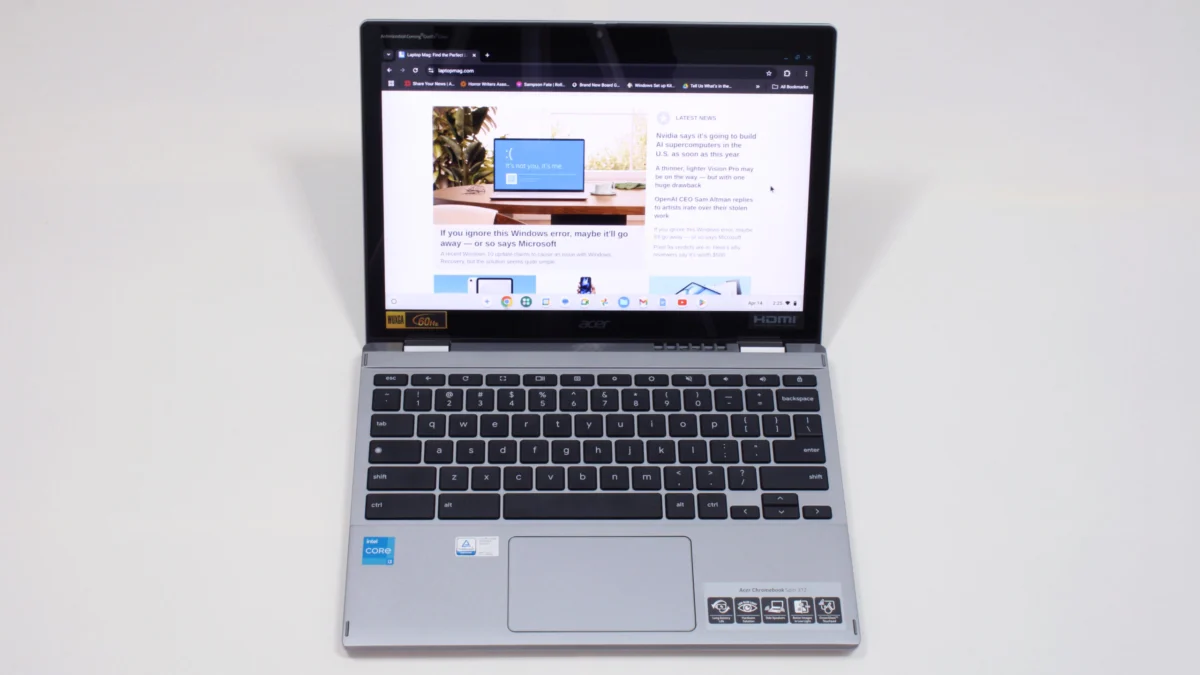
The Acer Chromebook Spin 312 is specifically optimized for the educational environment. It features a durable, silver-coated chassis and the "OceanGlass" touchpad, which offers a tactile experience superior to many laptops twice its price. Its 12.2-inch display and 10-hour battery life provide a balanced profile for students navigating long school days. The inclusion of a 2-in-1 hinge ensures that it can transition seamlessly from a traditional typing setup for essays to a tablet configuration for reading and note-taking.
Technical Performance and Comparative Analysis
To understand how these machines hold up under pressure, we subject each to a suite of synthetic and real-world benchmarks. The following data highlights the performance gap between top-tier budget devices and the broader market average.
| Metric | IdeaPad Flex 5i (Plus) | Duet 5 Chromebook | IdeaPad Flex 5 14 | Acer Spin 312 |
|---|---|---|---|---|
| Geekbench 6 (Multi) | 5,384 | N/A | N/A | 4,477 |
| Battery (Web Surf) | 09:43 | 13:31 | 14:16 | 10:33 |
| Display Brightness | 306 nits | 361 nits | 200 nits | 277 nits |
The data reveals a clear trade-off: users must choose between raw processing power (Flex 5i) and display quality (Duet 5). Furthermore, the battery life performance across all four models significantly exceeds the standard eight-hour workday requirement, a major improvement over previous generations of budget laptops.
Strategic Implications and Market Outlook
The resilience of the budget laptop market is a testament to the essential role these devices play in modern society. As of 2025, industry analysts note that while the average price of consumer electronics has been subject to volatility due to global tariff discussions and supply chain adjustments, the "value" tier has seen a stabilization in quality.
Retailers and manufacturers have begun to prioritize longevity in these machines, acknowledging that consumers are less likely to replace a laptop annually. This shift toward "future-proofing"—even at the $500 level—is evidenced by the transition from 4GB to 8GB of RAM as the industry baseline for entry-level machines. However, industry experts caution that if current legislative proposals regarding tech imports are enacted, the availability of high-quality sub-$500 machines could be curtailed, forcing a shift toward even lower-spec hardware or higher price points.

Expert Guidance for Informed Purchasing
When navigating the market for a new budget laptop, consumers should prioritize the following criteria to ensure a wise investment:
- Processor Architecture: Seek out Intel Core i-series or modern Ryzen chips where possible. Avoid older Celeron or Pentium processors if you require multi-tasking capabilities.
- RAM and Storage: 8GB of RAM is the absolute minimum for a smooth Windows or ChromeOS experience. For storage, prioritize an SSD over eMMC whenever possible, though eMMC is acceptable for basic Chromebook usage.
- Portability and Build: A screen size between 12 and 14 inches is ideal for portability. Check the hinge quality; if a 2-in-1 is required, ensure the mechanism feels stiff and durable, as this is the most common point of failure.
- The "Review" Check: Before finalizing a purchase, verify the specific model number. Many manufacturers sell multiple versions of the same chassis with varying internal components. A search for the specific model and the word "review" remains the most effective tool for avoiding underperforming configurations.
Ultimately, the best budget laptop is one that aligns with the user’s specific workflow. If the primary use case is academic research, writing, and web-based communication, a Chromebook remains the most cost-effective solution. If the user requires specialized legacy software or a traditional file management system, the Windows-based options like the Lenovo IdeaPad Flex 5 14 provide the necessary framework, provided the user is willing to accept slightly higher weight and shorter battery longevity compared to their ChromeOS counterparts.
As we progress through 2025, the synergy between performance and price continues to favor the consumer, provided they remain diligent in their research and realistic about the limitations of hardware in this tier. By focusing on battery efficiency, build quality, and essential specifications, users can secure a device that functions as a reliable productivity tool for years to come.