The global knife industry is preparing for the upcoming Blade Show in Atlanta, scheduled for June 5-7, where the intersection of metallurgical science and practical craftsmanship will take center stage. Among the most anticipated technical presentations are those led by Dr. Larrin Thomas, a prominent metallurgical engineer and author, who is set to discuss the factors affecting edge retention and the future of knife steel development. Central to these discussions is the ongoing research into MagnaMax, a high-performance steel designed to push the boundaries of modern cutlery. Recent experimental data comparing industrial vacuum furnace heat treating with custom plate quenching has provided new insights into how manufacturing scale impacts the final mechanical properties of high-alloy steels.
The Evolution of MagnaMax Heat Treatment
The development of MagnaMax represents a significant milestone in the quest for the "perfect" knife steel—a material that balances extreme hardness, high toughness, and corrosion resistance. Initial research into the steel focused on "custom" heat treatment methods, which typically involve small-scale electric furnaces and plate quenching. In this process, a knifemaker places the heated steel between two thick aluminum plates, which rapidly draw heat out of the metal. This method is highly effective for thin sections like knife blades, ensuring a very fast cooling rate that prevents the formation of undesirable microstructures.
However, as MagnaMax moves from the workshops of custom makers to the production lines of major knife manufacturers, the heat treatment process must change to accommodate higher volumes. Industrial heat treating typically utilizes large vacuum furnaces capable of processing hundreds of blades at once. Instead of aluminum plates, these furnaces use pressurized gas quenches—often nitrogen—to cool the steel. The transition from plate quenching to gas quenching introduces variables that can significantly alter the performance of the steel, a phenomenon that has recently been the subject of rigorous testing.
The Physics of Quenching: Speed and Hardenability
The primary challenge in industrial heat treating is the cooling rate. In metallurgy, "hardenability" refers to a steel’s ability to transform from austenite (the high-temperature phase) to martensite (the hard, functional phase) during cooling. If the cooling rate is too slow, the steel may form "pearlite" or "bainite," or carbides may precipitate at the grain boundaries. These formations are detrimental because they reduce both the final hardness and the impact toughness of the blade.
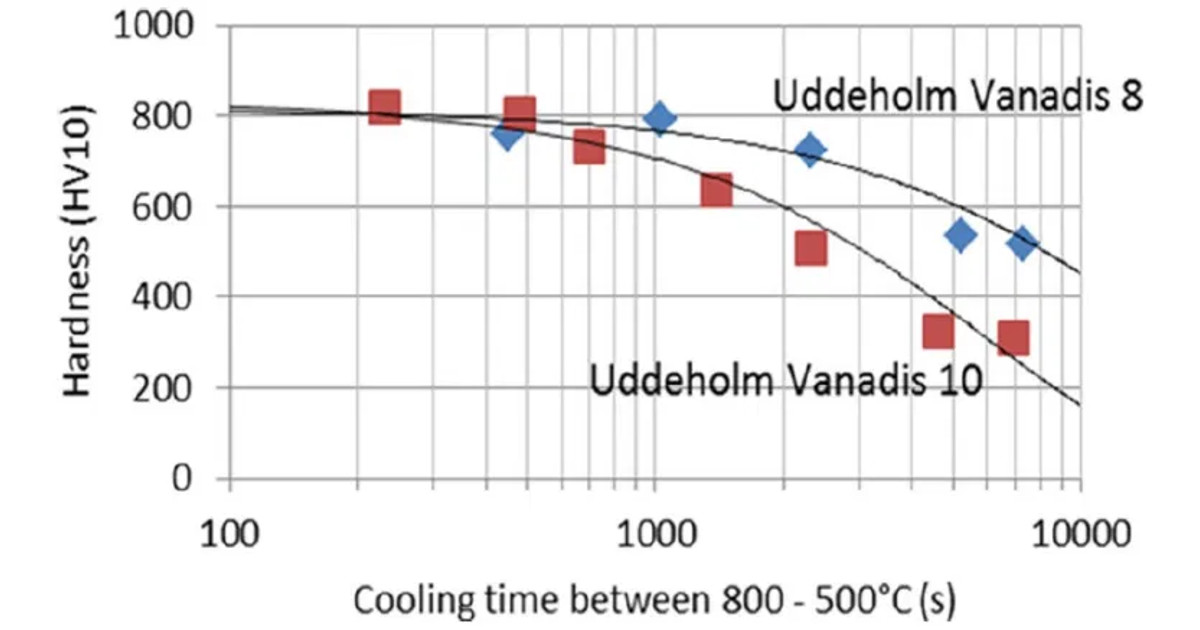
MagnaMax was specifically engineered with approximately 2% molybdenum to combat these cooling issues. Molybdenum is a critical alloying element that increases hardenability, allowing the steel to achieve full hardness even at slower cooling rates. This is a strategy often employed by major steel producers like Uddeholm. For instance, in the development of Vanadis 8, researchers increased molybdenum content from the 1.5% found in Vanadis 10 to 3.6%. Experimental data showed that this increase allowed the steel to maintain high hardness even as the cooling rate decreased, a vital characteristic for large-scale industrial applications where rapid quenching is difficult to achieve uniformly.
Comparative Experiments: Peters’ Heat Treating Study
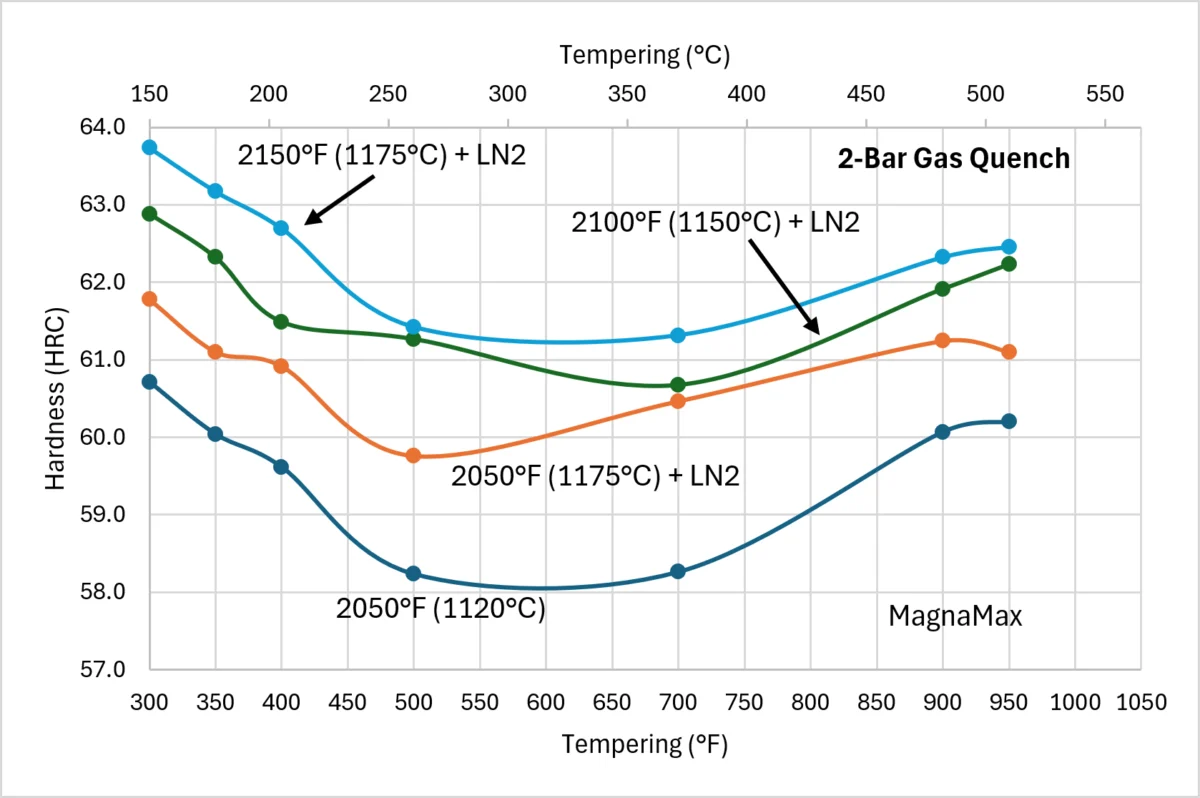
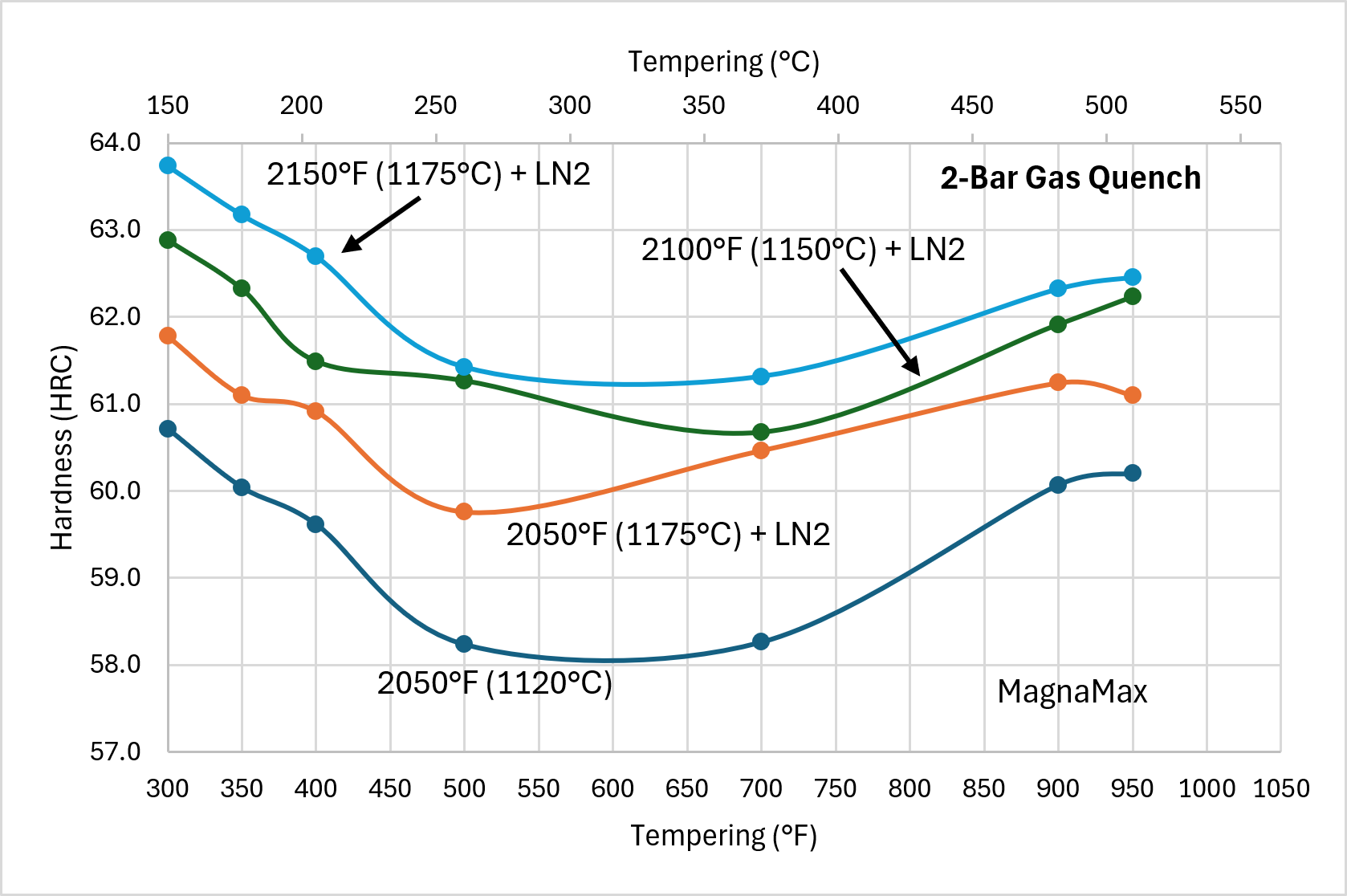
To quantify the differences between custom and industrial processing, Dr. Thomas collaborated with Peters’ Heat Treating, a leading firm specializing in precision thermal processing for the cutlery and tool industries. The study utilized a series of 1 x 3-inch coupons of MagnaMax, subjected to various austenitizing temperatures: 2050°F, 2100°F, and 2150°F.
The industrial simulation utilized a "2 bar" pressurized gas quench. In vacuum furnace terminology, "bar" refers to the pressure of the quenching gas relative to atmospheric pressure; a 2-bar quench uses twice the pressure of the surrounding atmosphere to force gas across the blades and accelerate cooling. Following the quench, the samples were subjected to a range of tempering temperatures, from 300°F to 950°F, to determine the resulting hardness profiles.
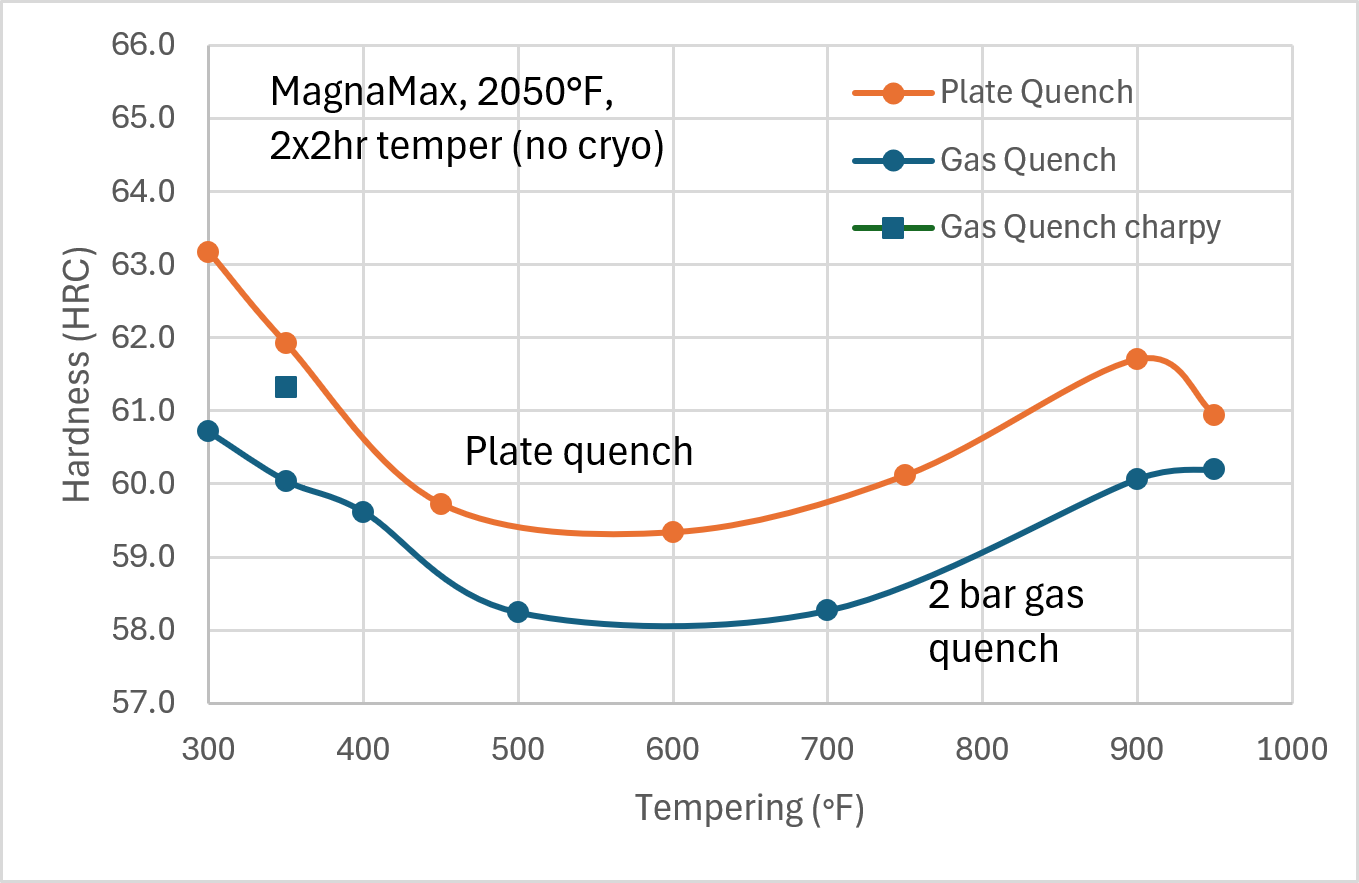
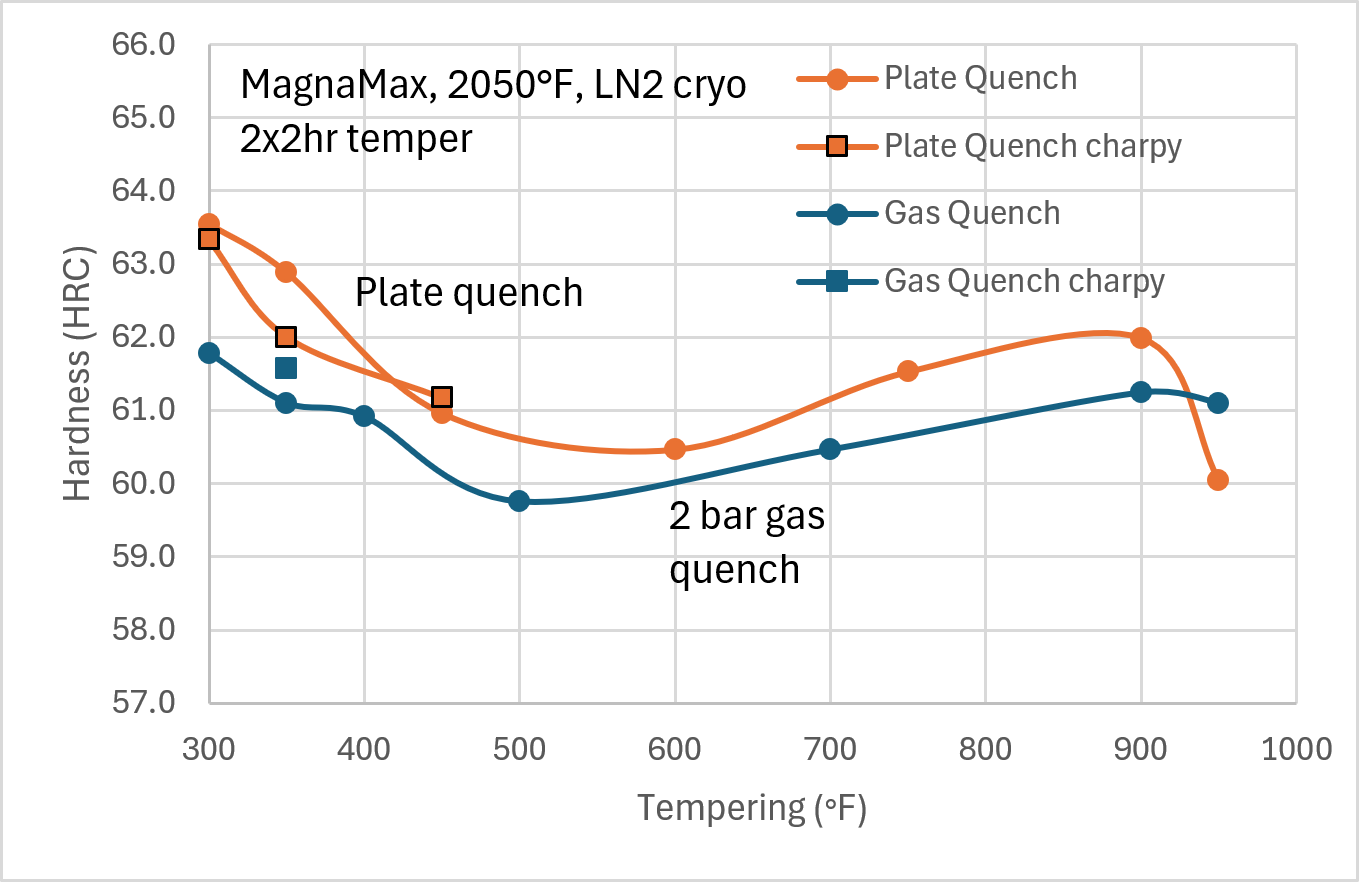
The results revealed a consistent trend: the gas quench generally resulted in lower hardness values compared to the faster plate quench. For example, at an austenitizing temperature of 2050°F with a cryo treatment, the industrial gas quench yielded slightly lower Rockwell C (HRC) values across most tempering ranges when compared to historical data from plate-quenched samples.
Hardness and Toughness: The Performance Trade-off
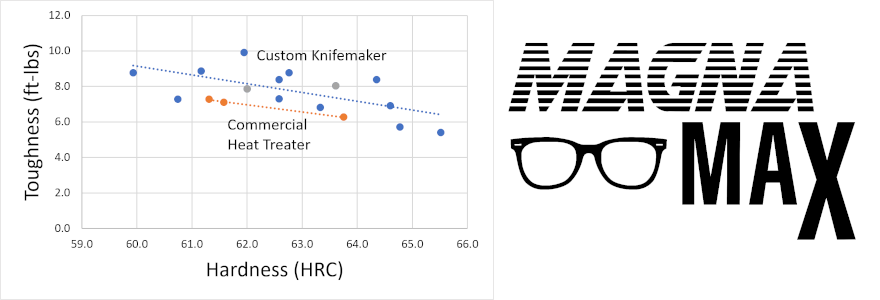
Beyond hardness, the study examined impact toughness using Charpy V-notch testing. Toughness is the measure of a material’s resistance to fracture or chipping, a critical metric for any cutting tool. The experimental data indicated that the toughness of MagnaMax decreases linearly as hardness increases, a standard relationship in tool steels.
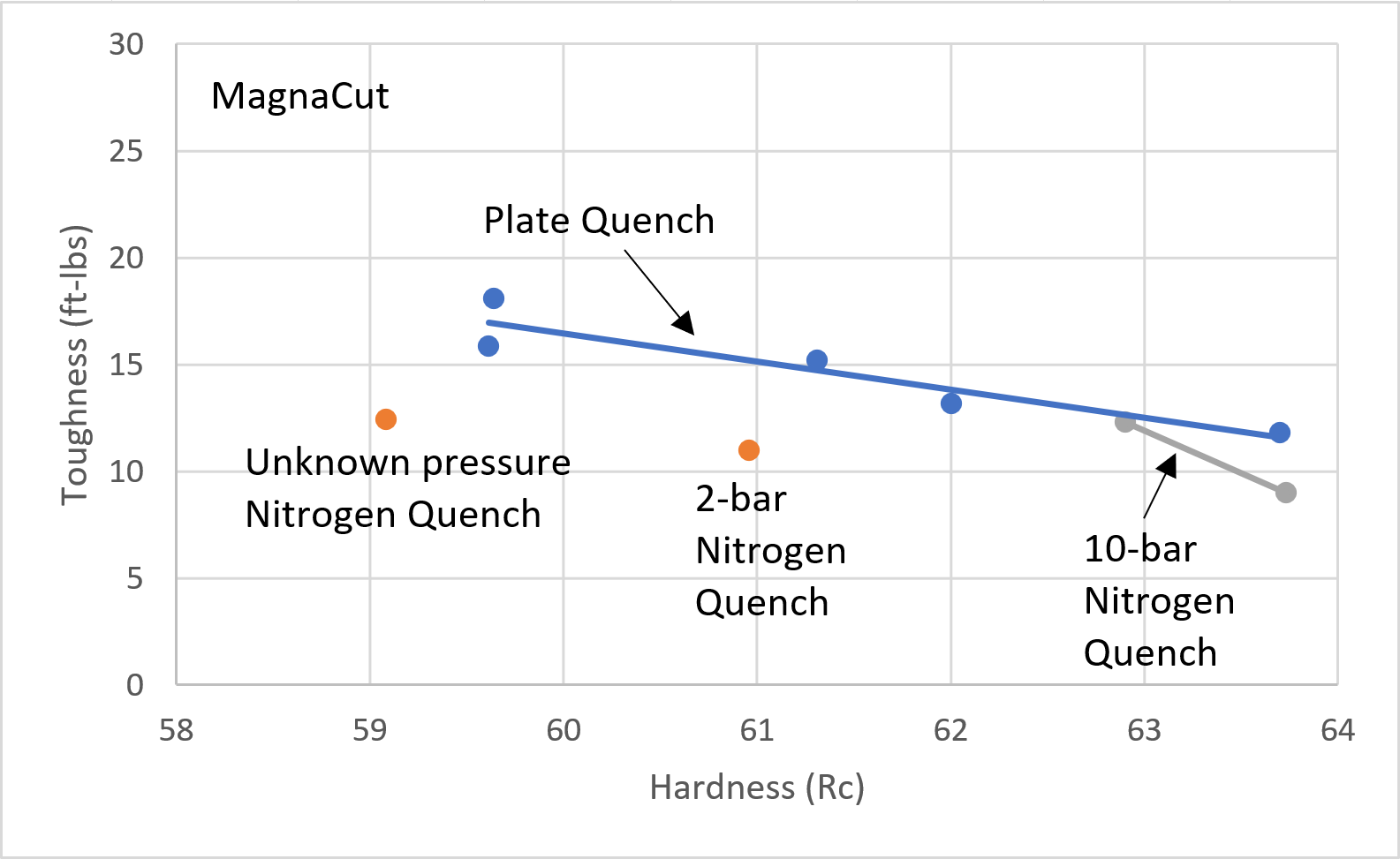
However, the specific cooling method played a role in the "toughness floor." When comparing MagnaMax to its predecessor, MagnaCut, researchers noted that the industrial gas quench resulted in a slight reduction in toughness compared to plate quenching. This is attributed to the slower cooling speed allowing for minute amounts of carbide precipitation at the grain boundaries. While these changes are often small—sometimes only a fraction of a foot-pound in impact energy—they represent the thin margin between a good blade and an exceptional one.
Interestingly, the size of the test specimen influenced the results. Smaller coupons (0.4 x 2.17 inches) used for Charpy testing actually showed slightly higher hardness than the larger 1 x 3-inch coupons when gas quenched. This highlights a fundamental reality of industrial heat treating: the mass and geometry of the part, combined with the "load density" of the furnace, dictate the actual cooling rate and, consequently, the final properties of the steel.
Implications for the Knife Industry
The data generated from these experiments has led to the publication of a new, comprehensive datasheet for MagnaMax. This document serves as a roadmap for both custom makers and large-scale manufacturers, providing recommended heat treatment cycles to optimize the steel’s performance. The current recommendation for achieving a balanced profile of high hardness and toughness is an austenitizing temperature of 2150°F followed by a 350°F temper, incorporating a cryogenic treatment to ensure the full transformation of retained austenite.
For the consumer, this research explains why "production" knives from major companies often feature a hardness range (e.g., 61-63 HRC) rather than a single specific number. The variability is a result of several factors:
- Furnace Loading: Large industrial furnaces may have slight temperature gradients depending on where a blade is positioned in the rack.
- Quench Consistency: Gas flow in a vacuum furnace may not hit every blade with the same velocity.
- Batch Variation: Large companies use steel from multiple heats (batches), which can have slight variations in chemical composition.
- Testing Statistics: Hardness testing itself has a degree of statistical variability.
By understanding these industrial constraints, researchers can better advise companies on how to "dial in" their processes to mirror the high-performance results achieved in a custom shop environment.
Analysis of Broader Industry Impact
The move toward more transparent, data-driven heat treating is a relatively recent shift in the knife industry. Historically, heat treatment was often treated as a proprietary "black art," with companies guarding their "secret recipes." The work being done with MagnaMax represents a move toward an open-science model, where metallurgical data is shared to improve the industry as a whole.
This transparency benefits the end-user by ensuring that the premium price paid for high-alloy steels like MagnaMax translates into measurable performance in the field. As manufacturers adopt the protocols suggested by these recent tests, the gap between "custom" and "factory" performance is expected to narrow.
The upcoming Blade Show Atlanta will serve as a critical forum for these findings. As Dr. Thomas presents "What is Coming Next for Knife Steel?" and "Factors that Affect Edge Retention," the industry will likely see a renewed focus on the technical nuances of the quench. For professional heat treaters like Peters’, and the manufacturers who rely on them, the MagnaMax study provides the empirical evidence needed to justify the use of higher-pressure gas quenches (such as 6-bar or 10-bar systems) to more closely replicate the superior cooling rates of plate quenching.
In conclusion, while industrial processing inherently faces more variables than the controlled environment of a custom workshop, the high molybdenum content and engineered hardenability of MagnaMax make it a robust candidate for mass production. The ongoing refinement of these heat treatment protocols ensures that whether a blade is hand-forged by a solo artisan or produced by the thousands in a factory, the metallurgical integrity of the steel remains uncompromised. As the industry gathers in Atlanta, the focus remains clear: leveraging scientific data to produce the most resilient and efficient cutting tools possible.