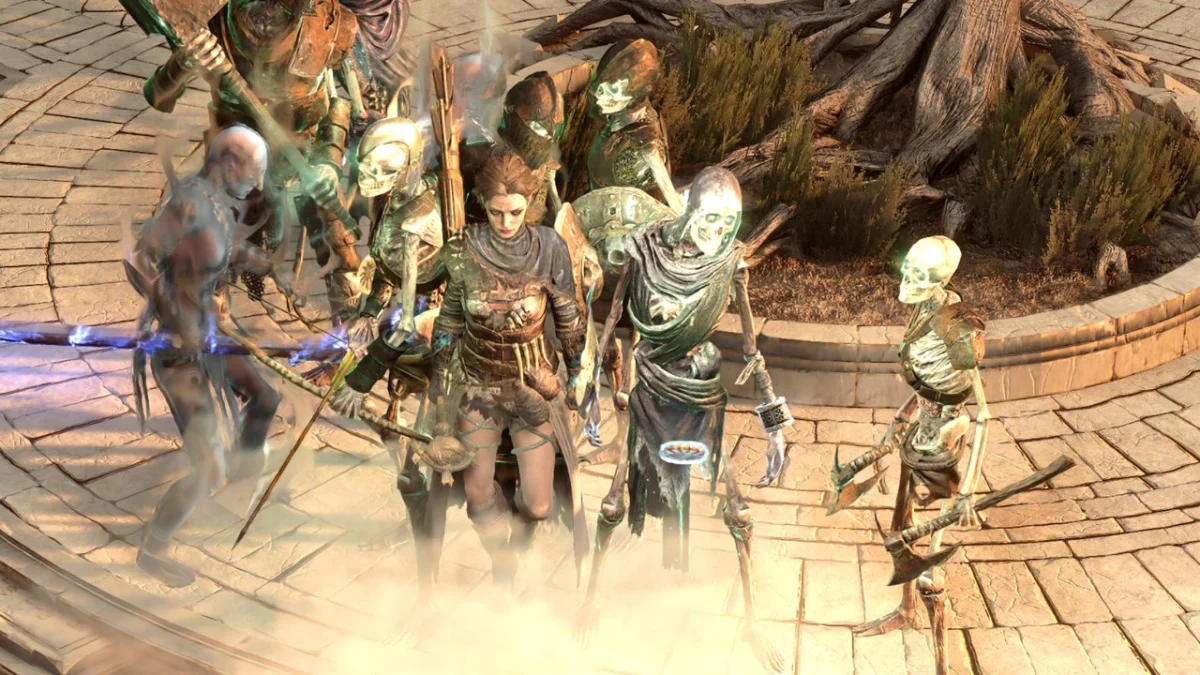
In a remarkable display of ingenuity and sheer determination, popular action RPG streamer Empyriangaming recently captivated the gaming world by assembling an unprecedented army of 2,000 skeletal minions within a test environment of Path of Exile 2, the highly anticipated sequel from Grinding Gear Games. This colossal undertaking, dubbed "Project Minionmaxxing," pushed the game’s engine and server infrastructure to their absolute breaking points, resulting in severe frame rate degradation and a highly unplayable, yet undeniably spectacular, in-game experience. The ambitious experiment, documented and shared with a wide audience, offered a unique glimpse into the extreme boundaries of game mechanics and performance under extraordinary player-induced stress.
The Foundation of "Project Minionmaxxing": A Deep Dive into Path of Exile’s Complexity
Path of Exile (PoE), and its upcoming sequel Path of Exile 2, are renowned for their intricate character customization, vast skill trees, and deeply complex itemization systems. These free-to-play action RPGs have cultivated a dedicated global community, largely due to their challenging gameplay, dark fantasy aesthetic, and frequent seasonal content updates, known as "leagues" or "seasons." A cornerstone of the game’s diverse build strategies is the "minion build," where players specialize in summoning and empowering hordes of AI-controlled allies to fight alongside them. Typically, a well-optimized minion build in Path of Exile might feature around 10 to 15 active skeletons, alongside other minion types, providing a comfortable balance between offensive power and system stability.
Empyriangaming, a streamer known for his deep understanding of game mechanics and his penchant for extreme optimization, embarked on "Project Minionmaxxing" with the explicit goal of transcending these conventional limits. His ambition was not merely to maximize minion count for practical combat but to discover the absolute maximum number of summoned entities the game could technically render and process. This required an astronomical investment in in-game currency, far exceeding the cumulative earnings of many players over hundreds, if not thousands, of hours of gameplay. The streamer meticulously acquired or crafted six complete sets of highly specialized gear, each tailored to drastically reduce the resource cost of summoning skeletons and to amplify the player’s maximum resource pool. This level of dedication highlights the intricate economy and crafting depth within Path of Exile, where specific item modifications can fundamentally alter gameplay possibilities.
Deconstructing the Minion Overload Strategy
The core of Empyriangaming’s strategy revolved around exploiting two primary mechanics: extreme resource cost reduction and massive resource pooling. In Path of Exile, summoning skills consume a specific resource, typically mana. By equipping multiple items with "mana cost reduction" modifiers, combined with passive skills from the game’s sprawling passive skill tree, Empyriangaming and his collaborators managed to reduce the mana cost of each skeleton summon to single digits. Concurrently, they stacked an immense amount of "maximum mana" and "mana regeneration" to ensure a continuous supply of the resource, allowing for rapid and sustained summoning.
However, a critical barrier emerged: Path of Exile 2 (like its predecessor) implements an internal cap on the number of identical minions a single player can control, which was discovered to be 255 per minion type. Beyond this threshold, the game’s system would automatically delete all existing minions of that type and reset the counter, preventing a single player from ever exceeding this hard limit. To overcome this, Empyriangaming enlisted the help of several fellow streamers and players, forming a coordinated group. Each participant independently optimized their characters for maximum skeleton summoning, effectively multiplying the individual cap by the number of players involved. This collaborative approach was essential to achieving the monumental 2,000-minion target.
A Chronology of Chaos: From Solo Lag to Massively Multiplayer Mayhem
The journey to 2,000 skeletons was a series of escalating experiments, each revealing new insights into the game’s performance characteristics:
-
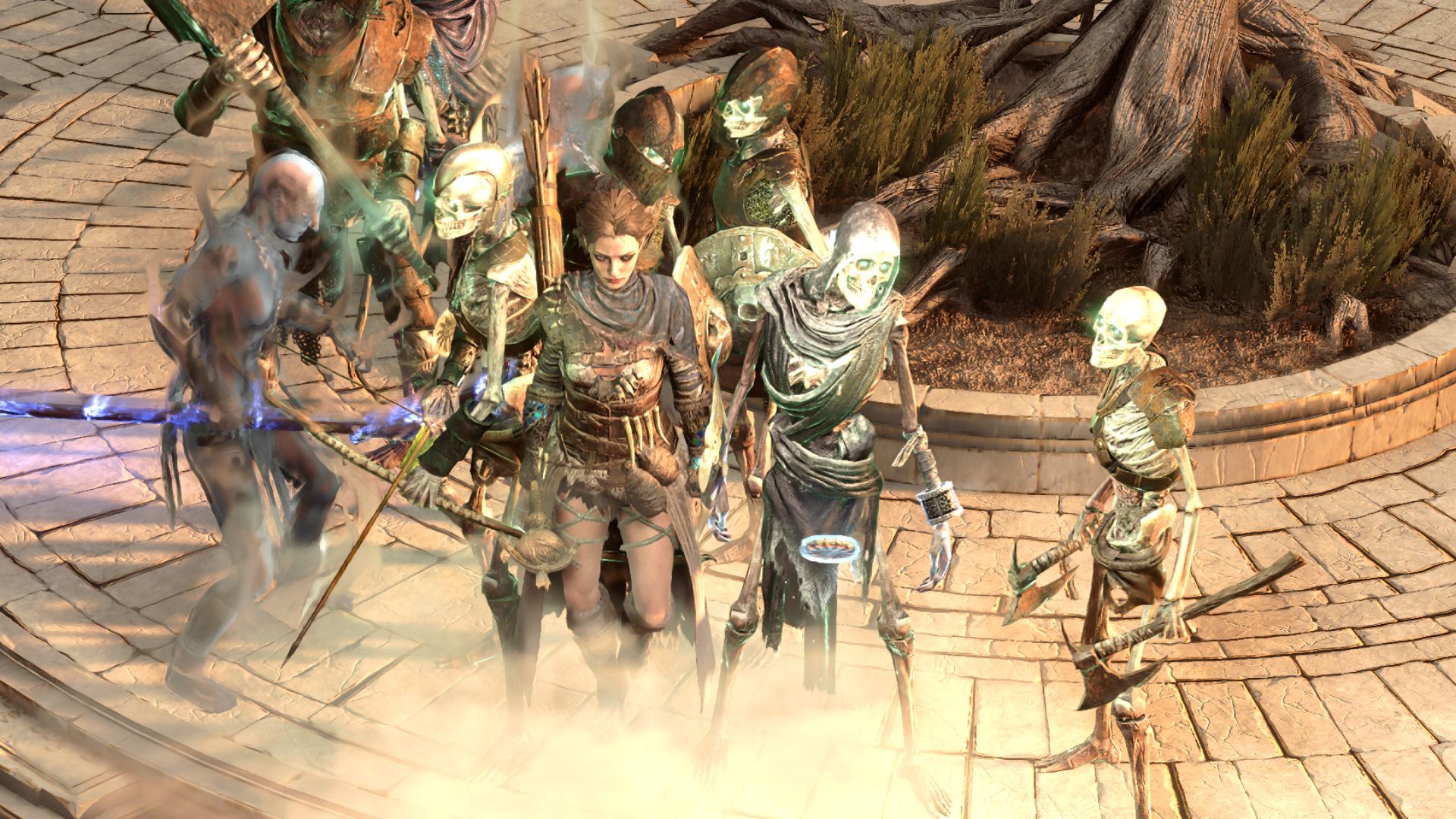
The Solo Stress Test (Initial Phase): Empyriangaming first tested his optimized build alone. Upon summoning his personal limit of 255 Skeletal Priests, the game’s performance immediately plummeted. The frame rate, typically fluid for most players, dropped to an unplayable crawl, akin to a stop-motion animation. Inputs registered with significant delays, creating a surreal and unresponsive gameplay experience. Despite the clear indication of performance limitations, the team remained undeterred, viewing this as merely a preliminary hurdle.
-
Harnessing the Trial of the Sekhemas (Mid-Phase): To further amplify their summoning capabilities, the group strategically entered Path of Exile 2‘s roguelike "Trial of the Sekhemas" mode. This mode grants players temporary, powerful buffs that are active only within its confines. Crucially, one of these buffs doubles the number of minions each player can summon. This bonus was pivotal, allowing each participant to effectively summon twice their usual maximum, bringing the collective goal of 2,000 skeletons within reach.
-
The Grand Assembly (The Climax): With all six players equipped with their optimized gear and benefiting from the Sekhemas buff, the moment of truth arrived. As each participant began to unleash their skeletal armies, Empyriangaming closely monitored his frame rate graph, which dramatically spiked and plummeted, resembling a chaotic heart rate monitor. The collective summoning of approximately 2,000 minions brought Path of Exile 2 to a virtual standstill. Basic character movements, such as a dodge roll, took an astonishing minute to register and execute on screen. Player communications during this phase were filled with a mix of awe and frustration, with one participant humorously stating, "Oh god, I didn’t aim my dodge roll properly. Give me like 30 more seconds," as they struggled to maneuver their character through the glowing, coalescing mass of undead.
-
The Futilty of Combat (Testing the Unplayable): The ultimate test for any minion army is its combat effectiveness. The group attempted to take their gargantuan force to an actual map to confront a boss. Predictably, the severe frame rate issues rendered any meaningful combat impossible. Locating a boss, let alone engaging it, became an exercise in extreme patience, with players waiting several minutes to traverse mere feet within the game world. The experiment clearly demonstrated that while a massive minion count was achievable, it came at the cost of any practical gameplay.
-
The Hideout Trap (A Social Experiment): For their final act, Empyriangaming orchestrated a unique social experiment within his private in-game hideout. He instructed his team to continuously spam skeleton summons. Simultaneously, he listed an extremely valuable in-game item on the trade website for an absurdly low price. The objective was to lure unsuspecting automated bot accounts and opportunistic players, seeking a "deal of a lifetime," into a hideout already choked with hundreds of skeletons. The trap worked flawlessly. Players flooded into the hideout, immediately confronted by a lag-induced nightmare and a visual spectacle of undead. Chat logs quickly filled with exclamations like "Wtf is this," as many joined and promptly disconnected, overwhelmed by the performance hit. One fortunate, or perhaps incredibly patient, player managed to navigate the chaotic lag, swipe the item, and escape. This final act solidified the experiment’s status as both a technical demonstration and a viral comedic event.
Technical Implications and Performance Benchmarking
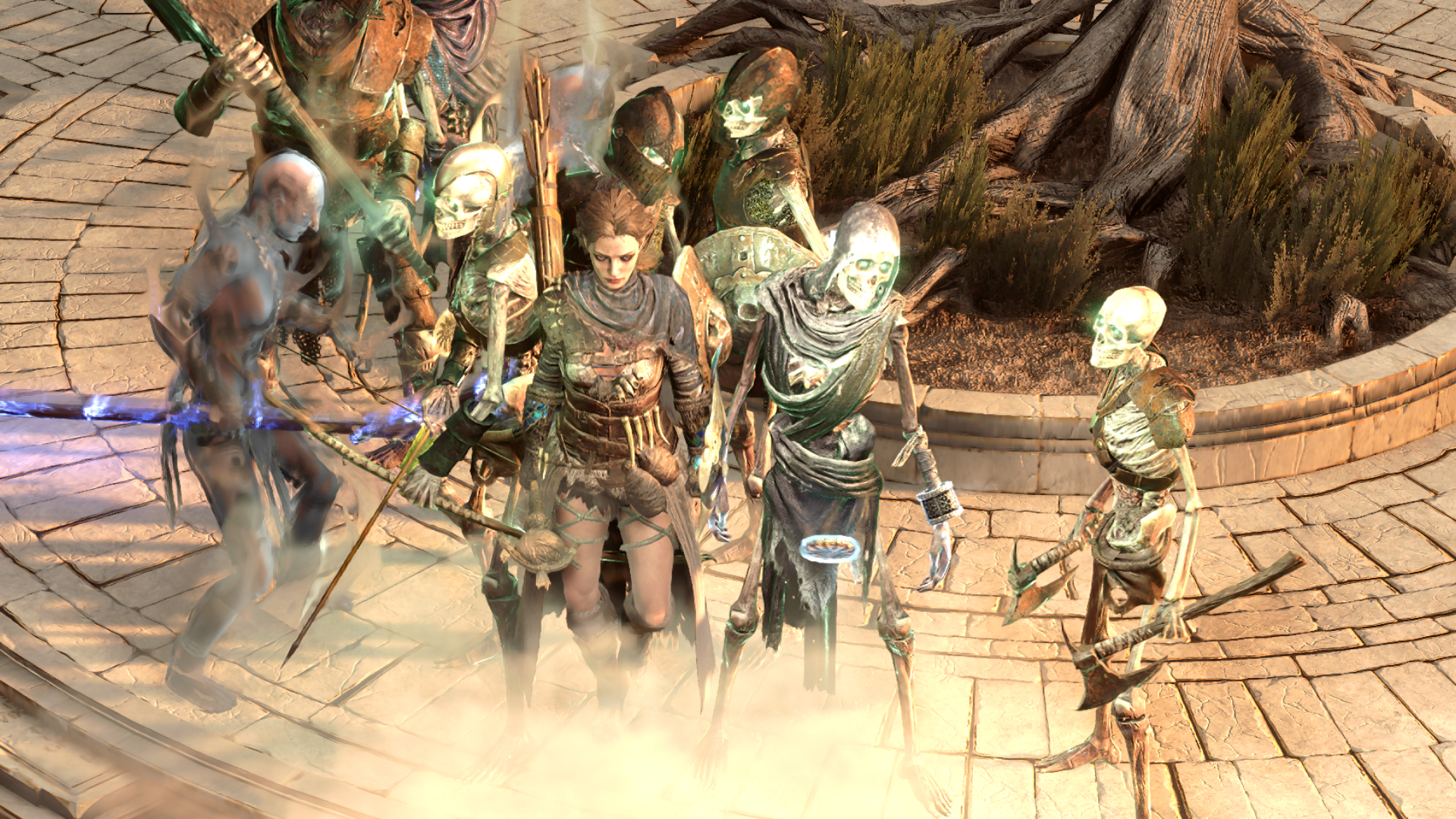
Empyriangaming’s "Project Minionmaxxing" serves as an extraordinary, albeit unconventional, stress test for Path of Exile 2‘s underlying game engine and server infrastructure. The observed performance degradation highlights several key technical considerations:
- Client-Side Rendering: A vast number of distinct character models (each skeleton) requires significant graphical processing power from the player’s computer (client-side). Each minion has its own animations, textures, and effects, collectively overwhelming even high-end GPUs when scaled to thousands.
- Server-Side Processing: While many visual elements are client-side, the AI and pathfinding for each minion, as well as their interactions with the game world and other entities, are managed by the game’s servers. Processing the actions of 2,000 individual AI entities simultaneously places an immense load on the server, contributing to input lag and synchronization issues.
- Network Synchronization: For multiplayer scenarios, the game server must continuously synchronize the state and position of all 2,000 minions across all connected clients. This generates an enormous amount of network traffic, further exacerbating lag and desynchronization between players’ screens and the server’s authoritative state.
While Path of Exile 2 is still in development, these findings offer valuable data to Grinding Gear Games. Developers continuously balance the desire for rich, dynamic gameplay with the practical limitations of hardware and network capabilities. Such extreme player-driven scenarios provide real-world insights into potential bottlenecks that might not be apparent during standard internal testing. It underscores the challenge of designing ARPGs that allow for immense player agency in build creation while maintaining a smooth and responsive experience for all.
Reactions from Grinding Gear Games and the Community
While Grinding Gear Games (GGG) has not issued a direct official statement regarding "Project Minionmaxxing," the developer community often views such experiments with a mix of amusement and analytical interest. GGG is known for fostering a hardcore player base that delights in pushing the boundaries of what’s possible within their games. This event likely provided their development team with invaluable, albeit extreme, stress-testing data on the limits of their engine and network code. It highlights areas where further optimization might be beneficial, especially as Path of Exile 2 aims for even greater visual fidelity and more complex encounters than its predecessor.
Within the broader gaming community, the spectacle quickly garnered widespread attention. Viewers of Empyriangaming’s stream and subsequent videos expressed a mix of disbelief, admiration for the effort, and humor at the sheer chaos. Forum discussions erupted, debating the technical feasibility, the implications for future game design, and the inherent fun in "breaking" a game in such a creative way. The "hideout trap" in particular resonated, creating a memorable, viral moment that added an unexpected layer of social interaction to the technical experiment.
Broader Impact and Implications for ARPGs
"Project Minionmaxxing" extends beyond a mere technical stunt; it carries broader implications for gaming culture and action RPG development:
- Streamer Influence: The event underscores the significant role streamers play in modern gaming. They act not only as entertainers but also as community leaders, content creators, and sometimes, unintentional game testers, driving engagement and conversation around upcoming titles.
- Edge Case Exploration: Such experiments highlight the importance of "edge cases" in game design. While most players will never attempt to summon 2,000 minions, understanding how the game behaves under such extreme conditions informs decisions about scalability, resource management, and overall engine robustness.
- Community Engagement: The collaborative nature of the project, involving multiple players to bypass a single-player minion cap, exemplifies the power of community in online gaming. It transformed a technical challenge into a shared, memorable experience.
- Publicity and Buzz: The viral nature of the event generated considerable organic publicity for Path of Exile 2. It showcased the game’s potential for deep customization and generated excitement for its eventual release, even if the demonstration was of an "unplayable" scenario.
- Defining "Horror": The final "hideout trap" brought a humorous, yet unsettling, dimension to the game. While Path of Exile 2 is firmly in the action RPG genre, the sudden, lag-induced appearance of hundreds of skeletal figures converging on unsuspecting players might genuinely qualify as a brief moment of digital horror for those caught in the trap, prompting lighthearted suggestions that the game might need an additional tag on platforms like Steam.
In conclusion, Empyriangaming’s ambitious endeavor to summon 2,000 skeletons in Path of Exile 2 was a remarkable blend of technical prowess, creative problem-solving, and sheer spectacle. It showcased the incredible depth of Path of Exile‘s character customization, pushed the boundaries of what is mechanically possible within the game’s engine, and provided a unique form of entertainment for the wider gaming community. While completely impractical for actual gameplay, "Project Minionmaxxing" stands as a testament to the creativity of players and the enduring fascination with testing the limits of virtual worlds.