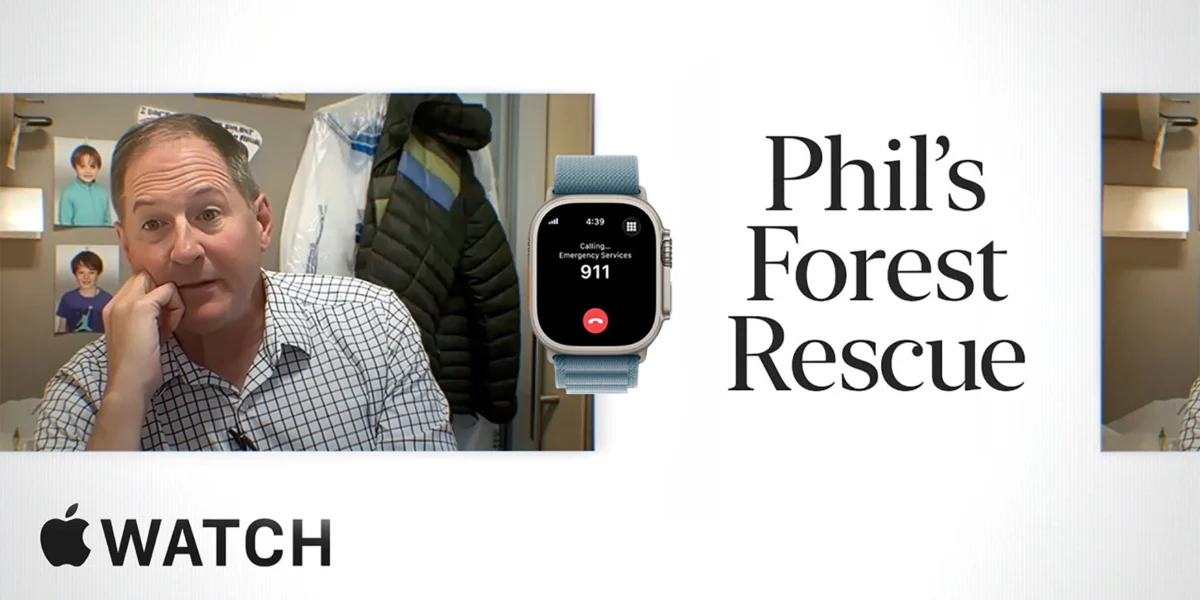
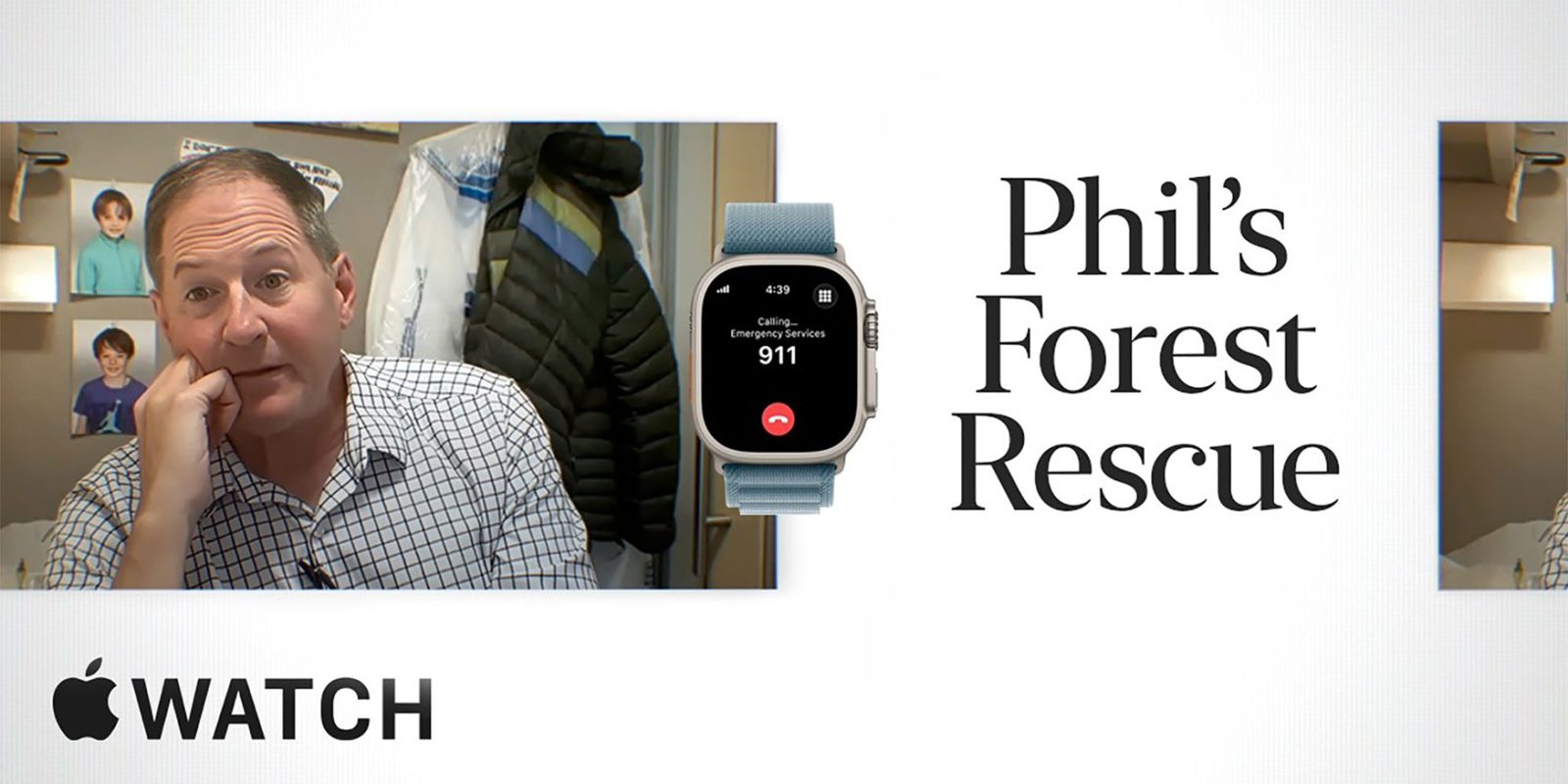
In a compelling testament to the evolving capabilities of wearable technology, Apple has released a new video detailing how its Apple Watch’s integrated Fall Detection and Emergency SOS features proved instrumental in the life-saving rescue of an injured cyclist. This incident, recounted by the individual, Phil, underscores the device’s profound impact beyond mere convenience, cementing its position as a vital personal safety tool. The company’s consistent efforts to spotlight these real-world scenarios serve to reinforce public awareness regarding the potentially life-altering benefits embedded within its popular smartwatch ecosystem.
The recent narrative centers on Phil, an avid mountain biker whose recreational outing with his children took an unexpected and perilous turn. While navigating a trail, Phil misjudged a takeoff, resulting in a severe crash that rendered him unconscious. The impact left him with significant injuries, including a broken collarbone and seven fractured ribs, placing him in a critical, vulnerable state without immediate means to call for help. This is where the Apple Watch, worn on his wrist, initiated its crucial intervention.
Chronology of a Life-Saving Intervention
The sequence of events unfolded rapidly, demonstrating the seamless automation designed into the Apple Watch’s safety protocols. Upon detecting the hard fall and subsequent immobility – a signature trigger for the Fall Detection feature – the device initiated a countdown. When Phil remained unresponsive, the watch automatically triggered an Emergency SOS call. Crucially, this call was not merely an alert; it simultaneously transmitted Phil’s precise GPS coordinates to local emergency services.
Within moments of the automated alert, emergency responders, specifically a team of firefighters, were dispatched to Phil’s location. Equipped with the exact coordinates provided by the Apple Watch, they were able to quickly pinpoint the injured cyclist despite the potentially remote or obscured nature of his crash site. Their prompt arrival was critical; Phil was found unconscious and in need of immediate medical attention. The rescue team safely extricated him from the scene and transported him to a nearby hospital, where he subsequently spent a week recovering from his extensive injuries. Phil’s own account in Apple’s commissioned video highlights the indispensable role of the device, stating his gratitude for a technology that functioned autonomously when he was incapable of acting for himself.
Apple’s Strategic Emphasis on Safety Features

This incident is not an isolated occurrence but rather another entry in a growing compendium of real-life rescue stories Apple strategically shares to illustrate the practical utility of its device’s safety features. The company has, over recent years, increasingly pivoted its marketing narratives to emphasize the Apple Watch’s health and safety capabilities, moving beyond its initial positioning as a fitness tracker and notification hub. This approach aims to resonate deeply with consumers by showcasing tangible, life-preserving benefits.
One notable instance of this strategic emphasis occurred nearly a year prior to the recent video release. During its "Awe Dropping" event in October 2025, Apple dedicated a significant segment to a series of testimonials from Apple Watch users. These individuals shared harrowing accounts of how the device had intervened in diverse life-threatening situations, ranging from severe medical emergencies and accidents to other perilous circumstances. The collective impact of these stories underscored the breadth of the Apple Watch’s protective capabilities, encompassing features like Fall Detection, Crash Detection, and advanced heart rate monitoring.
Furthermore, earlier in 2026, Apple launched the "Thankfully, I was wearing it" campaign in China, a key global market. This initiative specifically highlighted three users whose experiences with Fall Detection, Crash Detection, and atypical heart rate alerts had led to timely interventions during their respective emergencies. These campaigns collectively form a coherent marketing strategy designed to build consumer trust and demonstrate the tangible value proposition of investing in an Apple Watch for personal safety. The consistent drumbeat of these real-world stories reinforces Apple’s commitment to integrating advanced health and safety functionalities into its product line, transforming the smartwatch from a luxury gadget into a potential lifeline.
The Technological Backbone: Fall Detection and Emergency SOS
At the heart of Phil’s rescue lies the sophisticated interplay of the Apple Watch’s Fall Detection and Emergency SOS features. Understanding the technical mechanisms behind these capabilities illuminates their effectiveness.
Fall Detection: This feature leverages a combination of advanced sensors, primarily the accelerometer and gyroscope, to monitor wrist trajectory and impact acceleration. When these sensors detect a hard fall, the Apple Watch analyzes the data. If it determines a significant impact followed by a period of immobility, the device initiates a protocol. The watch vibrates, sounds an alarm, and displays an alert asking the user if they have fallen and if they need emergency services. If the user confirms they need help or remains unresponsive for approximately 60 seconds, the watch automatically contacts emergency services. This automated response is critical, especially when a user is unconscious, disoriented, or incapacitated, as was the case with Phil. The algorithms are continually refined to minimize false positives while ensuring critical incidents are not missed.
Emergency SOS: Once activated, either manually by the user or automatically by Fall Detection (or Crash Detection), Emergency SOS initiates a call to the local emergency number. Beyond merely placing a call, the feature also transmits the user’s current location to emergency dispatchers. This GPS data is vital for rapid response, especially in scenarios where the user cannot verbally communicate their whereabouts, or if they are in an unfamiliar or remote area. Following the emergency call, the Apple Watch also sends a text message to pre-designated emergency contacts, informing them of the situation and providing the user’s location. This multi-pronged approach ensures that not only are professional responders alerted, but also close contacts who can offer additional support or information. For users with cellular-enabled Apple Watch models, these features function independently of an iPhone, offering an added layer of security during activities like cycling, hiking, or even driving, where the phone might not be immediately accessible or charged.
Broader Impact and Implications for Wearable Technology
The continuous stream of Apple Watch rescue stories holds significant implications, not only for Apple but for the broader wearable technology industry and public safety initiatives.
Consumer Perception and Market Dynamics: These narratives powerfully influence consumer perception, shifting the Apple Watch from primarily a lifestyle or fitness accessory to an essential personal safety device. This emotional resonance can drive sales and increase market penetration, especially among demographics concerned with personal safety, such as the elderly, individuals with medical conditions, or those engaging in solitary outdoor activities. The "peace of mind" factor becomes a potent selling point. This also intensifies competition, compelling other smartwatch manufacturers to enhance their own safety features, fostering innovation across the industry.
Enhancing Emergency Services: For emergency responders, devices like the Apple Watch represent a significant technological aid. Automated alerts with precise location data drastically cut down response times, especially in situations where victims are unable to communicate or are in remote areas. This can free up valuable resources that might otherwise be spent on search efforts, allowing responders to focus directly on patient care. While challenges remain in integrating diverse smart device alerts into existing emergency systems, the overall trend points towards greater efficiency and effectiveness in emergency response protocols.
The Future of Personal Safety and Health Monitoring: The capabilities showcased by the Apple Watch are indicative of a larger trend towards proactive and preventative health monitoring through wearables. Beyond immediate emergency response, these devices are increasingly integrating features like irregular heart rhythm notifications, blood oxygen monitoring, and even potential future glucose monitoring. This convergence of fitness tracking, health diagnostics, and emergency response positions wearables as central components in a holistic personal health management strategy. As artificial intelligence and sensor technology advance, the potential for these devices to predict, prevent, and respond to health crises will only grow.
Ethical Considerations and Data Privacy: While the life-saving benefits are undeniable, the pervasive nature of these technologies also raises important ethical questions regarding data privacy and security. The collection of sensitive health and location data by wearable devices necessitates robust security measures and transparent privacy policies. Users must be assured that their personal data is protected and used responsibly, even as it serves a critical function in emergencies. Apple, like other tech giants, navigates a delicate balance between leveraging data for user benefit and upholding privacy standards.
Official Responses and Industry Trends

While Apple’s "statement" often comes in the form of these powerful user stories and marketing campaigns, the industry at large acknowledges the growing role of smart devices in public safety. Emergency services professionals, though rarely issuing direct endorsements of specific products, frequently express appreciation for technologies that enhance their ability to locate and assist individuals in distress. The reduction in "time to rescue" directly correlates with improved patient outcomes, a fact widely recognized within emergency medical communities.
Reports from organizations like the American Heart Association and various emergency medical services (EMS) bodies increasingly cite the positive impact of wearable technology on public health. While specific statistics on rescues solely attributable to Apple Watch can be hard to isolate from broader EMS data, the anecdotal evidence is compelling and consistent globally. The trend suggests that as more people adopt these devices, and as their features become more sophisticated and reliable, they will play an even greater role in daily safety.
Conclusion
Phil’s dramatic rescue by virtue of his Apple Watch stands as a potent example of how advanced consumer technology can translate into tangible, life-saving outcomes. It reinforces Apple’s commitment to integrating critical health and safety features into its popular smartwatch, moving it beyond a mere accessory to a device with profound practical utility. Through consistent innovation and compelling real-world narratives, Apple is not only shaping the market for wearable technology but also contributing significantly to personal safety and public health. As these technologies continue to evolve, their capacity to offer a safety net in an unpredictable world will undoubtedly expand, further embedding smartwatches as indispensable tools in the ongoing pursuit of well-being and security. The story of Phil serves as a powerful reminder that in moments of unforeseen crisis, the device on one’s wrist can indeed be the difference between peril and rescue.