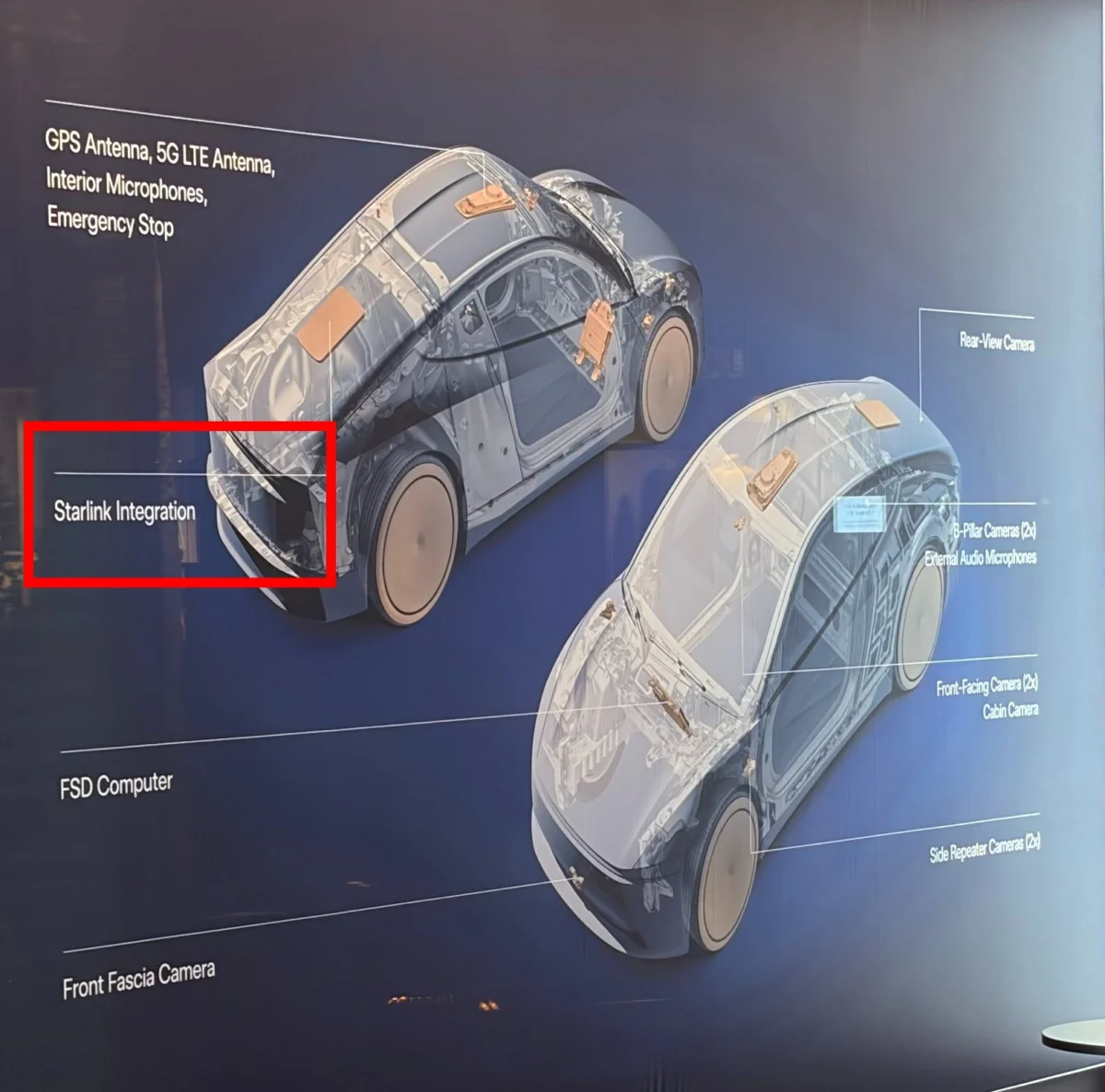
Tesla has officially confirmed that its upcoming Cybercab, designed for autonomous ride-hailing, will be the first vehicle in its lineup to feature integrated Starlink satellite internet connectivity. This groundbreaking integration, observed at Tesla’s Santana Row showroom, signifies a pivotal step in enhancing the passenger experience for autonomous mobility, promising seamless connectivity even in areas with conventional cellular service limitations.
Cybercab: A New Era of Autonomous Transport
The Cybercab is engineered from the ground up for a fully autonomous future, catering to one or two passengers. Notably, production models emerging from Gigafactory Texas are being manufactured without traditional steering wheels or pedals. This design choice underscores Tesla’s commitment to a future where human intervention in driving is eliminated, with all interactions managed through the vehicle’s central display. The integration of Starlink addresses a key challenge for widespread autonomous ride-hailing: ensuring consistent and reliable internet access for navigation, entertainment, and communication, regardless of terrestrial network availability.
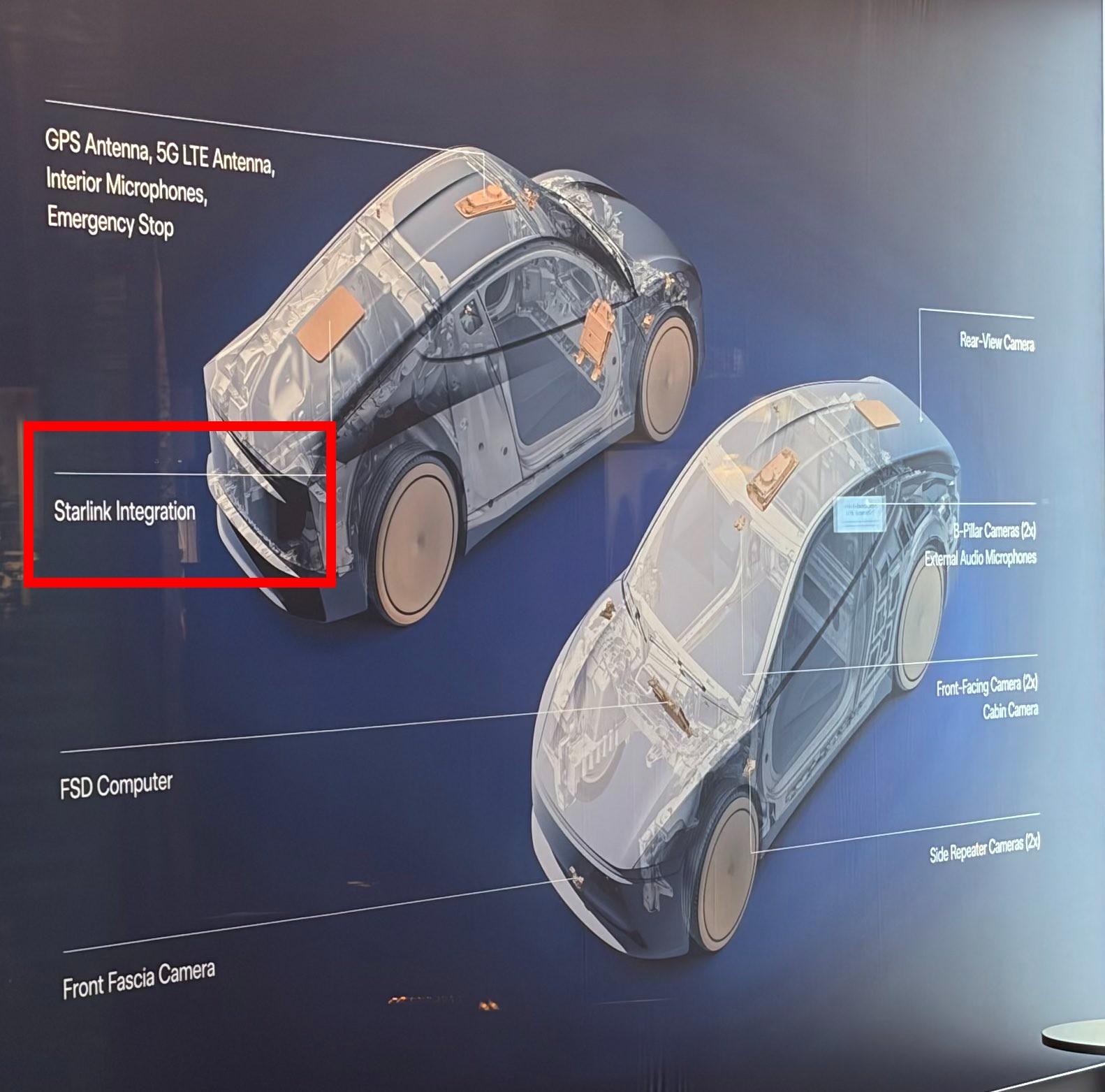
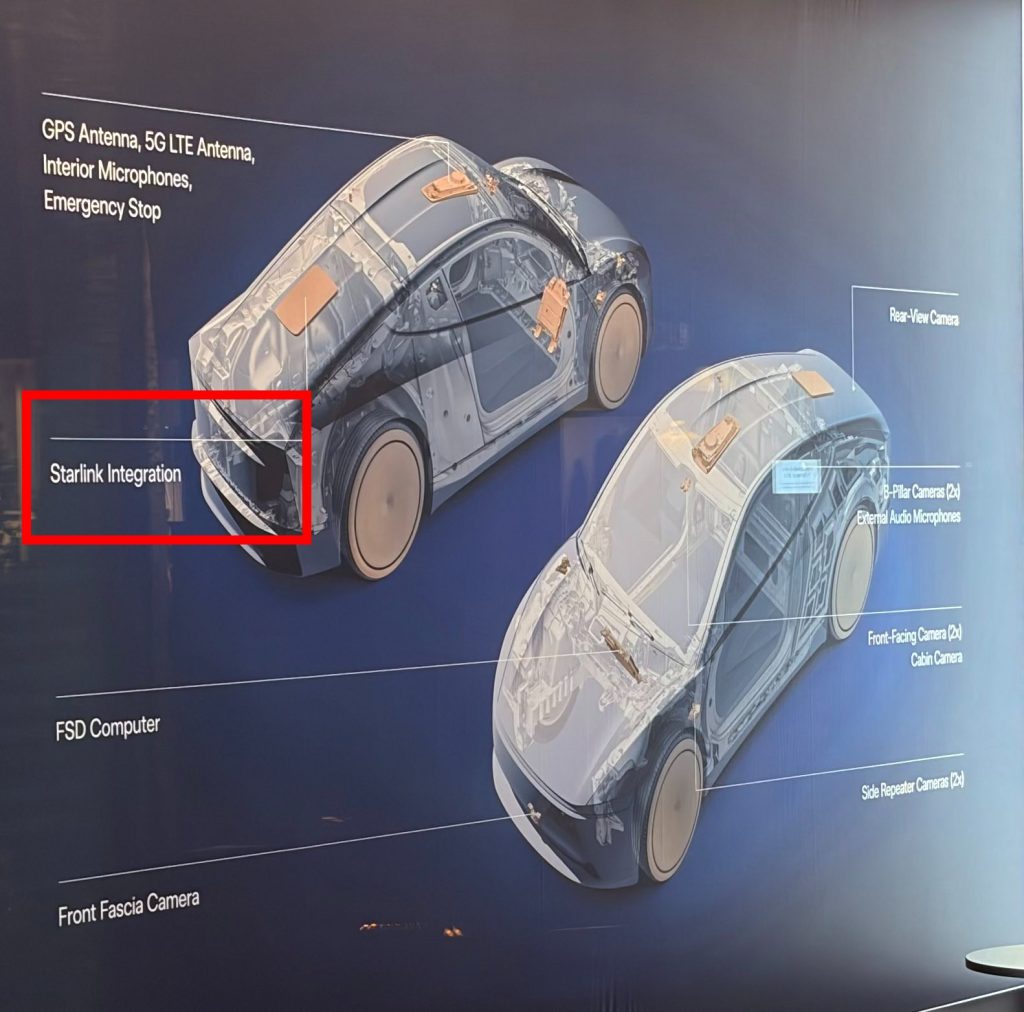
The display at the Santana Row showroom showcased an exhibit detailing the Cybercab’s advanced features, prominently featuring the integrated Starlink antenna. This technology is poised to provide secure and dependable internet access throughout passenger journeys, a crucial element for a service designed for on-demand mobility.
The Starlink Advantage: Connectivity Beyond Cellular
Starlink, SpaceX’s satellite internet constellation, offers a unique solution for in-vehicle connectivity. Unlike traditional cellular networks, which can be spotty or unavailable in remote locations or during network congestion, Starlink’s low-Earth orbit satellites provide a more consistent and robust connection. For an autonomous vehicle like the Cybercab, this means:
- Uninterrupted Navigation and Data: Real-time traffic updates, route adjustments, and communication with the network infrastructure will remain operational, enhancing safety and efficiency.
- Enhanced Passenger Experience: Passengers can enjoy seamless streaming of entertainment, conduct video calls, or access productivity tools without concern for cellular dead zones.
- Remote Diagnostics and Updates: Tesla can maintain a constant connection for remote diagnostics, software updates, and operational monitoring of the Cybercab fleet, crucial for managing a large-scale autonomous service.
The strategic decision to equip the Cybercab with Starlink highlights Tesla’s forward-thinking approach to developing a comprehensive ecosystem for its autonomous services. This integration is not merely about providing internet; it’s about ensuring the reliability and functionality of the entire autonomous driving experience.

A Timeline of Innovation: From Patent to Production
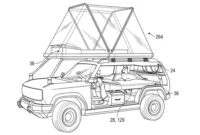
Tesla’s exploration of integrating satellite connectivity into its vehicles is not new. In December of the previous year, the company filed a patent that hinted at potential Starlink terminal integration. This patent described a vehicle roof assembly designed with materials that allow for radio frequency (RF) transparency. Such materials, potentially high-strength polymer blends like Polycarbonate, Acrylonitrile Butadiene Styrene, or Acrylonitrile Styrene Acrylate, differ from conventional metallic or glass elements, facilitating the seamless incorporation of technologies requiring RF transmission and reception.
This patent laid the groundwork for what is now becoming a reality with the Cybercab. The observed integration at the showroom represents the first official confirmation of this capability being implemented in a production vehicle. The timeline suggests a rapid progression from conceptualization and patenting to tangible product integration, a hallmark of Tesla’s rapid development cycles.
Cybercab’s Design Philosophy: Autonomy at its Core
The information displayed alongside the Cybercab at Santana Row further elaborates on its autonomous design principles:

"Cybercab is built for autonomy. It has no steering wheel, no side mirrors, and no pedals. It goes where you tell it to go and how you want it to, so you can relax along the way. It is hyper aware and responsive to your surroundings, monitoring other drivers, responding to emergency vehicles, utilizing its expertise in the rarest scenarios to help keep you safe."
This statement emphasizes the vehicle’s complete reliance on its advanced AI and sensor suite. The absence of manual controls signifies a complete shift in the driver-passenger dynamic, transforming the vehicle into a mobile living space or workspace. The Starlink integration is a critical enabler for this vision, ensuring that the advanced computational and communication needs of a fully autonomous system are met.
Broader Implications for the Future of Mobility
The integration of Starlink into the Cybercab has significant implications for the future of transportation and connectivity:
- Accelerating Autonomous Ride-Hailing: By addressing the connectivity gap, Tesla is paving the way for the widespread adoption of autonomous ride-hailing services, particularly in areas where cellular coverage is unreliable. This could unlock new markets and service possibilities.
- Enhancing In-Vehicle Productivity and Entertainment: The reliable internet connection will allow passengers to maximize their time during commutes. For work-related travel, productivity can be significantly boosted through seamless access to cloud-based applications and communication tools. For leisure, the ability to stream high-definition content or engage in immersive experiences will transform the passenger journey.
- Setting a New Standard for Connected Vehicles: This move by Tesla could prompt other automotive manufacturers to explore similar satellite connectivity solutions, leading to a broader trend of always-connected vehicles. The automotive industry is increasingly recognizing the importance of robust internet access for advanced driver-assistance systems (ADAS), infotainment, and over-the-air (OTA) updates.
- Synergy Between Tesla and SpaceX: The integration further solidifies the synergistic relationship between Tesla and SpaceX. This collaboration allows for the leveraging of cutting-edge technologies from both companies to create innovative solutions. The success of Starlink in the automotive sector could also open up new revenue streams for SpaceX.
Analysis of the Starlink Integration
The decision to equip the Cybercab with Starlink is a strategic masterstroke that addresses a fundamental challenge in the deployment of autonomous vehicles. While Tesla has made significant strides in developing its FSD software and hardware, the reliability of external communication networks has always been a potential bottleneck. Starlink’s global coverage and high bandwidth capabilities provide a robust solution.
The Cybercab’s design, stripped of manual controls, necessitates an unwavering connection to the network for operational integrity. This includes receiving navigation data, communicating with traffic management systems, and potentially interacting with other autonomous vehicles. The integration of Starlink ensures that this critical communication channel remains open, even in the most challenging environments.
Furthermore, the potential for productivity and entertainment enhancements cannot be understated. As vehicles become more autonomous, the time spent in transit will increase, and passengers will expect to utilize this time effectively. The ability to stream, work, or connect with loved ones seamlessly will be a significant differentiator for the Cybercab.
Future Outlook and Potential Expansion
While the Cybercab is the first Tesla model to receive Starlink integration, it is highly probable that this technology will be rolled out to other Tesla vehicles in the future, particularly those with advanced Autopilot and FSD capabilities. As Tesla continues to develop its autonomous driving technology and expand its ride-hailing services, robust and reliable connectivity will become increasingly paramount.
The integration of Starlink into the Cybercab is more than just a technological upgrade; it’s a statement of intent. It signifies Tesla’s unwavering commitment to ushering in an era of truly autonomous mobility, where the passenger experience is prioritized, and connectivity is no longer a limitation but an integral component of the journey. As the Cybercab progresses towards public deployment, its Starlink-equipped nature will undoubtedly be a key feature in its appeal and operational success.