




Smartphone cameras have undergone a radical transformation over the past decade, evolving from simple snapshot tools into sophisticated computational photography powerhouses. While manufacturers routinely boast about ultra-wide lenses, high-resolution sensors, and periscope zoom capabilities, close-up photography has remained a specialized frontier. Modern smartphones frequently ship with dedicated macro modes, typically leveraging ultra-wide secondary cameras to allow users to focus mere centimeters away from a subject. Yet, these native configurations often compromise on sensor size and optical clarity. Enter the Moment Macro 10x, an advanced optical attachment designed to bypass these inherent digital limitations by pairing precision glass with the phone’s primary sensor.
Priced at $150 / £150, this niche accessory targets mobile photographers and content creators looking to explore extreme magnifications. However, pushing a smartphone lens to a 10x macro factor introduces a unique array of optical challenges, physical limitations, and operational hurdles. While it successfully captures breathtaking textures invisible to the naked eye, it demands patience, deliberate lighting, and a steady hand.
Understanding the Evolution of Mobile Macro Photography
To appreciate the design philosophy behind the Moment Macro 10x, one must understand how mobile macro photography has matured. Early smartphone macro solutions relied heavily on cheap, clip-on plastic lenses that frequently introduced severe chromatic aberration, corner softness, and vignetting. As mobile sensors grew larger, manufacturers began incorporating software-driven macro switching, forcing the phone to crop or switch lenses automatically when approaching a subject.
Moment, a brand long established in the mobile filmmaking and photography ecosystem, carved out a reputation by offering professional-grade glass that mounts securely via proprietary cases. The introduction of their T-Series mounting system marked a significant mechanical upgrade over older generations, offering a robust twist-lock mechanism that ensures absolute optical alignment. Within this ecosystem, Moment offers two distinct macro options: the Macro 75mm and the Macro 10x. While the 75mm variant prioritizes a comfortable working distance and natural subject separation, the 10x lens is engineered purely for uncompromising, extreme magnification.
Design, Build Quality, and Specifications
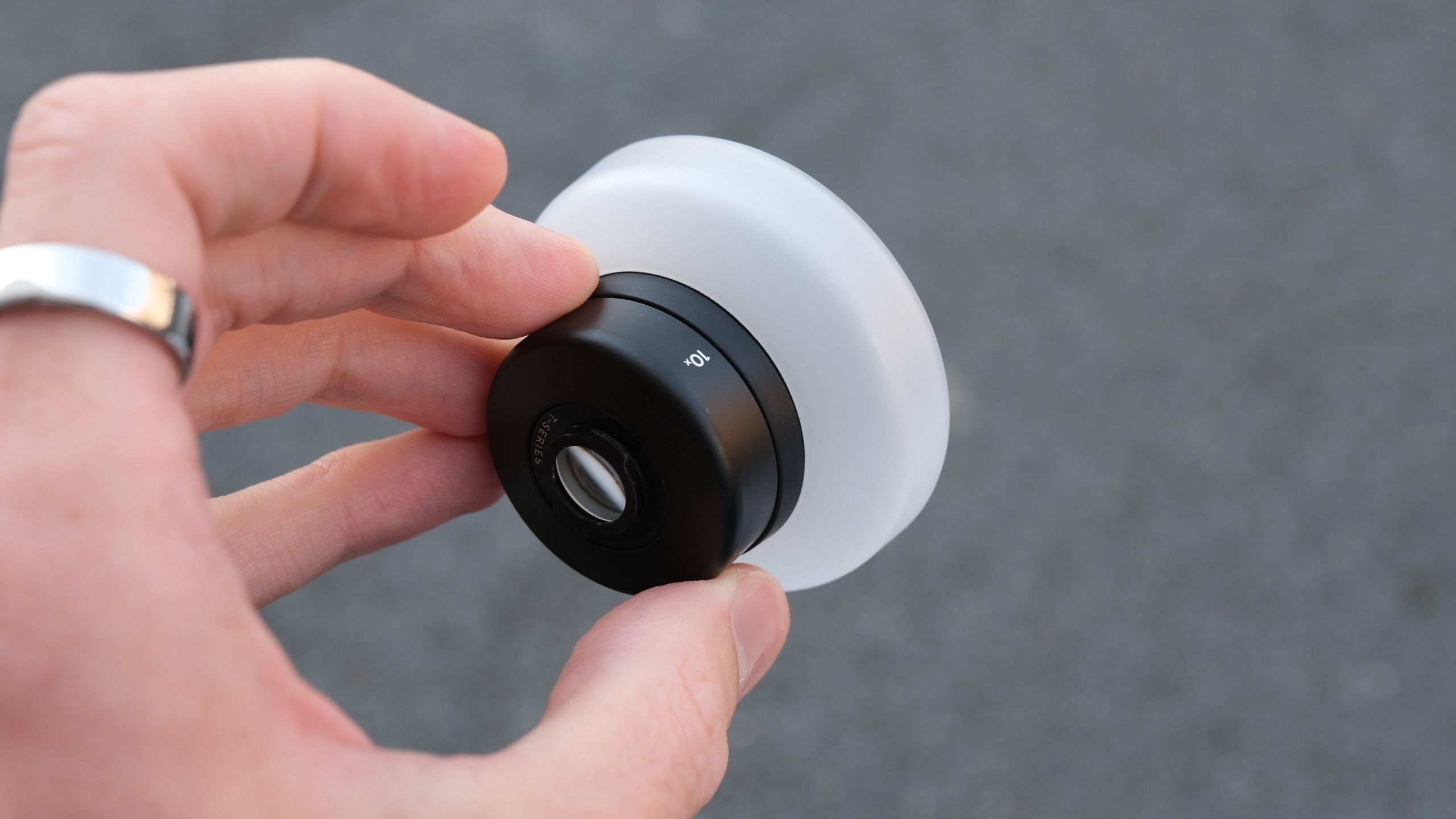
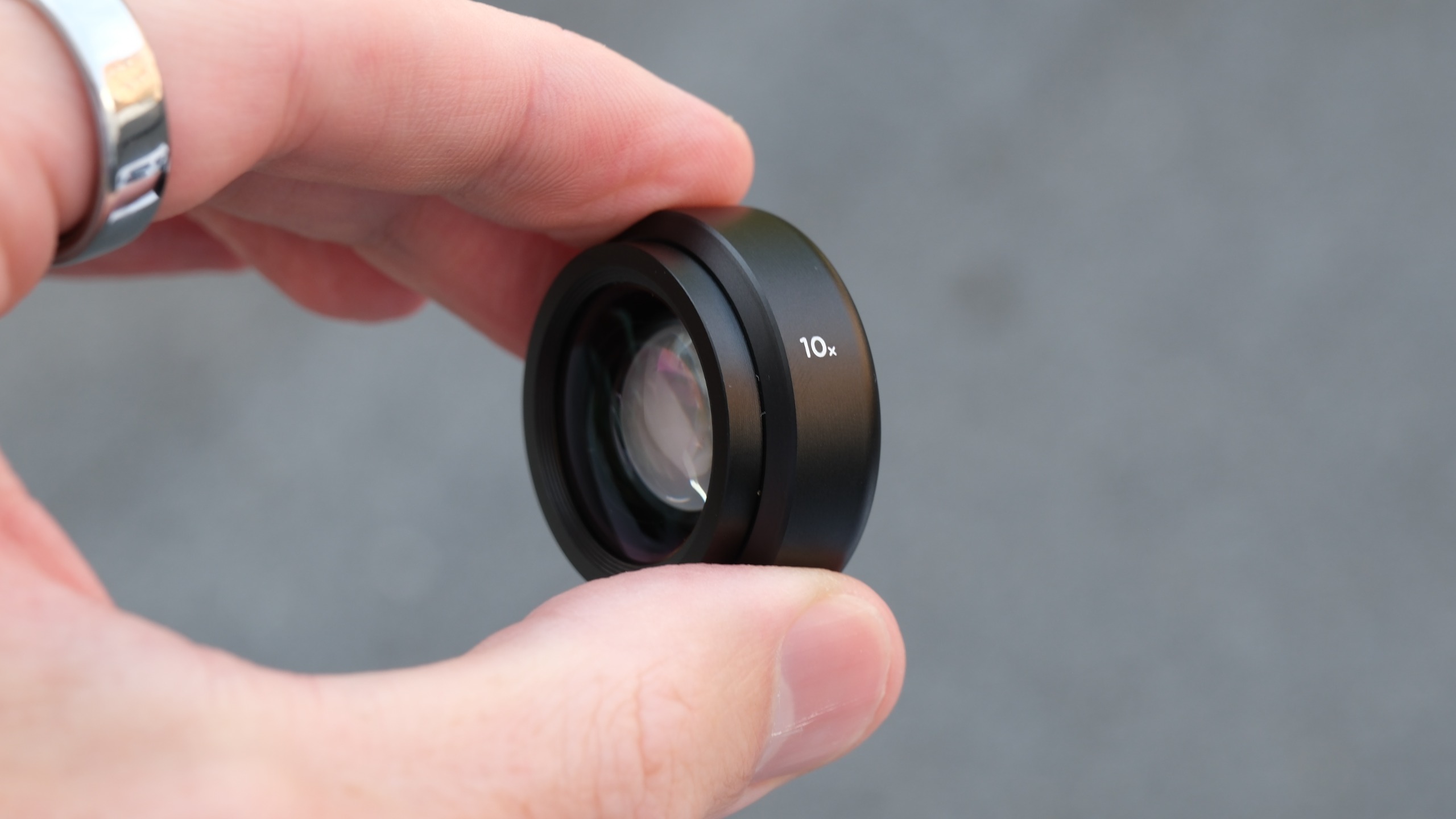
At first glance, the Moment Macro 10x resembles a miniature cinema lens scaled down for mobile architecture. Weighing in at 35.5 grams—or 40.5 grams when incorporating its specialized diffuser hood—the accessory is remarkably lightweight. Its housing is constructed from high-grade anodized aluminum, finished in a matte black coating that matches the understated aesthetic of the broader T-Series lineup.
Optically, the lens features a construction consisting of 3 elements arranged in 2 groups. It delivers an equivalent focal length of 34.8mm, a viewing angle of 65 degrees, and a minimum focus distance of approximately 15mm. Because it relies entirely on the smartphone’s primary camera sensor—which typically features a larger physical surface area and superior low-light performance compared to ultra-wide auxiliary sensors—the resulting image quality inherently benefits from higher base resolution and dynamic range.
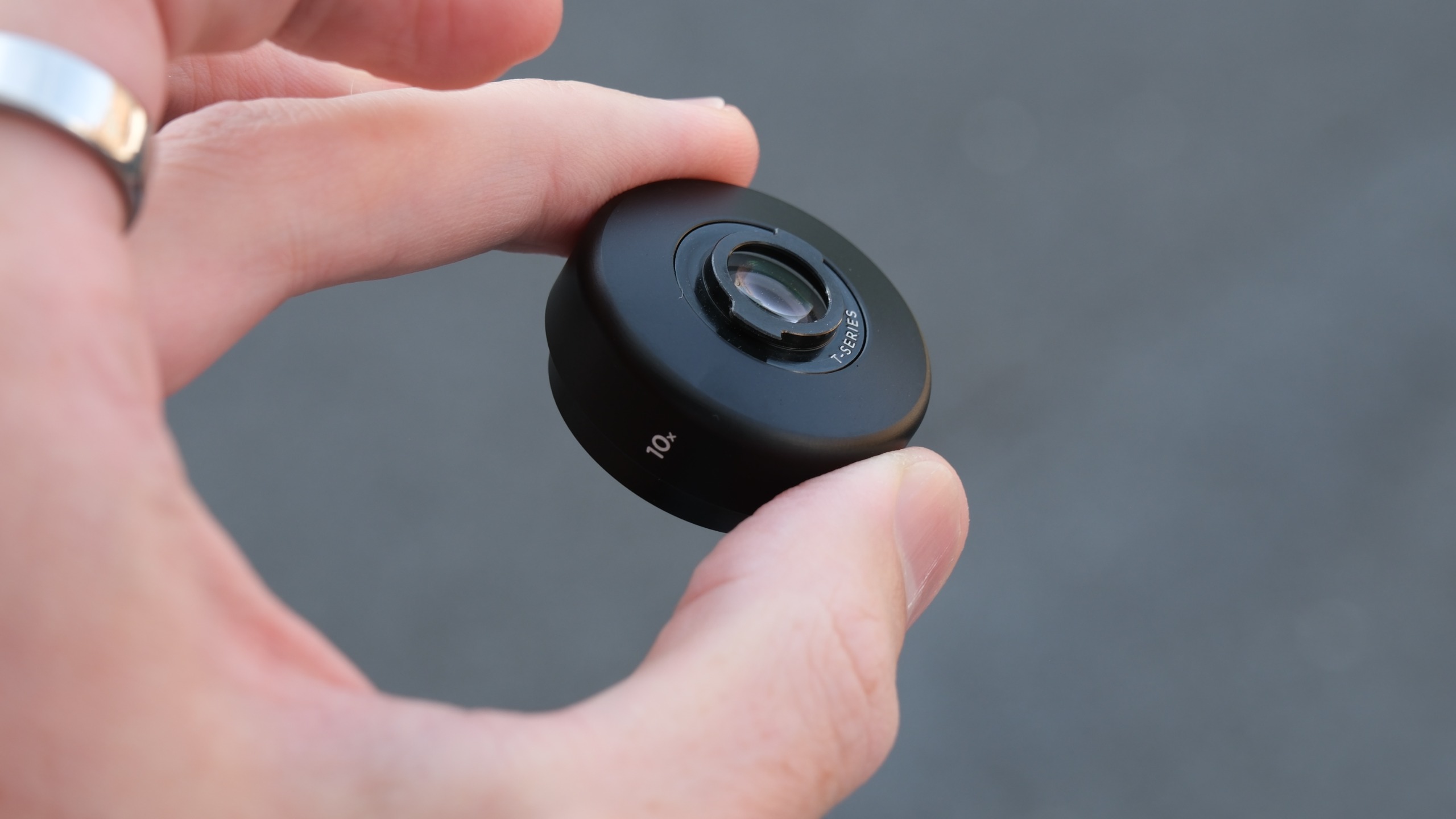
The inclusion of a removable diffuser hood is arguably one of the most practical engineering choices in the package. At a working distance of just 15mm, a smartphone and its mounting case invariably cast heavy shadows over the subject, obliterating detail and ruining lighting balance. The diffuser hood functions dually: it softens and evenly disperses ambient light across the subject while acting as a physical depth guide, helping the user maintain the precise distance required to achieve focus.
Real-World Performance and Optical Evaluation
Attaching the Macro 10x via the T-Series bayonet mount is swift and secure. Once mounted and aligned with the primary camera, the lens transforms ordinary surfaces into alien landscapes of microscopic detail. During field evaluations, subjects such as dried winged seeds, the intricate vein structures of translucent leaves, the microscopic pollen-bearing stamens of purple daisies, and the fibrous textures of woven fabrics rendered with remarkable clarity and sharpness.
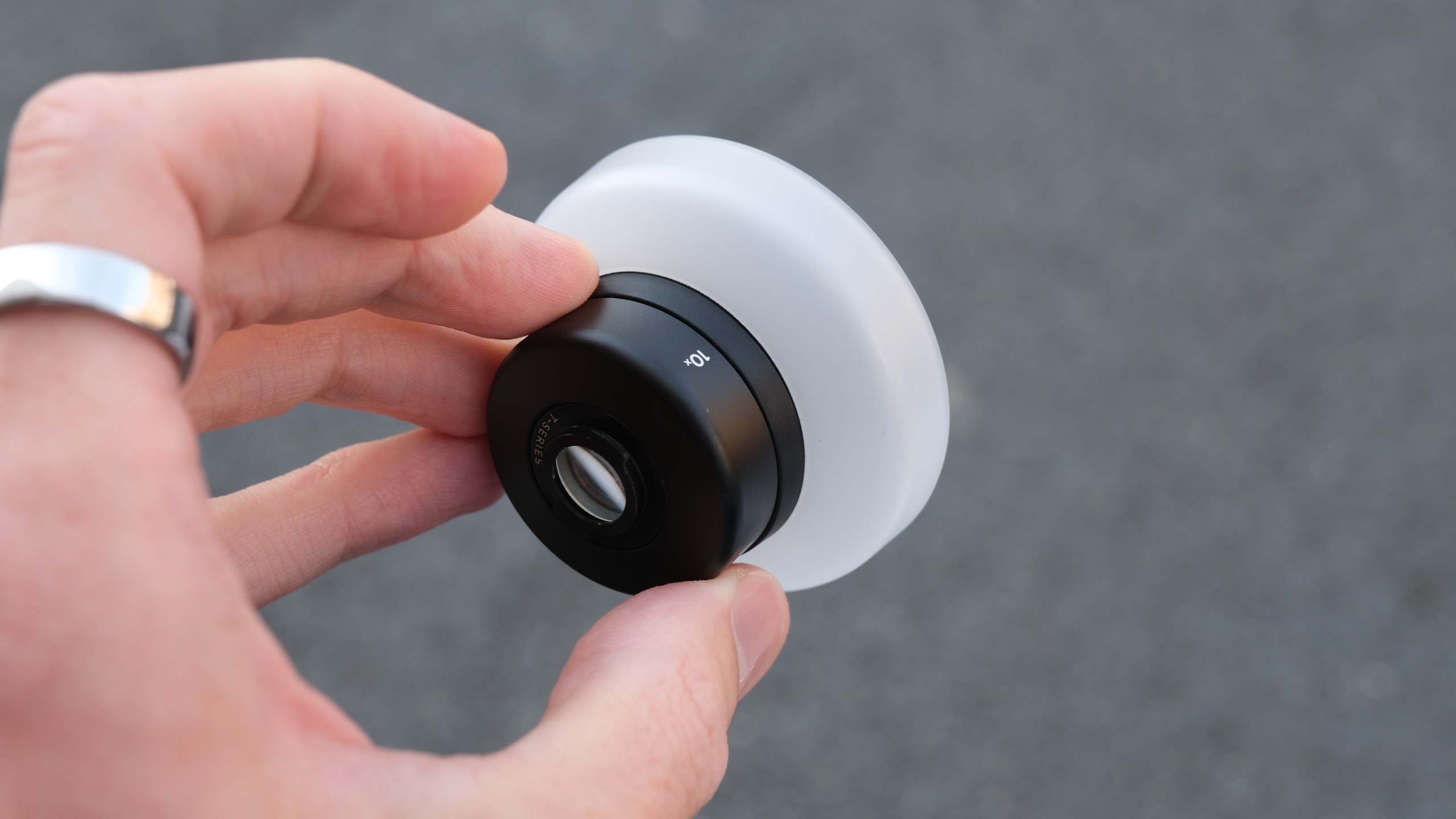
However, the laws of physics impose strict operational boundaries at this scale. The most immediate hurdle is the 15mm minimum focusing distance. While perfectly acceptable for stationary subjects like coins, minerals, or plucked botanical samples, it renders the lens virtually useless for dynamic, living subjects. Photographing insects, for instance, proves exceedingly difficult; bringing a bulky smartphone within a centimeter of a live bee or spider invariably startles the creature, causing it to flee before a stable frame can be captured.
Furthermore, depth of field at 10x magnification is razor-thin. The plane of acceptable focus is often restricted to a fraction of a millimeter. Consequently, even minute hand tremors or slight atmospheric air currents moving a delicate flower petal can completely throw the shot out of focus. Photographers must rely heavily on physical stabilization, tripods, or rapid burst-shooting modes to secure a single tack-sharp frame.
Lighting remains another critical obstacle. Even with the clever diffuser hood mitigating harsh directional shadows, the sheer proximity of the phone means that ambient light is frequently blocked. Users shooting indoors or in shaded environments will quickly find themselves needing supplementary artificial lighting, such as portable pocket LEDs or ring lights, to maintain usable shutter speeds and ISO levels.

Value Proposition and Market Positioning
At $150 / £150, the Moment Macro 10x sits at a premium price point. For consumers already invested in the T-Series ecosystem—owning a compatible smartphone case and mounting plates—the financial barrier is strictly limited to the cost of the lens itself. However, for newcomers starting from scratch, purchasing a compatible case, mounting hardware, and the lens pushes the total investment significantly higher.
When evaluating value, the primary competitor to the Macro 10x is actually found within Moment’s own catalog: the Macro 75mm. The 75mm lens offers a vastly more forgiving working distance, making it significantly easier to manage lighting, frame living subjects, and maintain a comfortable shooting envelope for everyday close-up photography.

Verdict and Final Recommendations
The Moment Macro 10x is an undeniably fun and capable optical tool that successfully unlocks a hidden world of microscopic detail previously restricted to dedicated macro photography rigs. Its build quality is exceptional, the T-Series mount provides rock-solid alignment, and the inclusion of a light-diffusing hood demonstrates thoughtful, field-tested engineering.
Yet, it is fundamentally a specialist tool for a patient photographer. The combination of an extremely shallow depth of field, strict working distance limitations, and complex lighting requirements means it demands a deliberate, methodical approach. For dedicated enthusiasts who revel in abstract textures, product macro details, and stationary studio subjects, the Macro 10x delivers impressive results. For general users seeking a versatile, everyday mobile macro lens, however, the more forgiving working distance of the Moment Macro 75mm remains the more practical and recommended choice.