









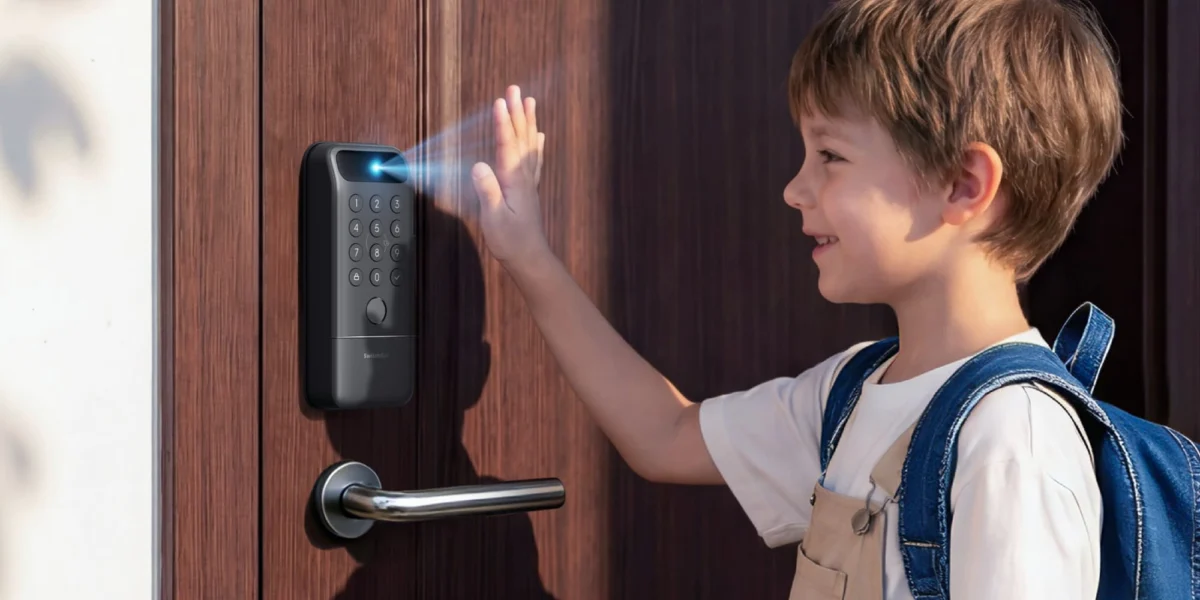
SwitchBot has officially entered a new phase of smart home security with the launch of the SwitchBot Lock Vision and the Lock Vision Pro, two devices that represent a significant leap in how residential entry systems integrate with the broader internet-of-things (IoT) ecosystem. By incorporating 3D facial recognition, mmWave radar, and native Matter-over-Wi-Fi compatibility, the company is positioning itself to compete directly with high-end security hardware manufacturers while lowering the barrier to entry for users deeply embedded in the Apple Home ecosystem.
The Evolution of Smart Access Control
The smart lock market has seen a rapid transformation over the last decade. Early iterations of smart locks were often bulky, required proprietary bridges, and were frequently criticized for inconsistent connectivity. The introduction of the Matter protocol has been the industry’s response to this fragmentation. Matter, an open-source standard for smart home devices, aims to ensure interoperability between devices from different manufacturers, allowing them to communicate seamlessly across platforms like Apple Home, Google Home, Amazon Alexa, and Samsung SmartThings.
SwitchBot’s decision to adopt Matter-over-Wi-Fi as a foundational element of the Lock Vision series indicates a strategic shift toward user convenience. By removing the requirement for a dedicated proprietary hub, SwitchBot has addressed a primary consumer pain point: the clutter of extra hardware. For Apple Home users, this means the lock can be managed directly through an existing HomePod or Apple TV, simplifying the setup process and potentially reducing the latency often associated with cloud-based bridging.
Technical Specifications and Biometric Security
At the heart of the new Lock Vision lineup is a sophisticated biometric suite designed to move beyond the traditional reliance on physical keys or standard numeric passcodes. The flagship technology is the 3D facial recognition system. Unlike simple image-based recognition, which can sometimes be bypassed by high-resolution photographs or video playback, the Lock Vision uses a projector array to cast 20,000 infrared points onto a user’s face. This creates a dense 3D depth map, ensuring that the system only recognizes physical, three-dimensional geometry.
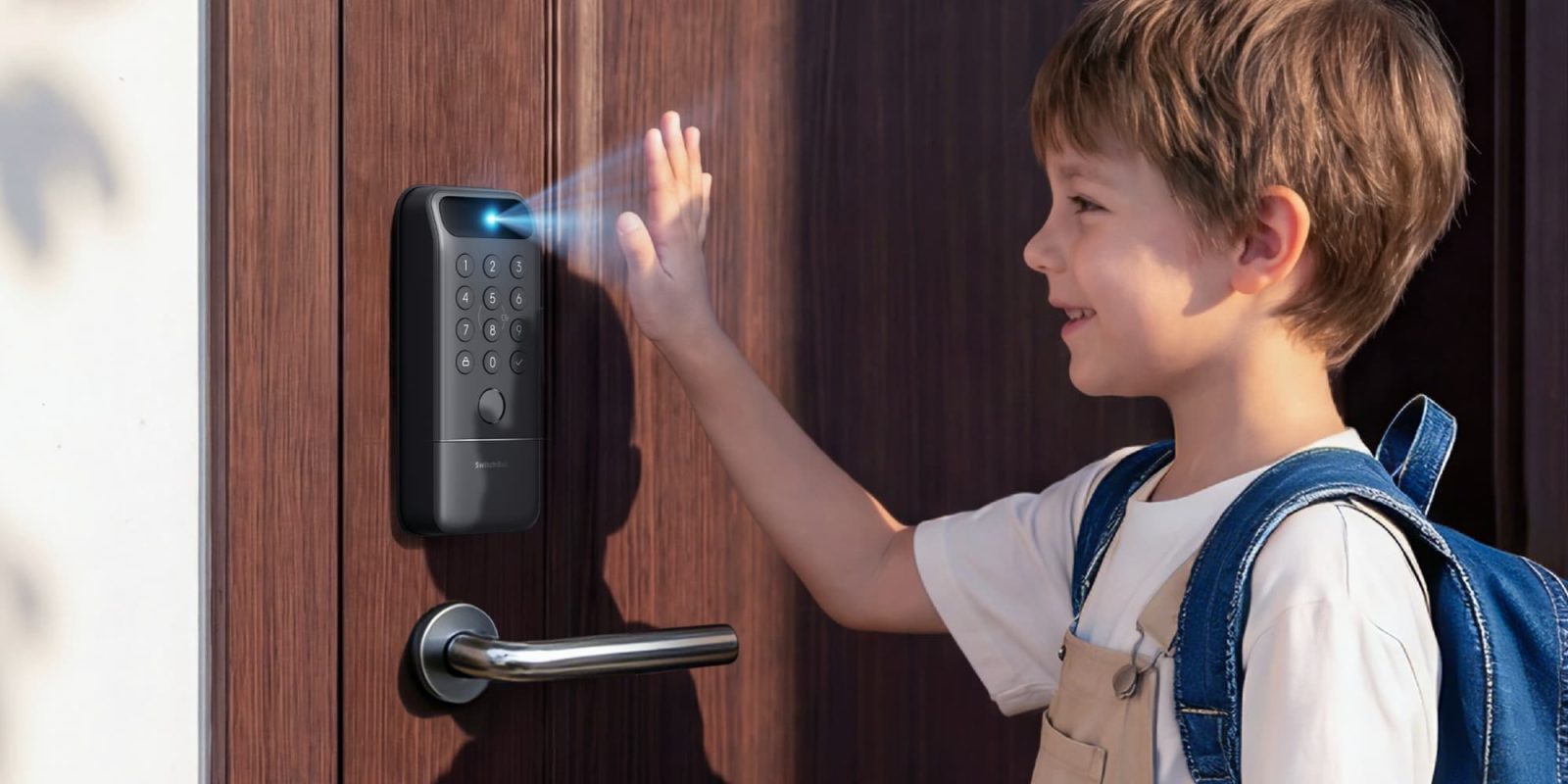
According to technical documentation provided by SwitchBot, the system is calibrated to achieve a sub-one-second unlock speed. Furthermore, the algorithm is designed to account for environmental factors and user appearance changes. The system has been tested to recognize users even when they are wearing accessories such as hats, glasses, or wigs, or when they are wearing heavy makeup, addressing the common failure points of early facial recognition technology. Privacy remains a central pillar of this implementation; SwitchBot confirms that all biometric data is processed locally on the device and secured with AES-128 encryption, ensuring that sensitive facial geometry is never transmitted to external cloud servers.
For users seeking additional security layers, the Lock Vision Pro model expands these capabilities. It introduces a semiconductor fingerprint scanner, which offers a familiar and reliable method of entry, and a more advanced, non-contact palm vein scanner. The latter is a notable inclusion in a consumer-grade product, as it uses near-infrared technology to read the unique vascular patterns beneath the skin of the palm. Because this process is contactless, it offers a hygienic alternative to traditional fingerprint sensors, which can occasionally struggle with moisture or surface debris.
Energy Management and Efficiency
Maintaining continuous power is one of the most critical challenges for smart locks, particularly those that incorporate power-intensive features like cameras or active biometric sensors. SwitchBot has addressed this through a dual-battery power architecture. The primary power source is a 10,000mAh rechargeable lithium-ion battery, which the company claims can provide up to 12 months of operation under standard usage scenarios.
To bridge the gap during maintenance or unexpected depletion, a secondary, internal CR123A battery acts as a fail-safe, providing enough energy for roughly 500 emergency unlocks. As a final layer of redundancy, the exterior housing features a USB-C port. This allows users to provide temporary power to the lock using a standard portable power bank, ensuring that even if both internal batteries are exhausted, the resident will not be locked out of their home.
To optimize this battery life, the devices are equipped with integrated mmWave radar sensors. Rather than relying on constant, power-hungry camera monitoring, the lock remains in a low-power state until the radar detects a human presence within a specific radius of the door. This proactive sensing technology ensures that the facial recognition or biometric scanning hardware is only activated when necessary, significantly extending the time between charges.
Strategic Market Positioning and Competition
The launch of the Lock Vision and Lock Vision Pro at $169.99 and $229.99, respectively, places them in a competitive position within the premium smart lock category. Historically, the smart lock market has been bifurcated into budget-friendly, feature-limited devices and high-end, professionally installed systems. SwitchBot is attempting to bridge this gap by offering "pro-level" features—such as 3D facial recognition and palm vein scanning—at a price point that remains accessible to the DIY consumer.
However, the lack of Apple Home Key support remains a notable omission. Apple Home Key allows users to unlock their doors by simply tapping their iPhone or Apple Watch against the lock, using NFC technology. While the new Lock Vision series supports NFC cards and various other digital methods, the absence of native Apple Home Key integration is a point of divergence from some competitors in the space. Industry analysts suggest that while this might be a limitation for power users of the Apple ecosystem, the inclusion of Matter-over-Wi-Fi and the robust biometric options serve as strong value propositions that may mitigate this concern for the average homeowner.
Implications for the Smart Home Industry
The release of these devices reflects a broader trend in the smart home sector: the shift toward "ambient intelligence." As smart homes become more sophisticated, the expectation is that they should react to users naturally and intuitively without requiring direct input. The use of mmWave radar combined with high-accuracy biometrics is a step toward a home that understands the presence and identity of its inhabitants in real time.
Furthermore, the emphasis on local processing for biometric data signals an evolving awareness of privacy among consumer electronics manufacturers. As biometric adoption becomes more widespread in the home, companies are increasingly aware that data security is not just a feature but a prerequisite for consumer trust. By keeping the biometric data on-device and using encryption, SwitchBot is aligning with industry best practices that protect users from the risks associated with data breaches.
Future Outlook and Consumer Adoption
As these devices reach the market, their success will likely be measured by the reliability of the facial recognition and the stability of the Matter connection over time. The transition to the Matter standard has been a phased rollout across the industry, and the performance of these locks will serve as a bellwether for how well third-party manufacturers can leverage the protocol to provide a "plug-and-play" experience for Apple, Google, and Amazon users.

For homeowners, the choice between the standard Lock Vision and the Pro version will largely come down to the necessity of redundant biometric authentication. Both devices offer the core benefits of the new platform, including the battery management system and smart integration. The Pro version, with its added palm vein and fingerprint scanning, is likely aimed at users who prioritize multi-factor security or who live in households with diverse needs where a single method of entry might not be preferred by all residents.
The launch of these locks confirms that SwitchBot is continuing its aggressive expansion into the smart security market. By focusing on high-frequency interaction points like doors and entries, the company is building a comprehensive ecosystem that is increasingly difficult for traditional home security brands to ignore. As the product begins to circulate, the combination of hardware innovation and software interoperability will likely establish a new benchmark for what consumers expect from a modern, connected smart home entry solution.