







The emerging independent game title Boars in Rome has recently garnered significant attention within the gaming community for its distinctive synthesis of high-speed platforming mechanics and a haunting, post-apocalyptic reimagining of Italy’s capital. Developed by Team Boars, the project draws heavy design inspiration from industry-defining movement shooters such as Mirror’s Edge and the movement-based "surf" maps popularized by the Counter-Strike series. As developers continue to refine the title, it stands as a compelling case study in how movement-centric gameplay can be effectively integrated into narrative-driven, environmental storytelling.
The Premise: A Silent, Sunken Capital
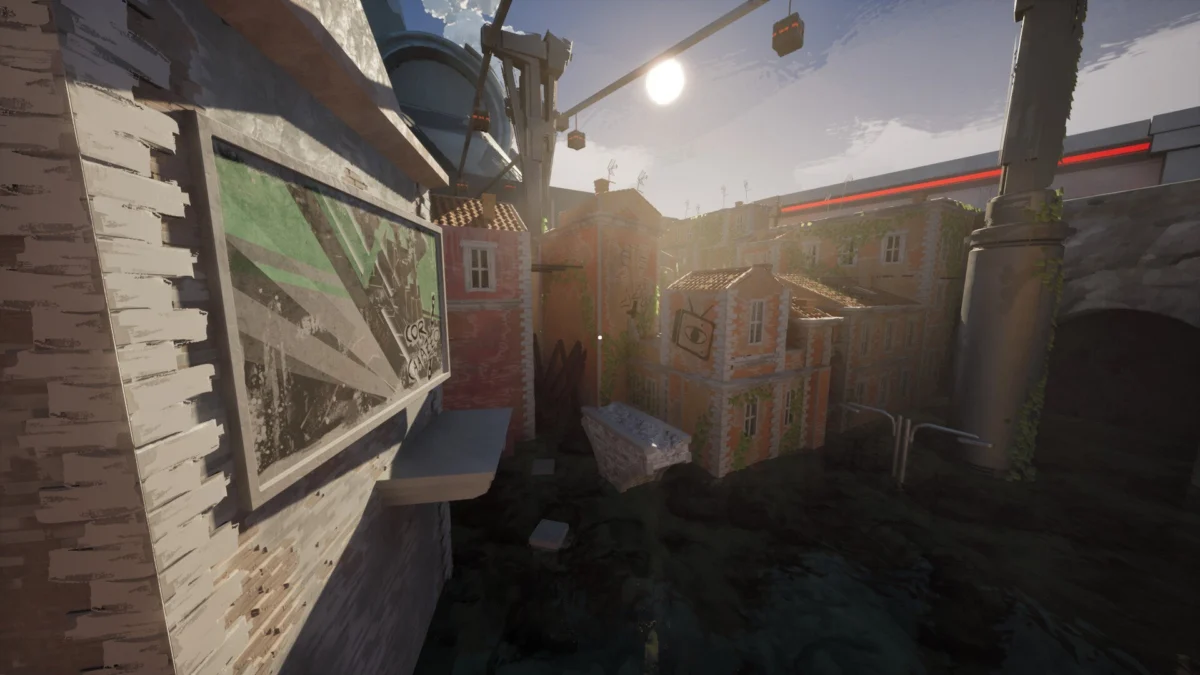
Set in a future where Earth has been largely abandoned by humanity in favor of off-planet colonization, the narrative of Boars in Rome centers on a protagonist awakening from a cryogenic stasis to find the world irrevocably altered. In this vision of Rome, the familiar historical monuments of antiquity—the Colosseum, the Pantheon, and the Forum—are juxtaposed against decaying, brutalist megastructures and nature-reclaimed ruins. The environment is not merely a static backdrop but a central puzzle; the city is flooded, likely with industrial runoff, and the infrastructure has transitioned into a series of interconnected, treacherous platforms that only a highly agile survivor can navigate.
The developer’s vision is one of melancholic beauty. By positioning the player as an outsider exploring the "remnants of Rome," the game forces an interaction with history that feels both intimate and alien. The architectural style, which echoes the design philosophy of artists like Viktor Antonov—known for his world-building in Half-Life 2 and Dishonored—emphasizes verticality, oppressive scale, and the contrast between ancient permanence and technological obsolescence.
Mechanics: The Evolution of Movement Gaming
At its core, Boars in Rome is defined by its mechanical depth. While many platformers rely on static, rhythmic jumping, this title aims for a fluid, expressive experience. The movement toolkit is extensive, allowing players to chain together wallruns, slides, and precision jumps. Beyond the standard repertoire of parkour games, the developers have introduced environmental interaction mechanics, such as the ability to swing from lampposts or vault over low-profile obstacles with momentum conservation.
This mechanical philosophy places the game in a unique category. While titles like VHOLUME focus on providing a "sandbox" toolkit for players to push to their absolute limit, Boars in Rome utilizes its mechanics to facilitate exploration within a semi-linear structure. This design choice implies a "soft" immersive sim structure, where the player is presented with an objective—often reaching a specific point in a level—but is granted total agency over the physical route taken to get there. The fluidity of the character’s movement allows for a high skill ceiling, where mastery of momentum and environment navigation becomes the primary method of progression.
Development Chronology and Industry Context
The reveal of Boars in Rome on social media platforms in early November 2026 marked the beginning of a public-facing development phase. While the studio has not yet disclosed a definitive release window, the immediate availability of a playable Steam demo signals a level of confidence in the game’s core loop.
The game enters a market that has seen a resurgence in movement-based titles. Over the last decade, the gaming industry has shifted toward "flow-state" design, where the player’s ability to maintain constant, uninterrupted motion is rewarded. Following the success of titles like Neon White, Ghostrunner, and the enduring legacy of Mirror’s Edge, Boars in Rome arrives at a time when players are increasingly seeking titles that favor kinetic expression over traditional combat or inventory management.
Technical Implications and Design Analysis
From a design perspective, the integration of "surf-inspired" physics into a narrative-heavy setting presents several technical challenges. In competitive FPS titles, "surfing" involves exploiting engine physics to glide along sloped surfaces at high speeds. Implementing this into a single-player, dystopian environment requires a delicate balance; if the physics are too loose, the player loses the sense of weight and place; if they are too rigid, the feeling of flow vanishes.
Early feedback from the playtest suggests that Team Boars has prioritized a "oneiric" or dreamlike quality to the motion. By decoupling the player’s movement capability from the limits of human physiology, the game fosters a sense of empowerment that contrasts sharply with the desolate, stagnant world around them. This narrative device—the agile, living player vs. the decaying, dead city—is a classic trope of the genre, but one that remains highly effective when executed with visual precision.
The Role of Environmental Storytelling
A significant factor in the game’s reception is its visual identity. By utilizing a "run-down, semi-futuristic" aesthetic, the developers are tapping into the "solarpunk" and "ruin-porn" sub-genres that have gained traction in recent years. The imagery of historical Italian landmarks partially submerged in dark, viscous liquids serves as a stark metaphor for the loss of heritage in the face of environmental collapse.
This is not merely aesthetic; it serves the gameplay. The flooded nature of the city dictates the pathing. Players must look for higher ground, follow the lines of power lines, or navigate the rusted iron scaffolding that now clings to the stone facades of ancient buildings. In this sense, the world-building is functional; it teaches the player to read the environment through the lens of a parkour athlete, identifying potential paths through the wreckage.
Strategic Outlook and Community Engagement
For a small, independent studio, the decision to offer immediate access to a playtest is a strategic move intended to foster a dedicated community early in the production cycle. By allowing players to test the movement mechanics directly, Team Boars is effectively crowdsourcing the "feel" of the game. This approach is common among successful indie titles, as it allows for the rapid iteration of physics-based systems based on thousands of hours of user feedback.
Looking ahead, the success of Boars in Rome will likely hinge on the studio’s ability to maintain the balance between its mechanical depth and its narrative density. If the levels can successfully evolve from simple, linear parkour tracks into complex environments that reward multiple traversal styles, the game has the potential to become a standout title in the platforming genre.
As the project moves out of its initial public reveal, the industry will be watching to see how the team addresses the challenges of level design in a 3D space. The combination of historical architecture and futuristic, vertical design creates a unique aesthetic proposition, but one that requires immense technical discipline to prevent navigation from becoming frustrating. With the Steam page currently active and the community already engaging with the mechanics, Boars in Rome is positioned as a noteworthy project to monitor for anyone interested in the intersection of physics, movement, and atmospheric design.
While there is no official word on a full launch, the availability of the current build allows for a transparent development process. For those interested in the evolution of movement-based gaming, this title represents a synthesis of the last twenty years of platforming innovation, wrapped in a setting that feels both hauntingly familiar and entirely new. The developers appear to be betting on the idea that the journey through a ruined world is best experienced at high speed, and early indicators suggest that the gaming public is receptive to that vision.