








This development marks a significant shift in the landscape of hobbyist game development and cross-platform architecture, as a Reddit user operating under the handle "FloatingFalafel" has successfully deployed an open-source project capable of bridging the gap between Nintendo’s proprietary Switch environment and Apple’s tvOS. The project, dubbed TVPort, functions as a sophisticated fork of the existing nxnative toolkit, leveraging the advanced reasoning capabilities of Claude Opus 5.5 to recompile binary code into a format compatible with Apple’s silicon.
The Mechanics of TVPort and AI-Assisted Porting
The core innovation of TVPort lies in its reliance on generative AI to automate the laborious process of porting game code. Traditionally, "porting" a title from one hardware architecture to another requires thousands of hours of manual work by skilled software engineers to translate instruction sets and map proprietary hardware APIs. By utilizing Claude Opus 5.5, the developer has automated the translation of the Nintendo Switch’s ARM-based instructions to work within the specific constraints of the Apple TV’s A-series chips.
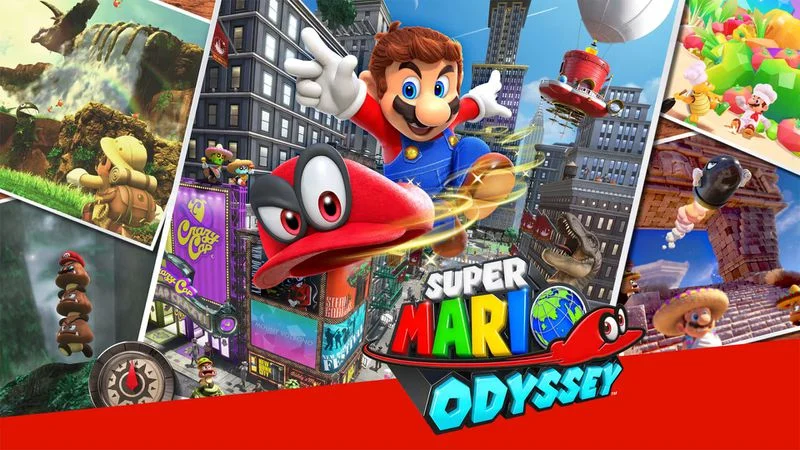
According to the developer’s technical documentation, the software operates by parsing game files extracted from legally owned physical cartridges. Users must possess a modified (jailbroken) Nintendo Switch to dump these files, which are then processed on a Mac to create the final executable for the Apple TV. Initial benchmarks provided by the developer indicate a high level of efficiency: Super Mario Odyssey runs at a consistent 60 frames per second (fps), while Animal Crossing: New Horizons maintains a stable 30 fps. These metrics are impressive given that the software is bypassing the traditional emulation route, choosing instead to run the game’s code natively on the target hardware.
Hardware Limitations and Future Scalability
While the current results are promising, the project is not without significant hardware constraints. The third-generation Apple TV 4K, while powerful for a streaming box, is not optimized for sustained high-performance gaming. Intensive titles—such as The Legend of Zelda: Tears of the Kingdom—present a daunting challenge. Early reports suggest that the system suffers from thermal throttling when tasked with rendering the complex physics and vast open-world assets required by such games.
However, the hardware landscape is set to change shortly. With the impending release of the fourth-generation Apple TV 4K, scheduled for commercial availability on November 13, the ceiling for performance is expected to rise. The new iteration, which features the cutting-edge A19 chip, represents a substantial leap in computational power and thermal management. This hardware upgrade may prove critical for the viability of the TVPort project, as the increased overhead could allow for more demanding software to run without the performance degradation currently observed on the third-generation hardware.
Chronology of Nintendo’s Legal Stance on Emulation
The emergence of TVPort occurs within a volatile legal climate regarding video game preservation and emulation. Nintendo has historically maintained an aggressive posture toward any third-party software that facilitates the unauthorized execution of its copyrighted titles. The company’s legal strategy is defined by a rigorous defense of its intellectual property, characterized by high-profile litigation and rapid enforcement.
- 2020-2023: Nintendo expanded its monitoring of open-source projects, frequently issuing Digital Millennium Copyright Act (DMCA) takedown requests to platforms like GitHub and Discord that hosted emulation-related tools.
- March 2024: The industry witnessed a landmark moment when Nintendo successfully sued the developers of Yuzu, a popular Nintendo Switch emulator. The litigation resulted in a $2.4 million settlement and the permanent cessation of the Yuzu project, setting a legal precedent that developers of such tools are liable for the copyright infringement committed by users of their software.
- Late 2024 to Present: Following the Yuzu shutdown, the hobbyist community has shifted toward "native porting" rather than traditional emulation. By creating tools that allow for native execution, developers are attempting to circumvent the legal definitions that previously doomed emulation projects, though the core issue of derivative work remains a point of contention.
Technical Implications and Market Impact
From a technical standpoint, the success of TVPort demonstrates the transformative potential of AI in software engineering. The ability to recompile legacy code for new environments without manual intervention could revolutionize how software is ported across platforms. However, this also poses a direct threat to the "walled garden" approach favored by console manufacturers like Nintendo.
If software can be ported to high-end set-top boxes with minimal human oversight, it undermines the hardware-exclusive business model. Should projects like TVPort gain mainstream traction, it could force a shift in how companies like Apple and Nvidia view their streaming devices. While Apple has historically distanced itself from the "gaming console" market, the integration of high-performance chips like the A19 suggests that the Apple TV is increasingly capable of acting as a secondary gaming platform, provided there is a library of compatible titles.
Potential Legal and Ethical Risks
The legal risks for the project are substantial. While the developer has emphasized that TVPort does not include any copyrighted game files—requiring users to provide their own dumps—the legality of bypassing digital rights management (DRM) on a physical cartridge remains a gray area. Nintendo’s legal department is unlikely to distinguish between a "native port" and an "emulator" if the end result involves their copyrighted content running on unauthorized hardware.
Furthermore, the "open-source" nature of the project complicates defense strategies. Unlike a corporate-backed emulator, an open-source project distributed on sites like Reddit has no central entity to hold accountable, which often leads to "whack-a-mole" litigation tactics by rights holders. Users engaging with the software should be aware that, regardless of the technological achievement, the usage of such tools remains firmly outside the terms of service set by Nintendo for its products.
Industry Perspectives and Expert Analysis
Industry analysts view the TVPort development as a double-edged sword. On one hand, it represents a remarkable feat of software engineering and a significant step forward in cross-platform interoperability. It showcases the capability of AI to bridge technological gaps that were previously deemed insurmountable by small teams or individual developers.
On the other hand, it highlights the ongoing tension between the preservationist community and intellectual property holders. Nintendo argues that such ports are essentially unauthorized derivative works that jeopardize the integrity of their platform and the revenue stream of their developers. Conversely, supporters of the project argue that if a consumer owns the physical software, they should be entitled to run that software on any hardware they possess.
As the fourth-generation Apple TV 4K enters the market, the performance of these titles will likely be scrutinized by both enthusiasts and tech analysts. If the A19 chip allows for seamless, high-fidelity gameplay, it could catalyze a broader trend of "unofficial" platform expansion. However, the legal pressure from Nintendo is expected to intensify. The history of the gaming industry suggests that while technology often advances faster than the law, corporations with the resources of Nintendo rarely concede when their primary revenue-generating platforms are threatened by third-party modifications.
Conclusion: The Future of TVPort
The TVPort project stands as a testament to the ingenuity of the modern developer community, enabled by the power of large language models like Claude Opus 5.5. By successfully bridging the gap between Nintendo Switch software and the Apple TV environment, the project has pushed the boundaries of what is possible in home-brew software development.
Whether TVPort will evolve into a stable, long-term project or succumb to the same legal pressures that dismantled Yuzu remains to be seen. As the community continues to test additional titles and monitor the impact of the upcoming Apple TV hardware update, one thing is certain: the line between specialized gaming hardware and general-purpose computing devices is becoming increasingly blurred. For now, users remain responsible for the legal implications of their actions, and the software remains an experimental tool that highlights the cutting edge of AI-assisted software migration.