










Apple’s rollout of the watchOS 27.3 and iOS 27.3 developer and public betas has introduced a paradigm shift in how wearable technology processes ambient audio and user environments. Highlighted by the debut of "Audio Intelligence" tools—specifically Siri Recap and Live Rewind—the latest software cycle brings advanced machine learning capabilities directly to the wrist. Exclusively available on the Apple Watch Series 12 and Apple Watch Ultra 4, these features aim to bridge the gap between passive environmental awareness and active digital assistance. However, they also ignite a broader conversation regarding data privacy, ambient listening technologies, and the evolving boundaries of personal electronic surveillance.
The evolution of Apple’s ambient computing strategy traces back to the initial unveiling of Apple Intelligence frameworks at the company’s September keynote event. While foundational artificial intelligence features rolled out gradually throughout the autumn, the integration of deep audio processing into watchOS 27.3 marks the first time high-end Apple Watch models are being utilized to actively synthesize and summarize spoken interactions throughout a user’s day. As beta testers explore the boundaries of these updates, early real-world deployment offers a clearer picture of both the technical proficiency and the socio-technical implications of always-on conversational summaries.
Main Facts and Technological Overview
The centerpiece of the watchOS 27.3 beta is Siri Recap, an ambient note-taking utility designed to process daily conversations and generate high-level, Apple Intelligence-driven summaries. According to official system documentation, the feature functions by quietly logging contextual markers from a user’s acoustic surroundings, translating spoken exchanges into structured journal-like recaps accessible via the Siri application on paired iOS devices.

Designed to operate seamlessly in the background, Siri Recap aims to help users jog their memories without requiring them to manually record notes, dictate reminders, or pull out their smartphones during active social or professional engagements. The framework operates on a strict retention window: summaries can be configured to automatically purge from local memory after a maximum of seven days, unless the user explicitly elects to save specific entries for long-term reference.
Accompanying Siri Recap on the Apple Watch Series 12 and Apple Watch Ultra 4 is Live Rewind, a companion audio feature that allows users to buffer and review recent audio inputs captured by the watch’s microphone array. Together, these tools represent a significant leap in on-device neural processing power, made possible exclusively by the upgraded neural engine silicon housed within Apple’s latest hardware iterations. Older watch models lack the necessary localized processing capability and real-time encryption pipelines required to handle continuous audio synthesis securely on the device.
Chronology and Deployment Timeline
The trajectory leading to the current beta release began at Apple’s annual September product showcase, where executives previewed the broader vision for Audio Intelligence within the ecosystem. Industry analysts initially anticipated a swift rollout alongside the initial iterations of watchOS 27, but engineering teams opted for a more measured deployment schedule to refine localized data handling and battery optimization protocols.
By late October, preliminary firmware leaks indicated that the Apple Watch Series 12 and Apple Watch Ultra 4 would serve as the exclusive launch hardware for Siri Recap and Live Rewind. This exclusivity sparked early debates across technology forums regarding hardware obsolescence and the rapid pace at which features are gated behind annual device upgrades.
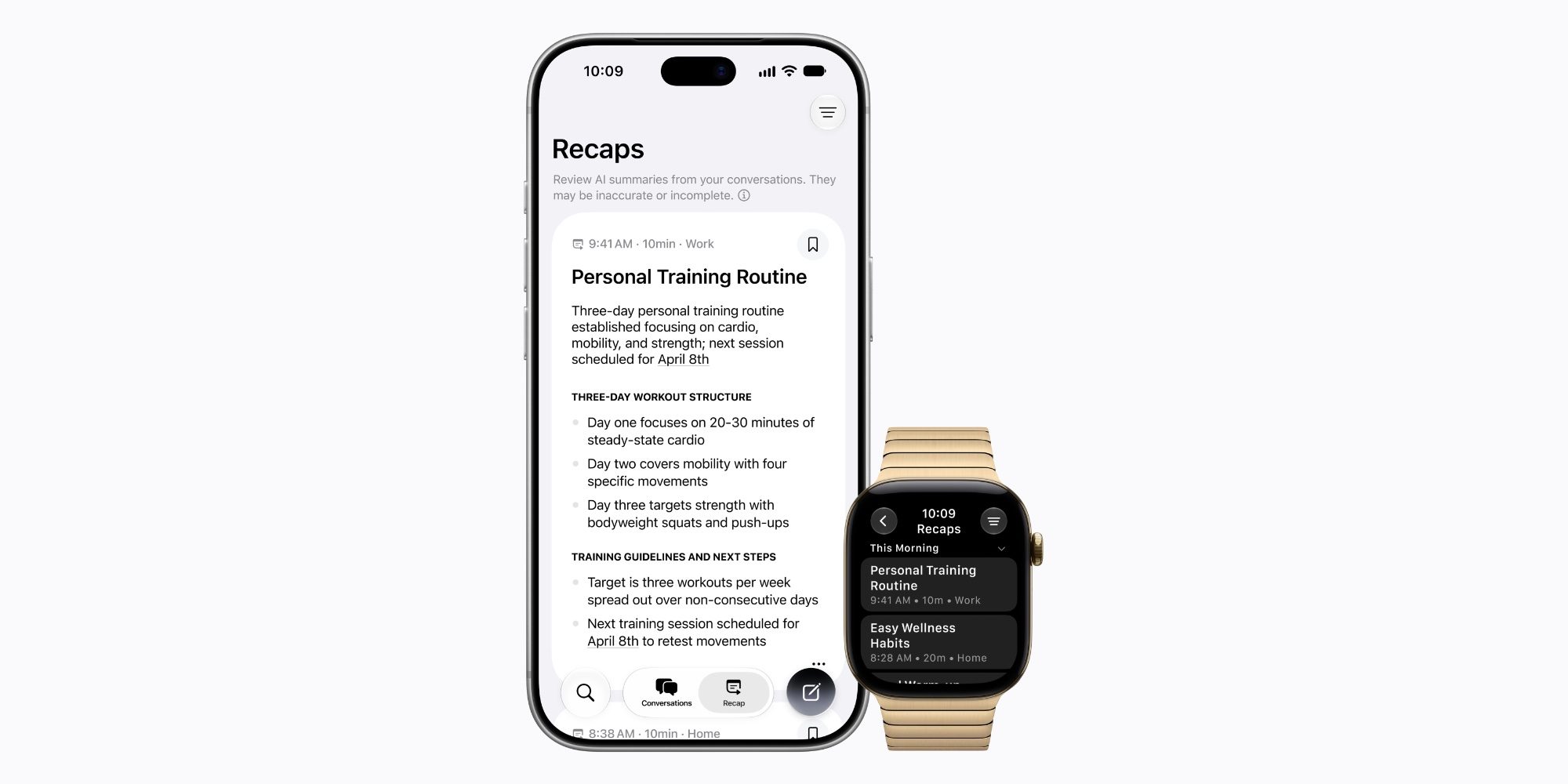
The official public and developer beta release materialized this week, launching watchOS 27.3 alongside corresponding iOS 27.3 builds. Early adopters immediately began testing the capabilities in diverse environments, ranging from retail spaces and family gatherings to quiet home offices, providing the first substantive user data regarding the accuracy and contextual awareness of the machine learning summaries.
Privacy Architecture and Data Safeguards
Given the inherent sensitivity of ambient listening technologies, Apple has implemented a rigorous privacy framework designed to mitigate user apprehension. Unlike traditional cloud-based voice assistants that frequently transmit raw audio streams to remote server farms for processing, Siri Recap relies entirely on on-device neural processing.
Official corporate compliance guidelines emphasize several key privacy safeguards:
- No Raw Audio Storage: The system does not permanently record, save, or upload raw audio files. Ambient inputs are processed in real-time, converted into abstracted contextual markers, and the raw acoustic data is immediately discarded.
- Exclusion of Sensitive Identifiers: The machine learning algorithms are explicitly programmed to filter out and disregard sensitive categories of information, including financial account details, authentication credentials, passwords, and specific personal identification numbers.
- Speaker Attribution Limits: The system avoids deep biometric voice profiling or granular speaker identification logs, focusing instead on the high-level thematic content of a conversation rather than mapping individual identities.
- Granular User Controls: Siri Recap is strictly an opt-in feature. Furthermore, users retain the ability to establish geographic or temporal boundaries—such as specific times of day or designated locations—where the ambient listening and note-taking functions remain automatically disabled.
Despite these technical mitigations, privacy advocates and cybersecurity specialists continue to scrutinize the psychological impact of wearing a device capable of continuous conversational parsing. The mere presence of an active listening node on the wrist introduces complex social dynamics in public and professional spaces, raising questions about consent among uninitiated third parties participating in conversations near the device owner.

Real-World Performance and User Observations
Early adopters evaluating the watchOS 27.3 beta have reported a high degree of accuracy in how Siri Recap organizes daily timelines. Testers note that the system successfully categorizes events, errands, and casual discussions into coherent chronological summaries that accurately reflect the flow of a user’s day.
In practical testing scenarios, the granularity of the summaries has surprised even seasoned technology reviewers. For instance, users have documented instances where the system captured specific product dimensions, pricing figures, or contextual details mentioned by family members during routine shopping trips—details that the primary device wearer had consciously overlooked or failed to actively commit to memory. Similarly, domestic interactions, such as music tracks played on household smart speakers during morning routines, are automatically cataloged at the conclusion of daily activity logs.
Crucially, early beta testers have observed a notable absence of false positives involving overly sensitive personal data, suggesting that Apple’s filtering algorithms are effectively screening out private identifiers during the initial on-device transcription phase. However, because the software remains in an active development cycle, edge cases and potential misinterpretations of complex conversational sarcasm or nuance are still being evaluated by quality assurance engineers.
Broader Industry Impact and Future Implications
The introduction of Siri Recap and Audio Intelligence within the watch ecosystem signals a broader industry trend toward proactive, ambient computing. Rather than requiring explicit user prompts—such as the classic "Hey Siri" invocation—modern AI assistants are increasingly moving toward passive observation and contextual synthesis, anticipating user needs based on real-world behavior and environmental data.

For the wearable technology market, this development elevates the Apple Watch from a traditional fitness tracker and notification relay into an active cognitive extension of the user. As competitors in the consumer electronics space observe Apple’s implementation, rival manufacturers are expected to accelerate their own ambient AI research, likely leading to a new wave of smart wearables equipped with advanced microphone arrays and localized neural processing units.
At the same time, the feature underscores regulatory and social challenges that tech companies must navigate in the coming years. As devices become more adept at quietly observing human routines, the burden of proof rests heavily on developers to maintain transparent data governance, robust encryption standards, and unambiguous user consent mechanisms. Whether consumer comfort with ambient AI will normalize these tools on a mass scale remains one of the defining questions of the current hardware generation.
As the watchOS 27.3 beta continues its iterative testing phase ahead of a wider public release, Apple will likely incorporate telemetry data and user feedback to refine the balance between contextual utility and privacy preservation. For now, early adopters are left to weigh the undeniable convenience of an AI-powered memory aid against the evolving social realities of living alongside an always-listening wearable ecosystem.