









The Premise of Gag Order
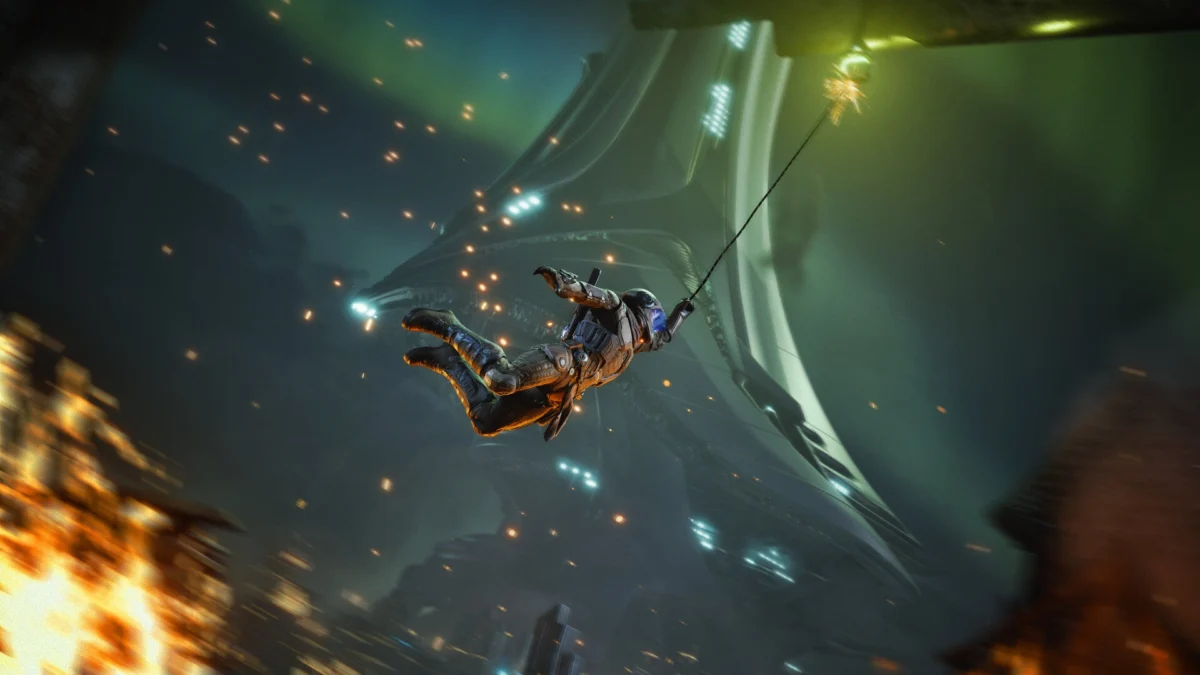
The narrative core of Gag Order places players in the boots of a Guardian Unit, a security and containment operative tasked with responding to a localized distress signal emanating from the deepest sectors of a classified research complex. Upon arrival, the environment is established as a hostile, decaying landscape, characterized by anomalous biological growth and structural degradation.
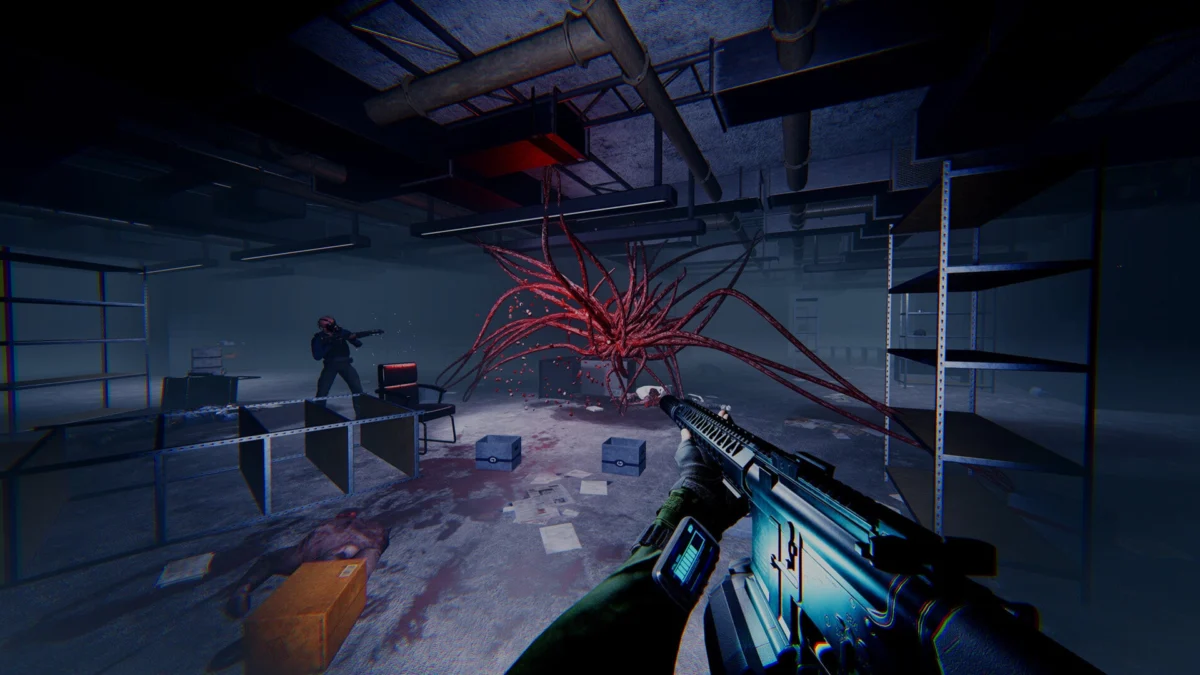
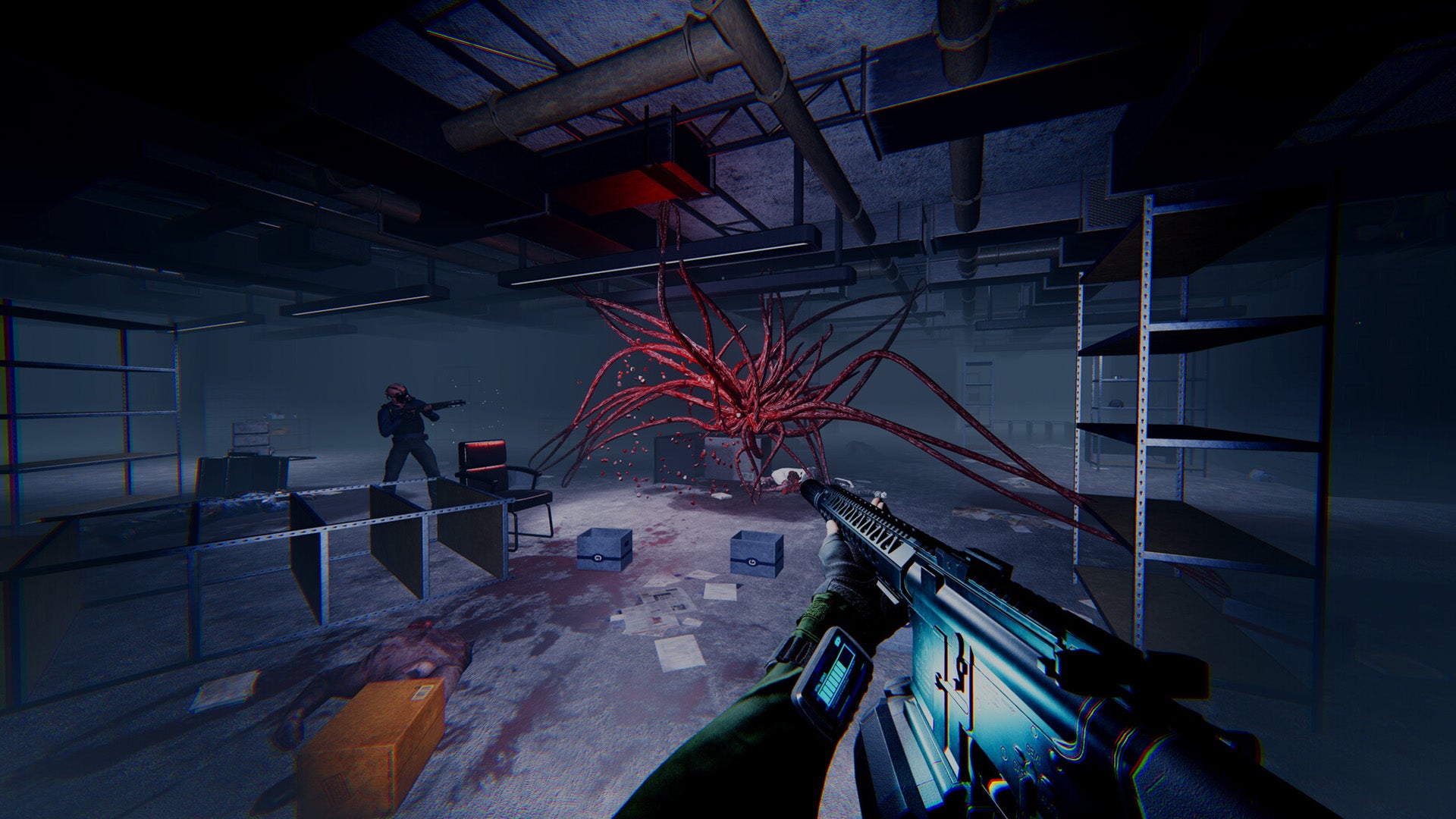
The game departs from traditional "power fantasy" shooters by emphasizing vulnerability. The primary antagonist—a shifting, tentacled organism—is not merely a damage sponge but a dynamic environmental hazard. During the opening phases of a session, the creature is effectively impervious to standard-issue ballistics. Players are forced to prioritize evasion and tactical suppression rather than direct combat, a design choice that mirrors the creeping dread found in contemporary cooperative horror titles like Lethal Company, while maintaining the atmospheric pacing of early 2000s tactical shooters.
Mechanics and Gameplay Structure
Raycast Games has structured Gag Order into two distinct, high-tension phases. The first phase focuses on exploration and survival, requiring players to navigate the labyrinthine corridors of the facility to uncover the source of the distress signal while managing dwindling resources. During this stage, the cephalopod entity functions as a persistent stalker, capable of maneuvering through vents and tight spaces to harass the team.
The transition to the second phase shifts the game into a high-octane "team-bossfight." While specific mechanics regarding how players bridge the gap between evasion and confrontation remain under wraps, developer documentation indicates that the entity’s vulnerability is tied to environmental interaction and synchronized team tactics. This necessitates a high degree of communication, as the game appears to punish disjointed playstyles. The visual language of the game—which features surreal, anomalous imagery such as avian wildlife inhabiting sterile office environments—suggests a narrative influenced by the "New Weird" genre and SCP Foundation-style lore, where the scientific unknown takes precedence over traditional sci-fi tropes.
Chronology and Development Roadmap
The project, currently in active development, has maintained a relatively low profile leading up to its announcement. The following timeline outlines the current trajectory of the game’s public-facing development:
- Mid-2024: Internal concept finalization and early environmental design. Raycast Games begins establishing the "Guardian Unit" lore and the specific behavioral AI models for the creature.
- Late 2024: The release of the first official trailer, which showcased the game’s aesthetic, sound design, and the primary gameplay loop. This marked the beginning of the public awareness campaign.
- 2025 (Projected): Expected period for closed technical testing and community feedback loops, intended to balance the difficulty of the boss-fight encounters.
- 2026 (Projected): Scheduled final release window. The developers have indicated that they intend to refine the "fast-paced team-bossfight" mechanics based on playtest data collected throughout 2025.
Industry Context and Market Positioning
Gag Order enters a crowded market of cooperative horror shooters, a genre that has seen significant growth following the success of indie titles that prioritize emergent gameplay over scripted sequences. By blending the tactical shooter sensibilities of the early 2000s with modern horror tropes, Raycast Games is positioning the title as a bridge between two distinct demographics: the competitive shooter player and the atmospheric horror enthusiast.
Market analysts note that the "cooperative survival" sub-genre has experienced a compound annual growth rate (CAGR) in player engagement metrics over the last three years, largely driven by the streaming community’s appetite for high-tension, unpredictable multiplayer experiences. Unlike narrative-heavy horror games that require individual mastery, Gag Order’s reliance on "team-bossfight" mechanics aligns with the industry trend toward social-centric gaming, where the game’s value is derived from the unpredictability of human interaction under pressure.
Fact-Based Analysis of Gameplay Implications
The inclusion of a "nearly invincible" antagonist for the first half of the game is a deliberate design choice intended to manage player expectations and pacing. From a technical standpoint, this allows the developers to focus on pathfinding and environmental AI without the need for complex hit-registration logic during the early stages of a run.
The aesthetic choices—specifically the juxtaposition of industrial decay with surreal elements like office-bound wildlife—serve a dual purpose. Beyond building atmosphere, these elements provide visual landmarks in a procedurally or semi-procedurally generated facility, helping players orient themselves during high-stress encounters. The decision to limit the player’s arsenal to "fending off" the creature rather than "defeating" it serves to keep the tension consistently high. It creates a psychological feedback loop where the player’s primary goal is not the accumulation of kills, but the maintenance of safety.
Implications for the Horror Genre
The shift toward "asymmetrical-lite" experiences, where players are physically capable but strategically disadvantaged, is a hallmark of the current era of horror gaming. In many traditional shooters, the presence of a gun signifies safety. In Gag Order, the gun serves as a psychological crutch; it provides a false sense of security that is stripped away during the second, boss-focused phase. This inversion of the power dynamic is expected to be the game’s defining feature.
Furthermore, the game’s adherence to a 2026 release window suggests a measured development cycle. Given the complexity of implementing synchronized multiplayer AI that can effectively "hunt" a team of players without feeling unfair, Raycast Games has opted for a long-lead marketing strategy. This allows for community wishlist engagement on platforms like Steam, which is a vital metric for visibility in the modern digital storefront landscape.
Future Outlook and Official Response
While specific statements from Raycast Games have been sparse, the studio’s approach has been characterized by a focus on "vibe-driven" design. The developer has emphasized the "rotten" atmosphere of the facility, suggesting that the environment itself is meant to act as a character in the narrative.
As the project approaches its 2026 release, stakeholders and potential players will likely look for updates regarding the specific number of players required for a balanced session, the degree of environmental destructibility, and whether the game will incorporate elements of roguelike progression. The current evidence suggests that Gag Order is not attempting to revolutionize the genre, but rather to distill the most effective elements of cooperative survival into a coherent, highly polished experience.
For those interested in tracking the project’s development, the title is currently available for wishlisting on major digital distribution platforms. As the industry continues to move toward more experimental multiplayer formats, Gag Order represents a concerted effort to maintain the intensity of traditional horror within a team-based, tactical framework. Whether the game can successfully balance the frustration of early-game vulnerability with the catharsis of end-game combat remains to be seen, but the initial visual and mechanical indicators suggest a title that is well-positioned to carve out a niche in the horror-shooter landscape.