








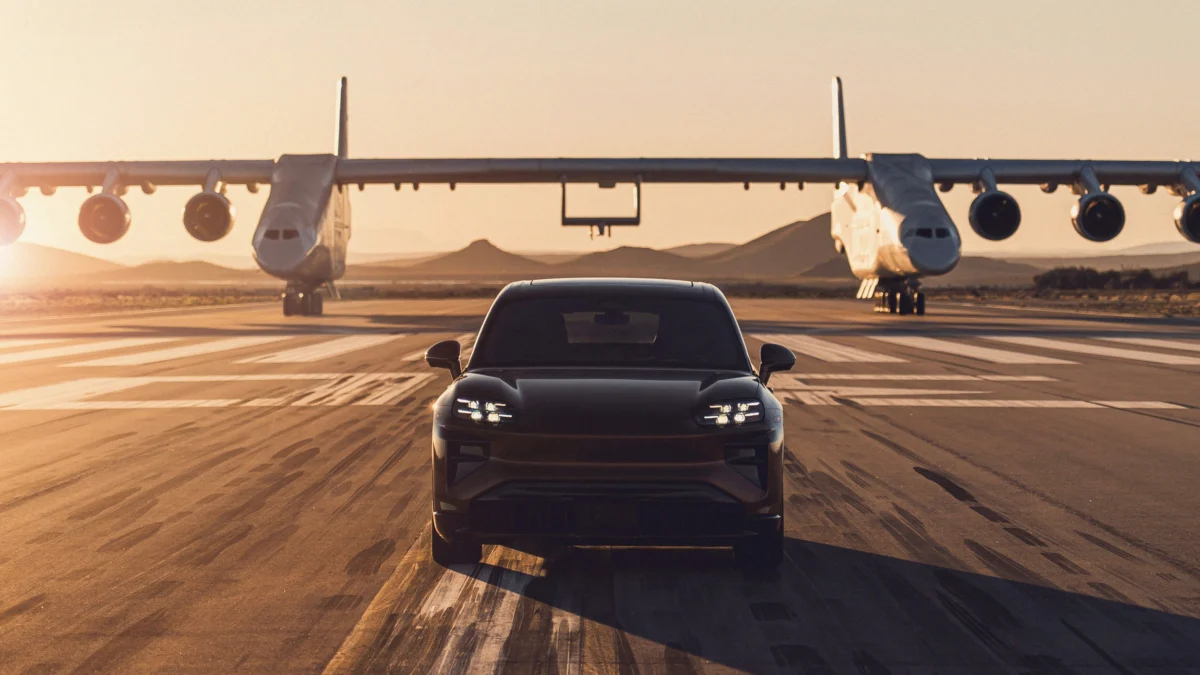
In a remarkable display of engineering synergy, Porsche and Stratolaunch have successfully completed a high-stakes performance test, placing the new Porsche Cayenne Electric in the direct wake of the Stratolaunch Roc, the world’s largest aircraft by wingspan. This demonstration, conducted to evaluate the vehicle’s high-speed stability and powertrain resilience under extreme aerodynamic conditions, highlights the intersection of cutting-edge automotive electrification and aerospace engineering.
The Technical Context of the Stratolaunch Roc
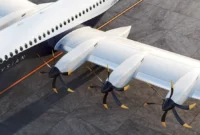
The Stratolaunch Roc is an engineering marvel designed for high-altitude, air-launch operations. With a wingspan of 385 feet—surpassing the length of a professional football field—the aircraft is powered by six Pratt & Whitney PW4056 engines. Collectively, these engines generate approximately 340,500 pounds of thrust. The sheer scale of the displacement and the resulting turbulence generated during a takeoff run are unprecedented in standard automotive testing environments.
The objective of the collaboration was to determine how a high-performance electric platform would respond to the intense, chaotic air currents created by a heavy-lift aircraft. While cinematic portrayals often depict cars being rendered helpless in the blast of a jet engine, this real-world experiment aimed to quantify the stability limits of the Porsche Cayenne Electric, testing its aerodynamic profile, torque vectoring, and suspension systems under sustained, high-pressure airflow.

Chronology of the Performance Test
The event took place on a designated runway, requiring precise synchronization between the flight crew of the Roc and the driving team. The test was broken down into three distinct phases:
-
Phase One: The Static and Low-Speed Assessment
The initial phase involved positioning the Cayenne Electric in the "dead zone"—a specific area of relative stability behind the aircraft. Race driver Patrick Long initiated the test at lower speeds, ensuring that the vehicle’s electronic control units (ECUs) were calibrated to handle the initial surge of power from the aircraft’s engines. During this stage, the car maintained a steady distance, allowing engineers to monitor battery temperature and motor performance telemetry. -
Phase Two: The Acceleration and Jet Blast Exposure
As the Roc began its full-power takeoff sequence, the six engines spooled up to maximum capacity. The Cayenne Electric, utilizing its "Boost" mode, matched the acceleration profile of the aircraft. As speeds exceeded 100 mph, the car encountered significant turbulent air. According to telemetric data recorded during the run, the vehicle remained planted, with the suspension system automatically compensating for the rapid pressure changes. -
Phase Three: The High-Speed Departure
The final, most critical phase occurred as the Roc lifted off the tarmac. The engines transitioned from horizontal thrust to a slight downward angle relative to the ground. Despite the intense turbulence and the rapid increase in vehicle speed—reaching peaks of approximately 170 mph—the Cayenne Electric maintained its position relative to the aircraft’s landing gear. Long successfully executed a controlled deceleration once the flight phase was finalized, ending the test with the vehicle systems fully intact and operating within nominal parameters.
Engineering Analysis: Why the Cayenne Held Its Ground
The stability of the Cayenne Electric during this test can be attributed to several factors. Modern electric vehicles (EVs) offer a significantly lower center of gravity due to the battery pack placement, which provides inherent resistance to lateral force. Furthermore, the Cayenne’s advanced active aerodynamics and high-torque electric motors allow for near-instantaneous adjustments to power delivery, ensuring that the driver can make micro-corrections faster than a traditional combustion engine would permit.
From an aerospace perspective, the "eye of the storm" behind the Roc is a transient zone. By keeping the car within this specific pocket, the team minimized the direct impact of the exhaust plumes while still subjecting the vehicle to the secondary turbulence. This experiment provides valuable data for Porsche regarding high-speed thermal management of electric drivetrains under extreme external stressors.
Official Statements and Industry Reaction
Professional race driver Patrick Long described the experience as a culmination of intense focus and rigorous preparation. "It was one of the most focused and intense moments of my life," Long stated following the test. "We believed in the data, and I knew I could rely on the Cayenne and the pilots of the Roc. The most impressive aspect was how the vehicle reacted to the turbulence; even when the engines pointed directly at us, the car remained rock solid."
Porsche ambassador Orlando Bloom, who observed the proceedings, noted that the feat was indicative of the brand’s shift toward high-performance electric capability. "The car is its own beast," Bloom remarked. "It has the ability to keep up and play in this space, and this test proved that the platform is capable of handling conditions far beyond the average consumer use case."

Broader Implications for the Electric Vehicle Market
This demonstration serves a dual purpose: marketing and technical validation. For Porsche, the ability to withstand the wake turbulence of a heavy-lift aircraft serves as a powerful testament to the structural integrity and performance ceiling of their electric lineup. In a market where range and charging speed have dominated the conversation, this test pivots the narrative back to performance and durability.
Furthermore, the collaboration between an automotive manufacturer and an aerospace firm highlights a growing trend of cross-industry data sharing. As electric vehicle technology continues to evolve, the lessons learned from extreme-condition testing—such as battery cooling efficiency under high sustained loads—will eventually trickle down to consumer-grade vehicles, potentially improving the reliability of EVs in diverse environmental conditions.
Future Outlook
While the average driver will never encounter the jet blast of a 385-foot wingspan aircraft, the implications of this successful feat are clear: the threshold for what is considered "high performance" in the electric era is rising. Porsche has signaled that its future EV models are designed to operate under stress that would have previously been deemed prohibitive for battery-electric platforms.
The test also underscores the importance of software-defined vehicle architecture. The precision with which the Cayenne’s traction and stability control systems managed the turbulent environment suggests that the future of automotive safety lies in the millisecond-latency adjustments made by onboard computers.

As the industry moves toward 2026 and beyond, we can expect to see more of these high-visibility technical demonstrations. Whether through partnerships with aerospace companies or participation in extreme-environment racing, manufacturers are increasingly looking for ways to prove that electric propulsion is not just a sustainable alternative, but a superior one in terms of pure, raw capability.
This event at the Stratolaunch facility has effectively set a new benchmark for automotive testing, proving that with the right engineering, the line between aviation performance and road-going capability continues to blur. The Cayenne Electric has not only survived the test but has provided a compelling look at what the next generation of high-performance vehicles will be capable of achieving when pushed to their absolute limits. The data gathered from this event will undoubtedly inform future iterations of the Porsche electric ecosystem, ensuring that the brand maintains its competitive edge in a rapidly changing automotive landscape.
The success of this stunt is a definitive signal to the market that the transition to electric power does not necessitate a compromise in the thrill or the technical superiority that driving enthusiasts have come to expect from the brand. As the automotive world watches, the question is no longer whether electric vehicles can perform under pressure, but rather, what other impossible scenarios they will conquer next.