









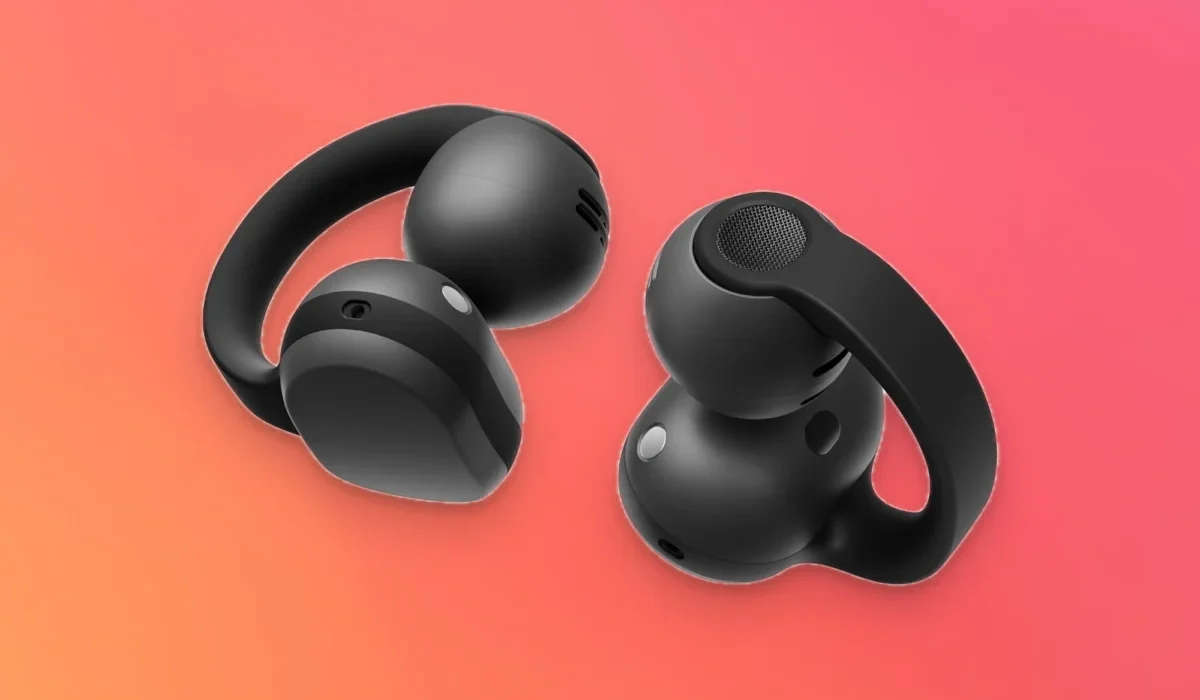
Samsung Electronics has officially announced the United States market introduction and pricing details for its first-ever open-ear, clip-on wireless earphones, the Galaxy Buds On. Initially unveiled earlier this month during a regional launch event in South Korea, these distinct listening devices are slated for an early November retail release across the United States. Priced at $229, the Galaxy Buds On arrive in a single initial color option—Black—and represent Samsung’s strategic entry into the specialized open-ear audio segment, a growing category designed for consumers who prioritize situational awareness alongside their personal media consumption.
This American market rollout broadens Samsung’s audio ecosystem, yet the pricing strategy has already drawn significant attention from industry analysts and consumers alike. At $229, the Galaxy Buds On occupy a unique tier within Samsung’s hardware lineup, sitting just below the company’s premier flagship active noise-canceling model, the Galaxy Buds 4 Pro, which retail for $250. This close proximity in price is particularly striking given that the Galaxy Buds On omit several advanced hardware features standard in traditional flagship earbuds, including active noise cancellation (ANC), deep acoustic bass response, and higher-grade dust and water ingress protection.

The rationale behind this pricing structure rests entirely on a fundamentally distinct user experience. Traditional in-ear monitors and closed-back earbuds create an acoustic seal inside the ear canal to isolate the listener from external sound. While effective for immersive listening in controlled environments, this isolation can pose safety hazards or practical inconveniences for individuals who jog near vehicular traffic, navigate bustling urban commutes, or require intermittent conversational availability throughout their workday. By leaving the ear canal unblocked, the Galaxy Buds On allow ambient noise to blend naturally with audio playback. This configuration targets urban commuters, outdoor fitness enthusiasts, and users who experience physical discomfort or fatigue from traditional silicone-tipped earbud designs.
Chronology of the Product Launch and Market Development
The commercial trajectory of the Galaxy Buds On reflects a measured, phased regional deployment by Samsung Electronics. The initial product announcement took place in South Korea earlier this month, where Samsung executives detailed the core technical architecture, design philosophy, and initial pricing for domestic consumers. Following the positive domestic reception and preliminary feedback from Korean tech reviewers, Samsung solidified its global supply chain logistics to secure an early November release window for North American consumers.

This phased rollout is consistent with modern consumer electronics strategies, allowing manufacturers to monitor initial production yields, firmware stability, and inventory distribution before scaling up to larger markets like the United States. Industry observers note that the early November launch positions the Galaxy Buds On strategically ahead of the crucial year-end holiday shopping season, ensuring prominent shelf space and digital availability during peak consumer electronics purchasing periods.
Engineering and Ergonomics: The Science of Open-Ear Comfort
Designing an open-ear device that remains secure during physical movement while delivering balanced audio quality presents severe engineering challenges. According to official documentation released by Samsung, the development of the Galaxy Buds On was informed by an extensive ergonomic study analyzing more than 119 million individual ear data points. This massive dataset allowed Samsung’s acoustic engineers to refine the clamping force and geometric curves of the clip-on mechanism, ensuring a secure fit across a diverse range of ear shapes and sizes without inducing pressure points.

Each individual earbud weighs a remarkably light 6.65 grams, minimizing user fatigue during extended listening sessions. Housed within each unit is a custom-engineered 11.3mm TwinBoost speaker driver, meticulously tuned to project sound directly into the ear canal while mitigating the inherent acoustic limitations of open-air designs.
Open-ear form factors historically struggle with two major acoustic hurdles: weak low-frequency response (bass) and severe sound leakage, where nearby individuals can clearly hear the user’s music or phone conversation. To combat sound leakage, Samsung has integrated proprietary Audio Leakage Reduction technology. This system utilizes phase-inverted sound waves to actively cancel out audio bleeding into the surrounding environment. Furthermore, the device incorporates an experimental automatic volume adjustment feature that dynamically modulates audio output based on ambient noise levels, though this capability requires synchronization with compatible Galaxy software and recent One UI firmware updates.
Under the hood, the Galaxy Buds On are powered by Qualcomm’s advanced Snapdragon S7 Gen 1 Sound Platform. This robust processing architecture not only ensures low-latency wireless transmission and efficient power management but also enables sophisticated on-device computational audio tasks. Battery performance is rated at up to 9.5 hours of continuous playback on a single charge, with the compact charging case extending total listening time to an impressive 38 hours. Durability is certified at an IP54 rating, offering reliable resistance against dust and everyday splashes, making the earbuds suitable for workouts and light rain.

Advanced Software Integration and Hands-Free Controls
In alignment with Samsung’s broader ecosystem strategy, the Galaxy Buds On are deeply integrated with Galaxy AI and advanced software functionalities designed to minimize the need for manual smartphone interaction. The hardware array features a sophisticated three-microphone system coupled with a dedicated voice pickup sensor. This hardware combination works in tandem to isolate the user’s voice from background wind and ambient chatter during telephone calls and video conferences.
For users embedded within the Samsung Galaxy ecosystem, the earbuds offer seamless voice-activated utility. Handlers can initiate conversations with Gemini Live through simple voice commands, record spontaneous voice memos on the fly, and execute hands-free call management using intuitive head gestures—such as nodding or shaking the head to accept or reject incoming calls. However, industry analysts point out that accessing the most advanced AI and gesture-recognition features requires pairing the earbuds with newer Samsung Galaxy devices running the latest iterations of the One UI operating system, potentially limiting the full feature set for users utilizing older hardware or non-Samsung Android devices.

Competitive Landscape and Industry Implications
The introduction of the Galaxy Buds On at a $229 price point underscores a broader industry shift toward diversified listening form factors. For years, the true wireless stereo (TWS) market was dominated almost exclusively by traditional in-ear silicon-tip designs and stem-based open-ear styles popularized by products like Apple’s AirPods. However, consumer demand for situational awareness and all-day comfort has catalyzed a renewed focus on secure clip-on and bone-conduction adjacent technologies.
Competitors in the audio space have similarly experimented with open-ear clip designs, catering to fitness enthusiasts and office workers alike. By pricing the Galaxy Buds On just slightly below its flagship Galaxy Buds 4 Pro, Samsung is making a calculated bet that consumers will value open-ear comfort and environmental awareness just as highly as active noise cancellation and high-fidelity acoustic seals.

Market researchers anticipate that while the lack of ANC and the steep price tag may deter casual audio consumers, niche demographics—such as cyclists, runners, corporate multitaskers, and individuals prone to ear fatigue—will find the engineering investments compelling. As the early November release date approaches, the commercial performance of the Galaxy Buds On will serve as a critical bellwether for whether consumers are willing to pay flagship-tier prices for specialized, non-isolating audio hardware.