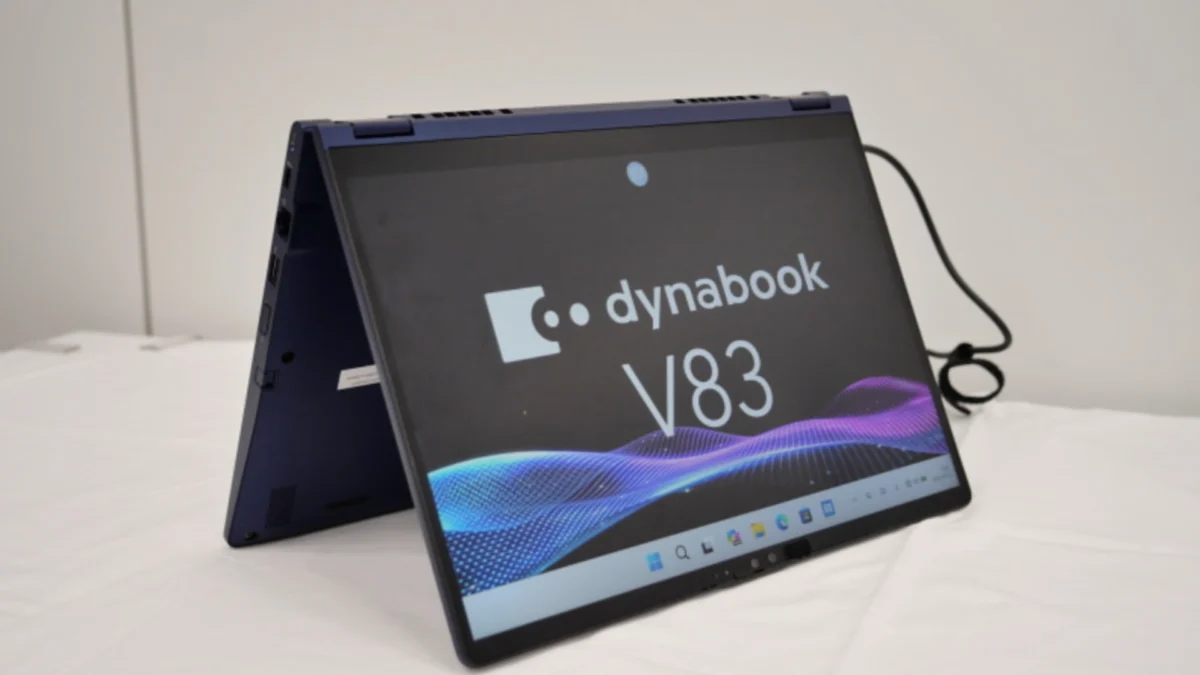
Dynabook has officially expanded its enterprise and consumer computing lineup with the introduction of the V83/PA, an ultra-lightweight convertible laptop that weighs a mere 989 grams. Designed to bridge the gap between traditional clamshell notebooks and high-mobility tablet devices, the V83/PA targets mobile professionals who require robust processing power, extensive connectivity, and versatile input methods without the burden of heavy hardware. The announcement highlights a growing industry trend toward featherlight enterprise computing, though the device’s eye-watering entry-level price point has immediately sparked debate among industry analysts regarding its market viability.
The laptop’s standout physical feature is its meticulously integrated stylus. Unlike many competing devices that require magnetic attachment to the exterior chassis or separate carrying cases, the V83/PA incorporates a dedicated internal compartment. This compartment not only secures the stylus when not in use but also charges it internally, ensuring that the pen is always powered and ready for annotation, sketching, or navigation.
Lightweight Design and Modern Connectivity Suite
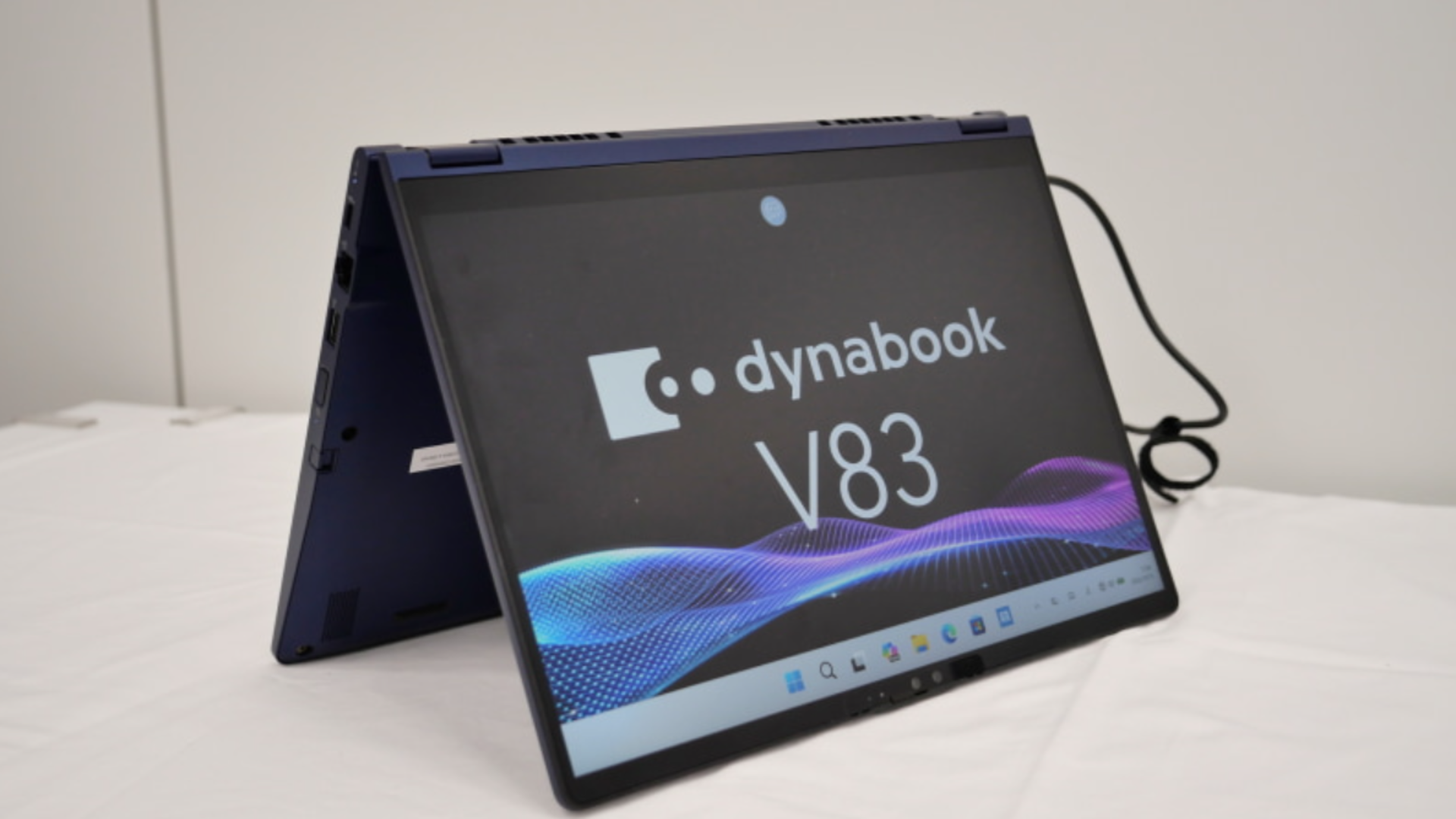
Measuring approximately 298.8 x 212 x 18.8 mm, the V83/PA sports a sleek Dark Tech Blue finish. The chassis features softly rounded rear edges to improve comfort during handheld tablet usage, complemented by an enlarged touchpad designed to enhance gesture control. Despite its featherlight 989g construction—a figure provided by the manufacturer that awaits independent laboratory verification—Dynabook has managed to pack a surprisingly comprehensive array of ports into the slim frame.
Connectivity options include two advanced Thunderbolt 4 ports strategically placed on opposite sides of the chassis. This thoughtful design choice allows users to connect power adapters and peripherals regardless of desk layout or cable routing constraints. Furthermore, the device includes two traditional USB 3.2 Gen 1 ports, a full-sized HDMI output, a physical Gigabit Ethernet port for stable wired networking, and a standard 3.2mm audio combo jack. This ensures that enterprise users can connect legacy office hardware without being forced to rely on external dongles.
Wireless capabilities are similarly cutting-edge, featuring support for Wi-Fi 7 and Bluetooth 5.4. For professionals who frequently work on the move, Dynabook offers optional mobile broadband configurations that support either 4G LTE or 5G networks, ensuring continuous cloud connectivity outside the office or home network.
Durability has also been factored into the physical design. The keyboard incorporates spill-resistant architecture capable of withstanding up to approximately 30cc of liquid. However, users are advised to immediately shut down the system following any accidental spills to prevent internal short-circuiting and protect vital components.
Performance, Intel Processors, and On-Device AI
Beneath the exterior, the Dynabook V83/PA is powered by Intel’s latest silicon. The laptop is configurable with a selection of high-efficiency processors, including the Intel Core Ultra 7 365, Ultra 7 355, Ultra 5 335, and Ultra 5 325. These processors are paired with either 16GB or 32GB of LPDDR5X RAM, alongside high-speed solid-state drive (SSD) storage options ranging from 512GB to 1TB. The system runs natively on Windows 11 Pro, making it immediately compatible with standard enterprise deployment tools and security protocols.
A major selling point of the V83/PA is its suite of artificial intelligence tools. The laptop features a proprietary AI application that allows users to translate or summarize onscreen text simply by drawing a circle around the relevant information with a finger or the integrated stylus. Crucially for privacy-conscious enterprise environments, all AI processing is handled locally on the device’s neural processing unit (NPU) rather than being transmitted to external cloud servers. This local processing ensures that sensitive corporate documents or proprietary data remain secure.
For remote workers and virtual meetings, the laptop supports AI-driven noise cancellation to filter out background audio disturbances. It also fully integrates Windows Studio Effects, providing advanced webcam framing, background blur, and eye-contact correction. To sustain peak performance during demanding computational tasks, Dynabook incorporates its proprietary Empower Technology, which dynamically manages thermal output and power distribution to prevent throttling.
Display, Optics, and Enterprise Security
Visual output is delivered via a 13.3-inch LCD touchscreen with a native resolution of 1920 x 1200 pixels. The 16:10 aspect ratio provides additional vertical screen real estate, which is particularly beneficial for document editing, coding, and web browsing. The convertible 360-degree hinge enables smooth transitions between traditional laptop mode, tent mode, presentation mode, and tablet mode.
For biometric authentication and video communications, Dynabook offers configurable camera setups. Buyers can select a high-end 5-megapixel front-facing sensor that supports facial recognition via Windows Hello, or a standard 0.92-megapixel alternative. Additionally, an 8-megapixel rear-facing camera is included for capturing documents or surroundings when the device is used in tablet configuration. A fingerprint reader is also embedded into the chassis, working in tandem with facial recognition to provide multi-factor biometric security.
Enterprise-grade security extends deep into the hardware and firmware levels. The V83/PA conforms to Microsoft’s Secured-Core PC standards, meets NIST SP800-171 guidelines for protecting controlled unclassified information, and utilizes a proprietary BIOS security manager designed to prevent unauthorized firmware tampering or rootkit installations.
Battery Life and Market Positioning
Battery endurance is another area where Dynabook has made aggressive claims. While the manufacturer has not disclosed the exact milliamp-hour (mAh) capacity of the internal battery cell, official estimates suggest up to 28.5 hours of idle time and approximately 16 hours of continuous local video playback. As with the device’s weight, these battery life metrics are manufacturer-calculated benchmarks that will require rigorous independent testing to verify under real-world multitasking conditions.
The most contentious aspect of the Dynabook V83/PA, however, is its pricing strategy. According to initial launch details sourced via industry reports from PC Watch, the base configuration of the V83/PA carries an introductory price tag starting at roughly ¥1,057,320—equivalent to approximately $6,740 USD. Given that this figure applies only to the entry-level tier, fully specified models featuring 32GB of RAM and 1TB of storage are expected to command an even steeper financial commitment.
Industry Implications and Competitive Analysis
The announcement of the V83/PA has prompted critical analysis from technology experts regarding its value proposition. While the combination of a sub-1,000-gram chassis, a 360-degree convertible hinge, comprehensive legacy ports, and an internally docked, charging stylus is undeniably impressive engineering, the asking price places the device in an exceptionally exclusive tier.
Many leading enterprise competitors—including Lenovo with its ThinkPad X1 Yoga series, HP with the EliteBook lineup, and Dell with Latitude convertibles—offer comparable Intel Core Ultra processors, matching RAM configurations, and robust security suites at a fraction of the cost. Few, if any, mainstream competitors integrate a charging stylus directly into the chassis in quite the same manner, but industry observers question whether this single design feature justifies a price tag exceeding $6,700.
Ultimately, the Dynabook V83/PA positions itself as a niche luxury tool for executives and specialized mobile professionals who place absolute priority on weight reduction, physical pen availability, and local AI processing security. Whether corporate IT departments will be willing to justify the capital expenditure in an increasingly cautious macroeconomic climate remains to be seen as the device rolls out to the market.