Ford’s latest advancement in its Level 2 driver-assist technology, BlueCruise 1.5, was introduced to the automotive landscape in 2025, promising a more seamless and intuitive hands-free driving experience. While initial impressions and subsequent tests of vehicles equipped with earlier versions of BlueCruise provided glimpses into its capabilities, a comprehensive evaluation of its true potential remained elusive until a recent extended road trip. This extended test, undertaken during a practical necessity to assist someone in Springfield, Massachusetts, offered a substantial, approximately three-and-a-half-hour round-trip, allowing for an in-depth assessment of BlueCruise 1.5’s performance in real-world conditions.
The opportunity to put BlueCruise 1.5 through its paces materialized with the availability of a 2026 Lincoln Nautilus, a vehicle that, like all Lincolns, comes equipped with a four-year subscription to the BlueCruise system. This contrasts with some Ford vehicles, which at the time of this writing, may still offer BlueCruise 1.4 as the primary option. Ford’s strategy for broader adoption across its vehicle lineup includes a complimentary one-month trial for new purchasers, with subsequent access available through monthly or yearly subscription plans, or as a standalone optional extra on select models. The Nautilus, however, represents a premium integration, highlighting Lincoln’s positioning as a flagship for Ford’s advanced automotive technologies.
Automatic Lane Changes: A Significant Leap Forward
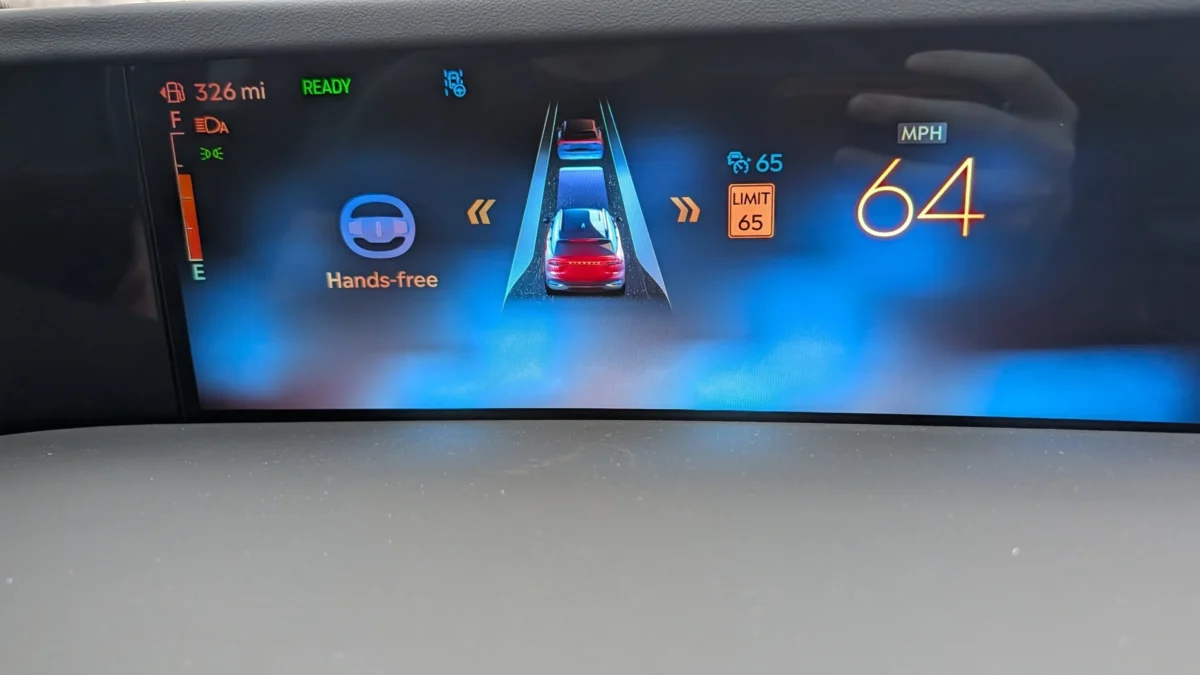
A pivotal enhancement in BlueCruise 1.5, and a feature that significantly elevates the hands-free driving experience, is the introduction of automatic lane changes. Previously, even with adaptive cruise control and lane centering engaged, a driver was required to initiate lane changes, typically by activating the turn signal. BlueCruise 1.5 removes this manual intervention, allowing the system to autonomously change lanes when deemed necessary for maintaining optimal traffic flow or executing a planned maneuver.

During the initial period of testing, this feature was not immediately active. This was attributed to a system setting that had been deactivated, a common scenario when new technology is first integrated. A swift adjustment within the vehicle’s settings menu, taking mere seconds, re-enabled the automatic lane change functionality. Once activated, the system demonstrated a remarkable ability to manage lane transitions independently. This liberated the driver to focus on other aspects of the vehicle’s sophisticated interior, such as engaging the massaging seat functions, exploring the customizable digital scent diffuser, or interacting with the advanced infotainment system, all while maintaining vigilant observation of the road ahead – a crucial requirement for any Level 2 system.
The system’s eagerness to perform lane changes was notable, sometimes bordering on what could be perceived as "lane-change happy." In one instance, while traveling in the rightmost lane, the vehicle encountered a car ahead that was inconsistently maintaining speed, fluctuating between being slightly slower and marginally faster. BlueCruise 1.5 responded by initiating a lane change to the left. Approximately 30 seconds later, without any overt overtaking maneuver being necessary, the system reverted to the right lane. While such behavior might initially seem overly sensitive, it underscores a proactive approach. This can be beneficial in quickly moving out of the way of tailgating vehicles or efficiently navigating around slower traffic when a safe overtaking opportunity arises. This proactive nature, while requiring driver awareness, contributes to a more fluid and less stressful highway driving experience.
Navigating the Nuances: When Human Intervention Remains Essential
Despite the advancements, BlueCruise 1.5, like all current Level 2 autonomous driving systems, necessitates continued driver engagement and responsibility. The system is designed to manage a significant portion of the driving task, but there are inherent limitations and specific scenarios where human intervention is not only recommended but legally mandated. This responsibility stems from the fundamental nature of Level 2 systems, where the driver is always considered to be in control of the vehicle, regardless of the technology’s capabilities. In the event of an accident, the onus remains on the driver, not the automated system.
Ford has adopted a cautious approach in defining the operational boundaries of BlueCruise. The system will prompt the driver to regain control in certain situations. While these situations are becoming increasingly rare, especially on well-maintained Interstates, they do exist. During the recent test, the most frequent prompt to grasp the steering wheel occurred when passing through toll road transponder scanners. Even in these instances, the vehicle generally continued to manage its speed and trajectory, with the driver’s input primarily serving as a confirmation of their readiness to resume full control.

However, there were moments that highlighted the system’s limitations and the critical need for driver vigilance. One particularly concerning scenario involved navigating through a construction zone. These areas often present narrowed lanes, sudden and significant reductions in speed, and an overall increase in potential hazards. Such conditions can be challenging for even the most sophisticated automated systems. While BlueCruise 1.5 did not fail outright during these moments, the proximity to concrete barriers at highway speeds prompted the driver to preemptively take manual control, prioritizing safety over the system’s operational limits. This experience reinforces the recommendation to disengage automated systems and assume manual control in complex or unpredictable road conditions, even if the system itself does not issue a warning.
Furthermore, BlueCruise 1.5 does not possess the capability to autonomously react to certain external factors. Drivers must remain attentive and prepared to intervene when encountering situations such as vehicles merging onto the highway, disabled vehicles stopped on the shoulder, or the presence of police or tow trucks assisting at the roadside.
A particularly noteworthy incident occurred during a highway merge. As a vehicle entered the highway, BlueCruise 1.5 simultaneously initiated a lane change maneuver. The driver had to react swiftly, taking control of the steering wheel to prevent a potential conflict. While it remains uncertain whether a collision would have definitively occurred, the driver’s prudent decision to intervene prevented any risk. This event underscores the critical importance of driver awareness, even when the system is actively engaged, particularly in dynamic traffic environments.
BlueCruise 1.5: A Top Contender in the Evolving Autonomous Landscape
Assessing BlueCruise 1.5’s standing in the competitive landscape of automotive self-driving systems, it’s clear that while not the absolute leader in terms of road coverage, it firmly resides within the top tier. With a multitude of original equipment manufacturers (OEMs) now offering some form of Level 2 driver assistance, Ford’s consistent development and refinement of BlueCruise represent a significant achievement. The system’s integration into a diverse range of Ford and Lincoln vehicles underscores its market penetration and the company’s commitment to advancing this technology.

The primary challenge faced by BlueCruise 1.5, and indeed by most highly capable Level 2 systems, lies in the inherent paradox of their current stage of development. The systems perform approximately 99% of the driving task, yet the driver is still legally and ethically required to remain attentive and ready to assume control. This "babysitting" requirement, while crucial for safety and legal compliance, can lead to a sense of ennui. The experience can be monotonous, especially on long stretches of highway with uninspiring scenery. While marginally more engaging than passively observing a static object, the lack of active participation can become a detractor for some drivers.
It is important to reiterate that BlueCruise 1.5 is not a Level 3 or Level 4 system. This means drivers cannot engage in activities such as napping, watching videos, or reading books. The driver remains ultimately responsible for the vehicle’s operation. However, Ford’s substantial investment in this technology suggests a clear trajectory. The Dearborn-based automaker is well-positioned to be among the vanguard of companies offering Level 3 autonomous driving capabilities in the United States, contingent upon the evolution of regulatory frameworks that permit such advancements.
For the present, BlueCruise 1.5 offers a compelling value proposition. It significantly alleviates the fatigue and tedium associated with long-distance driving, particularly when a driver is less inclined to engage in the minutiae of continuous manual control. Furthermore, the ability to easily disengage the system and resume manual control by simply applying the brake provides a readily accessible fallback for moments when the driving task becomes either too demanding or, conversely, too uneventful. The system’s ability to reduce driver workload on monotonous highway segments is a tangible benefit, contributing to enhanced comfort and potentially reduced driver fatigue on extended journeys.