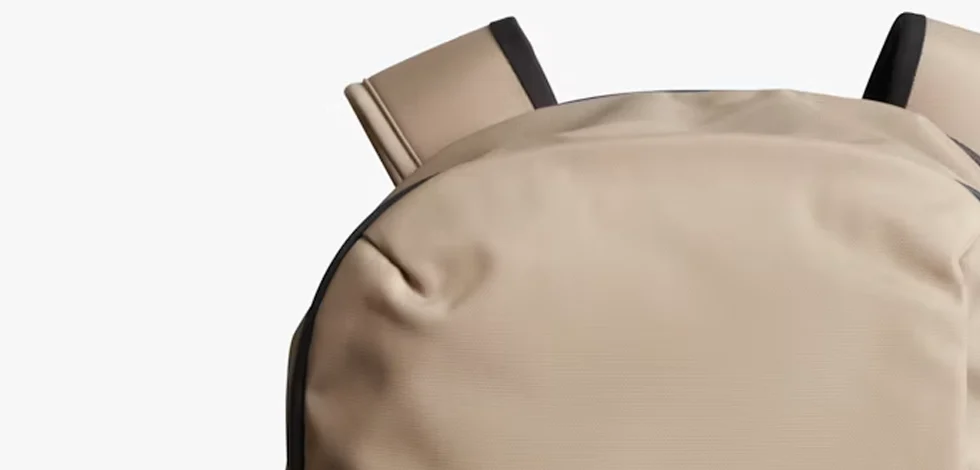
In the meticulous world of soft-goods engineering and technical bag design, the difference between a clumsy, boxy sack and a sleek, ergonomic daypack often lies in unseen architectural details. Among the most fundamental yet underappreciated techniques in a designer’s toolkit is the dart—a sewing method borrowed centuries ago from traditional garment tailoring. Though it frequently goes unnoticed by the casual consumer, this small triangular pinch of fabric is a masterclass in spatial geometry. By gathering material and tapering it down to a zero-point, a dart allows flat, two-dimensional textiles to curve, bulge, and contour into complex three-dimensional shapes without requiring additional panels, seams, or complex hardware.
To understand the profound impact of the dart, one must examine the fundamental limitations of modern textiles. Fabrics such as high-denier Cordura nylon, X-Pac laminates, and traditional waxed canvas are manufactured and processed as flat sheets. Translating these planar materials into ergonomic, volume-maximizing containers presents a continuous engineering challenge. Historically, bag makers addressed this by stitching together multiple flat panels at distinct angles, resulting in rigid, box-like structures reminiscent of early industrial luggage.
However, the integration of apparel-construction techniques—chiefly the dart—revolutionized modern carry design. By introducing a wedge-shaped fold into a pattern piece and stitching it shut, designers can manipulate tension and volume precisely where it is needed most. This technique is routinely deployed on the bottom corners of backpacks to create a rounded base that stands upright, along the contours of backpack lids to shed water more effectively, and across exterior pockets to allow them to expand outward when loaded with gear without sagging ungracefully.
Historical Origins and the Cross-Pollination of Textile Arts
The genealogy of the dart traces back hundreds of years through the history of European tailoring and dressmaking. Long before synthetic technical textiles and laser cutters existed, historical garment makers realized that human anatomy is inherently curved, whereas woven fabrics are inherently flat. To make garments conform to the waist, bust, and shoulders, tailors developed the dart as a quiet geometric solution to eliminate excess fabric smoothly.
Over the last several decades, as the technical outdoor and urban carry industries matured, product designers began cross-pollinating techniques from the fashion and apparel sectors into gear manufacturing. Industrial designers working with soft goods frequently look to historical tailoring methods to solve modern ergonomics and weight-reduction challenges. By adopting the dart, carry designers eliminated the need for extraneous seams, which are traditionally weak points susceptible to water ingress, abrasion, and structural failure under heavy loads.
In contemporary bag manufacturing hubs across Asia, Europe, and North America, the implementation of the dart has shifted from manual estimation to computer-aided design (CAD) precision. Modern vector software allows pattern makers to simulate how a specific dart angle will affect the overall cubic capacity and drape of a backpack before a single yard of fabric is cut. This integration of ancient craftsmanship and modern software has elevated bag making from a rudimentary assembly trade to a precise industrial art form.
Engineering Mechanics: How Darts Create Volume
From a purely mechanical standpoint, a dart functions by redistributing material stress across a load-bearing surface. When a flat sheet of fabric is subjected to a dart, the tensile strength of the weave is altered. Instead of pulling evenly across a flat plane, the fabric is forced into a curved radius.
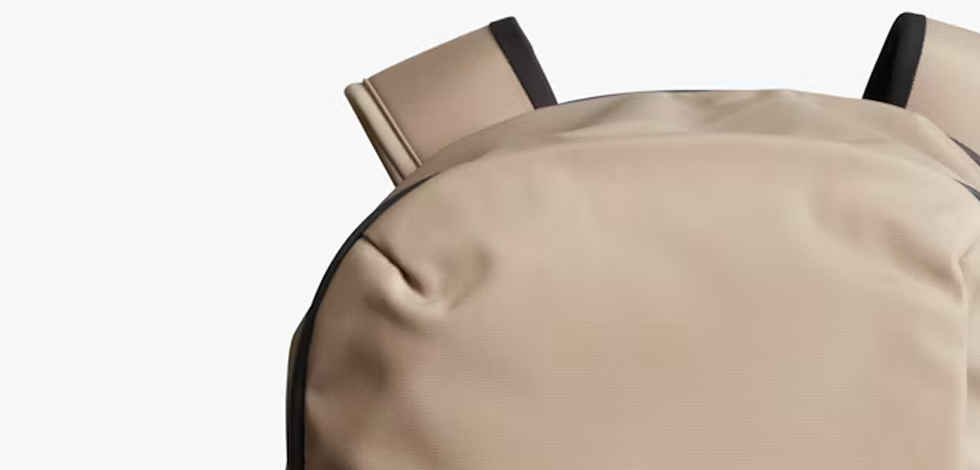
Material scientists and soft-goods engineers point out several distinct advantages to using darts over traditional multi-panel construction:
- Reduction of Seam Lines: Every seam in a backpack represents a potential point of failure and an extra step in manufacturing. Darts minimize the total linear footage of stitching required to achieve a given volume.
- Optimized Weight Distribution: By avoiding rigid corner seams, darts allow fabrics to flex naturally under shifting loads, thereby reducing localized stress concentrations.
- Enhanced Weather Resistance: Fewer seams mean fewer pathways for moisture to penetrate the interior compartment of a bag, improving overall weatherproofing.
- Aesthetic Cleanliness: Darts create smooth, continuous lines that give minimalist backpacks their signature organic silhouettes, reducing visual clutter.
Despite these clear engineering benefits, executing a clean dart requires exceptional skill on the production floor. Industrial sewing operators working with heavy-duty materials—such as 1000D Cordura or multi-layer laminate sails—must taper their stitching with absolute precision. If a dart is sewn off-angle by even a millimeter, the symmetry of the entire bag can be compromised, causing the finished product to lean or twist when resting on a flat surface.
Industry Perspectives and Modern Implementation
Leading voices within the technical carry community have long championed the subtle art of pattern manipulation. According to product development notes shared across major outdoor gear brands, the placement of a dart is often the defining signature of a master designer.
Independent bag designers and cottage-industry makers have similarly embraced the technique, frequently highlighting the dart as the ultimate test of pattern-making literacy. In online maker communities and design workshops, tutorials focusing on dart geometry consistently rank among the most sought-after educational resources. As consumers increasingly demand products that balance urban aesthetics with rugged outdoor utility, brands are investing heavily in refining these foundational construction methods.
Furthermore, the sustainability movement within the textile industry has added new relevance to classic techniques like the dart. By utilizing darts to maximize volume and shape efficiently, designers can minimize fabric waste during the laser-cutting phase. Every square inch of technical fabric saved translates directly to reduced petroleum consumption, lower manufacturing emissions, and less waste sent to landfills.
The Future of Spatial Soft-Goods Design
As the carry industry looks toward the future, the principles underlying the humble dart continue to evolve. Emerging manufacturing technologies, including 3D knitting and automated robotic assembly, are beginning to automate the process of creating three-dimensional textile forms. However, the foundational geometry remains unchanged. Whether shaped by the hand of a traditional tailor guiding a heavy industrial sewing machine or programmed into an automated CNC cutting and stitching cell, the core mathematical challenge of turning flat sheets into functional containers persists.
Ultimately, the dart stands as a testament to the elegance of functional design. It proves that some of the most powerful innovations in modern manufacturing do not arrive in the form of high-tech gadgets or complex hardware, but rather in the thoughtful, precise manipulation of fabric, thread, and space. For designers and enthusiasts alike, recognizing the dart is the first step toward understanding the complex architecture hidden inside everyday carry gear.