The evolution of Everyday Carry (EDC) has transcended the niche hobbyist market, emerging as a critical study in personal organization, preparedness, and industrial design. As professionals across highly specialized fields—such as aeronautical automation—refine their personal kits, a clear trend toward minimalism and high-utility value has surfaced. A recent submission by Ruben, an aeronautical automation operator based in Portugal, offers a granular look at how modern workers curate essential tools to balance high-stress operational requirements with daily functionality. This profile serves as a representative case study of contemporary EDC philosophy, where every gram and square centimeter of pocket space is optimized for efficiency.
The Anatomy of a Modern Professional EDC
The concept of EDC—the collection of items carried daily to assist in routine tasks or emergency situations—has become increasingly structured. For professionals operating in technical environments, such as aviation, the equipment selected must be durable, reliable, and unobtrusive. Ruben’s current rotation highlights a shift away from excessive bulk toward integrated solutions.
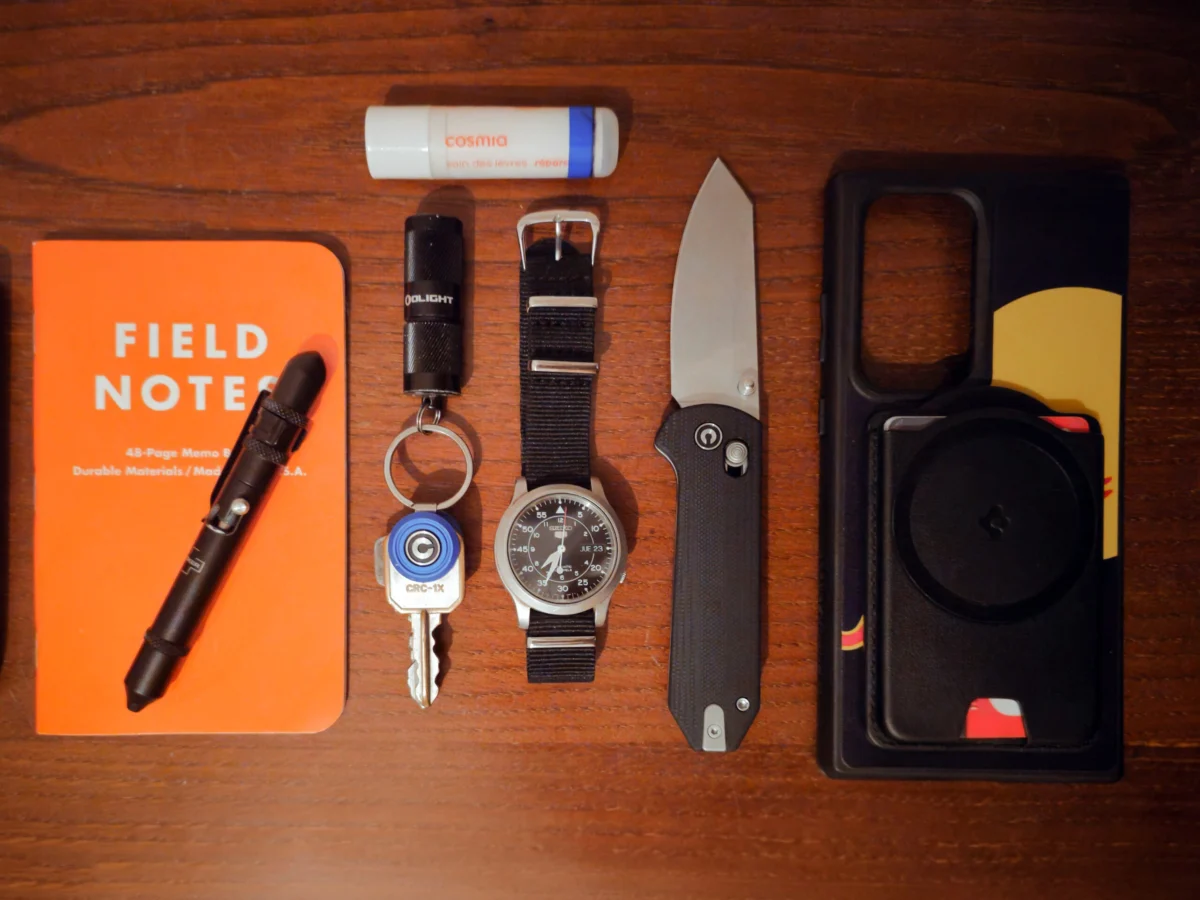
Central to his kit is the CIVIVI Yonder, a pocket knife that has garnered significant industry attention. Designed by Zac Whitmore, the Yonder was honored with the "Best Buy of the Year" award at the 2024 Blade Show. The selection of this specific tool reflects a growing consumer preference for high-performance steel and robust locking mechanisms—in this case, a crossbar lock—at a price point that prioritizes utility over luxury branding. Such choices suggest that the modern user is moving toward a “use-case first” mentality, favoring tools that offer peak mechanical performance without necessitating a prohibitive financial investment.
Chronology of Tool Integration
The adoption of specific tools often follows a timeline of iterative improvement. Ruben’s current setup is the result of a deliberate process of evaluation and refinement.
- Phase 1: Foundational Tools: The initial EDC kit focused on core necessities, including a smartphone with an integrated magnetic wallet and an ultra-compact key organizer. These items provide the foundation of digital connectivity and physical access.
- Phase 2: Tactical Expansion: The addition of a mini bolt-action pen and a high-lumen keychain flashlight introduced specific utility for documentation and visibility in low-light environments, common in technical facilities.
- Phase 3: Recent Enhancements: The recent introduction of a Field Notes notebook and the CIVIVI Yonder marks a pivot toward tactile, manual utility. The notebook serves as a reliable, analog backup to digital records, while the Yonder provides a sophisticated, ambidextrous cutting tool.
- Phase 4: Planned Diversification: Future plans involve a rotation to the Kizer Feist and a Casio Edifice timepiece. This transition indicates a desire to maintain the same functional quality while altering the aesthetic profile to suit different social or professional environments.
Data-Driven Analysis of Pocket Utility
To understand the significance of these selections, one must look at the market dynamics surrounding personal gear. The EDC market is currently driven by a confluence of material science advancements and global manufacturing efficiency.
According to industry metrics, the demand for knives featuring crossbar-style locking mechanisms has increased by approximately 22% year-over-year. This is attributed to the mechanism’s inherent safety features, which allow for one-handed operation and increased stability. Similarly, the trend toward “minimalist carry” is backed by consumer feedback surveys indicating that 65% of daily users cite "pocket comfort" as the primary factor in whether a tool remains in their daily rotation.
The inclusion of a Casio Edifice watch, particularly models featuring sapphire crystal and 100M water resistance, represents a segment of the market that prioritizes technical specifications over status. By choosing a watch with a "Tiffany-style" dial, the user demonstrates an awareness of design trends while maintaining a commitment to the durability provided by Japanese quartz movements.
The Role of Aeronautical Automation in Gear Selection
In the field of aeronautical automation, workers are tasked with the oversight of complex systems that demand extreme precision. The environmental context of this profession—often involving proximity to sensitive electronic equipment, varying lighting conditions, and strict safety protocols—dictates the constraints of the EDC kit.
A professional in this sector requires tools that are:
- Non-Magnetic (where applicable): To avoid interference with sensitive instrumentation.
- Compact: To allow for ease of movement within tight workspaces.
- Multi-Functional: Reducing the number of individual items carried minimizes the risk of losing equipment or cluttering a workspace.
The shift from larger, heavier knives to the streamlined Yonder is a direct response to these requirements. The lightweight nature of the tool ensures that it does not impede the operator during long shifts, while the ergonomic design allows for precise cuts when opening packaging or stripping wire, common tasks in automated maintenance.
Broader Implications and Industry Trends
The professionalization of EDC is not merely a trend in personal expression but a reflection of the modern workplace’s demand for high-readiness individuals. Companies are increasingly recognizing that employees who possess a baseline level of preparedness—evidenced by their personal kit—often demonstrate better problem-solving skills and operational awareness.
Furthermore, the rise of "micro-brands" in the EDC space, such as CIVIVI and Kizer, has effectively democratized high-end manufacturing. A decade ago, the materials used in the Yonder—such as high-grade stainless steels and G10 handle scales—were largely restricted to premium, custom-made knives. Today, these materials are accessible to the average professional, allowing for a higher standard of "readiness" across various demographics.
Official Perspectives and Expert Commentary
While there is no centralized governing body for EDC, industry experts and editors within the field note that the "minimalist-high-value" aesthetic is the current gold standard. Editors at leading gear publications suggest that the balance between a "dressier" kit and a "utility" kit is the hallmark of a mature user.
"The ability to curate a set of tools that serve both the professional rigors of an automation facility and the aesthetic requirements of a social setting is a skill," one analyst noted. "It demonstrates an understanding of one’s environment and the foresight to carry equipment that is appropriate for the task at hand."
Future Outlook: The Intersection of Digital and Physical
As we look toward the future of daily carry, the integration of digital and physical tools is expected to tighten. We are already seeing the adoption of smart-wallets and NFC-enabled key organizers. However, the endurance of items like the Field Notes notebook suggests that there remains an essential role for analog tools in a digital-first world.
For professionals like Ruben, the EDC is a living system. It is never truly "finished," but rather constantly evolving alongside the professional’s career and personal life. By documenting these transitions, we gain insight into how modern professionals define and maintain their personal autonomy in a world that is increasingly complex and technology-dependent.
Ultimately, the goal of an EDC kit is to provide the user with the confidence that they are equipped for whatever challenges their daily routine may present. Whether it is a routine maintenance task in an aeronautical facility or an unexpected situation on the commute home, the selection of reliable, purpose-built gear—like the CIVIVI Yonder or the dependable Casio Edifice—is a proactive step in managing one’s own preparedness. As these professional profiles continue to emerge, they provide a valuable roadmap for others seeking to streamline their daily carry, proving that with the right choices, one can achieve a perfect equilibrium between form, function, and utility.