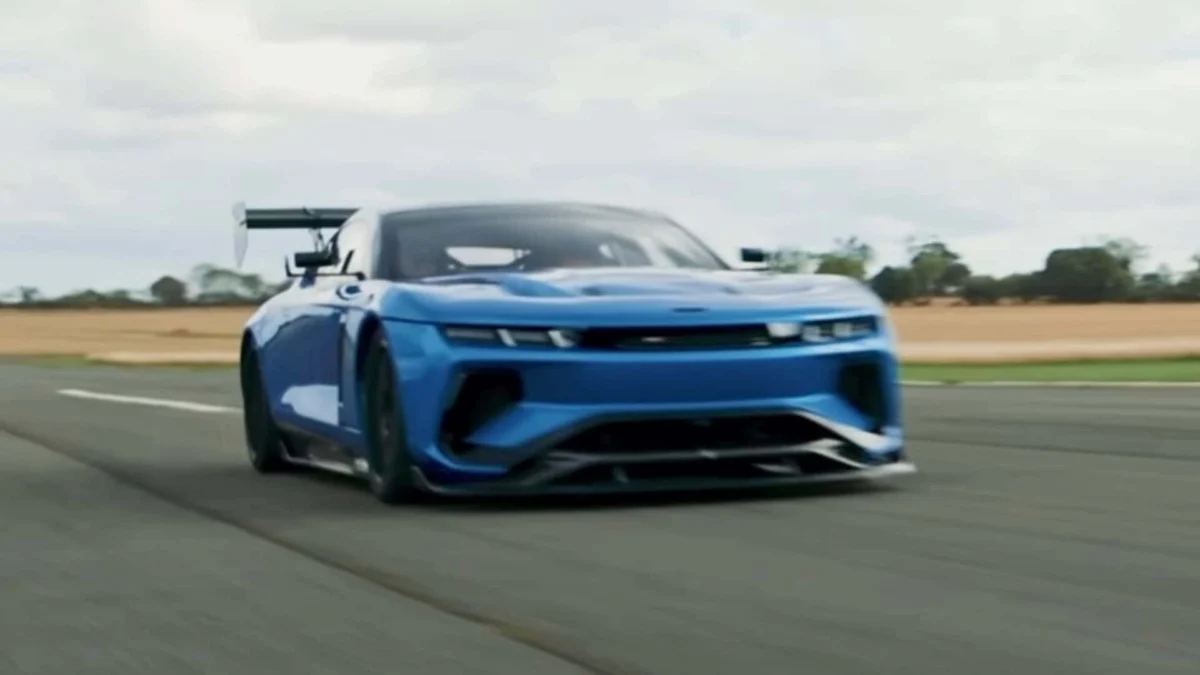
The automotive world is currently witnessing the resurgence of a legendary nameplate as Jensen Motors reveals its latest engineering feat: the Interceptor GTX. Currently restricted to track-only prototype status, the vehicle represents a bridge between the storied history of the British brand and the extreme performance capabilities of modern automotive technology. This project is not merely a nostalgic exercise; it is a serious attempt to re-establish Jensen as a manufacturer of world-class grand tourers, utilizing a potent, American-sourced, supercharged powertrain that signals a clear intent to compete at the highest echelons of the industry.
A Chronology of the Jensen Revival
The Jensen Interceptor, originally produced between 1966 and 1976, remains one of the most iconic vehicles to emerge from the United Kingdom. Known for its distinct "interceptor" styling, luxurious cabin, and massive Chrysler V8 power, it served as a defining vehicle of its era. Following the company’s dissolution in the mid-1970s, the brand name underwent various ownership changes, eventually finding its way back to a group of investors and engineers committed to a modern rebirth.
The path toward the current GTX prototype began several years ago, with the company focusing on a strategy that prioritizes high-end engineering and limited-run production. In recent years, Jensen has been methodical in its development, testing chassis dynamics and powertrain cooling systems under the rigors of track environments. This methodical approach is designed to ensure that when a road-legal version finally hits the pavement, it carries the structural integrity and performance pedigree that modern luxury performance buyers demand.
Powertrain Engineering and Technical Specifications
At the heart of the Jensen Interceptor GTX lies a masterclass in Anglo-American collaboration. Jensen sources a robust V8 engine block from General Motors, which is then transported to Late Model Engines (LME) in Texas for an extensive, ground-up overhaul. This process transforms the base engine into a bespoke performance unit tailored specifically for the Interceptor’s chassis.
The modifications are comprehensive. The engine features CNC-machined cylinder heads designed to optimize airflow and combustion efficiency. Furthermore, the inclusion of titanium valves reduces reciprocating mass, allowing the engine to rev with greater speed and precision. The rotating assembly is reinforced to withstand the extreme stresses induced by forced induction. Managing this complex mechanical symphony is a sophisticated Motec engine management system, which provides the engineers with granular control over fuel delivery, ignition timing, and boost pressure.
In its current configuration, the supercharged 6.8-liter V8 produces approximately 973 horsepower. However, technical documentation from Jensen suggests that the platform is engineered for even greater outputs, with the capability to push upwards of 1,200 horsepower through a specialized tune. This massive power delivery is channeled through a high-performance manual gearbox, a choice that underscores the manufacturer’s commitment to an analog, driver-focused experience in an increasingly automated market.
The Strategic Vision for Road-Legal Variants
While the current prototype is purpose-built for the track, the long-term strategic plan for the Jensen brand is focused on the development of two distinct road-going models: a grand touring version (GT) and a more aggressive, track-focused variant (GTR). The development of the current prototype serves as a rolling laboratory for these future production cars. By testing components in the punishing environment of a race circuit, Jensen can identify potential points of failure and refine the vehicle’s handling characteristics before moving to full-scale road certification.
The challenge of transitioning a track-only prototype to a road-legal car is significant. It involves meeting stringent safety, emissions, and noise regulations in various international markets. For a boutique manufacturer, this process is arguably more demanding than the development of the vehicle itself. However, by leveraging the data collected from the current prototype, Jensen aims to minimize the developmental hurdles associated with road compliance.
Market Implications and Industry Context
The return of Jensen into the luxury performance segment highlights a broader trend in the automotive industry: the "restomod-to-production" pipeline. Many small-volume manufacturers are successfully reviving classic marques by combining the emotional aesthetic of 20th-century design with the reliability and power of 21st-century engineering.
The Interceptor GTX faces a competitive landscape occupied by established luxury performance brands. To succeed, the vehicle must offer more than just raw power; it must deliver a refined driving experience, superior build quality, and the exclusivity that high-net-worth individuals seek. The decision to retain a manual transmission is a calculated risk. While it limits the potential customer base to purists, it also provides the Interceptor with a unique selling point that distinguishes it from the dual-clutch-only offerings of major luxury automakers.
From a financial perspective, the Interceptor is expected to command a premium price point. Given the cost of bespoke engineering, limited production numbers, and the high-end components utilized in the build, the final road-going cars will likely sit in the same tier as boutique hypercars. The company has yet to confirm pricing or a release date, but industry analysts anticipate that the scarcity of the vehicle will maintain high interest levels among collectors.
Official Stance and Future Outlook
While Jensen has remained relatively tight-lipped regarding specific launch dates, the company has emphasized that the sound and performance of the prototype are representative of the "DNA" that will define all future products. The roar of the supercharged V8, often cited as a standout feature of the current prototype, is meant to evoke the visceral experience of the original 1960s interceptors while meeting the performance standards of the 2020s.
The development team continues to invite feedback through its testing programs and public appearances. By engaging with enthusiasts and potential buyers, Jensen is effectively building a community around the brand before the first production car is even delivered. This strategy creates a "pull" market, where demand is generated by the brand’s history and the visible progress of its current engineering efforts.
As the industry pivots toward electrification, the Jensen Interceptor GTX stands as a defiant celebration of the internal combustion engine. By pushing the boundaries of what is possible with a traditional V8 platform, Jensen is positioning itself as a haven for enthusiasts who demand high-performance, high-displacement motoring. Whether or not this gamble on a "manual, high-horsepower" future will pay off remains to be seen, but the progress made thus far suggests that the Interceptor name is well-positioned for its second act.
In summary, the Jensen Interceptor GTX is more than a track-day toy. It is the manifestation of a long-term engineering commitment to restore a storied British marque to its former glory. By prioritizing power, mechanical purity, and the iconic styling of its predecessor, Jensen is creating a product that appeals to both the nostalgia of the past and the performance expectations of the future. The coming months will be critical as the company pivots from prototype development to the more rigorous requirements of production-ready, road-legal manufacturing. For the automotive enthusiast, the sight and sound of the Interceptor on the road will be the ultimate validation of the project’s ambitious trajectory.