The outdoor apparel industry faces an environmental paradox that hides in plain sight across the retail landscape. Walk into any well-stocked outfitter, navigate to the fleece aisle, and observe the sea of black garments hanging side by side. To the average consumer, these mid-layers, jackets, and accessories look identical. Yet, a closer examination under laboratory-grade lighting reveals a subtle truth: dozens of marginally different shades of black, each manufactured by a competing brand, hang in quiet juxtaposition.
This visual inconsistency is not a stylistic choice; it is the manifestation of a deeply fragmented supply chain. Every outdoor label commissioning synthetic fleece mid-layers initiates an independent, proprietary dyeing process. Each brand develops its own recipe, mandates its own minimum order quantities, and incurs a separate environmental toll for shades that are functionally indistinguishable to the end user.
To expose the inefficiency of this widespread manufacturing practice, legacy outdoor brand Haglöfs, in collaboration with textile innovator Polartec, has launched a collaborative initiative known as Standard Issue Black. By introducing a single, open-source black shade available to the entire textile industry, the partners are confronting an unaddressed source of industrial waste: the redundant, resource-intensive dyeing of synthetic garments.
The Anatomy of Synthetic Textile Dyeing and the Environmental Toll of Black
To comprehend the environmental implications of the current manufacturing model, one must examine the mechanics of synthetic textile coloration. Unlike natural fibers such as cotton and wool, which possess chemical affinities for water-based dyes and can be processed at relatively low temperatures, synthetic fibers like polyester are hydrophobic. Polyester repels water, requiring an entirely different class of chemistry—disperse dyes—to achieve permanent color integration.
The dyeing of polyester requires extreme conditions: high-pressure vessels and thermal baths operating at temperatures of 130 degrees Celsius or higher. These elevated temperatures force disperse dye molecules to penetrate the crystalline structure of the polymer fiber itself. Consequently, the process demands significant energy input to heat and maintain large volumes of water under pressure for the duration of the dye cycle.
Among all colorways, black demands the most resource-intensive processing. Achieving a deep, lightfast, neutral black requires layering multiple disperse dye molecules simultaneously. This multi-stage process necessitates additional chemical inputs, extended fixation cycles, higher water volumes, and prolonged thermal exposure.
According to global textile industry estimates, textile dyeing and finishing operations account for a substantial share of industrial water pollution worldwide. Depending on the methodology, depth of shade, and facility efficiency, processing a single kilogram of dyed polyester fabric requires between 30 and 150 liters of water. Because black sits at the absolute limit of the color spectrum in terms of pigment density, it commands the highest resource expenditure within this range.
When hundreds of distinct outdoor brands independently commission separate dye runs for functionally identical shades of black, the environmental impact multiplies exponentially. The waste does not stem from a single negligent corporate action, but rather from the aggregate of thousands of individual, rational supply chain decisions that culminate in an inefficient collective outcome.
Minimum Order Quantities and Operational Inertia
The persistence of this redundant manufacturing model is rooted in the operational economics of industrial dye houses. Textile dye facilities operate on strict batch schedules to remain economically viable. To initiate a custom dye cycle, a manufacturer must meet strict minimum order quantities (MOQs)—typically requiring hundreds of kilograms of fabric per run, if not significantly more.
Brands that possess high sales volumes can amortize these production runs efficiently. However, smaller brands or specialized product lines often pay financial and environmental premiums for smaller dye lots. Each individual batch requires dedicated recipe development, color-matching laboratory approvals, distinct chemical mixtures, and separate waste-water management cycles.
This structural dynamic traps the industry in a loop of microscopic differentiation. Brands invest capital and natural resources into achieving proprietary variations of black that confer no tangible performance or aesthetic advantage to the consumer. Institutional inertia keeps the machinery running, as supply chain managers default to established procurement habits rather than seeking cross-industry consolidation.
The Genesis of the Black Capsule Project
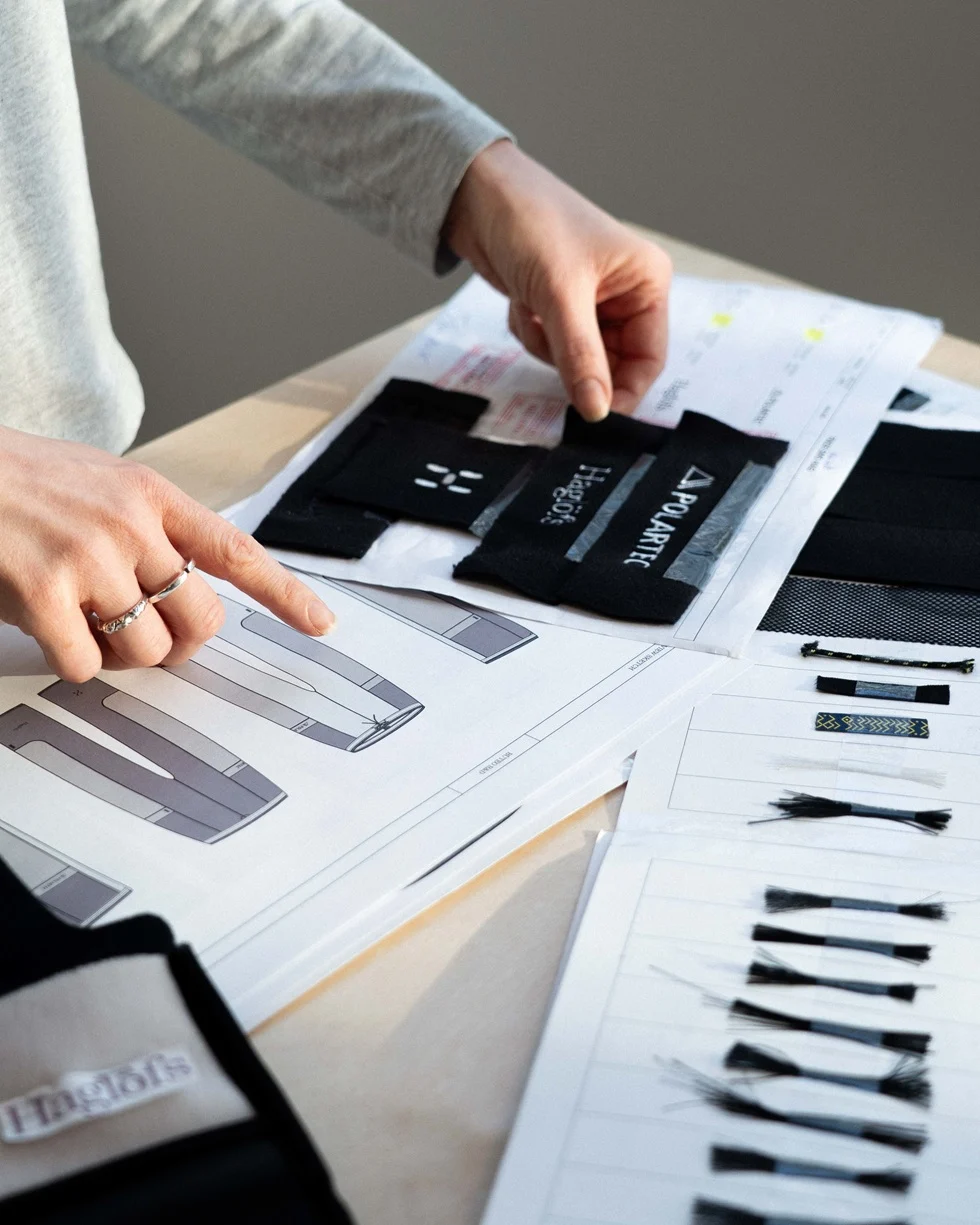
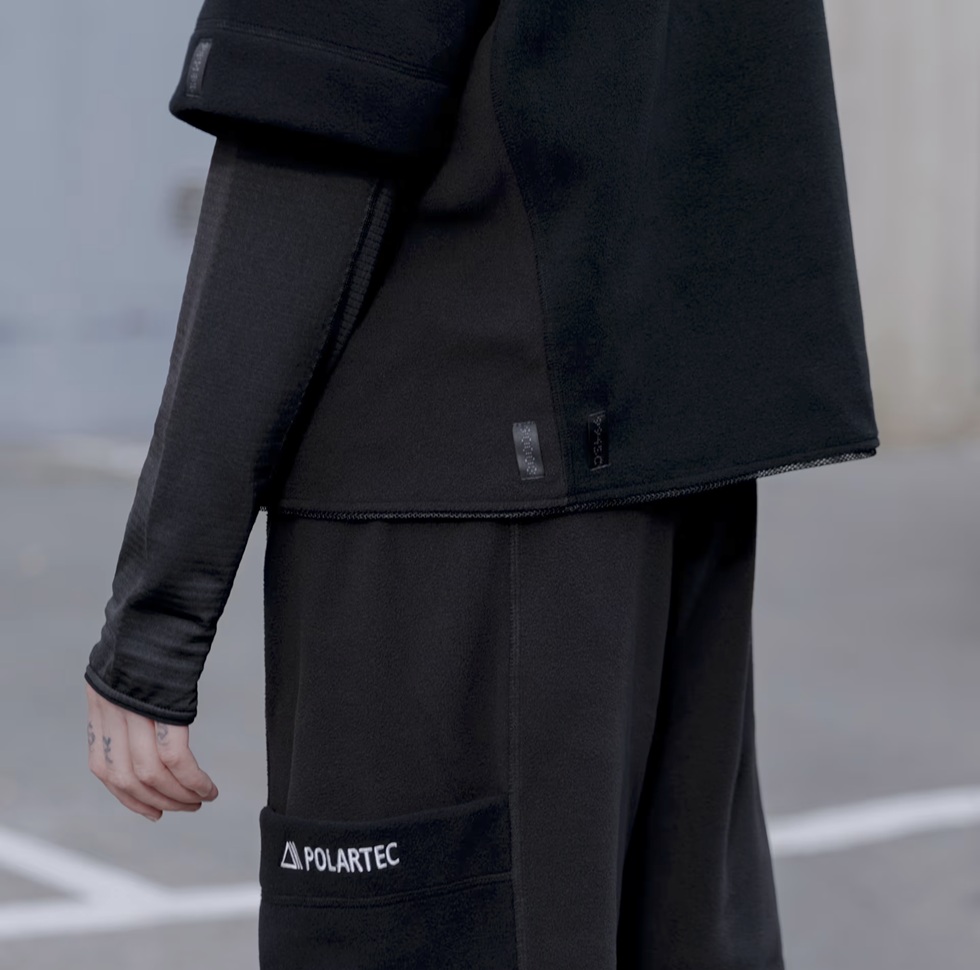
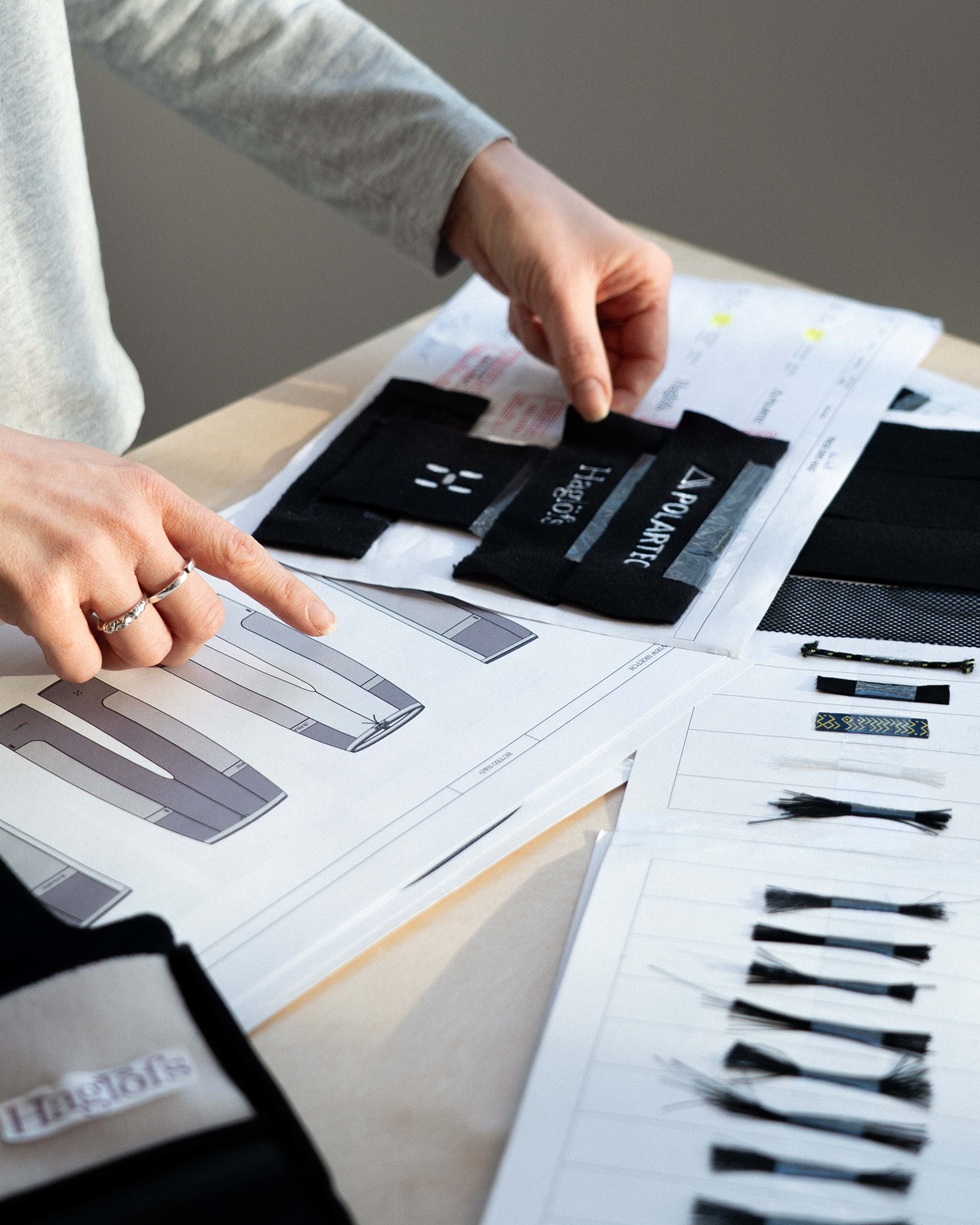
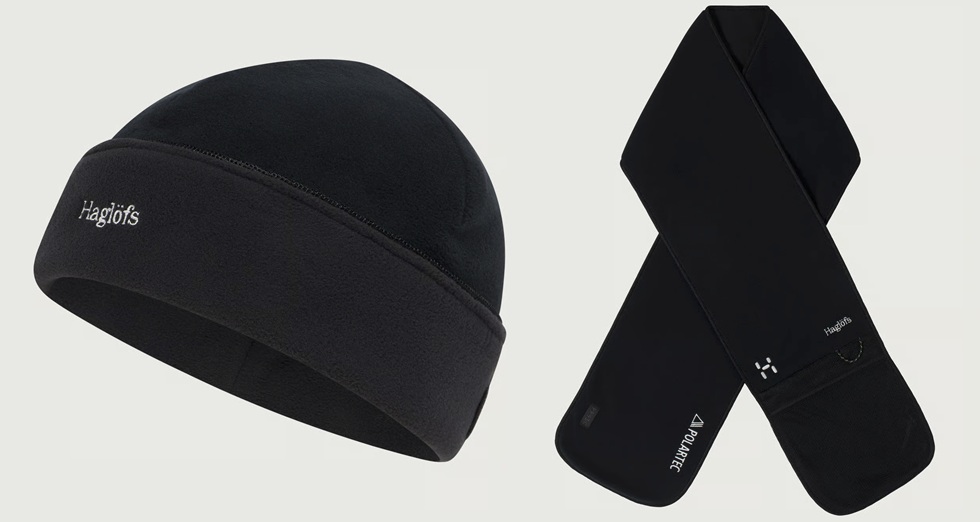
Before introducing their industrial solution to the commercial market, Haglöfs and Polartec chose to demonstrate the problem visually through a specialized product release. The Black Capsule collection—featuring a Project Tee, a beanie, a scarf, and trousers—served as a direct piece of sustainability communication rather than a standard commercial offering.
Each garment in the capsule was constructed by stitching together three distinct shades of leftover black Polartec fleece sourced from various industrial scrap streams. To underscore the underlying message, every panel on each garment featured a woven label stamped with its original color batch number. These numbers revealed the disparate dye runs required to produce marginal variations of a color that consumers assume to be uniform.
Following the conceptual rollout of the Black Capsule, Haglöfs and Polartec formalized their solution: Standard Issue Black. Rather than maintaining proprietary control over a specific shade for competitive advantage, the partners established a single, universally defined black. They integrated this shade into Polartec’s standard production output and made the formula openly accessible to any apparel manufacturer without licensing fees or restrictions.
Scaling Efficiency and the Buteo Mid II Implementation
The mathematical argument for Standard Issue Black rests on the principles of industrial scale. By consolidating what would otherwise be dozens of fragmented, small-to-medium dye batches into massive, continuous production runs, textile mills can unlock compounding efficiencies.
Internal assessments conducted by Haglöfs project that transitioning to a universal black fabric reduces water consumption by more than 50% and cuts energy usage by at least 20% compared to traditional piece-dyed black synthetic fabrics. While these figures represent manufacturer-supplied estimates rather than independent third-party audits, they align with well-established chemical engineering principles regarding batch consolidation and mass-production efficiency.
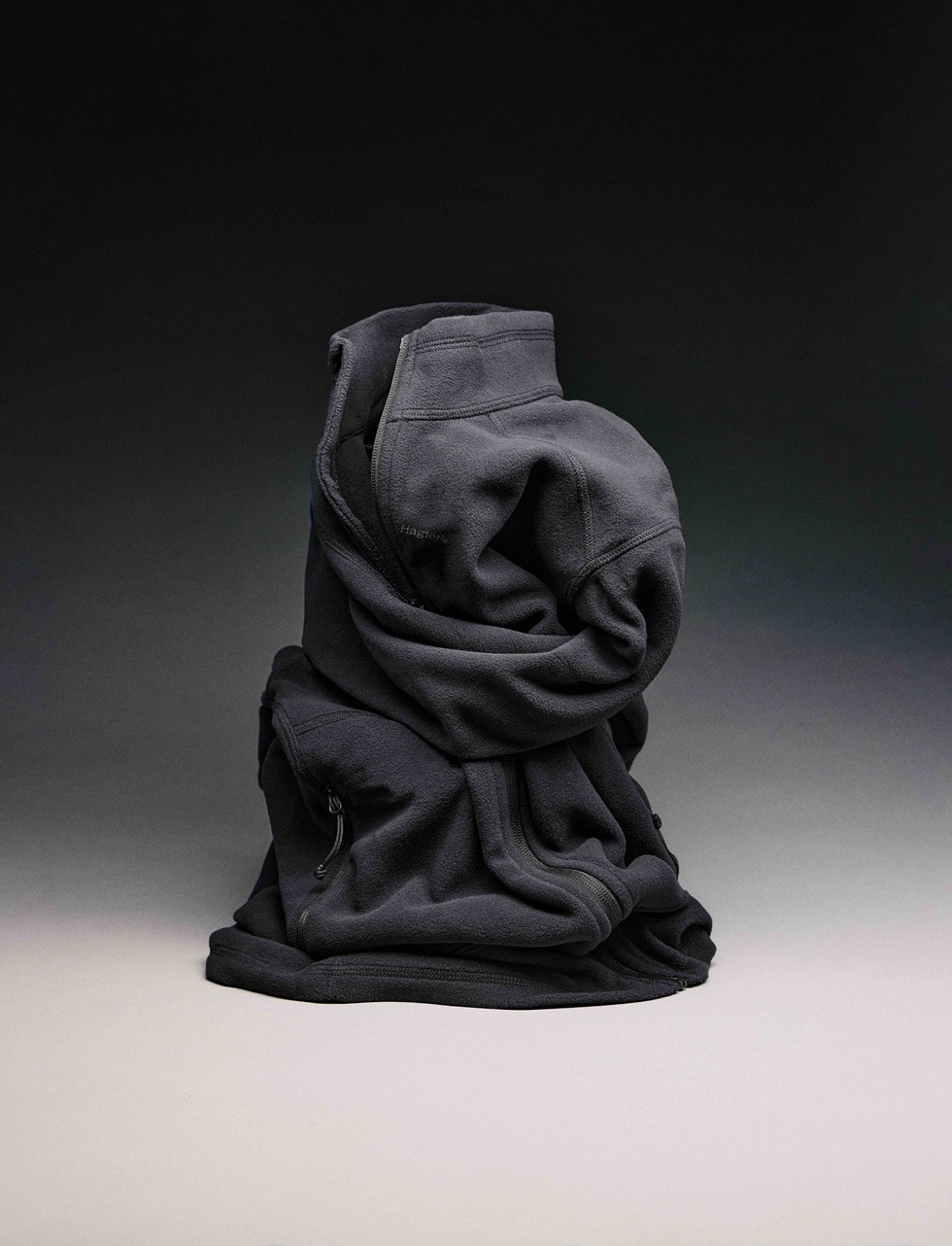
The initiative moves from conceptual demonstration to commercial reality with the launch of Haglöfs’ Fall/Winter 2026 collection. Rather than reserving the standard exclusively for niche or experimental garments, the brand has integrated it into one of its highest-volume commercial products: the Buteo Mid II Jacket.
Eva Weiss, Head of Design and R&D at Haglöfs, emphasized the strategic importance of applying the standard to a top-selling item. Deploying a sustainable standard within a high-volume product line ensures that manufacturing efficiencies are realized at a scale capable of moving industry-wide resource metrics.
Addressing the Creativity Debate
A common counterargument raised within design communities is that standardization inevitably stifles aesthetic creativity. Critics suggest that if competing apparel brands adopt the exact same shade of black, marketplace differentiation will erode, leading to homogenized product offerings.
Industry veterans, however, note that black has rarely served as a primary point of brand differentiation in technical outerwear. Instead, differentiation is achieved through pattern engineering, silhouette, proprietary hardware, functional pocket placement, technical fabric specifications, trim details, and seasonal accent colorways. Black remains a foundational, neutral constant across outdoor apparel lines.
Weiss addressed these design concerns directly during the rollout of the initiative, noting that operational standardization provides a framework that frees up creative energy for elements that genuinely impact product performance and aesthetic identity. She drew comparisons to historical precedents within the textile and hardware sectors, pointing to the widespread adoption of standardized fastening systems, such as YKK zippers, which achieved market dominance decades ago without diminishing the creative output of outerwear designers.
Broader Implications and Industry Adoption
Despite the operational and environmental advantages of Standard Issue Black, widespread industry adoption remains subject to historic hurdles. The outdoor apparel market has frequently encountered well-intentioned sustainability initiatives that struggled to achieve cross-brand consensus due to competitive silos, supply chain complexities, and the persistent "green premium" gap—the discrepancy between consumer sustainability values and purchasing behavior.
Because Standard Issue Black is economically neutral to positive, it circumvents traditional cost-increase objections. Its viability now depends on whether competing brands are willing to look past institutional habits and modify long-standing procurement protocols.
As other progressive material and manufacturing initiatives—such as zero-PCF chemistry developments and single-material recycling frameworks—gain traction, the introduction of Standard Issue Black highlights a growing shift toward collaborative efficiency. Whether the broader outdoor industry answers this call at a volume sufficient to redefine supply chain standards remains the defining question for the coming production cycles.