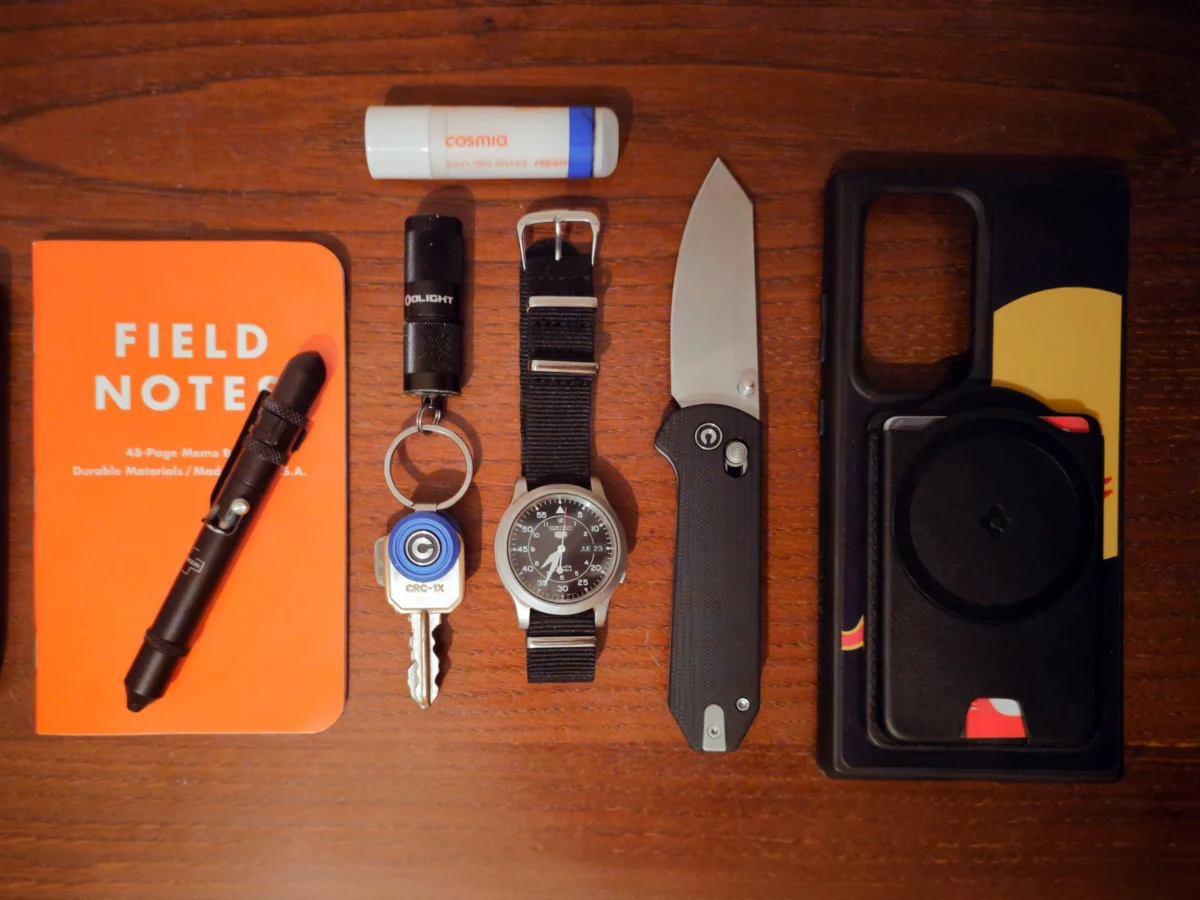
In the rapidly evolving landscape of professional gear, the concept of Everyday Carry (EDC) has shifted from a niche hobby for survivalists and enthusiasts into a fundamental component of professional efficiency. For individuals operating in high-stakes environments, such as aeronautical automation, the selection of tools is no longer a matter of mere preference but a calculated decision based on weight, reliability, and functional versatility. A recent profile of Ruben Caeiro, an aeronautical automation operator based in Portugal, offers a granular look at how modern professionals curate their kits to balance the demands of industrial labor with the aesthetic requirements of personal life.
The Anatomy of a Modern EDC Kit
The modern EDC philosophy is built upon the pillars of minimalism and high-utility integration. As documented in Caeiro’s recent kit, the transition toward compact, multifunctional tools is a growing trend. His current configuration includes a magnetic wallet integrated into his smartphone, an ultra-compact key organizer, a precision-engineered mini bolt-action pen, and a high-lumen keychain flashlight. These items represent a shift toward "consolidated gear," where the total physical footprint is minimized without sacrificing the ability to respond to common mechanical or organizational challenges.
The inclusion of the CIVIVI Yonder, a knife designed by Zac Whitmore, serves as a focal point for the current state of industrial design in consumer cutlery. Having secured the "Best Buy of the Year" accolade at the 2024 Blade Show, the Yonder represents the democratization of high-end materials. Featuring a crossbar-lock mechanism—a system previously reserved for premium-priced knives—this tool offers an ambidextrous, reliable locking system that is increasingly favored in professional settings where safety and ease of use are paramount.
Chronology and the Evolution of EDC Trends
The EDC movement has seen significant shifts over the past decade. In the early 2010s, the focus was largely on tactical durability and "overbuilt" gear. However, data from major EDC community platforms indicates a clear migration toward "urban professional" aesthetics starting around 2020. This evolution has been marked by three distinct phases:
- The Tactical Era (2010–2015): Characterized by heavy-duty materials like G10, high-carbon steel, and a preference for "overbuilt" construction that emphasized survival over daily office or technical utility.
- The Minimalist Transition (2016–2020): A move toward lightweight, slim-profile items. The rise of titanium as a preferred material for pens, key organizers, and wallet clips gained momentum, prioritizing weight reduction for the daily commuter.
- The Integrated Utility Era (2021–Present): The current phase, as seen in Caeiro’s kit, where gear is chosen for its compatibility with digital devices and ergonomic comfort. The integration of smartphone-based accessories—such as MagSafe wallets and specialized modular organization—reflects a society that is increasingly tethered to digital workflows while still requiring analog backups.
Supporting Data on the EDC Market
The market for EDC products has expanded significantly in recent years. Industry reports from 2024 suggest that the global pocket knife and multi-tool market is projected to reach a valuation exceeding $3.2 billion by 2028, growing at a compound annual growth rate (CAGR) of approximately 4.5%.
This growth is driven by several key demographic factors:
- The "Work-From-Anywhere" Culture: Professionals who move between industrial sites, office environments, and home workspaces require tools that are socially acceptable in corporate settings while remaining rugged enough for technical tasks.
- The Rise of Design-Centric Brands: Companies like CIVIVI, Kizer, and others have successfully bridged the gap between mass-market production and custom-quality ergonomics. By leveraging CNC machining and high-grade powder metallurgy steels, these brands provide tools that last significantly longer than traditional entry-level hardware.
- Increased Interest in Analog Hobbies: The resurgence of notebooks, such as the Field Notes line, indicates a counter-movement to total digitalization. Even in highly automated industries like aeronautical engineering, the ability to rapidly jot down data or observations remains a core professional skill.
Professional Implications and Tactical Adaptability
For an aeronautical automation operator, the environment demands precision. Equipment must be non-intrusive, durable enough to withstand potential exposure to oils or lubricants, and ergonomic enough to be handled with gloves if necessary. Caeiro’s stated intention to rotate his gear—switching to a Kizer Feist and a Casio Edifice watch for off-duty hours—highlights a growing trend of "context-dependent EDC."
This practice suggests that professionals are increasingly treating their carry as a dynamic system. The "dressy" duo of a Kizer Feist, known for its elegant front-flipper deployment, and a Casio Edifice, which offers a sapphire crystal and a professional aesthetic, demonstrates that high-value utility can be visually understated. This transition is essential for those who move between technical environments and social or professional engagements where a tactical-looking knife might be perceived as aggressive or inappropriate.
Analysis: Why Quality Matters in Routine Tasks
The emphasis on brands like CIVIVI and Kizer by modern professionals is not merely about consumerism; it is about the "cost-per-use" ratio. A high-quality tool that maintains its edge and mechanical integrity over several years is objectively more efficient than a cheaper alternative that requires frequent sharpening or replacement.
Furthermore, the integration of these tools into a daily routine fosters a sense of preparedness. In the aeronautical industry, where downtime can lead to significant economic consequences, the mindset of being "prepared for the unexpected" is baked into the professional culture. Carrying a reliable cutting tool or a high-quality writing instrument is an extension of that engineering mindset. It ensures that the individual is not dependent on environmental resources to solve minor problems, whether that involves opening a shipping package, marking a component, or navigating a low-light space with a flashlight.
The Role of Community and Feedback Loops
The feedback loop between manufacturers and the EDC community has become a primary driver of innovation. Designers like Zac Whitmore, who developed the Yonder, often engage directly with enthusiasts via forums and social media, gathering data on ergonomic pain points and desired features. This collaborative process has resulted in products that are far more refined than those produced by legacy manufacturing houses that lack direct consumer input.
Caeiro’s participation in this community—sharing his kit via platforms like Instagram—acts as a crowdsourced validation of these design trends. When a professional in a specialized field endorses a product, it serves as a form of social proof for other members of that industry. The editor’s note regarding this specific carry further reinforces the importance of this ecosystem: "I love how this carry strikes a great balance of minimalism and value."
Broader Impact and Future Outlook
Looking ahead, the EDC industry is likely to see further integration of "smart" materials and even more refined weight-to-strength ratios. As carbon fiber and aerospace-grade alloys become more affordable, the barrier to entry for high-performance tools will continue to lower.
However, the core of the EDC movement will likely remain focused on the human element. No matter how advanced the technology in a factory becomes, the individual operator still requires tactile, reliable tools that serve as an extension of their own capability. Whether it is a classic notebook for field observations or a crossbar-locked knife for precision cutting, these items will continue to define the "modern professional" aesthetic—a blend of technical proficiency, aesthetic intentionality, and a commitment to personal readiness.
As the industry continues to mature, the focus will likely shift toward sustainability and longevity. The "throwaway" culture is increasingly at odds with the values of the EDC community, which prioritizes items that can be repaired, maintained, and passed down. For operators like Caeiro, the gear is not just a collection of objects, but a toolkit for navigating the complexities of a modern, fast-paced professional life. By curating a selection of high-value, highly functional items, the modern professional ensures they are equipped for the challenges of today while remaining adaptable to the requirements of tomorrow.