The history of contemporary PC gaming is punctuated by a handful of seminal titles that redefined player agency and emergent gameplay. Among these, the Arma series—developed by the Czech studio Bohemia Interactive—occupies a unique position. While often categorized strictly as a "milsim" (military simulator) due to its uncompromising realism and punishing difficulty, the franchise has functioned as the primary laboratory for the most significant multiplayer trends of the last fifteen years. From the birth of the standalone survival genre to the global explosion of battle royale titles and the maturation of complex roleplay servers, the "Arma effect" is woven into the DNA of the modern digital entertainment industry.
The Foundation of an Open Sandbox
To understand the current gaming landscape, one must look back at the release of Operation Flashpoint: Cold War Crisis in 2001, which eventually evolved into the Arma brand. Bohemia Interactive’s core philosophy was never merely to create a game, but to build a robust, open-ended engine. By providing players with the Real Virtuality engine and comprehensive modding tools, the studio effectively crowdsourced innovation.
This environment allowed developers to experiment with massive player counts, persistent server states, and complex ballistics that were previously unthinkable in commercial titles. Throughout the late 2000s and early 2010s, these tools were utilized by modders to transform the tactical military simulator into an engine for entirely different genres.
A Chronology of Emergent Innovation
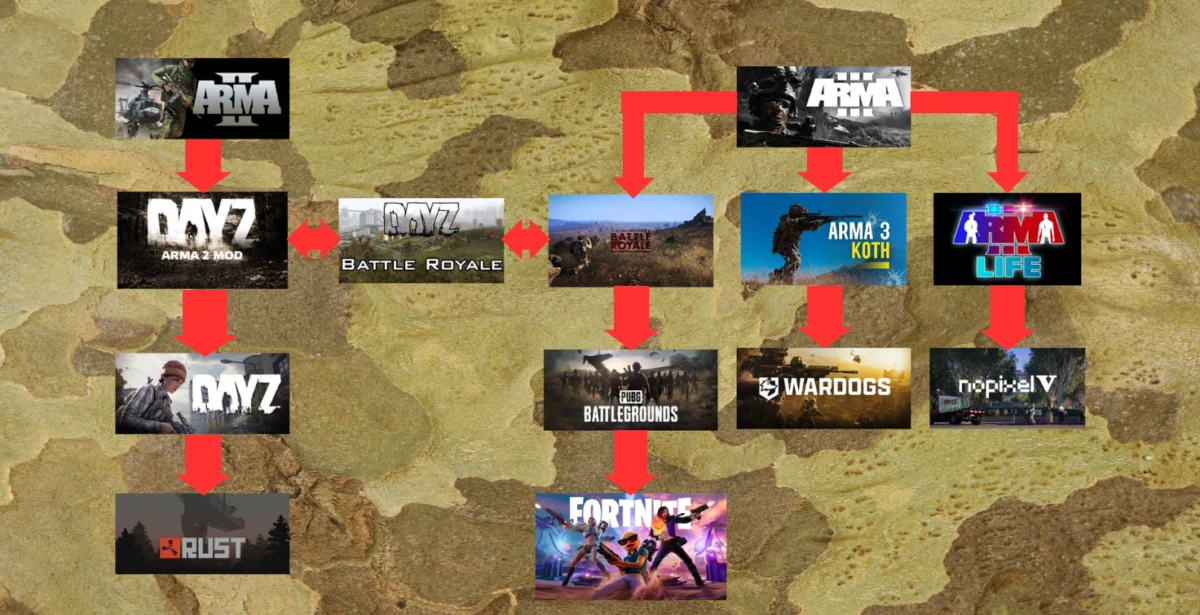
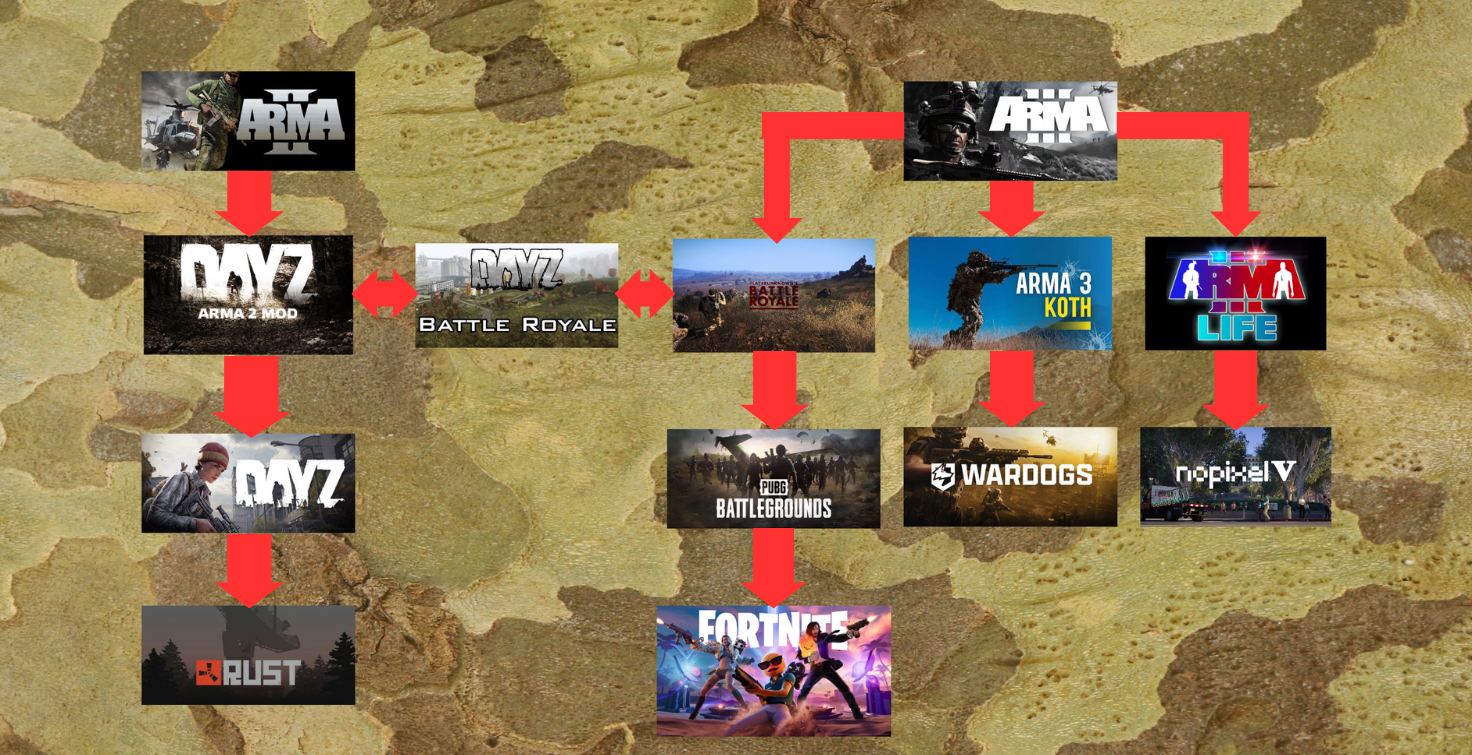
The trajectory of Arma’s influence follows a distinct path, starting with the evolution of survival mechanics and culminating in the highly polished competitive shooters of the current year.
- 2012: The Survival Revolution: The release of the DayZ mod for Arma 2 marked a paradigm shift. Created by Dean Hall, it introduced the concept of persistent, high-stakes PvPvE (Player vs. Player vs. Environment). The mod emphasized scarcity, permadeath, and social ambiguity, forcing players to weigh the risks of human interaction. Its success was so profound that Bohemia Interactive pivoted to support a standalone version, which served as the blueprint for subsequent hits like Rust, Ark: Survival Evolved, and Valheim.
- 2013-2015: The Rise of Battle Royale: Brendan "PlayerUnknown" Greene, operating within the Arma 3 community, refined the "last man standing" concept. His mod, "PlayerUnknown’s Battle Royale," leveraged the massive maps and vehicle systems of Arma 3 to create the first true battle royale experience. This experiment served as the direct precursor to H1Z1: King of the Kill and eventually the global phenomenon that is PUBG: Battlegrounds.
- 2014-Present: The Roleplay Evolution: Parallel to the competitive mods, the community developed "Altis Life," a roleplay mod for Arma 3. This allowed players to adopt specific societal roles—police officers, civilians, or criminals—within a persistent, rule-based economy. The structural concepts of this mod provided the foundational logic for the NoPixel community in Grand Theft Auto V, which has since become one of the most-watched spectacles on platforms like Twitch.
- 2024: Spiritual Successors: The modern FPS market continues to draw from these roots. The recent success of the 100-player shooter Wardogs is explicitly built upon the mechanics of the Arma 3 "King of the Hill" mod. By maintaining three-way combat dynamics and a centralized capture objective, developers at Bulkhead have effectively modernized a decade-old Arma mod for a contemporary audience.
Data and Impact: The Scale of the Legacy
The impact of these mods can be quantified by their market reach and cultural penetration. PUBG, which originated as a fan-made modification within the Arma framework, has sold over 75 million copies on PC and consoles, becoming one of the best-selling games of all time. Similarly, the survival genre, sparked by DayZ, currently commands a multi-billion dollar market segment.
Bohemia Interactive has actively fostered this culture through initiatives like the "Make Arma Not War" contest, which offered significant financial prizes for the best community-made mods. This institutional support distinguishes Bohemia from many of its peers, who often restrict user-generated content. By viewing its software as a platform rather than a static product, Bohemia has secured a long-tail relevance that most studios fail to achieve.
Industry Reactions and Official Perspectives
While Bohemia Interactive has historically remained focused on its core military simulation roots, the studio has frequently acknowledged its role as an incubator. In recent social media discourse, the developers have highlighted the "family tree" of their engine, showcasing how their early development decisions—such as the inclusion of expansive, open-world terrain and deep server-side customization—directly enabled the mods that would eventually cannibalize, and then revitalize, the shooter genre.
Industry analysts note that the "Arma pipeline" is an anomaly in modern game development. Typically, high-fidelity shooters are developed in closed, proprietary environments. However, by allowing for "mod-of-a-mod" development cycles, the Arma series facilitated a rapid iteration process that would have been impossible in a traditional corporate development studio. This, experts suggest, is the primary reason why Arma-born mods so frequently evolved into industry-leading genres.
Implications for the Future of Multiplayer Gaming
The legacy of Arma serves as a compelling case study for the value of open-platform architecture. As the industry moves toward "Games as a Service" (GaaS) models, many publishers struggle to maintain player engagement. The history of Arma demonstrates that the most enduring engagement strategies are those that empower the user base to contribute to the game’s evolution.
The transition of King of the Hill mechanics into the standalone Wardogs project suggests that the appetite for "mil-lite" gameplay—tactical, team-based, and objective-oriented—remains high. Furthermore, as technology advances, the limitations that once hindered these early Arma mods (such as netcode stability and server capacity) are being resolved by modern engine improvements, allowing the core concepts of the Arma modding scene to be realized with greater fidelity than ever before.
Ultimately, the Arma series stands as a testament to the power of community-driven design. While the name "Arma" is synonymous with the realism of military combat, its true contribution to the gaming industry is the blueprint for the modern multiplayer landscape. It provided the tools, the space, and the freedom for a generation of developers to build the games they wanted to play, forever altering the direction of interactive entertainment. Whether through the tension of a survival encounter or the adrenaline of a final-circle battle royale, the influence of the Arma engine remains as potent today as it was at the turn of the millennium.