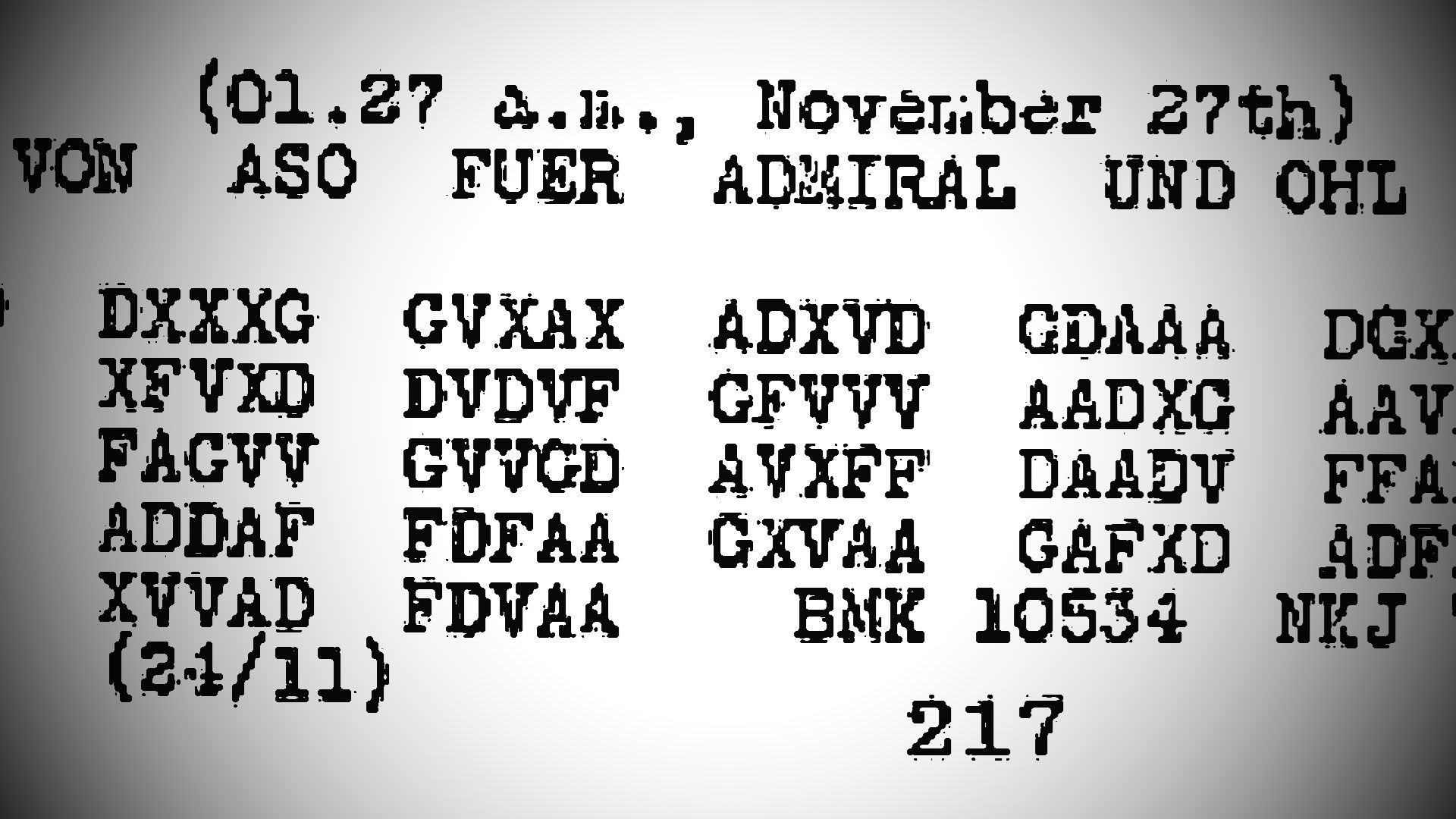
More than a century after it was first transmitted across the ether, an encrypted World War I German radio message has reportedly been successfully deciphered for the first time. The breakthrough, achieved by a software developer identified as Prinz, centers on the deployment of advanced artificial intelligence—specifically utilizing the GPT-Astra model—to crack a complex historical code that had resisted human cryptanalysis for 108 years.
The newly translated text reveals critical naval intelligence from the early twentieth century, specifically detailing the movements of an English cruiser and an Allied naval squadron operating near the strategically vital Crimean Peninsula. This historic decryption bridges a gap between early twentieth-century military communications and twenty-first-century machine learning, demonstrating the growing utility of modern artificial intelligence in historical research, archival preservation, and cryptanalysis.
The Decrypted Message and Historical Context
According to the findings shared by Prinz, the encrypted German radio transmission provides a snapshot of early naval warfare maneuvers during the First World War. The translated text explicitly relays precise operational data regarding the positioning and transit routes of an English cruiser alongside a broader Allied squadron. During the opening phases of World War I, the Black Sea and the Crimean Peninsula were theaters of intense strategic maneuvering between the Central Powers—primarily the German and Ottoman Empires—and the Allied forces, which included the Russian Empire, Great Britain, and France.
Naval intelligence during this era relied heavily on early wireless telegraphy. Unlike traditional land-based lines, radio waves could be intercepted by any listening post within range, making encryption an absolute necessity for military command. The German military utilized various cipher systems, ranging from manual transposition and substitution codes to more sophisticated mechanical and mathematical scrambling methods. However, due to the limited computational technology of the era, many of these ciphers possessed structural patterns or statistical frequencies that, while baffling to contemporary human cryptographers working under wartime pressures, left behind distinct mathematical signatures susceptible to modern algorithmic pattern recognition.
The Role of Artificial Intelligence in Modern Cryptanalysis
The breakthrough was made possible not by traditional pencil-and-paper codebreaking techniques or exhaustive manual trial-and-error, but by leveraging modern artificial intelligence tools. Prinz utilized GPT-Astra to analyze the ciphertext, identify repeating linguistic or mathematical structures, and test hypotheses regarding letter frequencies and structural syntax.
Modern large language models and specialized AI architectures excel at pattern recognition across vast datasets, a capability that translates directly to the field of historical cryptanalysis. Ciphers—whether they are classical substitution codes, Enigma machine outputs, or early twentieth-century radio transmissions—rely on transforming standard language through specific rules. AI systems, trained on multi-lingual corpuses and complex probabilistic patterns, can simulate thousands of decryption pathways simultaneously, evaluating semantic plausibility far faster than human teams.
This development marks a significant shift in how historians and independent researchers approach unsolved archival mysteries. While institutions like the National Archives, the Imperial War Museum, and various academic bodies house millions of pages of intercepted, undecoded wartime signals, the sheer human resource cost of reviewing and cracking these texts has left vast troves of historical data locked away. The application of tools like GPT-Astra suggests that AI could soon accelerate the discovery of lost historical details, bringing long-forgotten dispatches to light.
Chronology of the 108-Year Mystery
To understand the magnitude of this technological achievement, it is necessary to examine the timeline surrounding the transmission, interception, and eventual decoding of the message:
- 1914–1918 (World War I): The German military regularly transmits encrypted radio messages across European and Eurasian theaters, including the Black Sea region, to coordinate naval and ground operations. Allied interception stations log these signals, many of which are archived but never fully decoded due to changing cipher keys and wartime cryptographic bottlenecks.
- Post-War Decades: Historians and intelligence agencies declassify vast portions of WWI documentation. While major cryptographic triumphs—such as the interception of the Zimmermann Telegram—are well-documented, thousands of minor tactical radio transmissions remain classified, obscure, or officially categorized as unreadable.
- The Digital Era (Late 20th to Early 21st Century): Archivists digitize millions of historical military logs, making raw ciphertext data accessible to researchers, hobbyists, and independent developers worldwide.
- Present Day: Developer Prinz applies advanced artificial intelligence, utilizing GPT-Astra, to analyze the structure of the century-old ciphertext. Through iterative computational modeling and linguistic probability assessment, the system breaks the encryption, translating the German dispatch into readable text detailing the movements of the English cruiser and Allied squadron near Crimea.
Technical Implications and Expert Perspectives
The successful decryption of a World War I-era cipher using an advanced language model has drawn interest from both the technological and historical research communities. Cybersecurity experts note that while historical ciphers are elementary by modern cryptographic standards—where algorithms like AES-256 protect global digital infrastructure—the methodology used to crack them highlights the expanding capabilities of machine learning in reverse engineering complex systems.
From an academic perspective, historians emphasize that while decoding a single message does not rewrite the overarching narrative of World War I naval strategy, it provides granular, ground-level validation of troop and vessel movements that were previously known only through secondary accounts or fragmented logs. Such discoveries help historians construct a more accurate, day-by-day picture of wartime intelligence operations.
Furthermore, computer scientists point out that using AI for historical codebreaking serves as an effective stress test for language models. Ciphers require models to operate outside standard linguistic boundaries, forcing them to rely on pure logic, statistical analysis, and context reconstruction rather than simple text prediction. The success of GPT-Astra in this scenario indicates that modern AI frameworks are increasingly capable of multidisciplinary problem-solving that bridges computer science, history, and cryptography.
Broader Impact and Future Outlook
The intersection of artificial intelligence and historical archival research is entering a new phase. As AI models become more accessible and computationally powerful, independent developers and institutional researchers alike are turning their attention to the world’s backlog of unsolved ciphers.
Projects involving the decryption of historical documents—ranging from the infamous Zodiac Killer ciphers to unread diplomatic dispatches from the Renaissance and both World Wars—have increasingly benefited from crowdsourced computing and machine learning. The success achieved by Prinz with the 108-year-old German radio message serves as a proof of concept for future digital archaeology projects.
As these technologies mature, archives and museums may increasingly deploy automated AI pipelines to scan, analyze, and translate centuries of encrypted or obscured documents. For now, the unmasking of this WWI naval dispatch stands as a compelling demonstration of how cutting-edge artificial intelligence can illuminate the shadows of the past, turning forgotten radio static into a legible chapter of history.