
The landscape of wearable technology has reached a new inflection point with the official announcement of the Apple Watch Series 12 and the Apple Watch Ultra 4. Unveiled during a high-profile hardware event, these latest iterations represent a significant departure from iterative hardware updates, focusing instead on deep-tier integration between proprietary biometric sensors and artificial intelligence. By emphasizing clinical-grade accuracy and proactive, data-driven health coaching, Apple is positioning its wrist-worn devices not merely as accessories for the iPhone, but as central hubs for comprehensive personal wellness management.
The rollout of these devices, available for preorder immediately with a wide-scale shipping date of September 18, brings a starting price of $399 for the Series 12 and $799 for the high-end Ultra 4. While the physical aesthetics remain consistent with the established design language—notably the introduction of "natural" and "black titanium" finishes for the Ultra 4—the interior architecture marks a leap forward in how the company approaches human health metrics.
A New Standard in Biometric Precision
At the core of the new wearable lineup is a redesigned sensor array that Apple asserts offers the most accurate heart rate sensing currently available in the consumer electronics market. This claim is supported by an extensive internal study involving a diverse population of over 1,000 participants. By broadening the demographic scope of its testing, Apple aims to mitigate the historical issues of sensor bias—specifically regarding skin tone and wrist size—that have often plagued optical heart rate monitors.
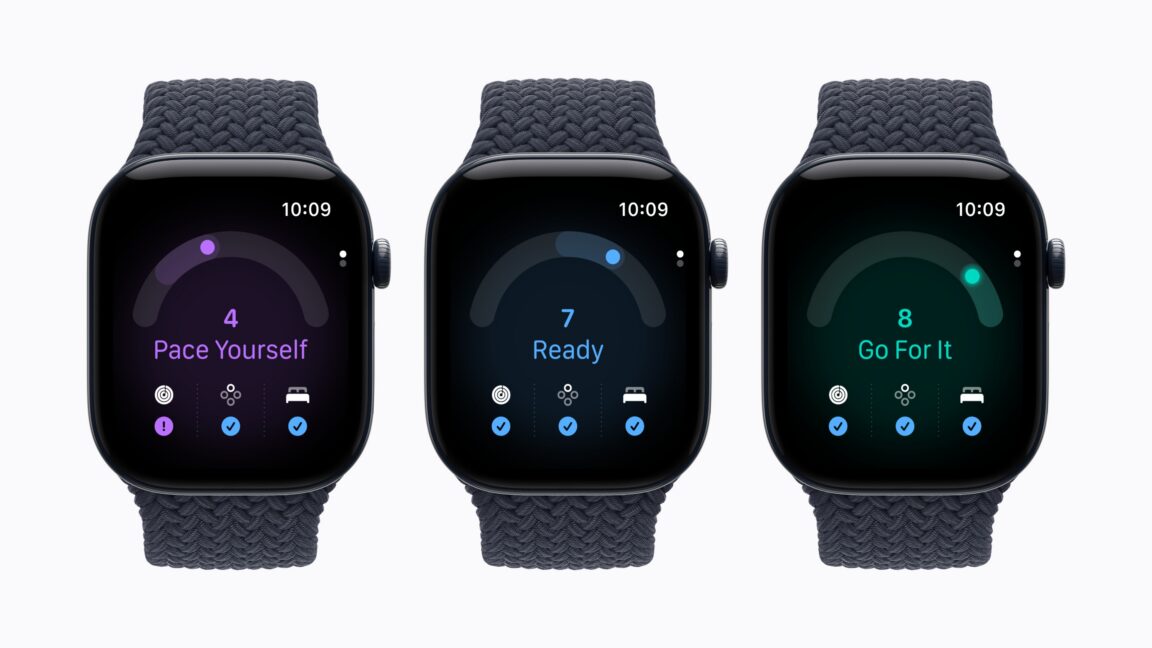
The implications of this heightened accuracy are significant. Reliable heart rate data is the foundation upon which the watch builds its new "readiness" score. This metric is designed to move beyond simple step counting or caloric tracking; it synthesizes a user’s recent activity levels, physiological training load, baseline vitals, and sleep quality scores into a single, digestible metric on a 0-to-10 scale. This score is dynamic, updating in real-time throughout the day. If a user’s cardiovascular strain or recovery status shifts, the watch adjusts its guidance, essentially acting as a digital coach that understands when an athlete should push their limits and when they require rest.
The Evolution of the Apple Health Ecosystem
Apple’s strategy extends well beyond the wrist, as the company plans to push a significant update to the iOS Health app later this year. This update will unlock a new "Health Age" score for users of the Series 12 and Ultra 4, providing a longitudinal look at health markers that correlate with longevity and vitality.
Perhaps most transformative is the integration of vision-based AI models within the iPhone and Apple Watch ecosystem. By combining heart rate data with movement evaluations captured by the iPhone’s advanced camera arrays, the system can now analyze complex biomechanical data, including flexibility, strength, and balance. This move signals Apple’s entry into the realm of preventative physical therapy and functional fitness, providing users with actionable feedback on their physical health that was previously only accessible through professional trainers or physical therapists.
Furthermore, Apple is formalizing its relationship with the clinical diagnostic industry. Through the Health app, users can now directly schedule and purchase laboratory tests at approximately 2,000 Quest Diagnostics locations across the United States. For a flat fee of $119, users can screen for over 50 key biomarkers. By centralizing these lab results directly within the Health app, Apple is creating a seamless bridge between self-monitoring wearables and professional clinical data, a move that is likely to invite scrutiny from healthcare providers but also offers unprecedented convenience for the end user.
Apple Intelligence: The AI-Powered Wrist
The integration of Apple Intelligence—the company’s proprietary artificial intelligence framework—into the watch OS marks a shift in how users interact with their devices. This is no longer about simple notifications; it is about cognitive assistance.
The new features include:
- Shazam Song Detection: Deeply integrated for instant audio identification without needing to pull out a phone.
- Live Rewind: A productivity-focused tool that captures and transcribes the previous 15 seconds of a conversation into a text snippet upon a double-press of the Digital Crown. This is designed for high-paced professional environments where recalling specific details is essential.
- Siri Recap: Using on-device processing to generate high-level summaries of extended conversations, allowing users to catch up on missed context without listening to long audio recordings.
These features leverage the powerful neural engines within the latest Apple silicon, ensuring that data processing remains largely on-device to maintain user privacy. This privacy-first approach has been a cornerstone of Apple’s marketing strategy and remains a critical competitive differentiator in an era of growing concern regarding personal data usage.
A Chronology of Innovation
To understand the trajectory of these new devices, one must look back at the development of the Apple Watch over the last decade. Since its inception in 2015, the device has transitioned from a fashion-forward notification center to a serious medical tool.
- 2015: Launch of the original Apple Watch, primarily focused on communication and basic activity tracking.
- 2018: Introduction of the ECG sensor, marking the first time a consumer wearable offered clinical-grade heart rhythm monitoring.
- 2020: Integration of blood oxygen (SpO2) sensors, reflecting a pivot toward respiratory health.
- 2022: Introduction of temperature sensing for cycle tracking and sleep health.
- 2026: The arrival of Series 12 and Ultra 4, signaling the integration of comprehensive, AI-driven biomechanical analysis and clinical-lab connectivity.
The rapid cadence of these releases demonstrates Apple’s commitment to capturing the health-tech market. By moving from intermittent monitoring to continuous, context-aware analysis, the company is successfully increasing the "stickiness" of its ecosystem. Users who rely on the Watch for daily readiness scores and health-age tracking are statistically less likely to migrate to competing platforms.
Market Implications and Future Outlook
Industry analysts have noted that the price point of $399 for the Series 12 and $799 for the Ultra 4 suggests that Apple is not looking to compete in the budget fitness tracker segment. Instead, they are positioning the device as a premium, long-term health investment. The partnership with Quest Diagnostics is particularly telling; it indicates a long-term goal of becoming a gatekeeper for health data, a move that could potentially disrupt the traditional primary care model.
However, challenges remain. The reliance on AI for health summaries and movement evaluations brings to the forefront the issue of "algorithmic accountability." As users begin to rely on their "Readiness" scores to make decisions about their physical health, the transparency of the underlying algorithms becomes paramount. While Apple has provided a baseline of data for its accuracy claims, independent researchers and medical boards are likely to continue scrutinizing these proprietary models to ensure they remain safe and effective for the general population.
Moreover, the privacy implications of linking 50+ biomarkers with real-time motion data are vast. As Apple continues to collect more granular information about the human body, the company’s ability to defend its user data against evolving cybersecurity threats will be tested.
Despite these challenges, the launch of the Apple Watch Series 12 and Ultra 4 underscores a broader trend: the consumerization of clinical data. By providing users with the tools to track their health at a molecular and biomechanical level, Apple is shifting the burden—and the power—of health management from the hospital to the wrist. Whether this leads to a healthier population or simply an increase in health-related anxiety remains to be seen, but the technological foundation for this new era is firmly established. As the devices begin to ship on September 18, the world will be watching to see how these AI-driven features integrate into the daily lives of millions, potentially setting a new standard for what it means to be a "connected" human being.