The modern military mechanic functions in a landscape that demands extreme versatility, requiring tools that are as rugged as the machinery they maintain. Alexander, a veteran military mechanic, recently detailed the composition of his Every Day Carry (EDC) kit—a curated selection of gear designed for maximum efficiency across diverse operational theaters. His kit, defined by a monochromatic black aesthetic and a focus on modular utility, offers a case study in how small-scale equipment supports high-level technical readiness. The components of this kit—ranging from weather-resistant writing implements to specialized illumination tools—reflect broader trends in tactical preparedness where weight, durability, and multi-functionality are the primary drivers of procurement.
The Anatomy of a Tactical EDC Kit
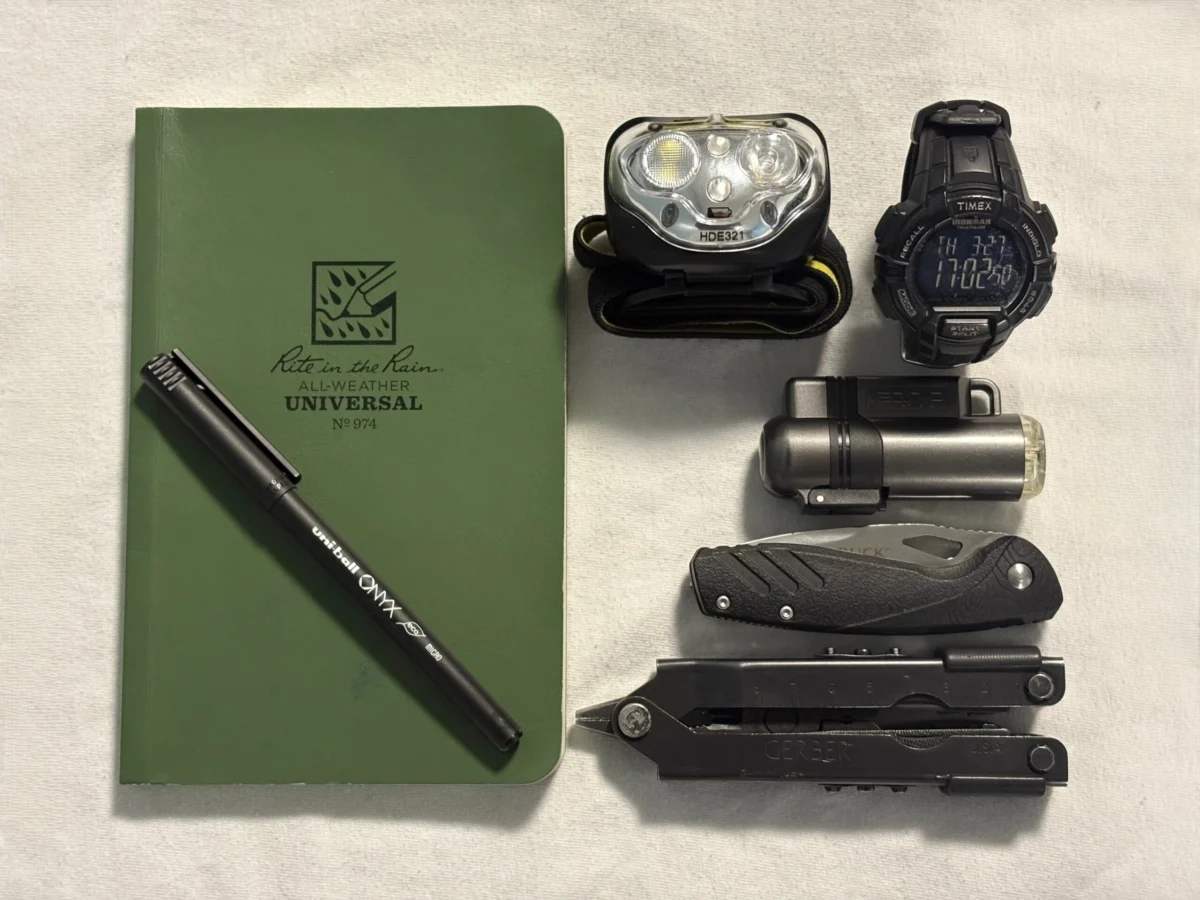
At the core of Alexander’s kit is the Rite in the Rain notebook, a staple in military logistics and field operations. Unlike traditional paper, which degrades rapidly when exposed to humidity, oil, or physical abrasion, these notebooks utilize a proprietary cellulose-based paper treated with a specialized coating. This ensures that technical notes, engine maintenance logs, and tactical orders remain legible in adverse weather conditions. When paired with the 0.5 mm Uni-Ball Onyx, the setup provides the precision required for detailed schematics or serial number recording, a critical requirement for maintaining supply chain integrity in the field.
Illumination remains a foundational pillar of any field mechanic’s kit. Alexander utilizes a dual-spectrum headlamp capable of switching between standard white light and low-signature red light. From a tactical perspective, the red light serves a dual purpose: it preserves the user’s night vision by preventing the pupil constriction associated with bright white light, and it reduces the visual signature of the user when operating in low-light environments where light discipline is essential for operational security.
Chronology of Gear Selection and Field Integration
The evolution of military field kits has shifted significantly over the last two decades. During the early 2000s, field mechanics were often burdened with heavy, specialized toolboxes that lacked mobility. Following the transition toward more agile, expeditionary warfare, military personnel began adopting the "EDC" philosophy, which emphasizes a "first-line" kit—equipment carried directly on the person at all times, independent of larger vehicle-mounted tool chests.
- 2005–2010: The rise of tactical nylon and MOLLE-compatible systems allowed for the integration of individual tools directly onto the plate carrier or belt.
- 2011–2017: A focus on weight reduction emerged as studies indicated that excess weight contributed to long-term musculoskeletal injuries in infantry and technical support roles.
- 2018–Present: The current era emphasizes high-strength, lightweight materials like carbon fiber, G10 scales, and hardened polymers, which define the kit currently utilized by Alexander.
The selection of the Timex Ironman reflects this transition. While digital smartwatches have gained popularity, the Ironman remains a preferred choice for many in the military due to its shock resistance, water rating, and battery longevity. Unlike modern smartwatches that require frequent charging—a logistical impossibility in remote field operations—the Ironman offers reliable timekeeping for months or years, essential for synchronized maintenance schedules and coordinated maneuvers.
Comparative Analysis of Tool Selection
The inclusion of a jet lighter alongside a traditional multitool and a Buck knife highlights the necessity of managing both thermal and mechanical tasks. While a Bic lighter is the industry standard for cost-effectiveness, the jet lighter provides a wind-resistant flame, which is critical for heat-shrinking wire insulation or heating small components in windy, open-terrain environments.
The Buck knife, favored for its ergonomic design and lightweight blade, serves as the primary tool for rapid-response tasks, such as opening shipping crates or stripping wire casing. Complementing this is the multitool, which provides the necessary leverage for minor mechanical adjustments. Data from military logistics commands suggest that approximately 60% of field repairs can be resolved using a limited set of hand tools, provided they are readily accessible. By streamlining the kit, mechanics like Alexander reduce "gear creep," ensuring that every item has a dedicated purpose and is verified for field reliability.
Industry Perspectives on Tactical Reliability
Maintenance experts often emphasize the importance of "familiarity-under-stress." A tool that is simple to operate with gloves on, or in freezing temperatures, is superior to a more complex, high-tech alternative that requires fine motor skills.
"The standard for military-grade equipment is not necessarily the most expensive or the most technologically advanced, but the most predictable," says Sarah Jenkins, a logistics consultant for defense contractors. "When a mechanic is under pressure to get a vehicle back into a convoy, they cannot afford a tool that requires a manual or a specific battery. They need immediate, tactile feedback."
This sentiment is echoed in official procurement manuals, which prioritize "Field-Maintainable Equipment" (FME). The shift toward gear that can be easily replaced or maintained—such as the disposable but effective jet lighter—is a direct response to the reality of the supply chain. In remote areas, the ability to secure a replacement item at a local market or via standard supply requisition is as important as the performance of the tool itself.
Broader Implications for Operational Readiness
The implications of a well-designed EDC kit extend beyond individual convenience; they impact the overall operational readiness of a unit. If a mechanic can perform a quick fix on a radio or a vehicle sensor without retreating to the base workshop, the unit remains mobile and capable. This "distributed maintenance" model is currently being tested by various military branches to see how it might reduce downtime in contested environments.
Furthermore, the trend toward "sleek black" or low-profile gear indicates a shift toward a more modern, professionalized appearance for technical personnel. While functionality remains paramount, the aesthetic cohesion of the kit—as noted in Alexander’s selection—reflects a high level of discipline and organizational pride. This attention to detail often correlates with higher standards of equipment maintenance, as personnel who take care of their personal kit are statistically more likely to adhere to rigorous maintenance schedules for the heavy machinery they operate.
Conclusion and Future Outlook
The EDC kit described by Alexander is not merely a collection of items, but a calculated response to the constraints of the modern battlefield. By prioritizing weight, durability, and multi-purpose functionality, he demonstrates how individual soldiers can enhance their own capability and, by extension, the capability of their unit.
As technology continues to evolve, we can expect to see further innovations in this space. Integration of small-scale sensors, improved power-storage solutions, and more durable, non-corrosive materials will likely be the next frontier for tactical EDC. However, the fundamental principles—the need for a weather-resistant record, reliable illumination, and versatile mechanical support—will remain constant. For the military mechanic, the kit is the first line of defense against equipment failure, and its careful curation remains a vital component of successful military operations worldwide. As global supply chains become increasingly volatile, the ability of individual operators to sustain their own readiness through well-thought-out, minimalist toolsets will become an increasingly important metric for military planners.