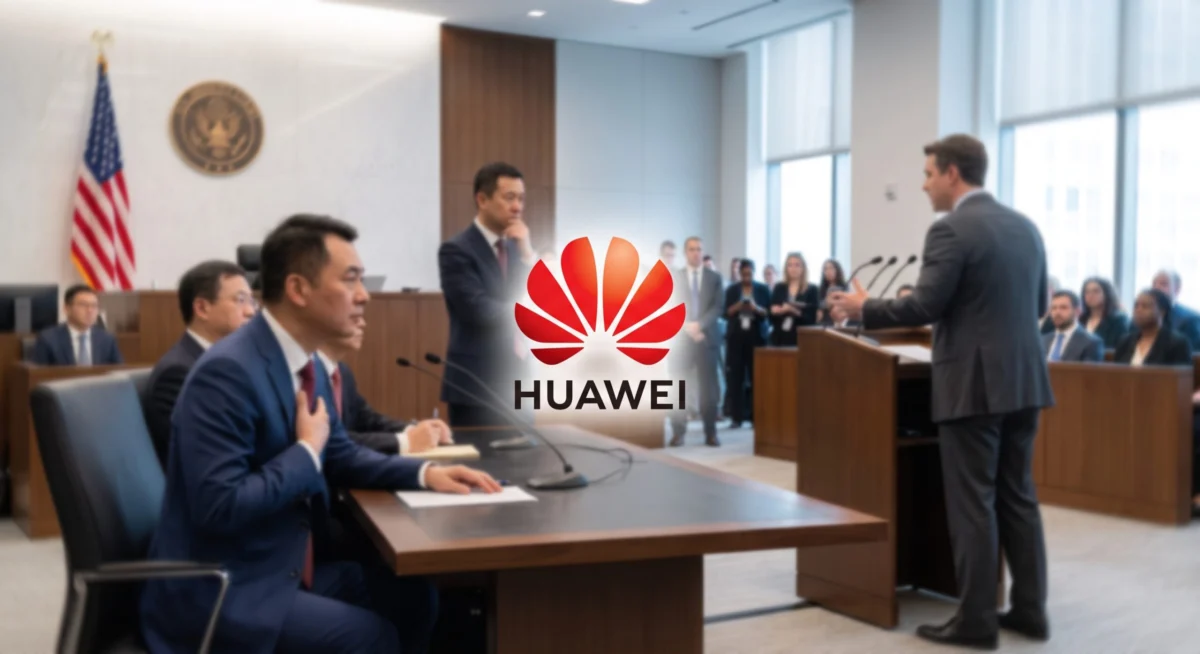
Department of Justice attorney Taylor Stout, leading the prosecution, laid out a narrative during opening statements that described a multi-layered strategy of intellectual property theft, financial fraud, and international sanctions evasion. According to the government, Huawei’s rapid ascent to the top of the global telecommunications infrastructure market was built upon a foundation of stolen American innovations. The prosecution intends to present evidence suggesting that the company systematically targeted high-value trade secrets from American competitors, specifically citing the unauthorized acquisition of Cisco Systems’ proprietary router source code and the illicit procurement of specialized robotic testing technology from T-Mobile, known as "Tappy."
A Decades-Long Pattern of Alleged Misconduct
The allegations presented by the Department of Justice are extensive, spanning over two decades of corporate history. Prosecutors argue that the company’s internal culture encouraged employees to engage in "theft by design," where engineers were incentivized to acquire and reverse-engineer competitor technology to accelerate Huawei’s own R&D cycle. This alleged institutionalized intellectual property theft was, according to the prosecution, merely one pillar of a broader racketeering scheme.
Beyond intellectual property issues, the government has leveled grave accusations regarding Huawei’s activities in Iran. Prosecutors allege that the firm surreptitiously conducted business in the sanctioned nation through front companies, effectively masking its operations to bypass U.S. export controls and financial sanctions. By funneling millions of dollars through the U.S. banking system, the government contends that Huawei intentionally deceived international financial institutions, putting those banks at risk of violating American law. Furthermore, the prosecution has raised concerns about the company’s role in facilitating regional domestic surveillance through its hardware, adding a layer of geopolitical sensitivity to the criminal charges.
The Defense: Innovation Over Infiltration
In response to the government’s opening salvo, lead defense attorney Brian Heberlig mounted a vigorous rebuttal, painting a picture of a misunderstood global leader. The defense argues that the U.S. government is attempting to criminalize what is essentially high-intensity global commercial competition. Heberlig insisted that Huawei’s success is the direct result of massive investment in internal innovation, noting that the company ranks among the world’s leaders in patent filings and research spending.
Regarding the specific allegations of theft, the defense characterized these instances as isolated "rogue actions" by individual employees that occurred without the knowledge or approval of corporate leadership. Heberlig emphasized that when these incidents came to light, Huawei addressed them through internal disciplinary procedures and, where necessary, legal settlements. The defense further argued that the government’s case relies on a "cherry-picked" collection of events that have been recontextualized to fit a narrative of systemic conspiracy. On the issue of sanctions, the defense maintained that Huawei’s financial partners were fully apprised of the company’s commercial footprint in the Middle East and that no willful violation of banking regulations occurred.
Chronology of a High-Stakes Legal Battle
The current trial is the culmination of a decade of intensifying friction between Washington and the Shenzhen-based company. The origins of the case trace back to initial civil litigation and intelligence gathering in the early 2010s, which eventually matured into a formal criminal indictment in 2018.
- 2012–2014: Initial reports emerge regarding Huawei’s alleged intellectual property theft involving Cisco and T-Mobile.
- December 2018: In a major escalation, Huawei CFO Meng Wanzhou is arrested in Vancouver, Canada, at the request of U.S. authorities on charges of bank fraud and violating Iran sanctions.
- 2019: The U.S. Department of Commerce adds Huawei to the Entity List, effectively barring it from purchasing critical American components, such as advanced semiconductors, without government approval.
- 2021: The Biden administration maintains a hardline stance, further tightening export controls on hardware capable of supporting 5G and other critical infrastructure.
- 2022: Meng Wanzhou reaches a deferred prosecution agreement with the U.S. government, allowing her to return to China while admitting to certain factual claims that now serve as evidentiary foundations for this current trial.
- September 2026: The federal criminal trial formally begins in Brooklyn, marking the first time the company itself is facing a jury on racketeering charges.
Supporting Data and Industry Context
The implications of this trial extend far beyond the courtroom. Huawei remains a massive player in the global 5G rollout, despite being effectively locked out of the U.S. market. According to recent industry data, Huawei maintains a significant share of the global telecommunications infrastructure market, particularly in developing economies across Africa, Asia, and Latin America. However, the loss of access to U.S.-designed chips—following the 2019 sanctions—has forced the company to undergo a radical, and costly, restructuring of its supply chain.
The prosecution’s focus on the "criminal enterprise" aspect of the trial is significant because it utilizes the Racketeer Influenced and Corrupt Organizations (RICO) Act framework. If the government successfully proves that the company functioned as an enterprise engaged in a pattern of racketeering, the penalties could go far beyond monetary fines, potentially impacting the company’s ability to operate in any market tied to the U.S. financial system.
International Reactions and Geopolitical Fallout
The Chinese Foreign Ministry has consistently framed the legal action as a thinly veiled attempt by the United States to contain China’s technological rise. A spokesperson for the Ministry stated, "The U.S. is abusing state power to suppress Chinese enterprises without any factual basis. We firmly oppose such bullying and will continue to support our domestic companies in safeguarding their legitimate rights and interests."
This sentiment is echoed by many in the Chinese tech sector, who view the trial as a key indicator of the "decoupling" process between the world’s two largest economies. While the U.S. asserts that the trial is about protecting national security and the rule of law, Beijing views it as part of a broader "tech war" designed to maintain American hegemony in the digital age.
Implications for the Future of Global Tech
The trial is expected to last approximately three months, and its conclusion will likely set a precedent for how the U.S. judiciary treats foreign entities accused of systematic intellectual property theft. The outcome carries profound implications:
- Supply Chain Stability: A guilty verdict could trigger further restrictions on Huawei, potentially destabilizing global supply chains that still rely on the company’s legacy equipment.
- Corporate Compliance: Multinational corporations will be watching the ruling closely to see how the court interprets the liability of a parent company for the "rogue" actions of its employees.
- Digital Sovereignty: The trial highlights the growing divide in the global tech landscape, as nations are forced to choose between Western-aligned technology and Chinese-built infrastructure.
As the proceedings in Brooklyn continue, the world is witnessing a clash that encompasses not just legal arguments, but the fundamental structure of global technological competition. Whether the jury finds that Huawei is a victim of aggressive protectionism or a perpetrator of systemic global fraud remains to be seen. Regardless of the verdict, the trial serves as a definitive marker in the evolving struggle for control over the future of the internet and global communication networks. With legal experts anticipating a complex and lengthy evidentiary phase, the case is poised to remain at the forefront of international headlines for the remainder of the year.