The landscape of digital audio consumption is continuously evolving, shifting away from rigid, algorithm-driven mainstream streaming services toward more immersive, exploratory platforms. Enter Farwave, a newly launched application featured in the ongoing Indie App Spotlight series, which introduces a geographically contextualized approach to listening to radio stations, podcasts, and personal music collections. Developed for iOS and iPadOS users, the application treats global audio as a physical terrain, utilizing interactive 3D visual environments—represented as distinct planetary bodies—to redefine how users discover and engage with spoken word and musical content.
As streaming fatigue sets in among consumers tired of identical recommendation carousels, independent software developers are increasingly stepping in to offer novel UX paradigms. Farwave represents a distinct entry in this burgeoning sector, combining gamified spatial navigation with robust traditional media management tools. Available now via the Apple App Store, the application bridges the gap between nostalgic international shortwave radio tuning and modern, on-demand digital media consumption.
Main Facts and Core Functionality of Farwave
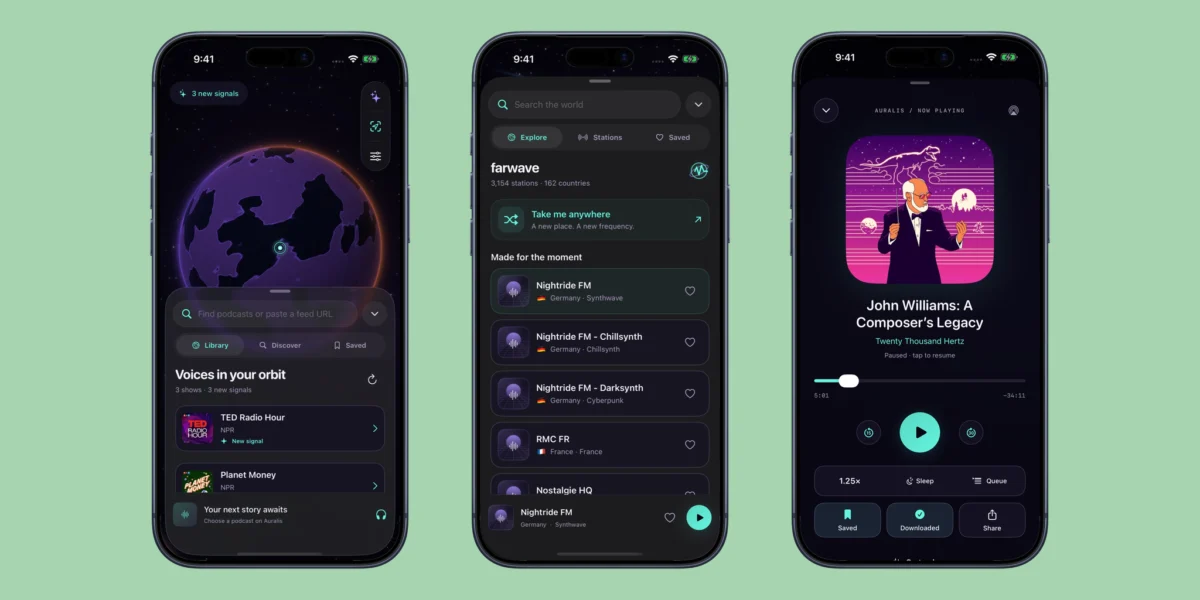
At its architectural core, Farwave reimagines the audio player as an interactive globe. Rather than relying on textual search bars or generic genre menus to find international broadcasts, users are presented with a detailed 3D rendering of the Earth. By physically spinning the globe, zooming into specific continents or metropolitan areas, and tapping on localized map points, listeners can tune into live radio stations broadcasting from virtually anywhere on the planet.

For users who prefer serendipity over targeted searching, the application includes a dedicated "Take me anywhere" feature. This tool bypasses manual navigation, instantly locking onto a random live broadcast somewhere in the world, evoking the vintage experience of sweeping across an analog radio dial late at night. To ensure users do not lose track of compelling discoveries, Farwave incorporates a comprehensive listening history log, allowing individuals to bookmark and revisit stations long after their initial transmission has ended.
Beyond live international radio, Farwave expands its scope to include podcasts and personal music libraries. Eschewing a cluttered interface, the developers separated these mediums onto entirely distinct "planets" within the app’s visual universe. The podcast ecosystem supports direct title searches, manual RSS feed integration, playback speed adjustments, custom queues, and offline downloading capabilities for commutes or areas with spotty cellular coverage.
The music module takes a specialized approach by bypassing mainstream commercial subscription services like Apple Music or Spotify. Instead, it invites users to curate their listening experience by importing local audio files directly from a desktop computer or via the native iOS Files application. Each imported artist generates a unique visual signal within the interface, and all files remain strictly on-device, prioritizing user privacy and ensuring seamless offline playback without requiring an active data connection.
Chronology and Development Background
The conceptualization and rollout of Farwave arrive at a time of significant maturation for the independent iOS developer ecosystem. Over the past several years, Apple’s continuous refinement of developer frameworks—such as SwiftUI, Metal, and advanced SpriteKit or SceneKit integrations—has democratized the creation of high-performance, graphically intensive 3D interfaces for small development teams.

While precise historical development milestones for Farwave remain closely tied to its recent deployment on the App Store, applications of this nature typically undergo months of rigorous beta testing through platforms like TestFlight. Indie developers focusing on niche audio utilities often spend substantial development cycles securing licensing for global radio streaming directories, optimizing battery consumption during active 3D rendering, and refining offline file-management pipelines to comply with strict iOS sandboxing protocols.
The release timeline aligns with Apple’s deployment of iOS 18, as Farwave requires the modern operating system environment to deliver smooth graphical performance and leverage the latest system APIs. By positioning the app specifically for devices running iOS 18 and later, the development team ensured access to cutting-edge performance optimizations, reducing the thermal and battery load typically associated with rendering interactive three-dimensional graphics on mobile hardware.
Supporting Data, Pricing Structure, and Accessibility
Farwave operates on a freemium monetization model designed to lower the barrier to entry while reserving advanced organizational and utility features for committed enthusiasts. The application itself is available as a free download on the Apple App Store, compatible with both iPhone and iPad hardware running iOS 18 or newer.
The free tier offers foundational access to the global radio explorer and basic playback functions. However, unlocking the full, uncompromised scope of the application—including comprehensive podcast management, RSS feed integration, multi-planet navigation, and local music file importation—requires upgrading to Farwave Pro. The subscription and access structure is tiered to accommodate different user preferences, offering a monthly pass priced at $2.99 or an annual commitment billed at $14.99.

This pricing strategy reflects a broader economic shift within the independent software market, where developers increasingly rely on sustainable subscription or annual renewal models to cover ongoing server maintenance costs, directory API fees, and continuous software updates. Given the operational expenses associated with maintaining live, global radio stream directories, the pricing model is structured to ensure long-term platform viability without resorting to intrusive advertising or third-party data tracking.
Broader Industry Impact and Market Implications
The launch of Farwave highlights several notable trends in contemporary software design and media consumption habits. First, it underscores the growing appetite for spatial computing concepts applied to everyday utility apps. While spatial computing is frequently discussed in the context of head-mounted mixed-reality hardware, applications like Farwave demonstrate that playful, three-dimensional spatial paradigms can enhance traditional flat-screen mobile devices, making utilitarian tasks feel more exploratory and engaging.
Second, the app addresses a distinct gap in the current audio streaming landscape. As major technology conglomerates consolidate music and podcast streaming into monolithic, algorithm-driven ecosystems—often criticized for creating filter bubbles and homogenizing discovery—independent tools like Farwave empower users to seek out authentic, localized content from diverse cultural backgrounds. By allowing listeners to effortlessly jump from a local news broadcast in a remote corner of Europe to an independent music stream in South America, the app champions serendipitous cultural exchange.
Finally, Farwave’s offline-first architecture for local music files and downloaded podcasts speaks to an ongoing consumer counter-trend. Amid rising concerns regarding cloud storage subscription fatigue, streaming service price hikes, and fluctuating digital catalog availability, a vocal segment of mobile users continues to value local file ownership and offline autonomy. By providing a beautifully styled sanctuary for self-hosted audio alongside global radio broadcasts, Farwave carves out a sustainable, differentiated niche in a crowded app marketplace. As indie developers continue to push the boundaries of iOS interface design, applications like Farwave signal a promising future for creative, user-centric software engineering.