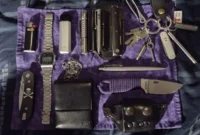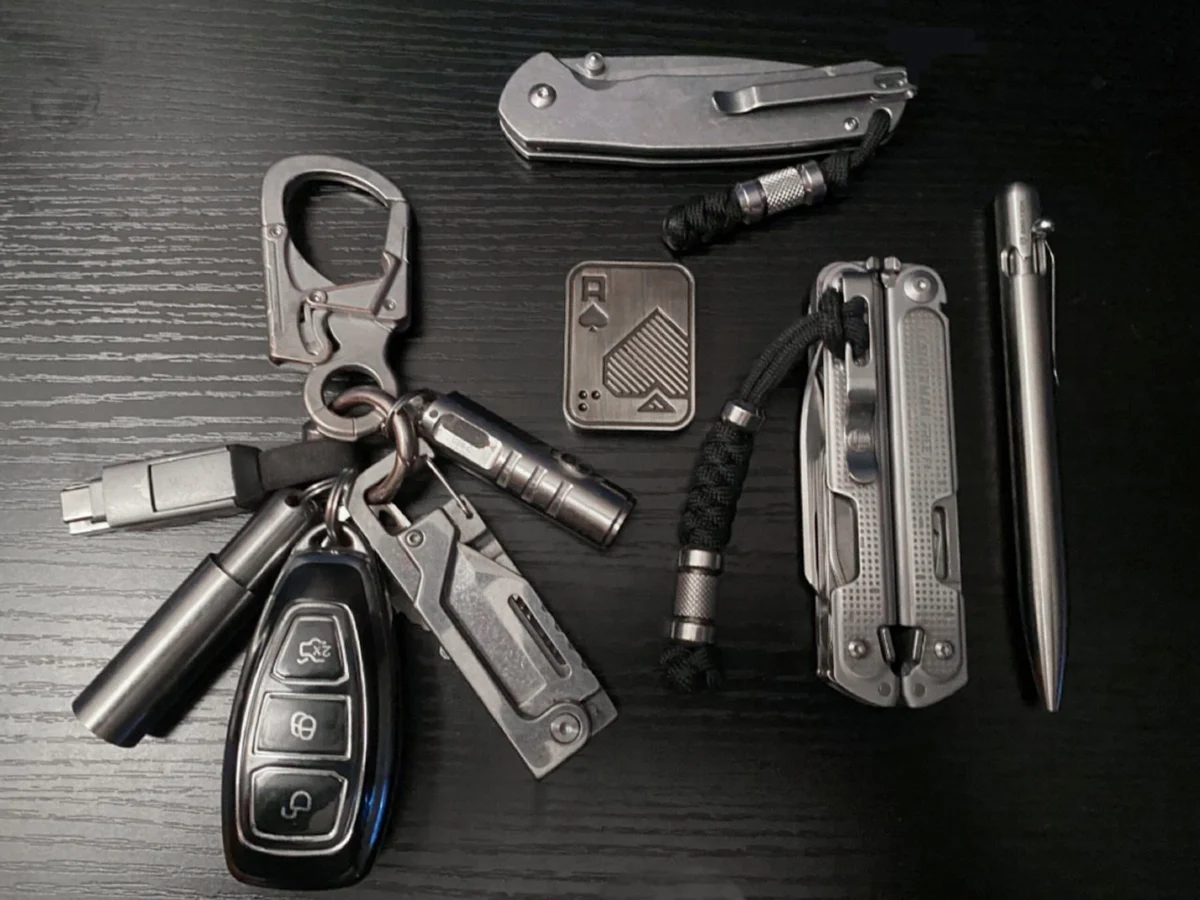
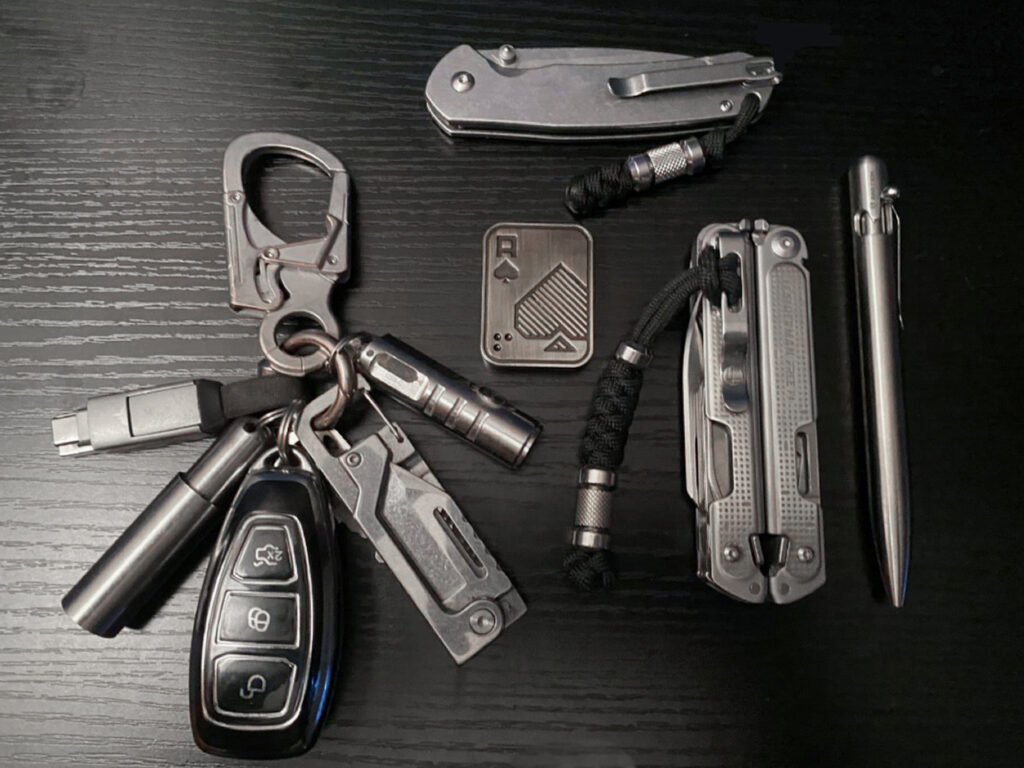
The concept of "Everyday Carry," commonly abbreviated as EDC, has evolved from a niche hobby into a sophisticated lifestyle and professional philosophy centered on preparedness, utility, and efficiency. For individuals working in high-demand industrial environments, the selection of pocket-borne tools is not merely a matter of personal preference but a critical component of workplace efficacy. A recent case study of an industrial factory worker, known as Kamren, highlights the intersection between heavy-duty professional requirements and the multifaceted demands of modern fatherhood. By examining the specific tools utilized in this "Girl Dad" and factory worker’s rotation—including the CJRB Pyrite, the Leatherman FREE series, and specialized keychain accessories—one can gain a deeper understanding of how modern metallurgy and engineering are being applied to solve daily problems in both the warehouse and the home.
The Anatomy of an Industrial Everyday Carry
In the context of factory work, particularly in environments involving the manipulation of plastics and piping, the requirements for a cutting tool are rigorous. The primary blade featured in this specific carry is the CJRB Pyrite, a folding knife that has gained significant traction in the EDC community for its use of AR-RPM9 steel. This proprietary powder metallurgy steel is designed specifically to offer high corrosion resistance and ease of sharpening, qualities that are essential when constantly cutting through abrasive materials like PVC or heavy-duty industrial plastics. The inclusion of a button-lock mechanism on the Pyrite allows for rapid, one-handed deployment and closure, a safety feature that ensures the user can keep one hand on the workpiece at all times.
Complementing the dedicated folding knife is a multitool from the Leatherman FREE series. The FREE architecture represents a paradigm shift in multitool design, utilizing a magnetic opening mechanism that eliminates the need for fingernail nicks, which can be difficult to use when wearing work gloves or when hands are slick with industrial lubricants. For a factory worker tasked with fixing machines on the fly, the ability to access pliers, wire cutters, and screwdrivers with a single hand is more than a convenience; it is a significant reduction in mechanical downtime.
The Keychain as a High-Density Utility Platform
While many enthusiasts view the keychain as a secondary storage area, professional applications often utilize it as a primary platform for "micro-tools" that are too small for pocket clips but too essential to leave in a toolbox. The inclusion of the RovyVon A4, a titanium keychain flashlight, underscores the importance of illumination in industrial maintenance. Factory floors, often filled with shadows and complex machinery internals, require high-lumen output in a compact form factor. The A4’s titanium construction provides a high strength-to-weight ratio, ensuring that the light can withstand the impacts and drops common in a manufacturing setting.
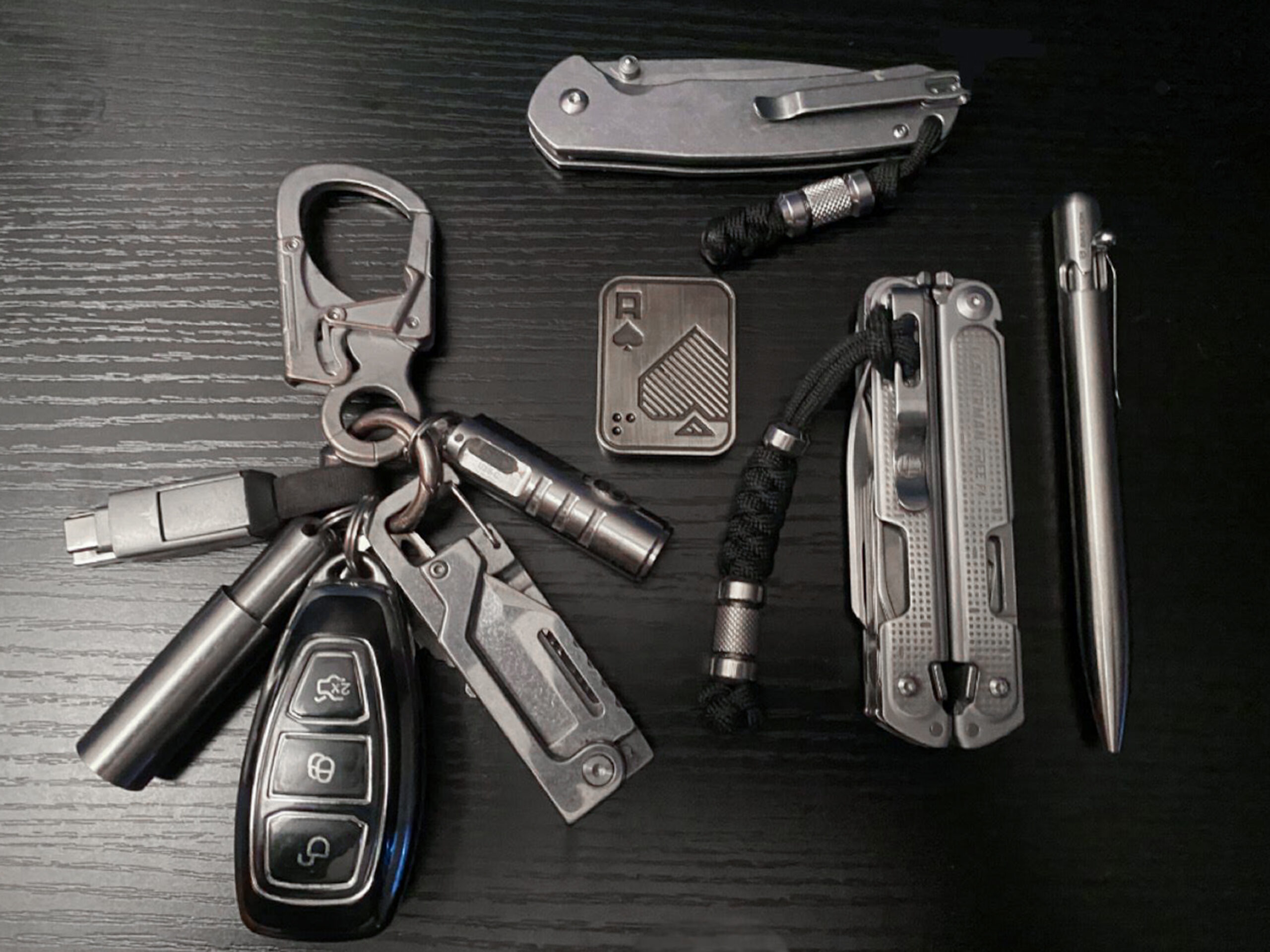
Beyond mechanical utility, the modern EDC has expanded to include personal care and digital connectivity. The Mordeco Nanosprayer and integrated charging cables represent a shift toward "holistic" preparedness. In the post-pandemic era, portable sanitization tools like the Nanosprayer have become standard for professionals moving between shared machinery and office spaces. Similarly, the inclusion of a cologne atomizer suggests a transitionary need—the ability for a worker to move from a rigorous shift on the factory floor to a domestic environment without the lingering scents of industrial fluids.
Data and Market Trends in the EDC Sector
The growth of the EDC market reflects a broader societal trend toward self-reliance and the premiumization of "pocket jewelry" that serves a functional purpose. According to market research, the global pocket knife and multitool market is expected to grow at a compound annual growth rate (CAGR) of over 4% through 2030. This growth is driven largely by the "prosumer" segment—workers who invest their own capital into higher-quality tools than those typically provided by corporate supply rooms.
The preference for materials like titanium, carbon fiber, and high-vanadium steels has created a secondary market for customization. In the featured carry, the use of monochrome metals paired with paracord lanyards serves a dual purpose. Tactilely, the paracord allows for easier retrieval from deep pockets, especially when the user is seated or wearing heavy work trousers. Visually, the "monochrome metal" aesthetic reflects a professional desire for gear that looks as cohesive as it is functional.
The "Girl Dad" Phenomenon: Domestic Utility
A unique aspect of this carry is its dual-purpose branding as a "Girl Dad" kit. This term, which rose to prominence in the late 2010s, describes fathers who take an active, hands-on role in the upbringing of their daughters, often requiring a different set of "emergency" tools than those found on a factory floor. In a domestic setting, the same Leatherman that fixes a pipe on the job might be used to open battery compartments on toys, snip stubborn plastic packaging, or repair a broken stroller during a weekend outing.
The transition from a high-stakes industrial environment to the delicate needs of parenting requires tools that are versatile enough to be both "heavy-duty" and "precision-focused." The editor’s note accompanying the original submission validates this, noting that the keychain’s "overdone" nature is actually an underrated method for "cramming functionality" into a limited space. For a parent, having a charging cable or a small light on hand can mitigate the small crises—like a dead tablet or a lost toy under a car seat—that characterize modern parenting.
Chronology of Tool Evolution in the Workplace
To understand the sophistication of modern EDC, one must look at the chronology of tool development over the last three decades:
- The 1990s: The Era of Bulk. Multitools were heavy, often requiring two hands and a belt sheath. Pocket knives were largely traditional, featuring lockback designs that were slow to deploy.
- The 2000s: The Tactical Shift. The influence of military design brought pocket clips and one-handed opening studs to the mainstream. This era saw the rise of the "tactical" folder, designed for speed and durability.
- The 2010s: The Material Revolution. The introduction of exotic steels (like M390 and S35VN) and handle materials (like G10 and Micarta) allowed for thinner, stronger tools. The "EDC community" began to form online, sharing "pocket dumps" that prioritized aesthetic harmony.
- The 2020s: Integrated Innovation. Current trends, as seen in the CJRB and Leatherman FREE products, focus on ergonomics and ease of use. Tools are now designed to be "fidget-friendly" while maintaining industrial-grade performance.
Implications for Industrial Safety and Efficiency
From a corporate and industrial standpoint, the personal carry of high-quality tools by employees has several implications. First, it fosters a culture of "first-line maintenance." When a worker has a reliable tool immediately available, they are more likely to tighten a loose screw or perform a minor adjustment before a machine fails, potentially saving thousands of dollars in lost production time.
However, this also brings up questions of workplace safety and compliance. Many modern factories have strict "no-knife" policies or require "safety cutters" with shrouded blades. The use of a "flipper" or "button-lock" knife like the CJRB Pyrite suggests a workplace culture that trusts the professional judgment of its technicians. The durability of these tools ensures that they will not fail under stress, which is a safety benefit in itself; a sharp, high-quality knife is often safer than a dull, cheap one that requires excessive force to cut.
The Psychological Impact of Preparedness
There is a significant psychological component to the everyday carry movement. For individuals like Kamren, who navigate the unpredictable environments of a factory and the responsibilities of fatherhood, the gear represents a form of "situational readiness." Knowing that one has the means to cut, screw, pry, and illuminate provides a sense of agency.
In the industrial sector, where workers often face complex mechanical problems, this sense of agency is vital for morale. The "monochrome metal" look is not just about fashion; it is a visual representation of the user’s commitment to their craft. It signals to peers and supervisors that the individual is equipped, prepared, and takes their role seriously.

Future Outlook for Professional EDC
As we look toward the future, the integration of technology into EDC gear is the next logical step. We are already seeing the inclusion of small power banks and "smart" finders (like AirTags) into keychain setups. For the factory worker of the future, we may see the integration of non-contact voltage testers or thermal imaging sensors into the compact form factors currently occupied by flashlights and multitools.
The story of a factory worker and "girl dad" sharing his gear is a testament to the enduring human desire to be useful. Whether it is fixing a machine to keep a production line moving or fixing a toy to keep a child happy, the tools remain the same. The CJRB Pyrite, Leatherman FREE, and RovyVon A4 are more than just consumer goods; they are the modern equivalents of the artisan’s kit, refined for the challenges of the 21st century. Through the lens of this specific carry, we see a broader narrative of a workforce that is increasingly specialized, highly equipped, and deeply invested in the intersection of their professional and personal lives.