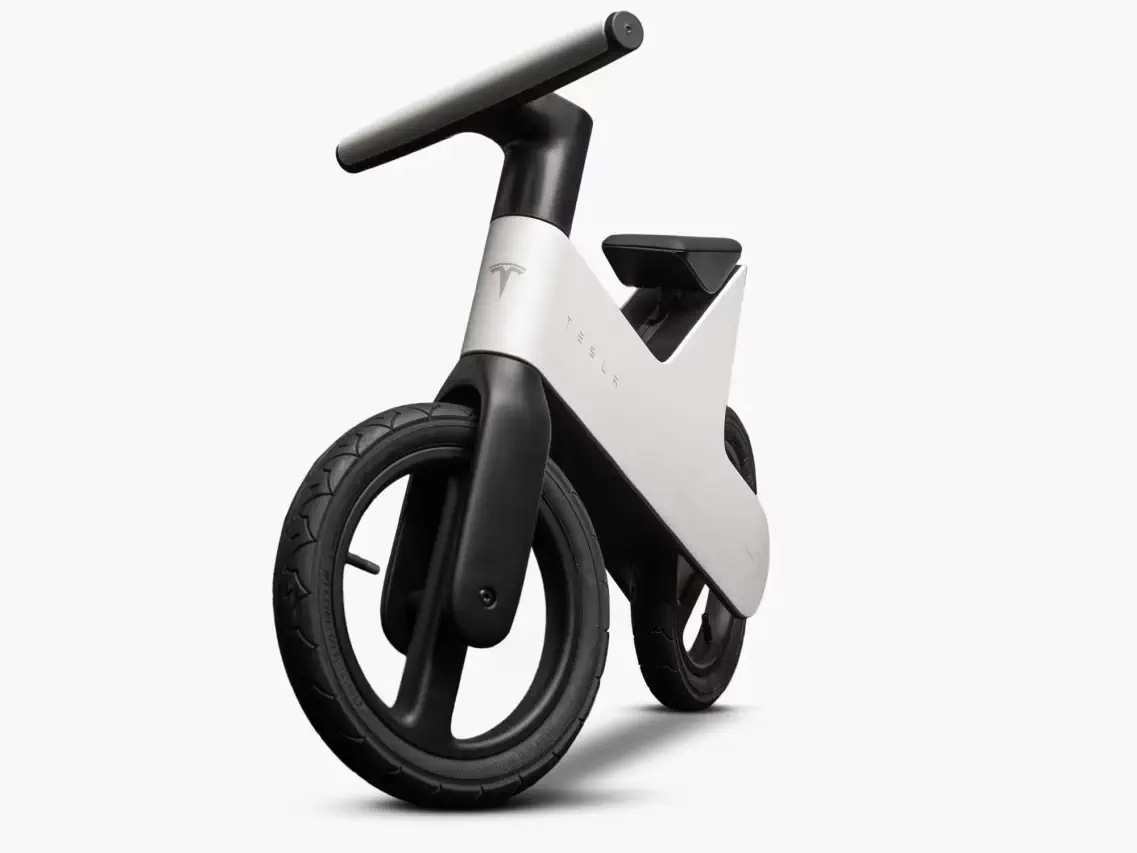
Tesla, the innovative electric vehicle manufacturer and energy company led by CEO Elon Musk, has once again ventured beyond its core automotive and energy offerings with the launch of a "Balance Bike for Kids." This new product underscores Tesla’s ongoing strategy to cultivate a broader lifestyle brand, engaging consumers from a young age through unique merchandise that often echoes the distinctive design philosophy of its vehicles. The balance bike is designed to assist children aged 2 to 5 in developing essential coordination and balance skills, serving as an introductory step to traditional cycling without the complexities of pedals.
The introduction of the balance bike is not an isolated incident but rather a continuation of Tesla’s deliberate expansion into a diverse range of consumer products. Over the years, the company has released an eclectic assortment of merchandise, from apparel and accessories to more unconventional items like the "Not-a-Flamethrower," a Cyberwhistle, Tesla Tequila, and even a miniature Cyberquad ATV designed for children. These items often become instant collector’s pieces, fueling brand loyalty and providing a tangible connection to the Tesla ethos for enthusiasts worldwide, regardless of whether they own one of the company’s electric vehicles.
Tesla’s Strategic Diversification: A History of Unique Merchandise
Tesla’s merchandise strategy is a fascinating case study in brand extension. Far from being mere promotional giveaways, these products are meticulously designed, often incorporating elements of Tesla’s industrial design language, particularly that of the Cybertruck. This approach creates a cohesive brand identity that transcends the automotive sector, positioning Tesla not just as a car company, but as a lifestyle brand synonymous with innovation, future-forward design, and a touch of playful irreverence, often reflecting Elon Musk’s personal brand.
A brief chronology of some of Tesla’s notable merchandise releases highlights this consistent pattern:
- 2018: The "Not-a-Flamethrower": A limited-edition propane torch, originally conceived as a fundraiser for The Boring Company, quickly sold out, demonstrating the immense demand for Musk-backed, quirky products.
- 2020: Tesla Tequila: Packaged in a distinctive lightning bolt-shaped bottle, this premium tequila was another unexpected, high-demand item, reflecting a luxury lifestyle segment.
- 2021: Cyberwhistle: Inspired by the Cybertruck, this polished stainless steel whistle was offered as a "collectible" and quickly sold out, prompting a flurry of resales at significantly inflated prices.
- 2021: Cyberquad for Kids: A miniature electric ATV, mirroring the design of the conceptual Cyberquad, was released for children, priced at $1,900. It quickly became a highly sought-after item, allowing younger fans to engage with the brand’s adventurous spirit.
- 2022: Giga Beer: A Pilsner-style beer brewed in Germany, celebrating the opening of Giga Berlin, further diversified Tesla’s consumable goods portfolio.
- 2024: Balance Bike for Kids: The latest addition, catering to a younger demographic with a focus on early childhood development.
This pattern suggests a deliberate strategy to build a robust brand ecosystem that offers entry points for various consumer segments, from high-net-worth collectors to everyday enthusiasts, and now, even toddlers. The merchandise serves multiple purposes: generating additional revenue, enhancing brand visibility, fostering community among fans, and subtly preparing future generations for the Tesla experience.
The Educational Value of Balance Bikes and Tesla’s Entry
Balance bikes have gained considerable popularity in recent years as an effective and intuitive way to teach young children how to ride a bicycle. Unlike tricycles or bicycles with training wheels, balance bikes encourage children to use their feet to propel themselves and maintain equilibrium, mimicking the natural motion of walking and running. This method focuses on developing core motor skills—balance, coordination, and steering—before introducing the complexity of pedaling.

Child development experts often recommend balance bikes for children as young as 18 months to 2 years old, as they promote confidence and a sense of independence. Studies have shown that children who start with balance bikes often transition to pedal bikes much more quickly and with greater ease, typically bypassing the need for training wheels altogether. The low-impact nature and control offered by a balance bike also contribute to a safer learning experience, reducing the likelihood of falls and building a positive association with cycling.
Tesla’s entry into this market segment with the "Balance Bike for Kids" leverages this educational trend. By offering a product that supports early childhood development, Tesla aligns its brand with values of growth, learning, and preparation for the future, concepts that resonate deeply with its forward-thinking technological image.
Design and Engineering: Echoes of the Cybertruck
The Tesla Balance Bike for Kids is characterized by a design that immediately evokes the futuristic aesthetic of the Cybertruck, a common thread running through many of Tesla’s non-automotive products. It features a sleek, angular silhouette and a minimalist approach, reflecting Tesla’s broader design philosophy of form following function with a distinct, modern edge.
Key features of the balance bike include:
- Lightweight Aluminum Frame: Constructed from a durable yet light aluminum alloy, the frame ensures the bike is easy for young children to handle and maneuver. The lightweight nature is crucial for balance bikes, as it allows children to lift and control the bike effortlessly, aiding in their learning process.
- 12-inch Air-Filled Rubber Tires: These pneumatic tires provide superior grip and cushioning compared to solid plastic wheels, offering a smoother ride and better traction on various surfaces. The larger 12-inch size is standard for this age group, providing stability without being overly cumbersome.
- Adjustable Seat: The seat height is fully adjustable, accommodating children between 2 and 5 years old as they grow. This ensures a proper fit for optimal comfort and control, allowing children to place their feet flat on the ground when seated, which is fundamental for learning balance.
- Minimalist Branding: The bike features subtle Tesla branding, likely a discreet "T" logo, integrated seamlessly into the design rather than overtly displayed. This allows the product’s design to speak for itself while maintaining brand identity.
- Safety-Focused Construction: While specific safety certifications are not detailed, the inherent design principles of balance bikes—low center of gravity, no pedals to interfere with foot placement, and easy stopping with feet—contribute to a safer learning environment.
The Cybertruck-inspired design, with its sharp lines and robust appearance, gives the balance bike a distinctive look that sets it apart from more traditional children’s bikes. This design choice is not merely aesthetic; it reinforces the idea that even children’s products can embody cutting-edge design and engineering principles.
Pricing, Availability, and Market Positioning
The Tesla Balance Bike for Kids is priced at 225 New Israeli Shekels (NIS). As of current exchange rates, this translates to approximately $61 USD or €56 EUR. This pricing positions the Tesla balance bike as a premium offering within the children’s balance bike market, though it is notably more accessible than some of Tesla’s other limited-edition merchandise, such as the Cyberquad for Kids which retailed for $1,900.
For comparison, generic balance bikes can be found for as little as 30 NIS (approximately $8 USD), while other high-end or branded balance bikes from specialized manufacturers can range from $100 to $250 USD or more. The Tesla balance bike, therefore, sits comfortably in the upper-mid to premium tier of this market segment.

The product is expected to be available through Tesla’s official online store, similar to its other merchandise offerings. This direct-to-consumer model allows Tesla to maintain tight control over its brand image and product distribution.
Strategic Implications: Beyond Automotive Innovation
Tesla’s continued foray into lifestyle products, exemplified by the balance bike, carries several strategic implications:
- Brand Cultivation from an Early Age: By offering products for children, Tesla aims to foster brand recognition and loyalty from a very young age. Children who grow up with Tesla-branded toys or bikes may develop an affinity for the brand that could translate into future vehicle purchases. It’s a long-term marketing play, essentially nurturing future customers.
- Reinforcing Brand Identity: Each new merchandise item, especially those that echo vehicle designs like the Cybertruck, reinforces Tesla’s identity as a leader in innovative, futuristic design. It signals that Tesla is more than just a car company; it’s a symbol of a certain lifestyle and technological outlook.
- Revenue Diversification: While merchandise sales are unlikely to rival automotive revenue, they contribute to the company’s overall financial health and provide a steady stream of income. More importantly, they offer diversification, protecting the company against potential fluctuations in the automotive market.
- Community Engagement and Collectibility: Tesla’s unique merchandise often sells out quickly and becomes collectible, creating a secondary market and fostering a sense of community among fans. The balance bike could become a sought-after item for parents who are also Tesla enthusiasts.
- Marketing and Buzz Generation: Every new product launch, particularly those outside Tesla’s traditional scope, generates media attention and social media buzz. This provides invaluable, often organic, marketing for the brand without significant advertising spend.
- Competitive Differentiation: While other luxury automotive brands like Porsche or Mercedes-Benz also offer branded merchandise, Tesla’s approach is often more audacious and integrated with its core product design, giving it a unique edge in creating an aspirational lifestyle brand.
Broader Industry Context and Consumer Reception
The market for children’s products, especially those that combine quality, educational value, and brand appeal, is robust. Parents are increasingly willing to invest in products that support their children’s development and reflect their own lifestyle choices. A Tesla balance bike taps into this demographic, appealing to parents who appreciate the brand’s values of innovation and sustainability, and who wish to pass that on to their children.
Consumer reception to Tesla’s merchandise has historically been enthusiastic, with products often selling out rapidly. This suggests that the balance bike is likely to be well-received, particularly by existing Tesla owners and brand enthusiasts. The relatively affordable price point (compared to other Tesla collectibles) could also make it an attractive gift item.
However, the launch also invites scrutiny regarding the perceived value and utility of such branded items. Critics might argue that it’s a purely commercial move designed to capitalize on brand cachet, while supporters would see it as a natural extension of a beloved brand into everyday life.
Conclusion
The introduction of the Tesla Balance Bike for Kids is a clear indication of Tesla’s evolving strategy to solidify its position as a comprehensive lifestyle brand. By combining innovative design, practical utility for early childhood development, and a price point that makes it accessible to a broader audience than some of its more extravagant merchandise, Tesla continues to build an ecosystem that engages consumers on multiple levels. This move reinforces the company’s commitment to not only shaping the future of transportation but also influencing the lifestyle choices and aspirations of its growing global community, starting from the very first pedal-free rides of its youngest fans.