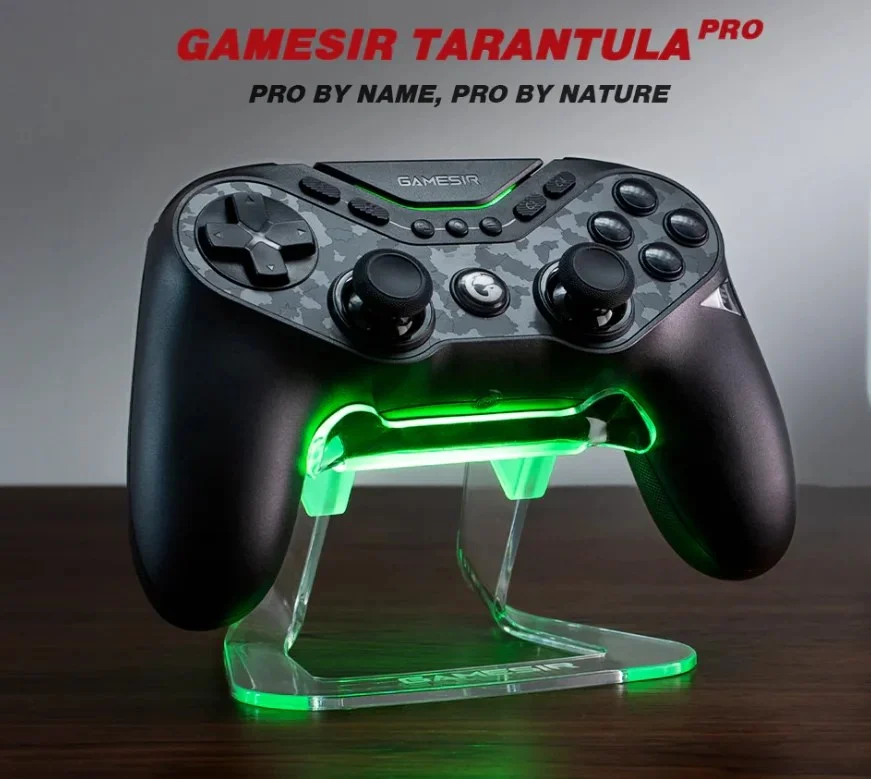
GameSir, a prominent innovator in the gaming peripheral industry, has officially broadened its product offerings for competitive gamers with the international unveiling of its new Tarantula series. This eagerly anticipated line introduces two distinct models, the Tarantula 8K and the Tarantula Pro, both engineered with a steadfast focus on delivering unparalleled precision and ultra-low latency across a diverse array of gaming platforms. This strategic launch underscores GameSir’s commitment to pushing the boundaries of controller technology, directly addressing the evolving demands of professional esports athletes and discerning enthusiasts alike who seek a definitive competitive edge. With a suggested retail price of $69.99 for both controllers, GameSir is positioning these devices as accessible yet high-performance options in the increasingly competitive peripheral market, with international shipping slated to commence in June.
GameSir’s Strategic Vision: Elevating Competitive Gaming
GameSir has steadily built a reputation for developing innovative and performance-driven gaming accessories since its inception. From mobile gaming controllers to PC peripherals, the company has consistently aimed to bridge the gap between casual and professional gaming experiences. The introduction of the Tarantula series marks a significant step in GameSir’s ongoing strategy to cement its position within the high-end, competitive gaming segment. In an industry where milliseconds can dictate victory or defeat, the emphasis on technological advancements like ultra-high polling rates and magnetic sensing mechanisms is not merely a feature set but a fundamental design philosophy.
The competitive gaming landscape has witnessed an exponential surge in professionalism and investment over the past decade. As prize pools grow and esports gains mainstream recognition, the demand for specialized, high-performance hardware has escalated proportionally. Players are no longer content with standard-issue peripherals; they actively seek devices that offer measurable advantages in speed, accuracy, and durability. GameSir’s Tarantula series is a direct response to this market imperative, embodying the company’s vision to equip gamers with tools that match their skill and ambition. While no direct statements from GameSir executives accompanied the initial press release, the product specifications and targeted marketing clearly communicate a dedication to esports excellence and a focus on delivering professional-grade performance at a compelling price point. This launch can be seen as a strategic move to capture a larger share of the growing competitive gaming peripheral market, challenging established brands with innovative technology and aggressive pricing.
The Tarantula 8K: Engineered for Uncompromising Speed and Precision
The flagship model of the new series, the Tarantula 8K, is meticulously crafted for PC gamers for whom raw performance and minimal input lag are paramount. This controller distinguishes itself with an industry-leading 8000 Hz polling rate, a specification that sets a new benchmark for wired controllers and directly translates to an astounding response time of just 0.5 milliseconds. To put this into perspective, most standard controllers operate at a 125 Hz polling rate, meaning the controller communicates with the PC 125 times per second. A 1000 Hz polling rate, common in high-end competitive peripherals, signifies 1,000 updates per second. The Tarantula 8K’s 8000 Hz polling rate means it reports its status to the PC 8,000 times per second, drastically reducing the latency between a physical input and its on-screen manifestation. This level of responsiveness is critical in fast-paced competitive titles such as first-person shooters (FPS), fighting games, and real-time strategy games, where instantaneous reactions can mean the difference between landing a critical shot or being outmaneuvered.
To achieve this ultra-low latency and lightweight profile, GameSir made a deliberate design choice: the Tarantula 8K is exclusively wired via a USB-C connection. This decision eliminates the inherent latency associated with wireless communication protocols and removes the need for internal batteries, which are often a source of additional weight and potential power management issues in competitive scenarios. Furthermore, the 8K model foregoes vibration motors, a feature often considered immersive but ultimately superfluous in a performance-focused esports context, where every gram and millisecond counts. This stripped-down, performance-first approach results in a remarkably lightweight device, weighing approximately 180 grams, minimizing fatigue during extended competitive sessions and allowing for quicker, more agile movements.
Beyond its polling rate, the Tarantula 8K integrates advanced technological innovations to enhance durability and precision. It utilizes second-generation TMR (Tunnel Magnetoresistance) magnetic sticks. Unlike traditional potentiometers, which rely on physical contact and suffer from wear and tear over time, leading to the infamous "stick drift," TMR technology employs magnetic fields to detect stick movement. This contactless sensing mechanism virtually eliminates physical wear, ensuring consistent, drift-free performance throughout the controller’s lifespan. This innovation represents a significant leap forward in controller longevity and reliability, addressing one of the most persistent frustrations for console and PC gamers alike.
The controller further boasts dual-mode Hall Effect triggers. Hall Effect sensors, similar to TMR technology, use magnetic fields for detection, providing superior accuracy and durability compared to traditional spring-loaded mechanisms. The dual-mode functionality allows users to toggle between a standard analog response, ideal for nuanced control in racing games or flight simulators, and a rapid-fire micro-switch activation, which mimics the instantaneous click of a mouse button. This "hair trigger" mode is particularly advantageous in competitive FPS games, enabling quicker shots and more responsive aiming.
Customization is another cornerstone of the Tarantula 8K’s design. It includes nine programmable buttons, allowing players to remap controls to suit their individual playstyles and game requirements. Macro support for up to 32 commands enables complex sequences of actions to be executed with a single button press, offering strategic advantages in games requiring intricate inputs. The adjustable RGB lighting, while primarily aesthetic, also allows for personalized visual feedback and further enhances the controller’s premium feel. This comprehensive suite of features underscores the Tarantula 8K’s positioning as a professional-grade instrument tailored for the most demanding PC esports environments.
The Tarantula Pro: Versatility, Immersion, and Broad Platform Support
While the Tarantula 8K is a laser-focused instrument for PC esports, the Tarantula Pro is engineered with versatility and broader platform compatibility in mind, catering to a wider audience of competitive gamers who play across various ecosystems including Xbox, PC, and mobile devices. This model operates at a robust 1000 Hz polling rate, which, while not matching the extreme frequency of its 8K sibling, still places it firmly in the high-performance category for competitive play. A 1000 Hz polling rate offers significantly lower latency than standard controllers and is more than sufficient for the vast majority of competitive titles across its supported platforms.
The Tarantula Pro incorporates first-generation TMR magnetic sticks, inheriting the core benefits of contactless sensing for enhanced durability and stick drift prevention. Although specified as "first-generation" compared to the 8K’s "second-generation," this still represents a significant upgrade over traditional potentiometer-based sticks, ensuring reliable and precise input over thousands of hours of gameplay.
Unlike the performance-stripped 8K, the Pro model embraces features designed for immersion and convenience, recognizing that not all competitive gamers prioritize raw, unadulterated speed over a more holistic gaming experience. The Tarantula Pro includes several key features that contribute to a more versatile and immersive experience:
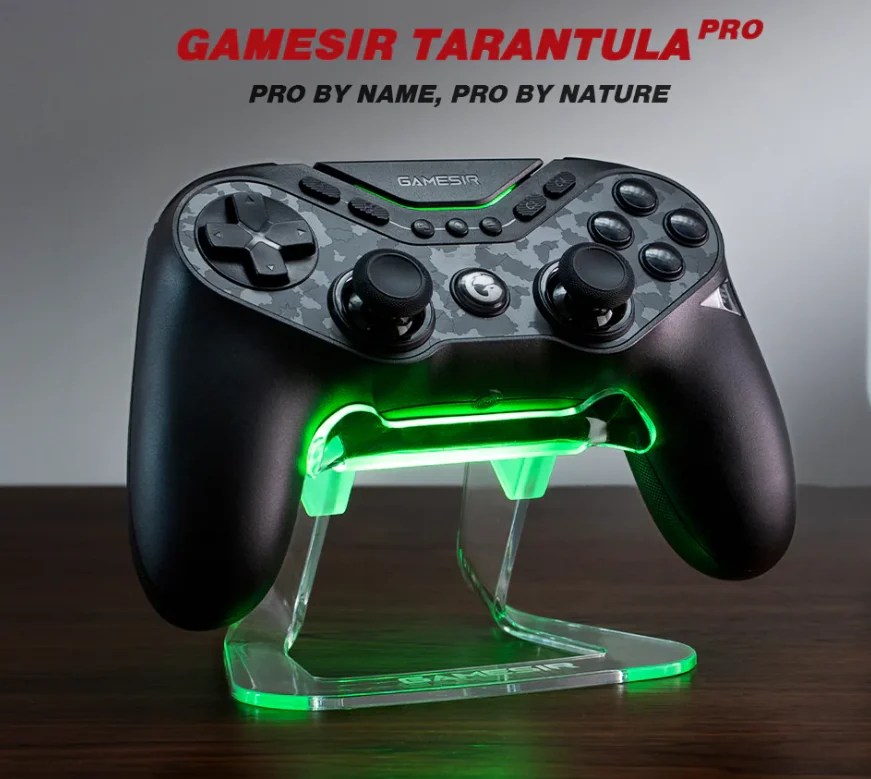
- Wireless Connectivity: Offering both Bluetooth and a 2.4GHz wireless dongle, the Pro model provides seamless connectivity across PC, Xbox (via dongle), and mobile devices, allowing for untethered gameplay and greater freedom of movement. The 2.4GHz connection minimizes wireless latency, making it suitable for competitive scenarios where a wired connection isn’t feasible or desired.
- Built-in Rechargeable Battery: Equipped with an integrated battery, the Tarantula Pro ensures portability and extended gaming sessions without the need for constant wired connection, a crucial convenience for mobile and multi-platform users.
- Haptic Feedback (Vibration Motors): The inclusion of dual vibration motors provides tactile feedback, enhancing immersion in games that utilize rumble effects. This feature, while omitted from the 8K for weight reduction, is a staple of traditional gaming controllers and adds to the sensory experience, especially in single-player or less intensely competitive multiplayer titles.
- 3.5mm Headphone Jack: A standard 3.5mm audio jack allows users to connect their gaming headsets directly to the controller, providing convenient in-game audio and voice chat capabilities, particularly valuable for console and mobile gaming setups.
- Ergonomic Design and Grip: While specific details were not provided, it can be inferred that the Pro model would incorporate ergonomic considerations for comfortable extended play, potentially featuring textured grips or a slightly different form factor compared to the minimalist 8K.
- Customization Software: Like its counterpart, the Pro model would likely be supported by GameSir’s companion software, allowing users to customize button mappings, trigger sensitivities, macro settings, and RGB lighting profiles across all supported platforms.
The Tarantula Pro’s broader compatibility and inclusion of immersive features make it an attractive option for gamers who demand high performance but also value the convenience and sensory feedback of a traditional, fully-featured controller. It represents a balanced approach, delivering competitive-grade responsiveness while retaining the immersive elements that enhance the overall gaming experience.
The Evolution of Controller Technology and Its Impact on Esports
The launch of the GameSir Tarantula series is not an isolated event but rather a significant development within a broader trend of innovation in gaming peripheral technology. For decades, the fundamental design of game controllers remained relatively static. The introduction of analog sticks in the late 1990s and rumble feedback were major milestones, but the core input mechanisms often relied on potentiometers and membrane switches, technologies susceptible to wear and tear.
The rise of esports amplified the scrutiny on hardware performance. Professional players began demanding peripherals that offered unmatched precision, durability, and responsiveness. This demand spurred manufacturers to invest heavily in research and development. The shift from traditional potentiometers to magnetic Hall Effect sensors and TMR technology is a direct outcome of this pursuit of perfection. These contactless technologies offer several advantages: they eliminate mechanical wear, drastically reduce the likelihood of stick drift, and provide more accurate and consistent input over the product’s lifetime.
Similarly, the concept of polling rate, once primarily discussed in the context of gaming mice, has become increasingly relevant for controllers. While a 125 Hz polling rate might be imperceptible to casual gamers, the difference between 1000 Hz and 8000 Hz, though subtle, can provide a measurable competitive advantage to elite players in scenarios demanding split-second reactions. This relentless drive for lower latency extends to wired-only designs, which, by eliminating wireless transmission overhead, ensure the fastest possible signal transfer.
The competitive landscape for high-end controllers has grown significantly, with established brands like Microsoft (Xbox Elite controllers), Sony (DualSense Edge), Scuf Gaming, Razer, and others offering premium options. GameSir’s entry into this segment with the Tarantula series, particularly at its aggressive price point of $69.99 for both models, poses a substantial challenge. By offering cutting-edge technology (8K polling, TMR sticks, Hall Effect triggers) at a price often associated with mid-range controllers, GameSir aims to democratize access to elite-level hardware. This pricing strategy could force competitors to innovate further or adjust their own pricing models, ultimately benefiting consumers.
Pricing, Availability, and Market Implications
GameSir has set a suggested retail price of $69.99 for both the Tarantula 8K and the Tarantula Pro, a pricing strategy that is notably competitive for controllers featuring such advanced technologies. Typically, controllers boasting features like Hall Effect sensors, high polling rates, and extensive customization options often retail for significantly higher prices, sometimes exceeding $150 or even $200 for premium "pro" models from other brands. By offering these features at a sub-$70 price point, GameSir is effectively positioning the Tarantula series as a high-value proposition, making elite-level performance more accessible to a broader demographic of gamers.
International shipping for both units is scheduled to begin in June. This phased rollout will allow GameSir to manage initial demand and ensure a smooth global distribution. The timing aligns with the peak summer gaming season, potentially capturing a significant audience looking for hardware upgrades or new controllers for upcoming game releases.
The implications of this launch for the gaming peripheral market are noteworthy. GameSir’s aggressive pricing strategy for technologically advanced controllers could disrupt the existing hierarchy. It challenges the notion that cutting-edge performance must come with a premium price tag, potentially putting pressure on other manufacturers to re-evaluate their own product offerings and pricing structures. For consumers, this means more choices and potentially better value for their money.
Furthermore, the dual-model approach – one optimized for extreme PC performance (8K) and another for versatile, immersive multi-platform play (Pro) – allows GameSir to cater to distinct segments of the competitive gaming market without diluting its brand message. This targeted strategy ensures that gamers can choose a controller that precisely matches their primary use case, whether they are hardcore PC esports enthusiasts or multi-platform players seeking a blend of performance and convenience.
Conclusion
The international launch of GameSir’s Tarantula 8K and Tarantula Pro controllers represents a significant milestone in the evolution of gaming peripherals. By integrating state-of-the-art technologies such as 8000 Hz polling rates, second-generation TMR magnetic sticks, and dual-mode Hall Effect triggers, GameSir is not merely releasing new products; it is setting new benchmarks for performance, durability, and value in the competitive gaming sphere. The Tarantula 8K stands as a testament to uncompromising speed for PC esports, while the Tarantula Pro offers a compelling blend of versatility and immersion across multiple platforms.
This strategic move by GameSir is poised to have a substantial impact on the gaming industry, particularly in the competitive hardware segment. The aggressive pricing of $69.99 for both models challenges established market norms, making professional-grade performance more attainable for a wider audience. As international shipping commences in June, the Tarantula series is expected to resonate strongly with gamers seeking a definitive edge, further solidifying GameSir’s reputation as a key innovator and formidable competitor in the global gaming peripheral market. The future of competitive controller technology appears to be one of increasing precision, durability, and accessibility, and GameSir’s Tarantula series is at the forefront of this exciting progression.