







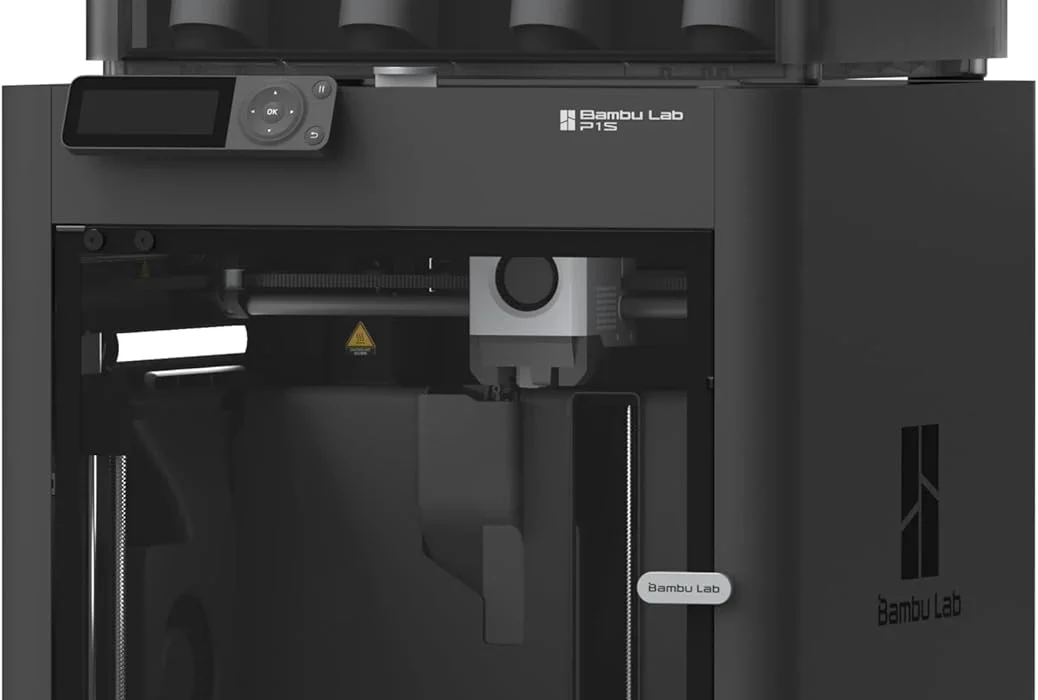
For enthusiasts and novices considering a foray into the rapidly expanding world of desktop manufacturing, the current retail landscape is offering a compelling entry point. Best Buy has slashed the price of the critically acclaimed Bambu Lab P1S 3D Printer Combo—complete with the Automatic Material System (AMS) color printing module—to $479.99. This $70 discount off the standard retail price of $549.99 represents a significant markdown for a hardware package that has consistently earned top industry accolades, including the coveted Editor’s Choice Award, since its market introduction.
The promotion arrives at a time when consumer-grade additive manufacturing is experiencing a massive shift toward plug-and-play usability, largely spearheaded by manufacturers like Bambu Lab. By lowering the financial barrier to entry for a multi-color capable ecosystem, this retail development signals a broader trend of making advanced rapid-prototyping tools accessible to hobbyists, educators, and small-business operators alike without requiring deep technical calibration expertise.
Main Facts and Product Overview
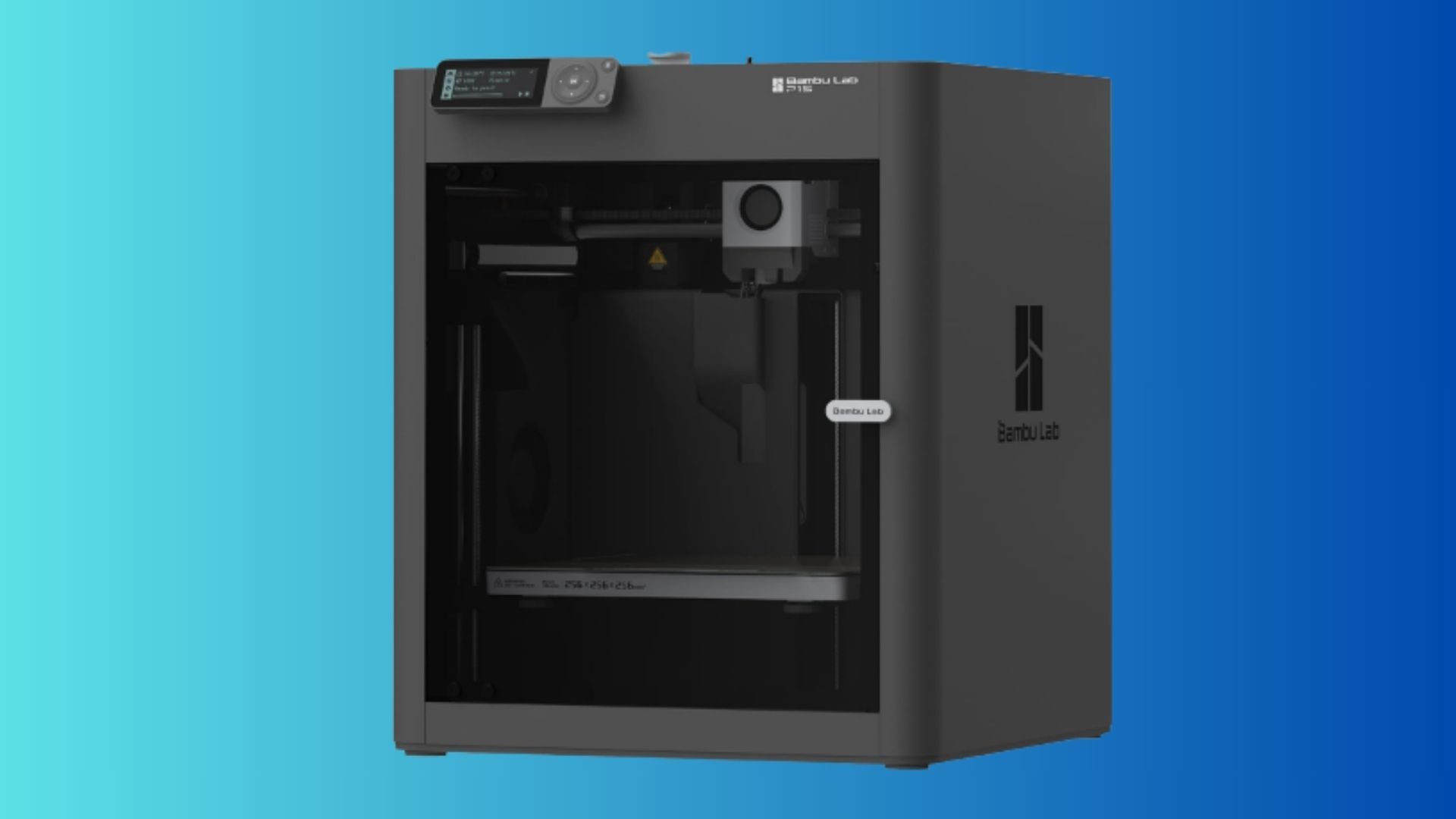
At its core, the Bambu Lab P1S is an enclosed, CoreXY-driven 3D printer engineered for speed, reliability, and versatility. Unlike open-frame desktop printers that struggle with warping and temperature regulation when printing advanced engineering filaments like ABS, ASA, PC, and nylon, the fully enclosed chassis of the P1S provides a stable thermal environment. This design choice ensures consistent layer adhesion and minimizes environmental drafts.
The defining feature of the "Combo" package is the inclusion of the Automatic Material System (AMS). The AMS is a motorized multi-spool feeder that integrates seamlessly with the printer, allowing the machine to automatically switch between up to four different filaments during a single print job. This capability unlocks multi-color printing and multi-material applications—such as using water-soluble support structures for complex geometric overhangs—without demanding tedious, manual filament swaps mid-print.
Out of the box, the P1S is celebrated for its out-of-the-box calibration, vibration compensation, and pressure advance tuning. These automated features eliminate hours of trial-and-error configuration that historically discouraged newcomers from adopting hobbyist 3D printing. With speeds reaching up to 500 mm/s, the printer bridges the gap between industrial-grade fabrication turnaround times and desktop convenience.
Background Context and Industry Evolution
To understand the significance of a $70 discount on the Bambu Lab P1S, one must examine the rapid evolution of the consumer 3D printing market over the past half-decade. For many years, entering the hobby meant purchasing an inexpensive, open-source Cartesian printer—such as models derived from the RepRap project—which typically required extensive assembly, firmware flashing, manual bed leveling, and continuous troubleshooting.
While these legacy machines cultivated a dedicated community of tinkerers, they also created a steep learning curve that limited mainstream adoption. Consumers often found themselves spending more time diagnosing mechanical failures, clogged nozzles, and adhesion issues than actually designing or printing objects.
The landscape shifted dramatically around 2022 and 2023 with the market disruption caused by high-speed, closed-ecosystem machines. Companies introduced advanced sensors, AI-powered print monitoring, and closed-loop motion control systems as standard features rather than expensive aftermarket upgrades. Bambu Lab emerged as a dominant force in this paradigm shift, challenging legacy manufacturers to drastically accelerate their research and development cycles. The P1S, launched as a more enclosed, cost-effective derivative of the flagship X1 series, democratized high-speed core-XY printing and multi-material capabilities for a broader consumer demographic.
Chronology of the P1S and Market Trajectory
The journey of the Bambu Lab P1S reflects the swift pace of technological obsolescence and refinement characteristic of the consumer electronics sector.
- Late 2022: Bambu Lab disrupts the market with the release of the X1 and X1-Carbon printers, introducing high-speed CoreXY kinematics and AI failure detection to the consumer tier.
- Mid-2023: Recognizing the demand for a more budget-friendly variant that retained the core velocity and enclosed architecture of the flagship models, Bambu Lab launches the P1P (open frame) followed quickly by the P1S, which added the full enclosure and upgraded cooling required for engineering-grade filaments.
- Late 2023 to 2024: The P1S and its AMS bundle quickly garner widespread critical acclaim, securing top awards across major technology publications and hardware review platforms for balancing high-end performance with a mid-tier price point.
- Current Period: Retailers such as Best Buy begin deploying targeted promotional discounts, reflecting a maturing product lifecycle where hardware is periodically discounted to capture price-sensitive holiday shoppers and holiday-adjacent consumer demand waves.
Supporting Data and Performance Metrics
Evaluating the value proposition of the P1S requires looking closely at the performance specifications delivered at the $479.99 price point.
The machine boasts a build volume of 256 × 256 × 256 mm, which accommodates a vast majority of functional parts, miniatures, organizational tools, and artistic models. Its maximum toolhead acceleration reaches an astonishing 20,000 mm/s², allowing the printer to complete complex prints in a fraction of the time required by traditional bed-slinging printers.
Furthermore, the integration of the AMS unit introduces sophisticated Radio-Frequency Identification (RFID) tracking for Bambu-branded filaments. When loaded, the printer automatically reads the material type, color, and optimal temperature profiles, virtually eliminating human error in slicing parameter configuration. For multi-color prints, the system manages filament purging through a purge chute, optimizing waste management while delivering crisp, multi-hue aesthetic finishes.
Market Implications and Consumer Analysis
The discounting of the Bambu Lab P1S Combo to under $500 carries several notable implications for the desktop manufacturing ecosystem.
First, it exerts downward pricing pressure on competing manufacturers. Brands such as Creality, Anycubic, and Prusa Research have all had to adapt their product roadmaps to counter the high-speed, multi-material value proposition established by Bambu Lab. As margins tighten, consumers reap the benefits through more competitive hardware pricing and accelerated feature integration.
Second, price reductions of this magnitude lower the barrier for educational institutions and small-scale entrepreneurs. Schools seeking to incorporate STEM, engineering, and rapid prototyping curricula into their classrooms often operate under strict budgetary constraints. Securing an enclosed, multi-material printer capable of handling robust thermoplastics at a sub-$500 price point makes outfitting a maker lab significantly more viable.
Finally, the deal highlights the shifting nature of 3D printing from an esoteric hobby to a mainstream appliance category. Much like standard 2D paper printers transitioned from finicky office peripherals to reliable home appliances, 3D printers are increasingly marketed as plug-and-play tools for everyday creativity. Sales events at major national retailers like Best Buy serve as the primary conduit for introducing these advanced fabrication tools to mainstream consumers who might otherwise bypass niche online specialty stores.
As retail inventories fluctuate and promotional windows remain subject to stock availability, prospective buyers evaluating the current market will find that the Bambu Lab P1S Combo at $479.99 establishes a high benchmark for price-to-performance ratio in the contemporary 3D printing landscape.