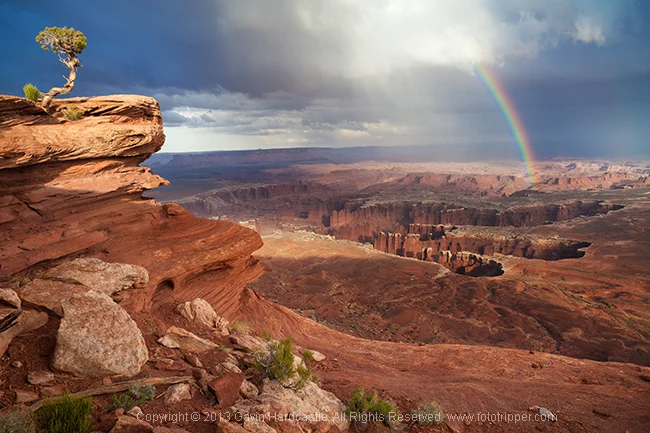
For outdoor and landscape photographers, achieving corner-to-corner sharpness—a condition where every element from the immediate foreground to the distant horizon remains crisp—is often regarded as the ultimate technical benchmark. A deep depth of field (DOF) does more than provide clarity; it transforms a two-dimensional image into an immersive experience, allowing the viewer to perceive the spatial depth and intricate textures of a scene. While modern digital imaging has introduced sophisticated computational methods to address focus issues, the foundational principles of aperture control and precise focus placement remain the most essential skills for any professional or amateur photographer working in the field.

The Evolution of Depth of Field Management
Historically, landscape photographers relied on the Scheimpflug principle, which involves tilting the lens plane relative to the image plane to alter the plane of focus. This was primarily the domain of large-format view cameras. As photography shifted toward smaller, more portable digital systems, three primary methodologies emerged: standard aperture selection, focus stacking, and the use of tilt-shift optics.
Focus stacking involves capturing a sequence of images at different focus distances and merging them in post-production software. While effective for extreme macro or close-up landscapes, it is time-intensive and susceptible to artifacts if there is movement in the scene, such as swaying trees or flowing water. Tilt-shift lenses offer a mechanical solution but represent a significant capital investment, often costing several thousand dollars. Consequently, the mastery of aperture and focus selection remains the industry standard for rapid, high-quality environmental photography, particularly when lighting conditions are fleeting.

Understanding the Physics of Aperture and Diffraction
The aperture, or the opening in the lens diaphragm, is the primary regulator of the depth of field. However, there is a fundamental trade-off in optical physics known as the "diffraction limit." When a lens is stopped down to a very narrow aperture, such as f/22 or f/32, the light waves passing through the small opening begin to interfere with one another, causing a loss of fine detail across the entire image. This phenomenon, known as diffraction, results in a softness that negates the sharpness gains achieved by the deeper depth of field.
Data from optical bench testing consistently suggests that most high-quality wide-angle lenses reach their peak performance—the "sweet spot"—between f/8 and f/16. At these settings, the lens aperture is narrow enough to maintain a deep zone of focus but wide enough to avoid the detrimental effects of diffraction. Professional photographers are encouraged to conduct empirical tests with their specific gear to determine the exact point where their lens produces the highest MTF (Modulation Transfer Function) scores, which measure the contrast and resolution of the optics.

Chronology of Field Techniques
The methodology for achieving maximum depth of field in a single exposure has been refined over decades of field practice. The process typically follows a logical sequence:
- Analysis of the Scene: Evaluate the distance between the primary foreground subject and the distant background.
- Aperture Selection: Based on the lens’s known diffraction limit, select an aperture between f/8 and f/16. If the foreground is exceptionally close (e.g., within 3–5 feet), the closer end of this range (f/16) is generally preferred to maximize the zone of focus.
- Focus Point Determination: Rather than focusing on the infinity marker, which often leaves the foreground soft, photographers employ the "two-thirds rule." By placing the focus point approximately one-third of the way into the frame, the depth of field expands to cover both the foreground and the background effectively.
- Verification: Utilizing modern features such as "Live View" magnification or "Focus Peaking" allows the photographer to confirm sharpness on the intended subject before committing to the exposure.
Case Studies and Empirical Observations
Professional photographers often document their findings to standardize their approach. For instance, in high-contrast environments such as the Pacific Northwest or the deserts of Utah, lighting conditions dictate the technical approach. When capturing a scene with a prominent foreground element, such as mossy rocks, using an aperture of f/8 may result in a sharp background but a blurred foreground. By closing the aperture to f/16, the photographer increases the "circle of confusion," effectively widening the area of acceptable sharpness.

In scenarios where the subject is a distant mountain range, focusing on a high-contrast detail in the mid-ground, such as a tree line or a rock formation, ensures that the infinity focus remains sharp. Conversely, if a specific foreground element is intended as the primary subject, the focus must be prioritized on that object, even if it necessitates a slightly softer background. These decisions are not merely technical; they are aesthetic choices that define the hierarchy of the image.
Implications for Workflow and Efficiency
The broader implication of mastering these manual techniques is a significant increase in field efficiency. In volatile outdoor conditions—where the "golden hour" light may last only minutes—the ability to set up a shot without the need for multiple exposures or complex post-processing is a major competitive advantage.

Professional bodies, including the American Society of Media Photographers (ASMP), emphasize that while technological advancements like focus stacking are valuable, they cannot replace a fundamental understanding of optics. An over-reliance on software correction often leads to a "digital" look that lacks the natural roll-off of depth of field found in high-quality optical captures. By internalizing these techniques, photographers ensure their workflow remains lean, enabling them to capture fleeting moments with technical precision.
Managing Trade-offs: The Reality of Optics
It is critical for photographers to acknowledge that "maximum depth of field" does not always equate to "flawless sharpness." There are instances where the physical limitations of glass and light make it impossible to have every inch of a frame in perfect focus. In these cases, the professional approach is to prioritize the area of the image with the most visual weight. If the foreground is the anchor of the composition, it must be the point of critical focus. If the background contains the primary narrative element, that must take precedence.

The trade-off often involves sacrificing a degree of sharpness in the extreme corners to ensure the central subjects are rendered with clarity. This is a common reality in landscape photography, particularly when using ultra-wide-angle lenses that suffer from inherent field curvature.
Conclusion: Technical Intuition in the Field
Achieving consistent, high-quality landscape imagery is a byproduct of practice and the rigorous application of optical principles. By moving beyond automated settings and taking manual control of aperture and focus, photographers gain the ability to manipulate the viewer’s experience of space. The transition from "taking" a photograph to "making" a photograph is defined by this mastery.

As digital sensors continue to increase in resolution, the demand for optical precision will only grow. Photographers who dedicate time to testing their equipment, understanding the diffraction limits of their specific lenses, and practicing the art of strategic focus placement will be better equipped to produce work that stands the test of time. Whether shooting in the high mountains or local forests, these core techniques provide the foundation for professional-grade results without the requirement of additional, expensive hardware. Consistent practice ensures that these technical decisions become second nature, allowing the photographer to focus on the artistic vision rather than the mechanics of the camera.